
Andro Dunos

Buy
Part of collection:
Andro Dunos
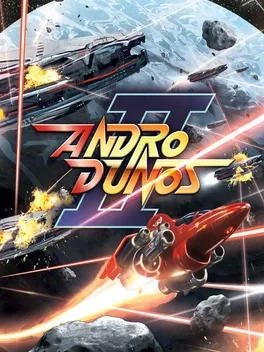
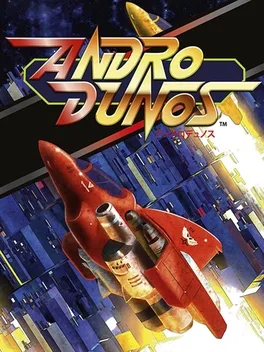
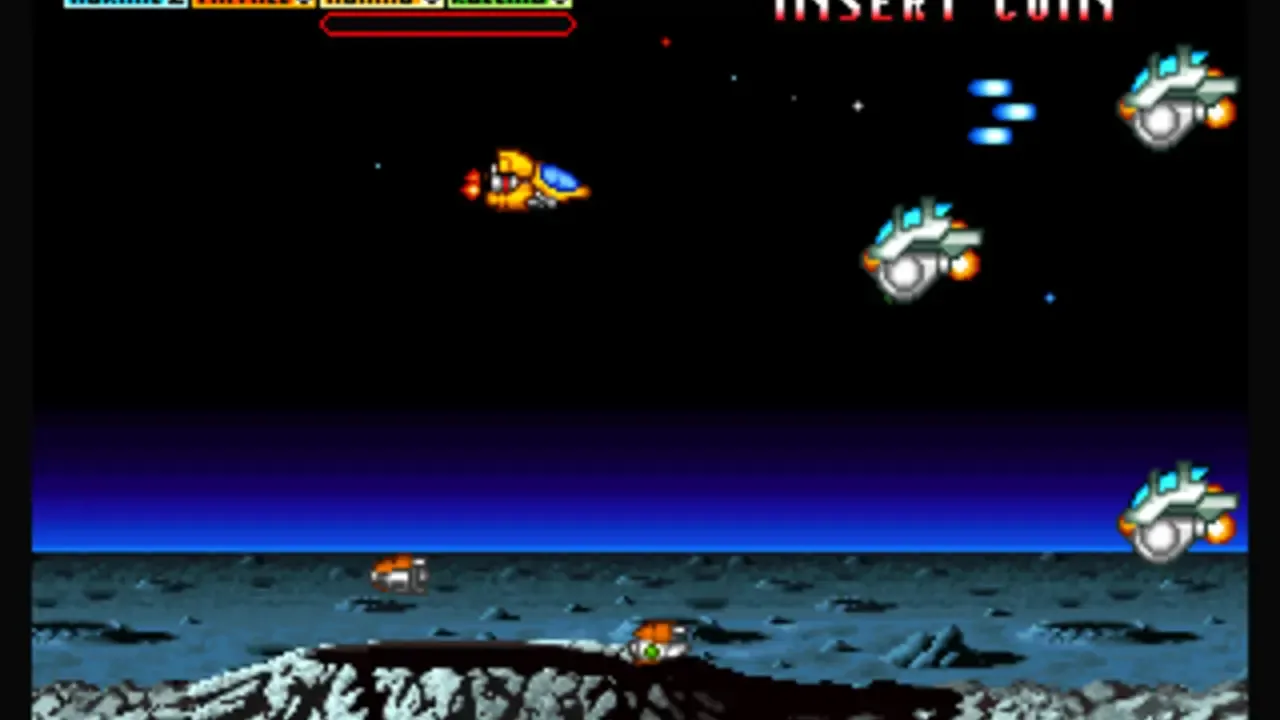
Once upon a time… Andro Dunos is a side scrolling arcade game from shoot’em up category (Shmup). It's the sequel to the famous shoot’em up from Visco studio is coming to PixelHeart. It’s time to bring out your good old spaceship fighter in Andro Dunos II.
Could be interesting
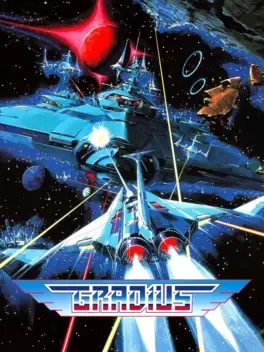
One of the defining characteristics of the Gradius series is the use of a "power meter." The power meter is powered by a power-up item, whose purpose, when collected, is to move a highlight to the next power-up on the power meter. When a power-up that the player wants becomes highlighted, he or she may activate it, also causing the highlight to reset.
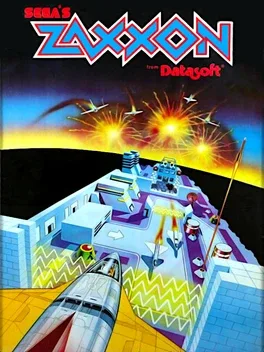
Zaxxon is a 1982 isometric shooter arcade game developed and released by Sega. The game gives the player the experience of flying a fighter craft through a fortress while shooting at enemy entities (missiles, enemy gunfire, etc.) The object of the game is to hit as many targets as possible without being shot down or running out of fuel, which can be replenished paradoxically, by blowing up fuel drums.
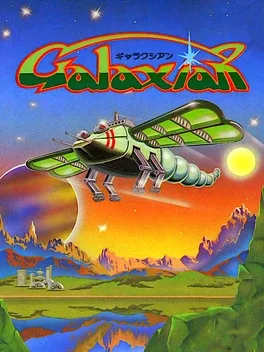
Galaxian is a shooter arcade game developed by Namco in 1979. It was released by Namco in Japan and a few months later by Midway Games in North America. The game was developed to compete with Taito Corporation's Space Invaders, released a year earlier, and featured a similar space theme. The player controls a space ship in the bottom part of the screen and shoots at enemies descending from the top of the screen. The game was received very well by the public and has continued to be a game with a competitive community to this day. It was followed by a successful sequel called Galaga in 1981 and two less known sequels called Gaplus in 1984 and Galaga '88 in 1987. Galaxian was one of the most popular games in the golden age of arcade video games.
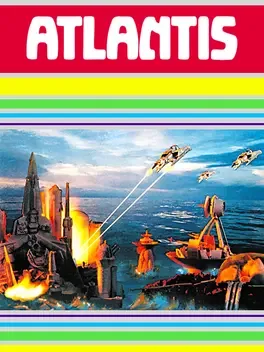
The lost city of Atlantis is under attack! Wave after wave of Gorgon vessels are approaching, each armed with weapons capable of destroying a part of the city. You are in charge of the command posts at the edges of the city and need to defend it from the invaders. The various gorgon craft will keep flying by on the screen in varying numbers and in different flight patterns. At first they fly high in the sky but then progressively lower. If an enemy makes it low enough before you destroy it, it will use it's weapons and destroy one of the buildings in Atlantis. As you progress in the game, the enemy craft will keep increasing in speed. The game ends when all remaining buildings in the city have been destroyed.
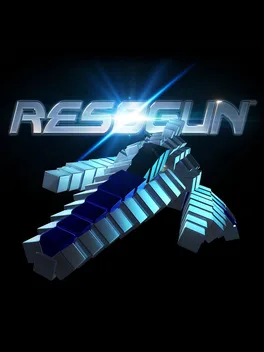
Resogun is a shoot 'em up game. Unleash an explosive array of devastating weapons to obliterate hordes of ruthless enemies while making sure you rescue the last survivors and keep your multiplier going! Push yourself to the limits trying to climb the global leaderboards for each game mode and difficulty setting. Join forces with your friends online and show off your skills in action packed co-op multiplayer.
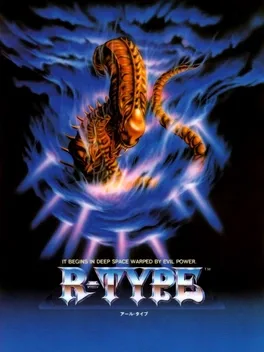
R-Type is set in the 22nd century, and the player flies a futuristic fighter craft called the R-9a "Arrowhead", named for its shape, and because it is the ninth model in the 'R' series of fighter craft (but it is the first of the series to actually be used in combat; the previous models were all prototypes). The mission is to 'blast off and strike the evil Bydo Empire'. The R- in the series title originally stood for "ray", as in a ray of light. It was a reference to the many different types of ray-like weapons in the first R-Type. his was later retconned in R-Type Final to refer specifically to the production code as well as a term of endearment for the player fighter craft, the "Round Canopy". The original R-Type was well received by most gaming critics. However, it was also infamous for its relentless difficulty. It earned 7th place in IGN's Top 10 most difficult games to beat. The gameplay of R-Type is noticeably distinct among shoot 'em ups. Invariably the player will lose, not because of an inequality in firepower, but because of the design of the levels themselves. There is usually a 'correct' way to get through a level, but players must learn these by experience - i.e. by losing and restarting from earlier in the level. The game innovated with its weapon system compared to contemporary shooters, featuring a chargeable shot (beam-meter), and detachable 'force' pod; levels were designed to require different tactics and ideal weapons (air-air, diagonal, or air-ground laser).
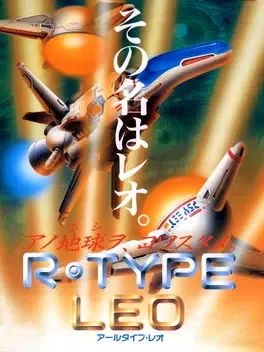
R-Type Leo is a horizontally scrolling shooter arcade game. It is a spin-off of the R-Type series and the last entry to be released in Arcades. R-Type Leo was initially an original shoot 'em up game in development by Nanao before Irem retooled it into an R-Type project instead. It is also the first R-Type game to feature simultaneous two player gameplay.
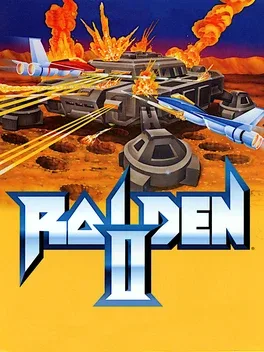
Excellent sequel to the classic original "Raiden". As in the original, players control a fighter jet/spaceship through various levels while shooting down other planes and bombing tanks on the ground.
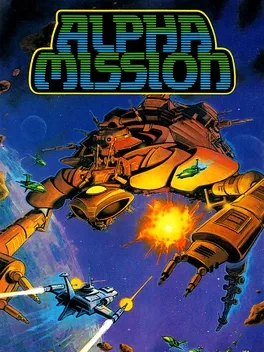
Alpha Mission is a vertical scrolling shooter that has similarities to Xevious, with the use of air-to-air and air-to-ground weapons.
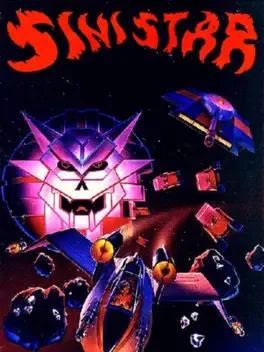
The player pilots a lone spacecraft, and must create "Sinibombs" by shooting at drifting planetoids and catching the crystals that are thereby released. Sinibombs are needed to defeat the game boss, Sinistar, an animated spacecraft with a demonic skull face. Sinistar does not exist at the start of the game, and is continuously under construction by enemy worker ships. Though time is crucial, attempting to mine too quickly will destroy a planetoid without releasing any crystals. Enemy worker ships are also gathering crystals (often stealing them from the player) which they use to construct the Sinistar. Enemy warrior ships can directly attack the player's ship. The player is given a head-start before the enemy ships have enough crystals to begin construction. Game ends when the player's ships are all destroyed. Once the Sinistar is completely formed, a digitized voice makes various threatening pronouncements, including "Beware, I live!," "I hunger, coward!," "I am Sinistar!," "Run! Run! Run!," "Beware, coward!", "I hunger!," "Run, coward!," and a loud roaring sound. The Sinistar has no weapon attacks, but if it contacts the player's ship while it darts about the playfield, the player's ship will be "eaten" and destroyed. A total of 13 Sinibombs are required to destroy a fully built Sinistar, although an incomplete Sinistar can be damaged to slow construction. Each short-range Sinibomb automatically targets the Sinistar when fired, but can be intercepted by a collision with an enemy ship, enemy fire, or a planetoid. The player moves from one zone to the next each time he defeats the Sinistar. A sequence of four zones repeats continuously after the first zone. Each is named for the most numerous feature of that zone: Worker Zone, Warrior Zone, Planetoid Zone, and Void Zone (the Void Zone is especially difficult because it has very few planetoids). Beginning with the first Worker Zone, a completed but damaged Sinistar can be repaired/rebuilt by the enemy ships by gathering more crystals, extending its "lifespan" if the player is unable to kill it quickly.