
Galaxian


Buy
Part of collection:
Galaxian
(last 3 games)
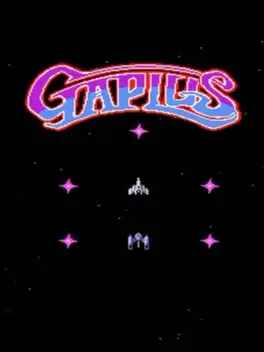
A port of Gaplus developed by M2 for the NES capabilities, released in Namco Museum Archives (Namcot Collection).
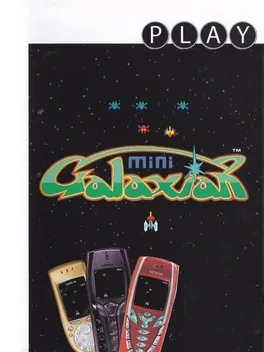
"Miniature" remake of Galaxian. Gameplay involves shooting down small formations of diving enemies.
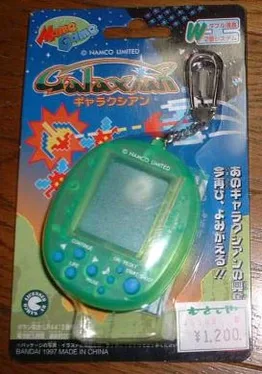
A port for handheld devices.
Part of franchise:
Galaxian
(last 3 games)
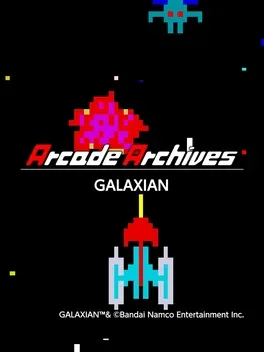
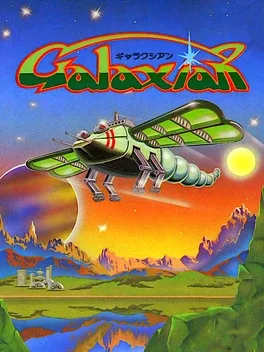
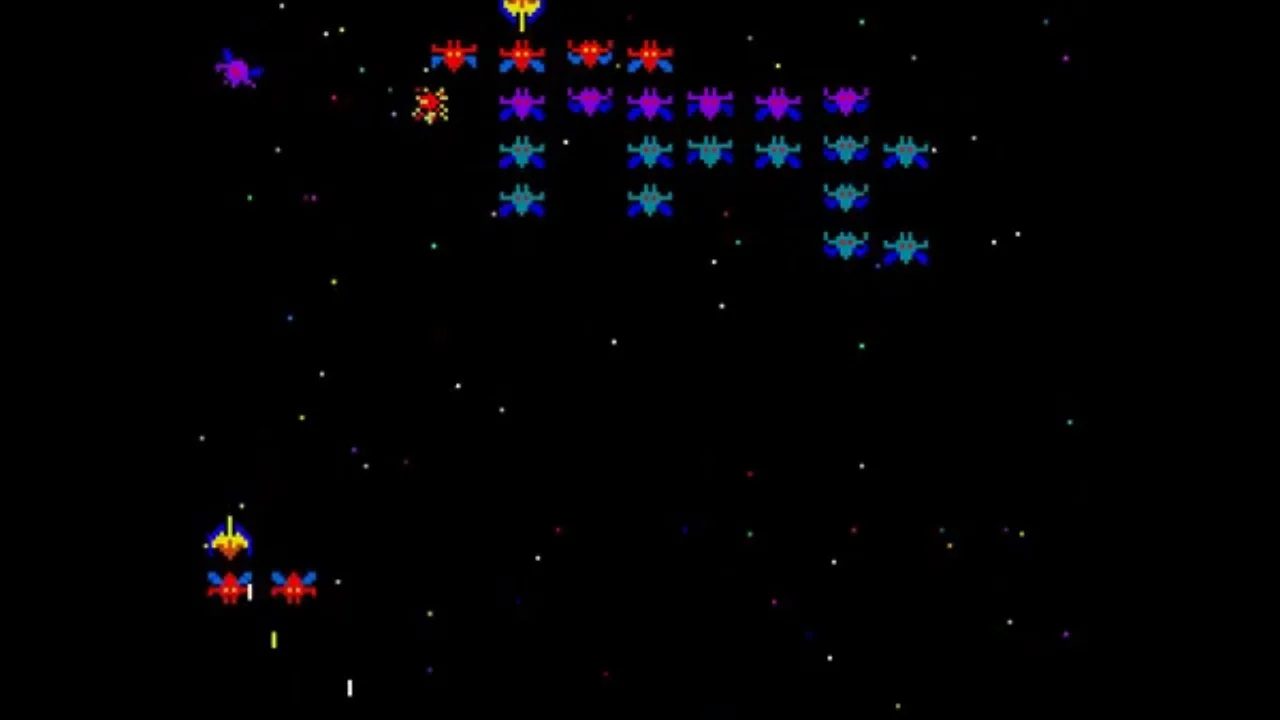
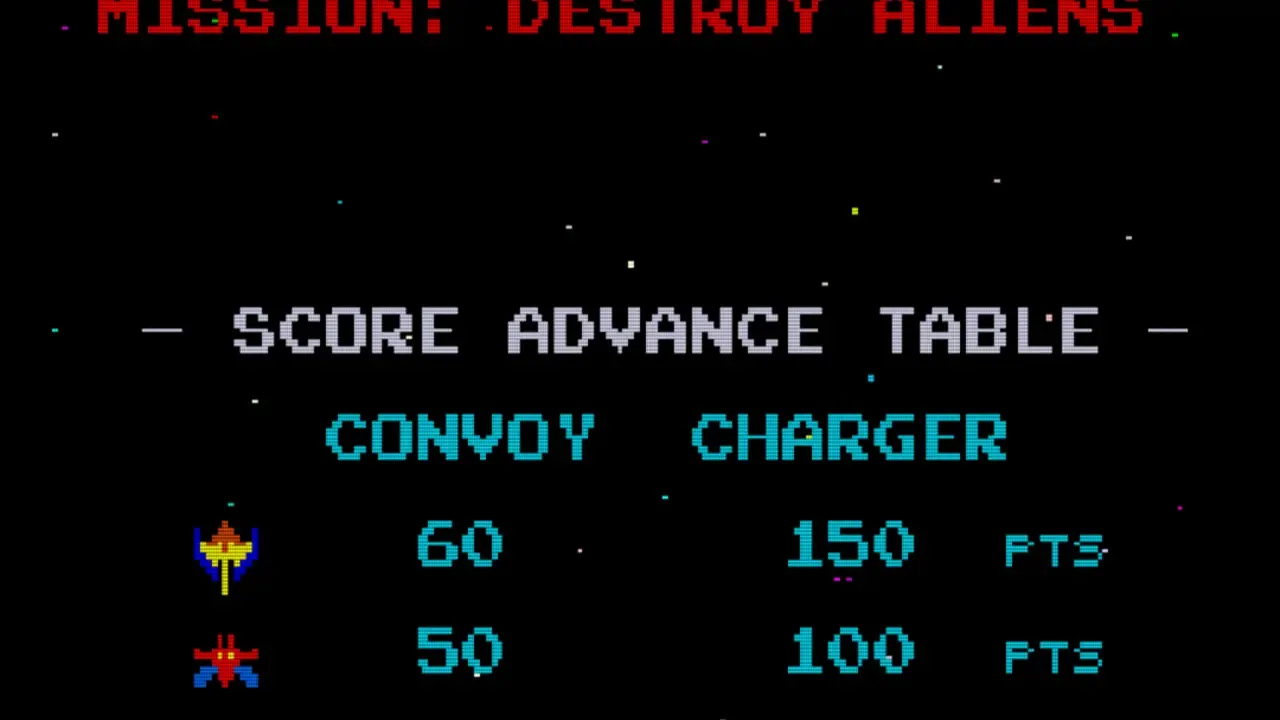
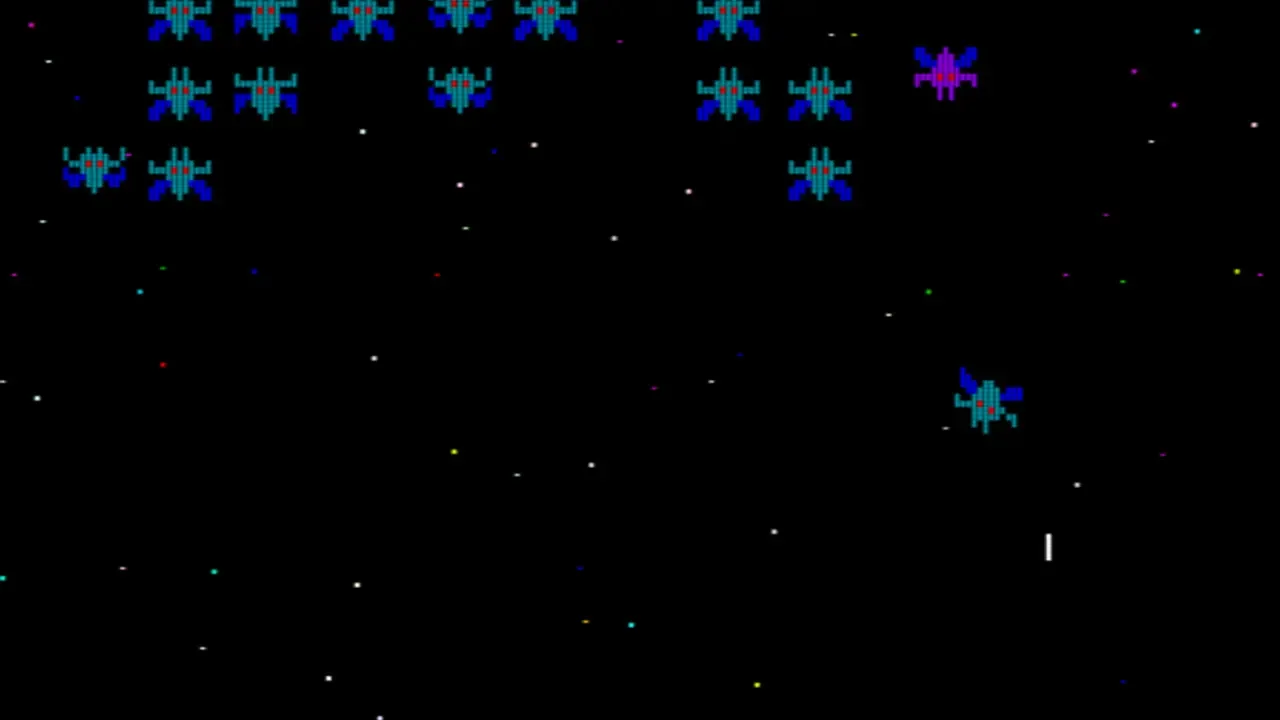
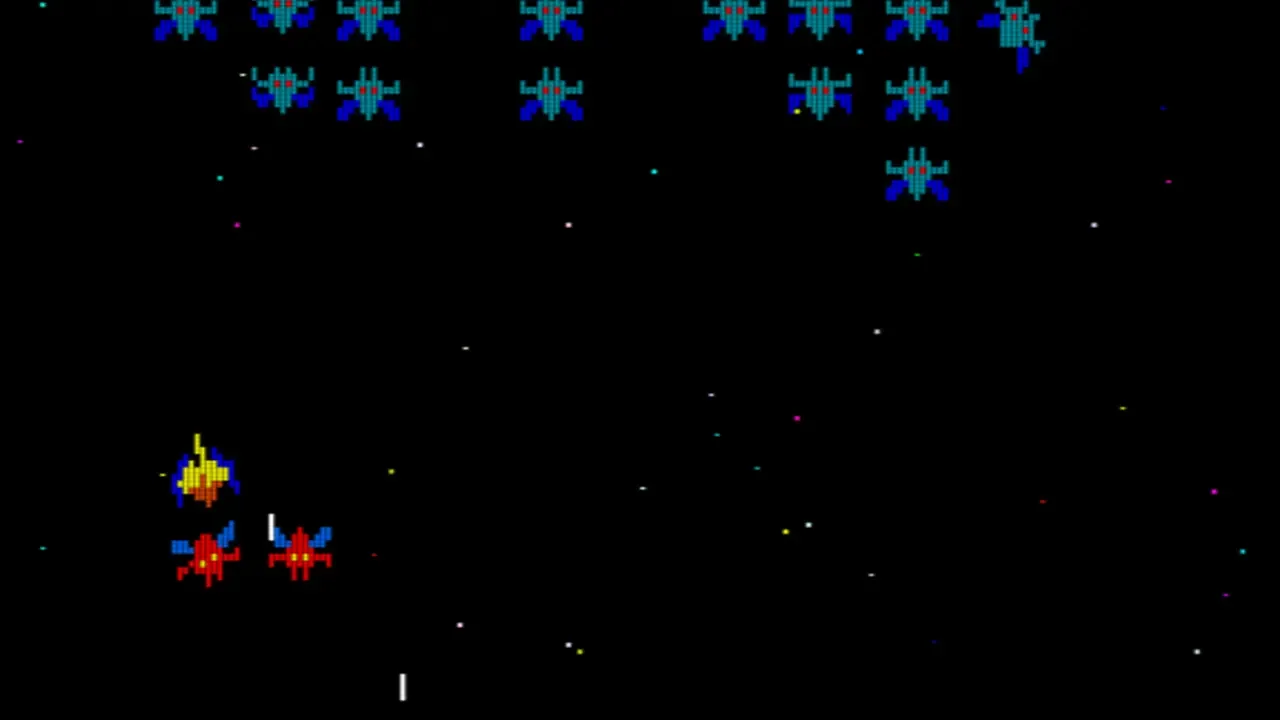
"Galaxian" is a shooting game released by Namco in 1979. You control a Galaxip and shoot aliens that approach you in eerie curves. Aliens during the assault double your score, and the flagship (Galboss) can be shot at in turn, starting with the escort (red alien), for a higher score. Deftly dodge enemy aliens and destroy the large formation.
Strike back with powerful Blaster Head weapons!
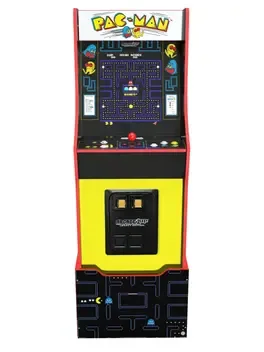
Pac-Man 12-in-1 Legacy Series is an arcade machine bundle by Arcade1Up that features various arcade games from Namco.
Could be interesting
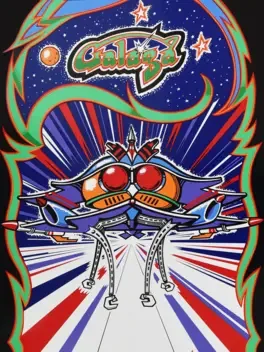
The objective of Galaga is to score as many points as possible by destroying insect-like enemies. The player controls a starfighter that can move left and right along the bottom of the playfield. Enemies swarm in groups in a formation near the top of the screen, and then begin flying down toward the player, firing bombs at the fighter. The game ends when the player's last fighter is lost, either by colliding with an enemy or one of its bullets, or by being captured. Galaga introduces a number of new features over its predecessor, Galaxian. Among these is the ability to fire more than one bullet at a time, a count of the player's "hit/miss ratio" at the end of the game, and a bonus "Challenging Stage" that occurs every few levels, in which a series of enemies fly onto and out of the screen in set patterns without firing at the player's ship or trying to crash into it. These stages award a large point bonus if the player manages to destroy every enemy. Another gameplay feature new to Galaga is the ability for enemies to capture the player's fighter. While the player is in control of just one fighter, a "boss Galaga" (which takes two shots to kill) periodically attempts to capture the fighter using a tractor beam. If successful, the fighter joins the enemy formation. If the player has more lives remaining, play resumes with a new fighter. The captured fighter flies down with the enemy that captured it, firing upon the player just like normal enemies, and can be shot and destroyed. The player can free the fighter by destroying the boss Galaga while in flight, causing the captured fighter to link up with the player's current fighter, doubling his or her firepower but also making a target twice as large. Galaga has an exploitable bug that can cause the attackers to stop firing bullets at the player, due to a coding error. In addition, similar to the famous "Split-Screen bug" in Pac-Man, a bug exists in Galaga in which the game "rolls over" from Level 255 to Level 0. Depending on the difficulty setting of the machine, this can cause the game to stall, requiring that the machine be reset or power-cycled in order to start a new game.
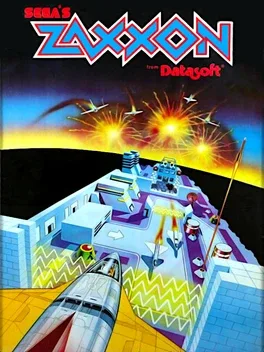
Zaxxon is a 1982 isometric shooter arcade game developed and released by Sega. The game gives the player the experience of flying a fighter craft through a fortress while shooting at enemy entities (missiles, enemy gunfire, etc.) The object of the game is to hit as many targets as possible without being shot down or running out of fuel, which can be replenished paradoxically, by blowing up fuel drums.

In this shoot 'em up the player has to fight off four assault waves consisting of different enemy types until he reaches a huge UFO. After destroying the protective plates guarding the UFO's pilot in his cockpit the player can kill the pilot. The game starts anew with harder enemies.
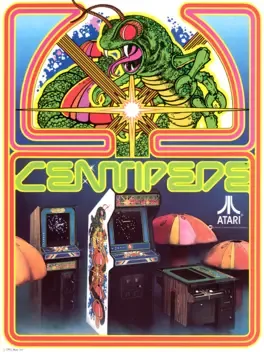
Centipede is a vertically-oriented shoot 'em up arcade game produced by Atari, Inc. in 1980. The game was designed by Ed Logg along with Dona Bailey, one of the few female game programmers in the industry at this time. It was also the first arcade coin-operated game to have a significant female player base. The player defends against swarms of insects, completing a round after eliminating the centipede that winds down the playing field.
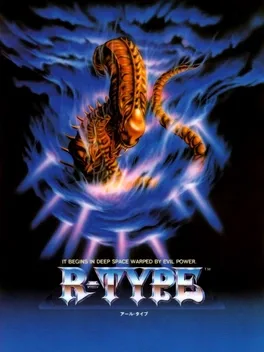
R-Type is set in the 22nd century, and the player flies a futuristic fighter craft called the R-9a "Arrowhead", named for its shape, and because it is the ninth model in the 'R' series of fighter craft (but it is the first of the series to actually be used in combat; the previous models were all prototypes). The mission is to 'blast off and strike the evil Bydo Empire'. The R- in the series title originally stood for "ray", as in a ray of light. It was a reference to the many different types of ray-like weapons in the first R-Type. his was later retconned in R-Type Final to refer specifically to the production code as well as a term of endearment for the player fighter craft, the "Round Canopy". The original R-Type was well received by most gaming critics. However, it was also infamous for its relentless difficulty. It earned 7th place in IGN's Top 10 most difficult games to beat. The gameplay of R-Type is noticeably distinct among shoot 'em ups. Invariably the player will lose, not because of an inequality in firepower, but because of the design of the levels themselves. There is usually a 'correct' way to get through a level, but players must learn these by experience - i.e. by losing and restarting from earlier in the level. The game innovated with its weapon system compared to contemporary shooters, featuring a chargeable shot (beam-meter), and detachable 'force' pod; levels were designed to require different tactics and ideal weapons (air-air, diagonal, or air-ground laser).
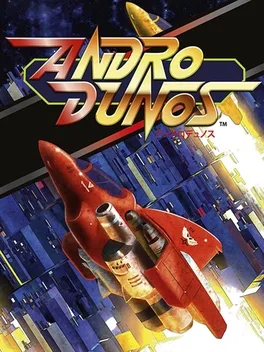
Andro Dunos is a horizontally scrolling shoot 'em up arcade game released by Visco in 1992 for the SNK Neo-Geo MVS. The player controls a futuristic fighter spacecraft with different weapon settings that you can switch between, and shoot enemies, collect power-ups, and defeat bosses to advance levels.
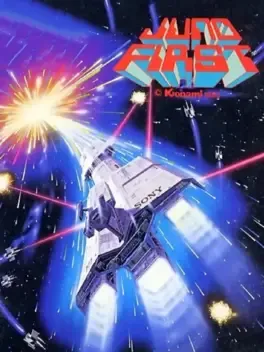
Juno First is a shoot 'em up originally developed and published by Konami Corporation for Arcades. The game was later published by Mylstar Electronics (US arcades), Datasoft Inc. (Atari 8-bit, PC Booter, and Commodore 64), and Sony Computer Entertainment Japan (MSX). Juno First is a top down, vertical scrolling shooter in which there is a limited amount of time to defeat the enemies in each wave. The players spaceship starts out with a laser that has a longer reach than the enemy weapons. The enemies start out firing a few bullets at the ship but the amount enemy fire rapidly increases as players progress through to the next waves. Certain enemies fire tracking missile-like projectiles that can shoot additional bullets.
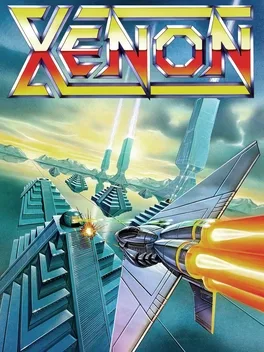
Xenon is a 1988 vertical scrolling shooter computer game, developed by The Bitmap Brothers and published by Melbourne House which was then owned by Mastertronic. Xenon was followed in 1989 by Xenon 2: Megablast. The player assumes the role of Darrian, a future space pilot called into action by a mayday report from his superior on a nebula space station. As of late, the colonies of mankind have been under attack by mysterious and violent aliens called the Xenites and it is finally time for Darrian to engage them. Unlike most scrolling shooters, the player can move in any direction instead of straight up. The player craft has two modes, a flying plane and a ground tank. The transition between crafts can be initiated at almost any time during play (except during the mid- and end-of-level boss sections, as well as certain levels where a certain mode is forced), and the mode chosen depends on the nature of the threat the player faces. Destroying some enemies released power-ups the player could catch to enhance their ship.
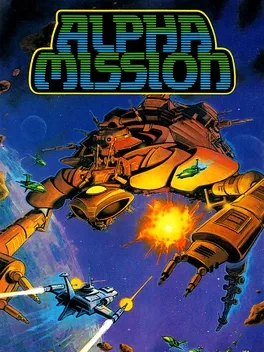
Alpha Mission is a vertical scrolling shooter that has similarities to Xevious, with the use of air-to-air and air-to-ground weapons.
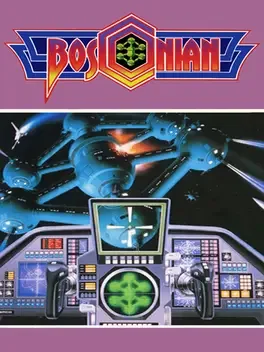
The object of Bosconian is to score as many points as possible by destroying enemy bases and ships. The player controls a small fighter ship that can move in eight directions and can fire both forward and backward. Each level consists of a number of green space stations that must all be destroyed to advance to the next level (a semi-transparent mini-map helps identify their location). Each station consists of six cannons arranged in a hexagon, surrounding a central core. The player must either destroy all six cannons or shoot the core to destroy a station, and in later levels the core is capable of defending itself. Additionally, the player must avoid or destroy asteroids, mines, and a variety of enemy missiles and ships that attempt to collide with the player's ship. Enemies occasionally launch formation attacks — destroying the leader causes all remaining enemies to disperse, but destroying all enemies in a formation scores extra bonus points. A spy ship (worth a random bonus value) also appears occasionally, which must be destroyed or the enemies will go berserk.