
Galaga


Buy
Expanded games
A modified version of Galaga, released first in the Namco Museum Remix compilation. Pac-Man rolls through a track while the Wii Remote is used to shoot Galaga enemy ships.
Part of collection:
Galaga
(last 3 games)
This is a special edition of Galaga Wars exclusively for Apple Arcade. It has no ads, and the microtransactions have been removed.

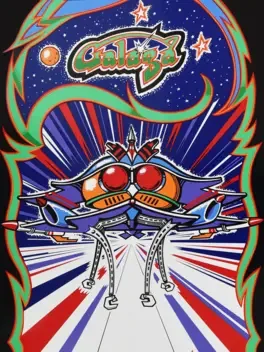
The galaxy is calling for you, it needs to be saved from waves of aliens. Jump in your ship and head to space. The survival of the universe is once more at stake. They have an alien mothership of immense proportions, endless waves of ships bristling with high-tech weaponry and of course the sheer power of the boss Galaga... You are the hero that will make it through those waves as if they were mere bricks. You are the breaker of this cycle and the savior of the galaxy Galaga Wars is a classic retro shooter that has been seen times and times in your favorite arcades. From pixel ships to more refined ones, have the feel of a casual runner mixed with the adrenaline of destroying enemies in the vast ocean of stars ATTACK through endless waves of original enemies, including the Bee, Butterfly, Scorpion and many more deadly ones. ENHANCE your weapons by upgrading and leveling up your craft. BLAST alien waves with 4 unique abilities per ship including laser, explosive shot, space mines, ghost shield...
Part of collection:
Galaxian
(last 3 games)
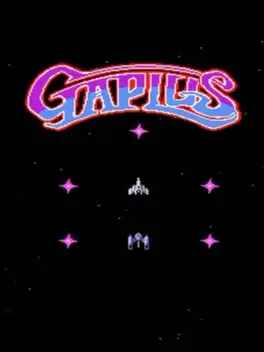
A port of Gaplus developed by M2 for the NES capabilities, released in Namco Museum Archives (Namcot Collection).
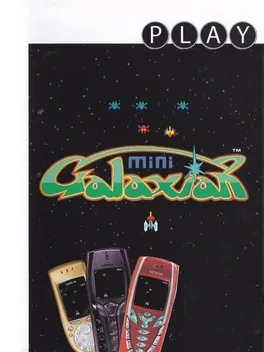
"Miniature" remake of Galaxian. Gameplay involves shooting down small formations of diving enemies.
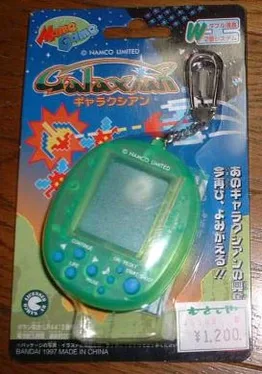
A port for handheld devices.
Part of franchise:
Galaxian
(last 3 games)
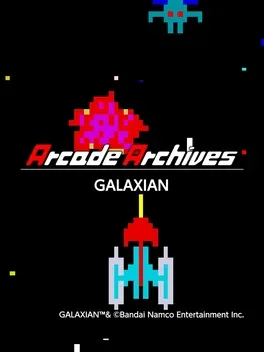
"Galaxian" is a shooting game released by Namco in 1979. You control a Galaxip and shoot aliens that approach you in eerie curves. Aliens during the assault double your score, and the flagship (Galboss) can be shot at in turn, starting with the escort (red alien), for a higher score. Deftly dodge enemy aliens and destroy the large formation.
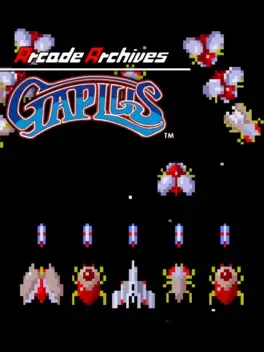
Strike back with powerful Blaster Head weapons!
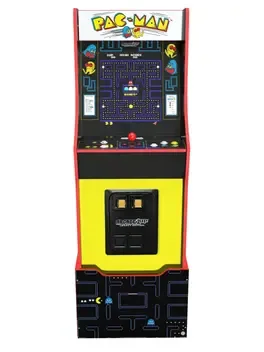
Pac-Man 12-in-1 Legacy Series is an arcade machine bundle by Arcade1Up that features various arcade games from Namco.
Could be interesting
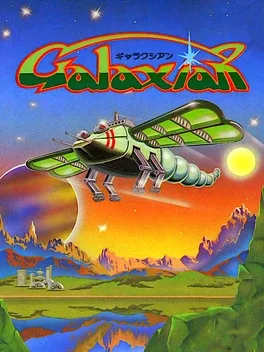
Galaxian is a shooter arcade game developed by Namco in 1979. It was released by Namco in Japan and a few months later by Midway Games in North America. The game was developed to compete with Taito Corporation's Space Invaders, released a year earlier, and featured a similar space theme. The player controls a space ship in the bottom part of the screen and shoots at enemies descending from the top of the screen. The game was received very well by the public and has continued to be a game with a competitive community to this day. It was followed by a successful sequel called Galaga in 1981 and two less known sequels called Gaplus in 1984 and Galaga '88 in 1987. Galaxian was one of the most popular games in the golden age of arcade video games.
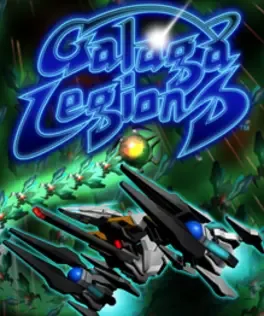
Galaga Legions is an Xbox Live Arcade exclusive video game created by Namco Bandai Games. The title was developed by the same team who created Pac-Man Championship Edition. This game is also included in the Namco Museum Virtual Arcade collection, and in Pac-Man & Galaga Dimensions for Nintendo 3DS. A DX version of the game was released on Xbox Live Arcade as part of the Namco Generations series on June 29, 2011, with the PlayStation Network version released in August 2, 2011.
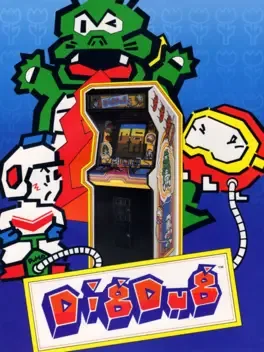
Dig Dug is a 1-2 player arcade game in which you have to use your shovel to dig your way through the earth. Stopping you from doing this are two monsters, called Pooka and Fygar, who will continually chase you around. The only weapon that you carry is an air pump, which you can use to inflate the monsters to the point where they explode. (if you start to inflate them but stop doing so, the monsters will get turned back to their normal selves). Furthermore, rocks are scattered throughout the earth, and you can use these rocks to squash them. If the monsters do not find you for several seconds, they will eventually get turned into ghosts, which are able to walk through the earth. They are invincible and cannot be killed. From time to time, vegetables will appear in the center, and you can get these for points.
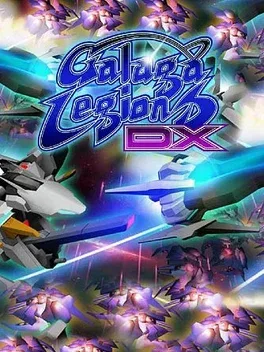
The legendary hit arcade shooter returns with Galaga Legions DX! Featuring a new twist on the classic gameplay, slick new graphics and devastating weapon power-ups, the fate of the galaxy lies in your hands! Board your fighter and prepare to defend Earth from wave after wave of relentless aliens. Target your enemies' critical weak spots to earn bonuses and rack-up an astronomical score! Blast your way through unique levels and epic boss battles on your mission to defend the galaxy and prevent an intergalactic catastrophe!
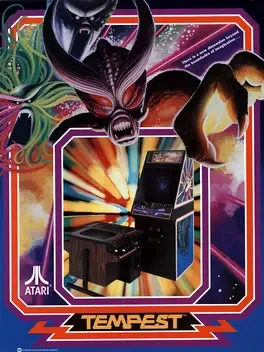
Tempest is a 1981 arcade game by Atari Inc., designed and programmed by Dave Theurer. It takes place on a three-dimensional surface, sometimes wrapped into a tube, which is viewed from one end and is divided into a dozen or more segments or lanes. The player controls a claw-shaped spaceship (named Blaster) that crawls along the near edge of the playfield, moving from segment to segment. Tempest was one of the first games to use Atari's Color-QuadraScan vector display technology. It was also the first game to allow the player to choose their starting level (a system Atari dubbed "SkillStep"). This feature increases the maximum starting level depending on the player's performance in the previous game, essentially allowing the player to continue. An official port was released for the Atari ST. An official port that bears the Atari logo was released by Superior Software for the BBC Micro and Acorn Electron in 1985, and another by Electric Dreams for the ZX Spectrum and Amstrad CPC in 1987. Versions for the Atari 2600 and 5200 were in the works in Atari, Inc. during 1984, and unfinished prototypes exist for both of them.
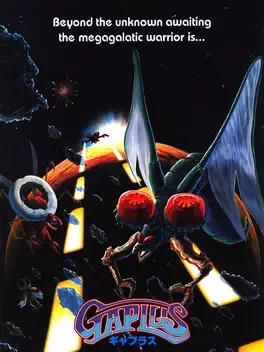
Gaplus is a fixed shooter arcade game that was released by Namco in 1984. It was the only other game to run on Namco Phozon hardware, and in the US, a modification kit was later released to change the name to Galaga 3, possibly to increase recognition among fans of the games even though there was no "Galaga 2". Since Gaplus is a sequel to Galaga, it has similar gameplay. The player controls a spaceship, that can now move vertically (limited to halfway up the screen, much like Atari's Centipede) as well as horizontally, and shoots at swarms of incoming insect-like aliens which fly in formation above it and swoop down to attack it in akamikaze-like dive. In this sequel, the level starts over if the player gets killed before all the enemies have come in. When all enemies are killed, the player moves on to the next level. By obtaining certain powerups, it is possible to shoot sixty bullets per screen, the most any Galaxian-related game has.
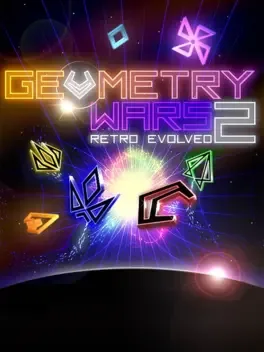
Geometry Wars: Retro Evolved 2 contains six different game modes: Deadline, King, Evolved, Pacifism, Waves and Sequence. Multiplayer was introduced in this sequel.
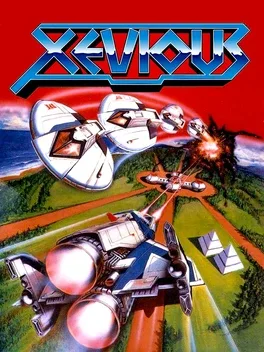
It's a nightmare, but it's true! Research shows that we are the actual aliens on Earth, and the ruthless Xevions are the original inhabitants. Now the Xevions want Earth back -- minus humans! Their invasion forces are fierce -- the land is crawling with deadly Domogram Rovers; the sky is black with Toroid Patrol Fleets and Zoshi Death Squads. Our puny weapons offer no defense. Earth's only hope is our powerful new Solvalou Fighter Plane. Its pilot will have a single mission: Penetrate the enemy ranks and destroy the Xevious Mother Ship. The mission is dangerous. We can't guarantee success. But at this point, it's do or die! One small problem. We still need a pilot. Any volunteers?
Space Invaders Extreme combines the captivating essence of the original game with a stunning alliance of futuristic graphic design and cutting-edge audio. The gameplay experience has been developed to maximise on the consoles' abilities, offering players a whole new range of amazing features including a vast array of new power-ups.
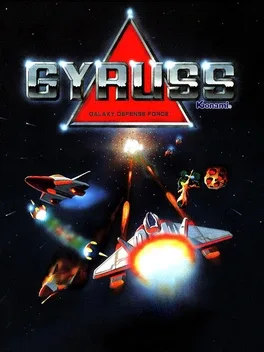
Gyruss is a shoot 'em up video arcade game developed by Konami, and released in 1983. It was designed by Yoshiki Okamoto, who had earlier created Time Pilot for Konami. Gyruss was licensed to Centuri in the United States, and was ported to numerous games consoles and home computers. It follows in the tradition of space war games such as Space Invaders and Galaga. Gyruss was the second and last game Yoshiki Okamoto designed for Konami, after Time Pilot. Due to pay disputes, he was fired after the release of this game, and soon joined Capcom, where he would write 1942 and the first Street Fighter game. The game's background music is an electronic, fast-paced arrangement of J. S. Bach's Toccata and Fugue in D minor, BWV 565; this particular arrangement is similar in sound to "Toccata", a rock arrangement by the UK-based instrumentalist group Sky. Gyruss is notable for using stereo sound, which according to the bonus material for Konami Arcade Classics, was achieved by utilizing discrete audio circuits. The game used three microprocessors: two Z80 microprocessors and one 6809, as well as an 8039 microcontroller. For the sound, five AY-3-8910 PSG sound chips and a DAC. Gyruss was released in both upright and cocktail cabinets. R.Hirst "KOO", M.Jones, "BOX" and the Elliott Brother's are arguably considered some of the best Gyruss players of the 1990's.