
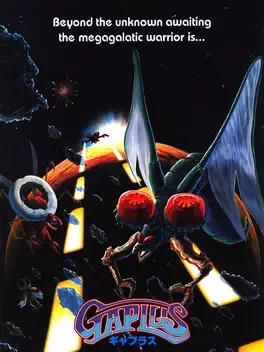
Gaplus


Buy
Part of collection:
Galaxian
(last 3 games)
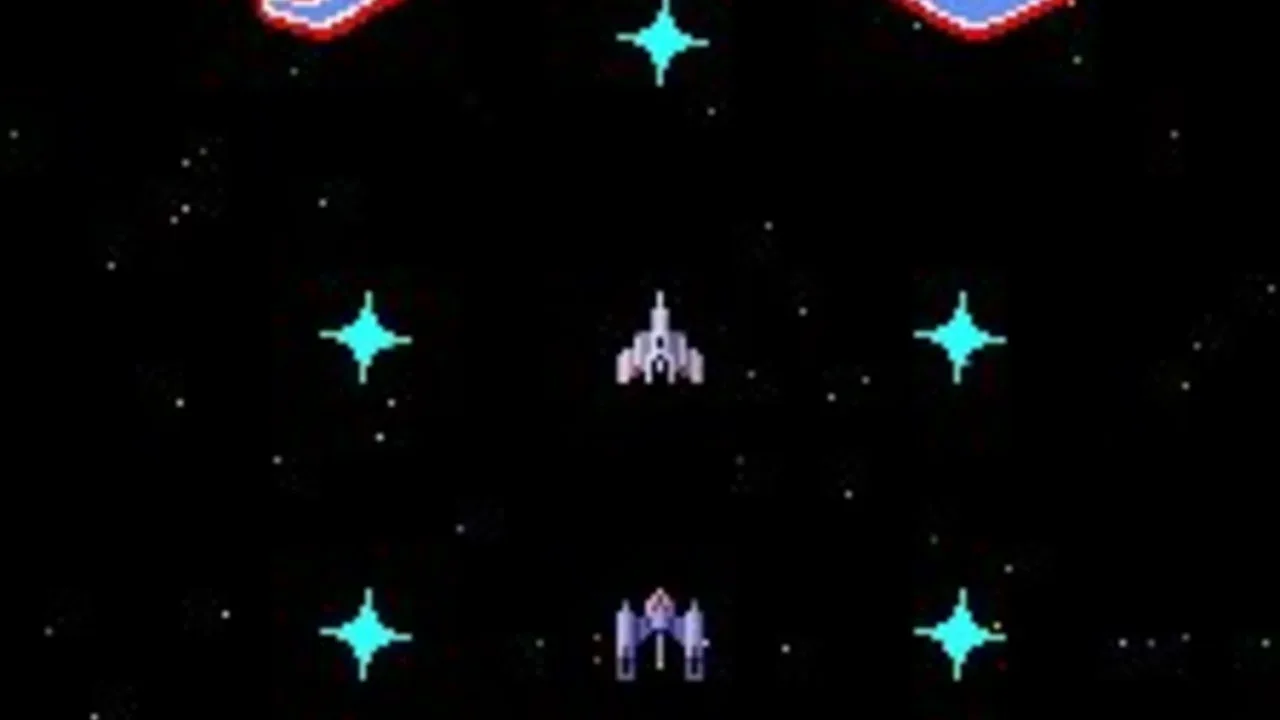
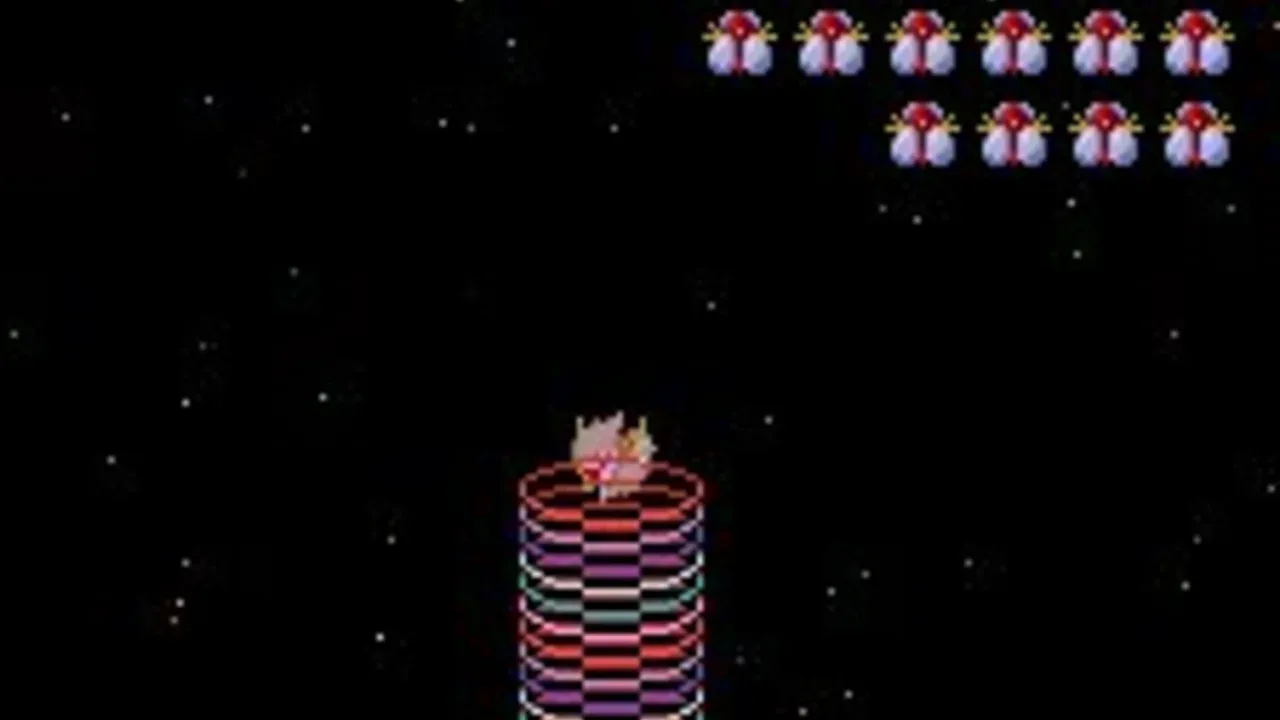
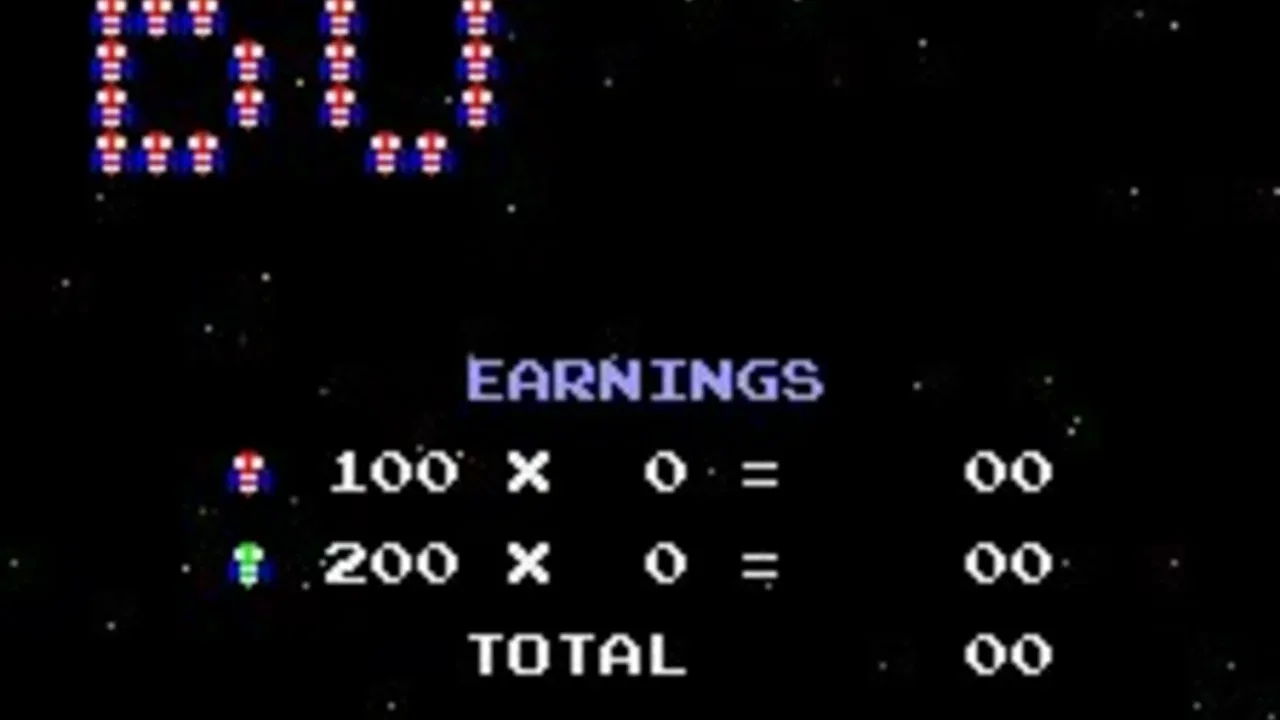
A port of Gaplus developed by M2 for the NES capabilities, released in Namco Museum Archives (Namcot Collection).
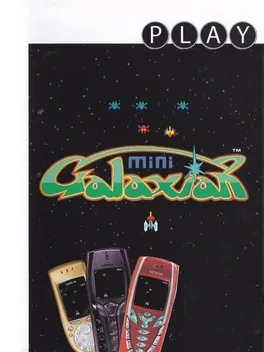
"Miniature" remake of Galaxian. Gameplay involves shooting down small formations of diving enemies.
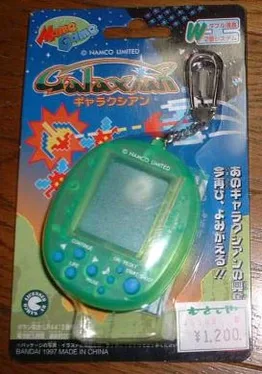
A port for handheld devices.
Part of collection:
Galaga
(last 3 games)
This is a special edition of Galaga Wars exclusively for Apple Arcade. It has no ads, and the microtransactions have been removed.

The galaxy is calling for you, it needs to be saved from waves of aliens. Jump in your ship and head to space. The survival of the universe is once more at stake. They have an alien mothership of immense proportions, endless waves of ships bristling with high-tech weaponry and of course the sheer power of the boss Galaga... You are the hero that will make it through those waves as if they were mere bricks. You are the breaker of this cycle and the savior of the galaxy Galaga Wars is a classic retro shooter that has been seen times and times in your favorite arcades. From pixel ships to more refined ones, have the feel of a casual runner mixed with the adrenaline of destroying enemies in the vast ocean of stars ATTACK through endless waves of original enemies, including the Bee, Butterfly, Scorpion and many more deadly ones. ENHANCE your weapons by upgrading and leveling up your craft. BLAST alien waves with 4 unique abilities per ship including laser, explosive shot, space mines, ghost shield...
Part of franchise:
Galaxian
(last 3 games)
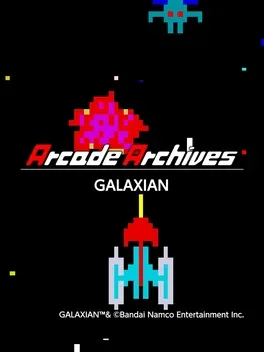
"Galaxian" is a shooting game released by Namco in 1979. You control a Galaxip and shoot aliens that approach you in eerie curves. Aliens during the assault double your score, and the flagship (Galboss) can be shot at in turn, starting with the escort (red alien), for a higher score. Deftly dodge enemy aliens and destroy the large formation.
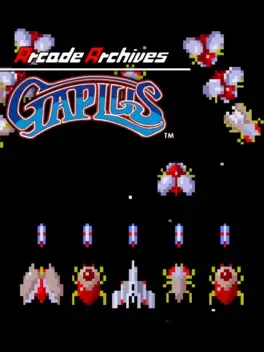
Strike back with powerful Blaster Head weapons!
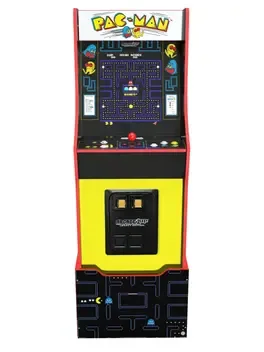
Pac-Man 12-in-1 Legacy Series is an arcade machine bundle by Arcade1Up that features various arcade games from Namco.
Could be interesting
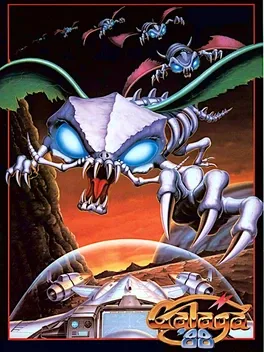
The gameplay in Galaga '88 is built on the same premise as that of the original Galaga game, but is in many ways more complex and more difficult. The game is divided into a series of 29 Stages distributed through eight Worlds. The starship Galaga accelerates between Stages and Worlds and even to higher dimensions (go to the section on Dimensional Travel below to find out more). With the exception of the third and eighth, each World culminates in a Challenging Stage. There are six such stages to engage in any full game, and each begins with the on-screen announcement "That's Galactic Dancin'!" and has its own YM2151-generated song to which the enemy formations dance. In any given Challenging Stage, both the design of the enemies and their dancing formations shall vary according to the player's current Dimension. As in Galaga, the objective is to destroy all forty enemies before they fly away off the screen. However, refraining completely from touching any controls for the duration of a Challenging Stage awards a "secret bonus" ranging in value from 10000 to 25000 points, and equal to the "special bonus" which would have been awarded for destroying all forty enemy aliens instead. Galaga '88 introduces a variety of new enemies and behaviors. Most of these special enemies are worth varying amounts of bonus points when destroyed. Some enemies can combine into larger enemies which take multiple hits to destroy, while others arrive in eggs, explode in a shower of fireworks, grow with multiple hits, or sport armor which makes them invincible while in formation. Certain enemies drop small formations of tiny creatures that wiggle their way down the screen, and still others can act as escorts to incoming groups of enemies and then quickly dive at the player before leaving the game. Most stages also include various obstacles which appear once the enemy formation has been assembled. These can be destroyed with either one or several shots, and the first one on each stage will leave a "Warp Capsule". At the start of the game, the player can select how many Galaga starships to start with (one or two), affecting their number of remaining lives. The game ends after the final boss is defeated (or when the player's last ship is destroyed or captured) - in the latter case, the player can continue the game for an additional credit. The Game Over screen shows the player's hit-miss ratio and a visual representation of their progress. If the player reaches Stage 27, the game also shows a picture of the final boss (damaged if defeated, but silhouetted if not). If the arcade operator has set the "continue" option to "on", the player also cannot continue if he is defeated on Stages 27-29.
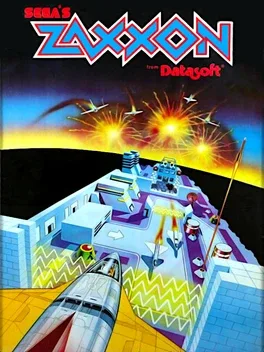
Zaxxon is a 1982 isometric shooter arcade game developed and released by Sega. The game gives the player the experience of flying a fighter craft through a fortress while shooting at enemy entities (missiles, enemy gunfire, etc.) The object of the game is to hit as many targets as possible without being shot down or running out of fuel, which can be replenished paradoxically, by blowing up fuel drums.
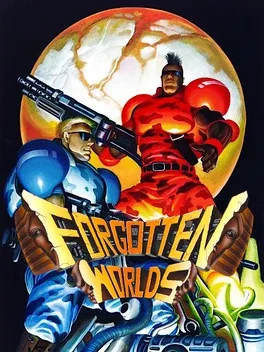
Forgotten Worlds can be played by up to two players simultaneously. The player controls a flying muscle-bound soldier armed with a rifle with unlimited ammo. The Player 1 character is equipped with a long-range automatic rifle, while Player 2 has a short-range wide shot. The controls in the original coin-op version consists of an eight-way joystick for moving the character in the air while flying and a unique rotatable button known as the "roll switch".Rotating the switch left or right allows the player to adjust their character's aim in one of sixteen directions, while pressing it causes the player character to shoot his gun. This allows for the player to move their character anywhere while keeping their aim in one direction. Pressing the switch rapidly will cause the character to perform a "megacrush" attack will destroy all on-screen enemies, but at the expense of a portion of their vitality gauge. The player character is accompanied by a satellite module orbiting near him that will provide backup firepower every time the player fires their gun. Like the main character, the satellite can also be rotated with the roll switch. Rotating the character while firing will only rotate the aim of the satellite, while rotating the character without firing will not only rotate the satellite's aim, it will also move its relative position around the player. The player can obtain blue-colored coins known as "zennies" from defeating enemies throughout the game. The zennies are used as currency to obtain new power-up items from shops located at certain points in each stage. When the player enters an item shop, they are given a choice of the items available and a limited time to make any purchase they wish. These items consists primarily of new weapons for the satellite module, but also includes a health kit to restore lost vitality, an armor that allows the player to sustain additional damage, and even tips on how to defeat the boss awaiting at the end of the current stage. Forgotten Worlds consists of five stages with a total of eight bosses. The player will lose if their vitality gauge runs out, but will be given a chance to continue.
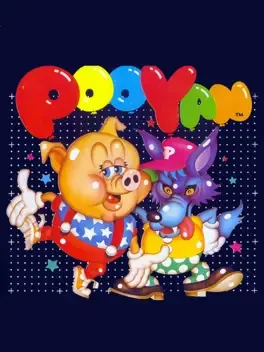
Pooyan is a classic arcade game manufactured by Stern Electronics under license from Konami in 1982. In it, the player controls "Mama", a pig whose babies have been kidnapped by a group of wolves.
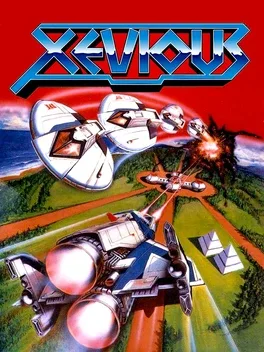
It's a nightmare, but it's true! Research shows that we are the actual aliens on Earth, and the ruthless Xevions are the original inhabitants. Now the Xevions want Earth back -- minus humans! Their invasion forces are fierce -- the land is crawling with deadly Domogram Rovers; the sky is black with Toroid Patrol Fleets and Zoshi Death Squads. Our puny weapons offer no defense. Earth's only hope is our powerful new Solvalou Fighter Plane. Its pilot will have a single mission: Penetrate the enemy ranks and destroy the Xevious Mother Ship. The mission is dangerous. We can't guarantee success. But at this point, it's do or die! One small problem. We still need a pilot. Any volunteers?
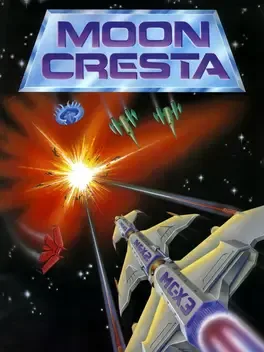
Moon Cresta is an arcade game released in 1980 by Nichibutsu. A moving starfield gives the impression of vertical scrolling, but the game is a fixed shooter in the vein of Namco's Galaxian. Incentive Software published a version of this arcade game for many 8-bit home computers of the time. Dempa also released a port of both Moon Cresta and Terra Cresta for the X68000. It was also released on the Wii Virtual Console in Japan on March 9, 2010 and PlayStation 4 (Arcade Archives) in 2014.
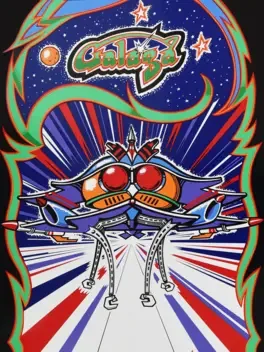
The objective of Galaga is to score as many points as possible by destroying insect-like enemies. The player controls a starfighter that can move left and right along the bottom of the playfield. Enemies swarm in groups in a formation near the top of the screen, and then begin flying down toward the player, firing bombs at the fighter. The game ends when the player's last fighter is lost, either by colliding with an enemy or one of its bullets, or by being captured. Galaga introduces a number of new features over its predecessor, Galaxian. Among these is the ability to fire more than one bullet at a time, a count of the player's "hit/miss ratio" at the end of the game, and a bonus "Challenging Stage" that occurs every few levels, in which a series of enemies fly onto and out of the screen in set patterns without firing at the player's ship or trying to crash into it. These stages award a large point bonus if the player manages to destroy every enemy. Another gameplay feature new to Galaga is the ability for enemies to capture the player's fighter. While the player is in control of just one fighter, a "boss Galaga" (which takes two shots to kill) periodically attempts to capture the fighter using a tractor beam. If successful, the fighter joins the enemy formation. If the player has more lives remaining, play resumes with a new fighter. The captured fighter flies down with the enemy that captured it, firing upon the player just like normal enemies, and can be shot and destroyed. The player can free the fighter by destroying the boss Galaga while in flight, causing the captured fighter to link up with the player's current fighter, doubling his or her firepower but also making a target twice as large. Galaga has an exploitable bug that can cause the attackers to stop firing bullets at the player, due to a coding error. In addition, similar to the famous "Split-Screen bug" in Pac-Man, a bug exists in Galaga in which the game "rolls over" from Level 255 to Level 0. Depending on the difficulty setting of the machine, this can cause the game to stall, requiring that the machine be reset or power-cycled in order to start a new game.
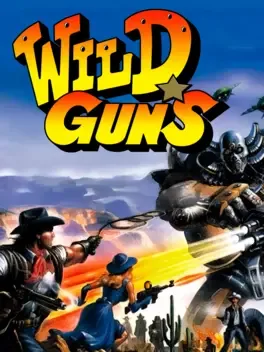
Released in 1994, Wild Guns is a shooting gallery video game for the Super Nintendo Entertainment System, developed by Natsume. Its setting is a unique blend of the Wild West, steampunk, and science fiction. The narrative revolves around Annie and Clint, a bounty hunter duo on a quest for vengeance after Annie's family is killed. Players can choose to control either Annie or Clint, navigating through the foreground, avoiding enemy fire, and taking down hostile robots in the background. This gameplay combines elements from third-person shooters and light gun games.
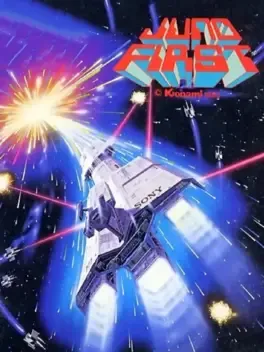
Juno First is a shoot 'em up originally developed and published by Konami Corporation for Arcades. The game was later published by Mylstar Electronics (US arcades), Datasoft Inc. (Atari 8-bit, PC Booter, and Commodore 64), and Sony Computer Entertainment Japan (MSX). Juno First is a top down, vertical scrolling shooter in which there is a limited amount of time to defeat the enemies in each wave. The players spaceship starts out with a laser that has a longer reach than the enemy weapons. The enemies start out firing a few bullets at the ship but the amount enemy fire rapidly increases as players progress through to the next waves. Certain enemies fire tracking missile-like projectiles that can shoot additional bullets.

You are Frald Rancer and control a space ship which must journey from your home planet to outer space to defeat enemy invaders. Once all the enemies are defeated then return home. The game moves in a forward direction where the screen objects move towards and down to the player. Approaching enemy ships are small, in the distance, and become larger and move faster as they approach the player. The player controls a fighter at the bottom of the screen, which can only move from side to side. Shots can be fired at a diagonal, as well as straight, by twisting the joystick from side to side. At certain stages, ground targets will appear and can be destroyed by using the "Burn" button. The laser disc generated backgrounds are largely non-interactive during game play. They form the backgrounds on which the game is played on. Scenes do work in with the backgrounds, however that is the extent. Some backgrounds appear as they should have elements of interactively, however, were not used in the release of the game. These include scenes where the player is going through an asteroid field and asteroids fly towards the player. Another scene is in the crystal caverns, where there are many obstacles which could have been made to be avoided. These are only two of many scenes which could have had interactive elements. The game may have been decided to have been too hard to play with these background obstacles and computer fighters to play. Hence removing the background interactively to make the game more playable. The game starts with the player in Frald Rancer's home city, then taking off into outer space via a fly-by of the city. The backgrounds are very Sci-Fi and are fantasy themed. They are very interesting, more so than the game. The music from the laser disc also complements the laser disc video very well and makes up for the sometimes annoying, computer generated sounds.