
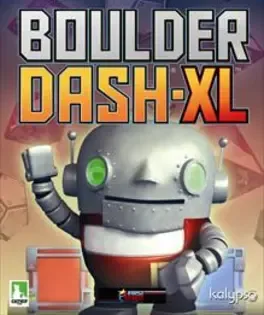
Boulder Dash-XL
Buy
Part of collection:
Boulder Dash
(last 3 games)
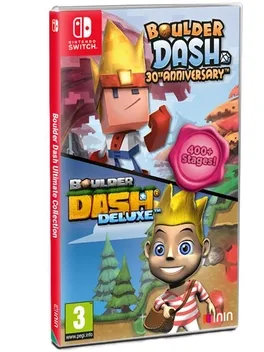
Boulder dash Ultimate Collection for the Nintendo Switch includes two Boulder Dash titles, the Boulder Dash 30th Anniversary and Boulder Dash Deluxe. The game features more than 400 newly designed levels across two games!
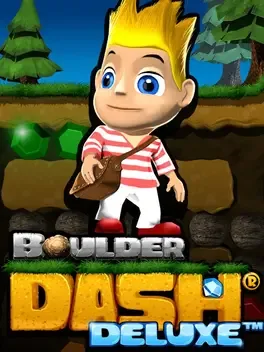
The retro game and legendary action puzzler for players young and more experienced alike arrived, combining up-to date-graphics with original game features – spanning 35+ years of Rockford and his friends, digging though caves to collect gems - Boulder Dash Deluxe!
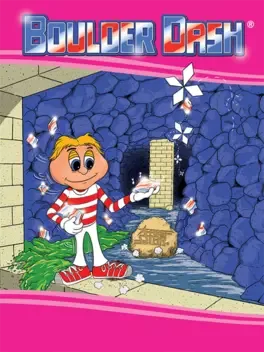
Intellivision port of Boulder Dash
Could be interesting
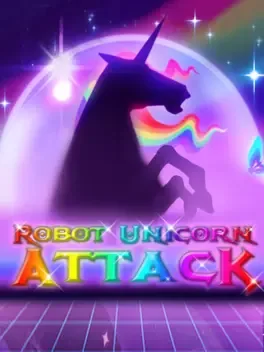
Robot Unicorn Attack is a colorful, fast paced, score-attack platforming game that prominently features a prancing mechanical Unicorn with 3 wishes and a pocket full of dreams, gratuitous dolphins, and Erasure's song, "Always".
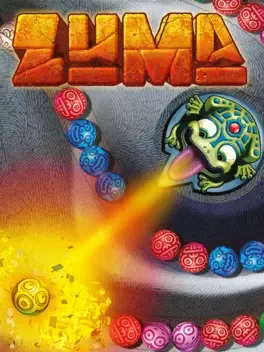
Survive the ancient temples of Zuma, the critically acclaimed action-puzzler from PopCap! Deep in the jungle lie hidden temples bursting with traps and trickery, and it's up to you to uncover their treasures. Fire magical balls from your stone frog idol to make matches of three or more and clear the deadly chain before it reaches the golden skull.
Waves is a twin stick shooter that can be played by anyone, but with a high enough skill threshold to keep even the most hardened shooter fan entertained. Clear the arena of enemies while racking up a big fat Combo with swift kills and well timed Bombs. If it all gets a bit too much you can use your Time Buffer to slow down the action and turn defeat into victory. Players can compete across seven different game modes with online high-score tables and Achievements in their pursuit of twin-stick perfection.
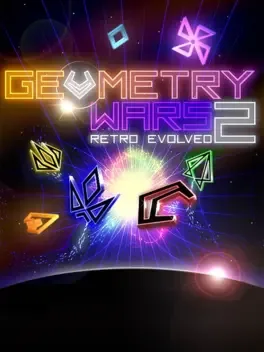
Geometry Wars: Retro Evolved 2 contains six different game modes: Deadline, King, Evolved, Pacifism, Waves and Sequence. Multiplayer was introduced in this sequel.
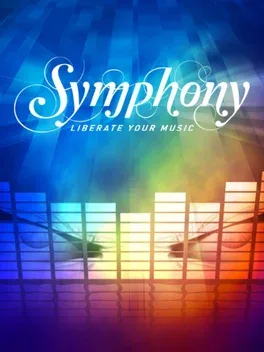
Your music is under attack… You must liberate it! In Symphony, you fight through levels uniquely generated by your own song collection, discover items and vanquish bosses to defeat the evil within! With Symphony, we wanted to push the limits of user-music-based gameplay and focused on two concepts: Your music creates the game Every song has a unique emotion, sound and rhythm, and we wanted the gameplay to capture that as fully as possible. When your music gets intense or calmer, so does the gameplay. Enemies appear and shoot on the beat of the music. Some weapons are music-driven. Each song has its personality and it directly translates into gameplay. Replayability In Symphony, each song in your collection not only becomes a unique level, but also provides you with an item you can equip and challenges you with score targets to reach. As you progress through the game, you unlock new difficulty levels, new items and abilities! This means you have many reasons to play your favorite song over and over.
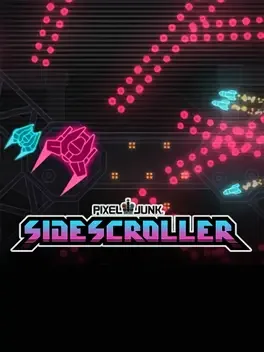
PixelJunk SideScroller is a side-scrolling shoot 'em up game developed by Q-Games for the PlayStation 3 as part of the PixelJunk series. It was released on the PlayStation Store on 25 October 2011 in North America and 26 October 2011 in Europe. Visually, it is designed to resemble old vector-based games and is based on the "Road to Dawn" bonus stage in PixelJunk Shooter 2.
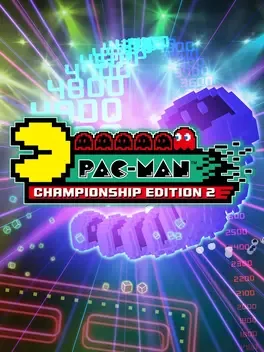
The much-awaited sequel to Pac-Man Championship Edition! Featuring eye-popping 3D graphics and funky visuals! New modes include Score Attack and an Adventure mode!
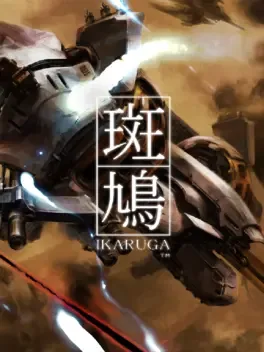
In this vertical scrolling spaceship shooter, you control a ship that can change its polarity at will. As blue/white, the ship can easily destroy red/black enemies, and vice versa. Bullets of your polarity can be collected to fuel your energy gauge, but those opposite will kill you. Destroying an enemy ship causes them to fire revenge bullets which can be absorbed and fired back by the player. Different difficulties exist to change exactly how you interact with polarized points, or how they appear. It is the spiritual successor to Radiant Silvergun, featuring similar level and boss design, as well as it's buddhism inspired themes and aesthetics. Both are directed by Hiroshi Iuchi, who also composed Ikaruga's soundtrack.
High-speed action-packed game play returns with the addition of exciting head-to-head battle modes, a challenging new time attack mode, and expanded game play progression that goes beyond Fever Time to SUPER FEVER TIME! Space Invaders Extreme 2 - faster and more exhilarating than ever before!
A sequel to Street Fighter, Street Fighter II improved upon the many concepts introduced in the first game, including the use of command-based special moves and a six-button configuration, while offering players a selection of multiple playable characters, each with their own unique fighting style and special moves. Street Fighter II is credited with starting the fighting game boom during the 1990s. Its success led to the production of several updated versions, each offering additional features and characters over previous versions, as well as many home versions. Some home versions of the Street Fighter II games have sold millions of copies, with the SNES port of the first Street Fighter II being Capcom's best-selling consumer game of all time as of 2008. Street Fighter II follows several of the conventions and rules already established by its original 1987 predecessor. The player engages opponents in one-on-one, close-quarters combat in a series of best-of-two-out-of-three matches. The objective of each round is to deplete the opponent's vitality before the timer runs out. If both opponents knock each other out at the same time or the timer runs out with both fighters having an equal amount of vitality left, a "double KO" or "draw game" is declared. Additional rounds will be played until sudden death. In the first Street Fighter II, a match could last up to 10 rounds if there was no clear winner; this was reduced to 4 rounds in the Champion Edition and onward. If there is no clear winner by the end of the final round, then either the computer-controlled opponent will win by default in a single-player match, or both fighters will lose in a 2-player match. After every third match in single-player mode, the player will participate in a "bonus game" for additional points. The bonus games include (in order) a car-breaking event; a barrel-breaking bonus game where the barrels are dropped off from a conveyor belt above the player; and a drum-breaking bonus game where drums are flammable and piled over each other. The bonus games were removed from the arcade version of Super Street Fighter II Turbo. As in the original, the game's controls use an eight-directional joystick and six attack buttons. The player uses the joystick to jump, crouch, move the character towards or away from the opponent, and guard against the opponent's attacks. There are three punch buttons and three kick buttons, each with varying strength and speed (Light, Medium, and Heavy). The player can perform a variety of basic moves in any position, including grabbing/throwing attacks, which were not featured in the original Street Fighter. Like in the original, the player can perform special moves by inputting a combination of directional and button-based commands. Street Fighter II differs from the original in that it features multiple playable characters, each with distinct fighting styles and special moves. Additionally, the player can "cancel" an animation by performing another move, enabling combinations of basic and special moves. Both of these features would be expanded upon in subsequent installments.