
Dancing Stage EuroMix


Buy
Parent game
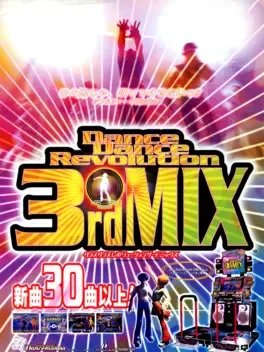
Dance Dance Revolution 3rdMix, or 3rdMix, is the 3rd game in the Dance Dance Revolution series of music video games. It was released in the arcades by Konami on October 30, 1999. Although only officially released in Japan, units exist worldwide. It has a total of 68 songs, 35 of which were new to Dance Dance Revolution. The core gameplay of 3rdMix is the same as the previous Dance Dance Revolution games. 3rdMix featured a brand new scoring system, instead of being heavily combo-based like the last two mixes, combos are of virtually no importance. The maximum score for each song is 10,000,000 (all Perfects). Perfects are worth twice as many points as Greats, and steps toward the end are worth progressively higher points than steps toward the beginning. In nonstop mode, a 2x, 3x and 4x multiplier apply to the 2nd, 3rd and 4th songs respectively, making a perfect nonstop worth 100,000,000 points. 3rdMix was also the first version of DDR where different beats (compared to a 4-beat register) alternate different colors, making 1/4, 1/8, 1/12 and 1/16 steps look different and making it easier for the player to recognize changing rhythms. This color scheme is called "vivid" mode, whereby the old scheme of all arrows being the same color is henceforth referred to as "flat" mode. Flat appears as an option and modifier in later versions of DDR. This release marked the first time lyrics were displayed during gameplay for every song. This can be turned on or off by the arcade operator. This feature was later dropped from future arcade mixes, although some home versions contain this as an option, and most European Dancing Stage versions contain this on by default. 3rdMix also allowed to choose characters, and while their purpose is for the most part aesthetical, the chosen character affects which beatmania remix song can be played at one playthorugh.
Part of collection:
Dancing Stage
(last 3 games)
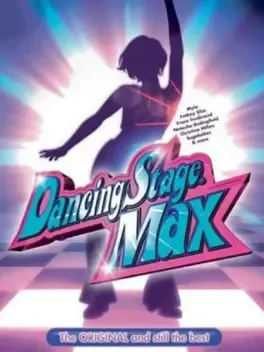
Dancing Stage Max was released on November 25, 2005 by Konami to the European PlayStation 2 gaming audience. Dancing Stage Max was modeled after Dance Dance Revolution Extreme 2 in America and Dance Dance Revolution Strike in Japan, containing the new Dance Master Mode and improved EyeToy support. Max featured music by Natasha Bedingfield, Sugababes and Franz Ferdinand as well as new and old Konami Originals. Unlike the previous release, Dancing Stage Fusion, Max was not ported to the arcades.
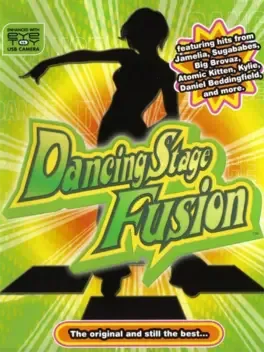
Dancing Stage Fusion, abbreviated DS Fusion or simply Fusion, is a music video game released by Konami to the European PlayStation and PlayStation 2 gaming audience on November 5, 2004. In April of the following year, Dancing Stage Fusion was released as an arcade game. Fusion featured new gameplay features such as EyeToy support for the PlayStation 2 release as well as new music from hit pop artists. The arcade version of Fusion was the first arcade machine in Europe since Dancing Stage EuroMix 2 and set a milestone as the first Dance Dance Revolution arcade machine produced by Konami since Dance Dance Revolution Extreme in 2002. The arcade release marked a total game engine upgrade from the old PlayStation-based boards to a new system built on top of an off-the-shelf PlayStation 2. This hardware upgrade would be later featured in the global release of Dance Dance Revolution SuperNova in 2006.
Dancing Stage Fever is the second European DDR game to be released for the PlayStation 2, although a port for PlayStation was also released. The PS2 edition uses a recolored DDRMAX2 engine with an aqua blue background complemented with star motifs instead of black and gray, while the PS edition uses a recolored DDR 4thMix engine. Also, the PS edition omits freeze arrows and full motion videos. The PlayStation 2 edition has 29 songs: 8 licenses, 16 Konami originals (of which 14 are also on Dancing Stage SuperNova for arcades) and 5 Bemani crossovers (of which 4 are also on Dancing Stage SuperNova for arcades). The PlayStation edition only features 15 of these songs: 5 licenses, 8 Konami originals and 2 Bemani crossovers. All licensed songs, with one exception, are exclusive to Fever. Both Fever releases include "All That She Wants", "Cool for Cats", "One Step Beyond" and "Virtuality" (by VBirds). On the PlayStation 2, these songs feature their music video, except for "Cool for Cats". The "Virtuality" music video notably shows the VBirds members dancing on flying dance pads to the rhythm of the arrows shown on screen.[3] The PlayStation 2 version also exclusively features "Come On Eileen", "Teenage Kicks" (with its music video) and "The Boys Are Back in Town". "Wannabe" was once exclusive to both Fever releases, but it was later included on Dance Dance Revolution Party Collection.
Could be interesting
The dance floor kicks into overdrive with DDRMAX2 Dance Dance Revolution. It is the latest installment of the highly anticipated DDR series and takes the revolution to the masses! Players can customize their own dance steps and workout in an innovative Exercise Mode. DDR is packed with a smash-hit lineup of all-new exclusive songs, licensed music and dance hits. There are cool contemporary game modes and brand new graphical interfaces featuring music videos that will keep everybody movin' and groovin' to the pulsating beats. DDR Max 2 also includes links to previous games for special features.
Dance Dance Revolution (ダンスダンスレボリューション Dansu Dansu Reboryūshon?), abbreviated DDR and also known as Dancing Stage in earlier games in Europe and Australasia, and some other games in Japan, is a music video game series produced by Konami. Introduced in Japan in 1998 as part of the Bemani series, and released in North America and Europe in 1999, Dance Dance Revolution is the pioneering series of the rhythm and dance genre in video games. Players stand on a "dance platform" or stage and hit colored arrows laid out in a cross with their feet to musical and visual cues. Players are judged by how well they time their dance to the patterns presented to them and are allowed to choose more music to play to if they receive a passing score. Dance Dance Revolution has been given much critical acclaim for its originality and stamina in the video game market. There have been dozens of arcade-based releases across several countries and hundreds of home video game console releases, promoting a music library of original songs produced by Konami's in-house artists and an eclectic set of licensed music from many different genres. The DDR series has inspired similar games such as Pump It Up by Andamiro and In the Groove by Roxor

Just Dance 2021 is the ultimate dance game, with 40 hot new tracks from chart-topping hits from artists like Dua Lipa, Twice, Shawn Mendes and Billie Eilish. Start dancing right away in quickplay mode or join the improved dance floor where you can challenge other dancers from all over the world. Time to start a dance party your friends and family can enjoy!

An action-dance VR rhythm game with custom song support and a thriving multiplayer community.

Jump into a host of fun-packed party modes for up to eight players that turn any night into a celebration. Whether you're performing a duet with a partner or recording your performance with the PlayStation Camera to upload to the online community, SingStar Celebration is the perfect way to unleash your inner pop star.

SingStar Vol.2 is the sequel to the first SingStar on PS3. It's a karaoke game, giving points which are distributed by the purity of singing, as in how well does one manage to stay on tune. It doesn't matter if you change octaves in the middle of the song or what words are you singing in (it doesn't have a word recognition), so your singing is rated by how well you manage to hit the correct note at the correct time. There's a new mode called Harmony Duet, in which two players sing different lines of the same song, at the same time.

SingStar: Amped is a karaoke game, featuring rock music. The German and US versions have a number of different included songs. The main focus of the game is singing those songs as good as one can. The game gives points which are distributed by the purity of singing, as in how well does one manage to stay on tune. It doesn't matter if you change octaves in the middle of the song or what words are you singing in (it doesn't have a word recognition), so your singing is rated by how well you manage to hit the correct note at the correct time.

SingStar '90 is a karaoke game featuring hit songs from the nineties. The game gives points which are distributed by the purity of singing, as in how well does one manage to stay on tune. It doesn't matter if you change octaves in the middle of the song or what words are you singing in (it doesn't have a word recognition), so your singing is rated by how well you manage to hit the correct note at the correct time.

Singstar Legends offers yet another patch of songs to sing in this 7th game of the series. The objective of the game is to sing songs and sing them well. The game gives points according to player's performance. There is three difficulty levels to choose from, the easiest one being very forgiving.

The main focus of the game is singing those songs as good as one can. The game gives points which are distributed by the purity of singing, as in how well does one manage to stay on tune. It doesn't matter if you change octaves in the middle of the song or what words are you singing in (it doesn't have a word recognition), so your singing is rated by how well you manage to hit the correct note at the correct time.