
Dancing Stage Max


Buy
Parent game
In addition to including features from the previous game, PS2 gamers will now have the opportunity to participate in exciting head-to-head DDR online competitions for the first time ever. The 100 top scorers will be recognized through an interactive ranking system, letting novice players test their dancing mettle against top-notch DDR experts. Players can also go online to access new challenge missions which will be refreshed periodically, allowing players a way to continually expand the DDR gaming experience. Whether players are looking to dance to the hottest tracks in town, choreograph, edit and create their own dance steps, or use the 'Work Out' mode to burn off excess pounds, DDR STR!KE will offer players of all ages an interactive and fun way to get up and groove. The game's support for the EyeToy Camera continues to add depth and dimension to the gameplay. While using the camera, players can access fast-paced mini games and use both their hands and feet while dancing and watching themselves on TV. Keeping players on the dance mat is more than 100 minutes of energetic dance music, including exclusively-licensed dance hits as well as smash-hit songs, such as "Genie In A Bottle" and "Oops!...I Did It Again." Also adding to the impressive line-up of songs is new music by the famous video game musician Yuzo Koshiro, whose credits include composing music for hit games such as Streets of Rage series, Revenge of Shinobi and Shenmue.
Part of collection:
Dancing Stage
(last 3 games)
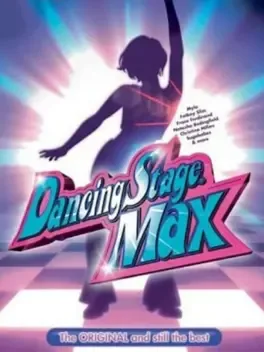
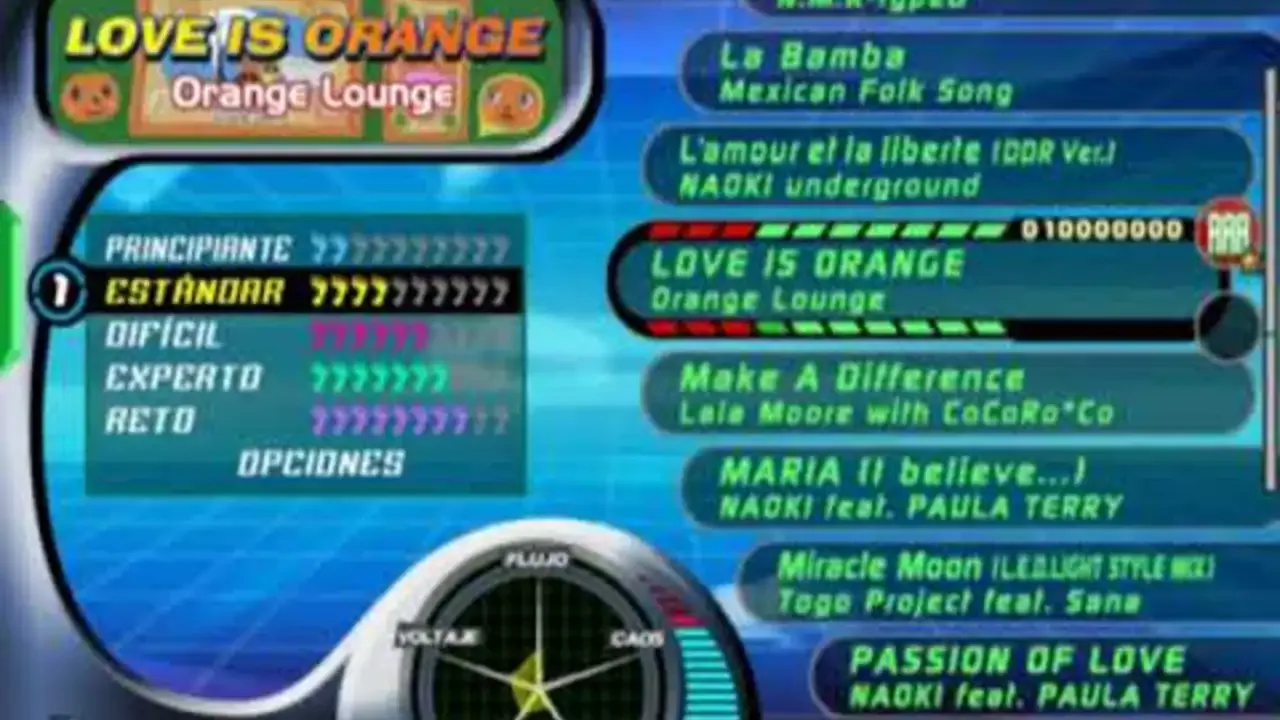
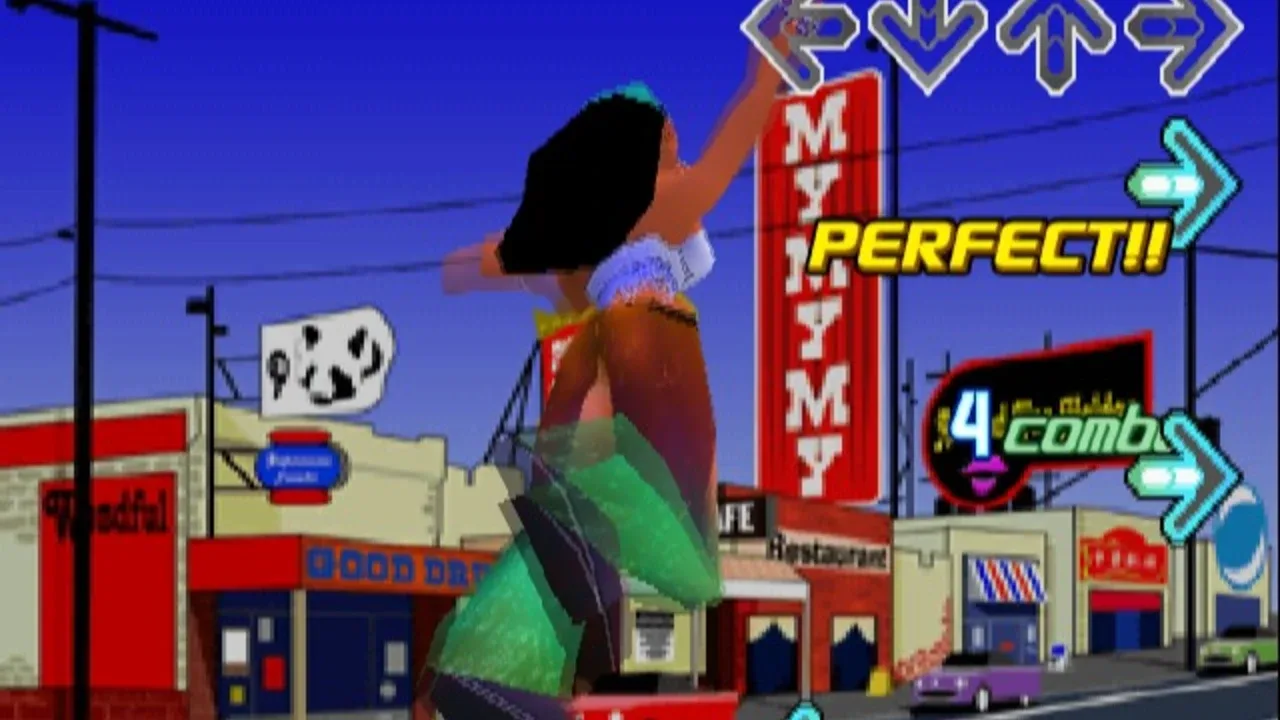
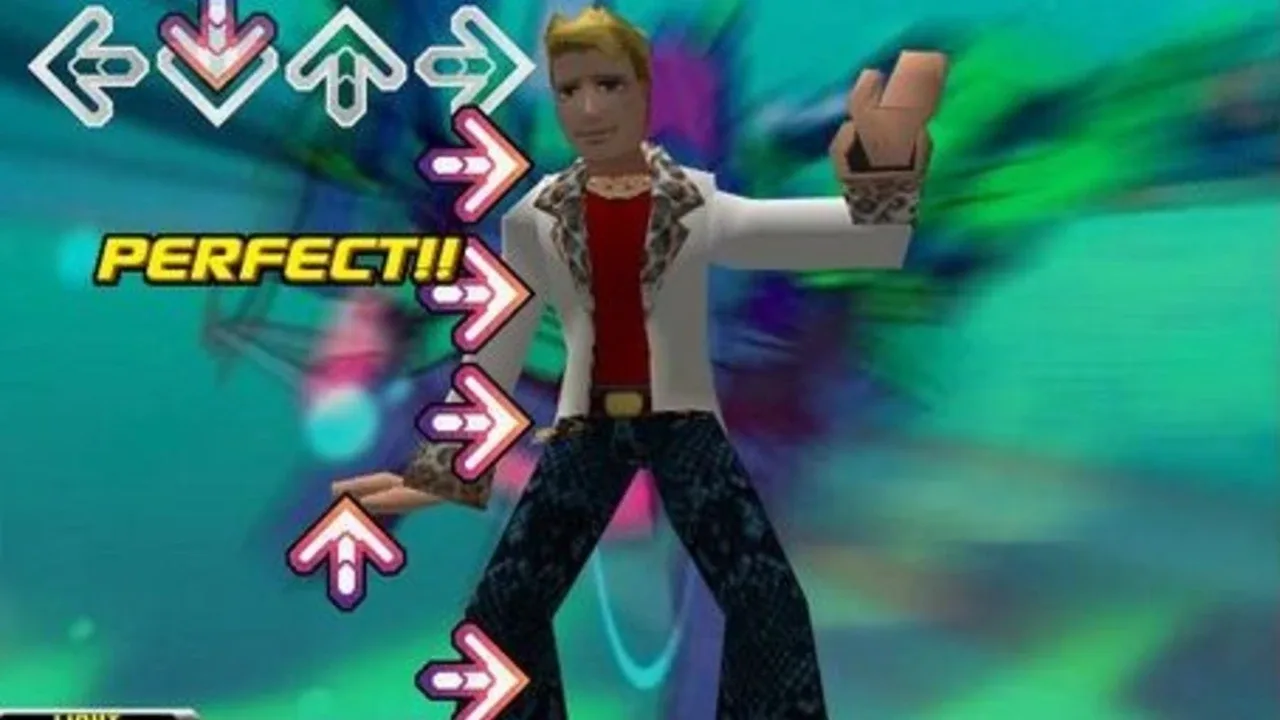
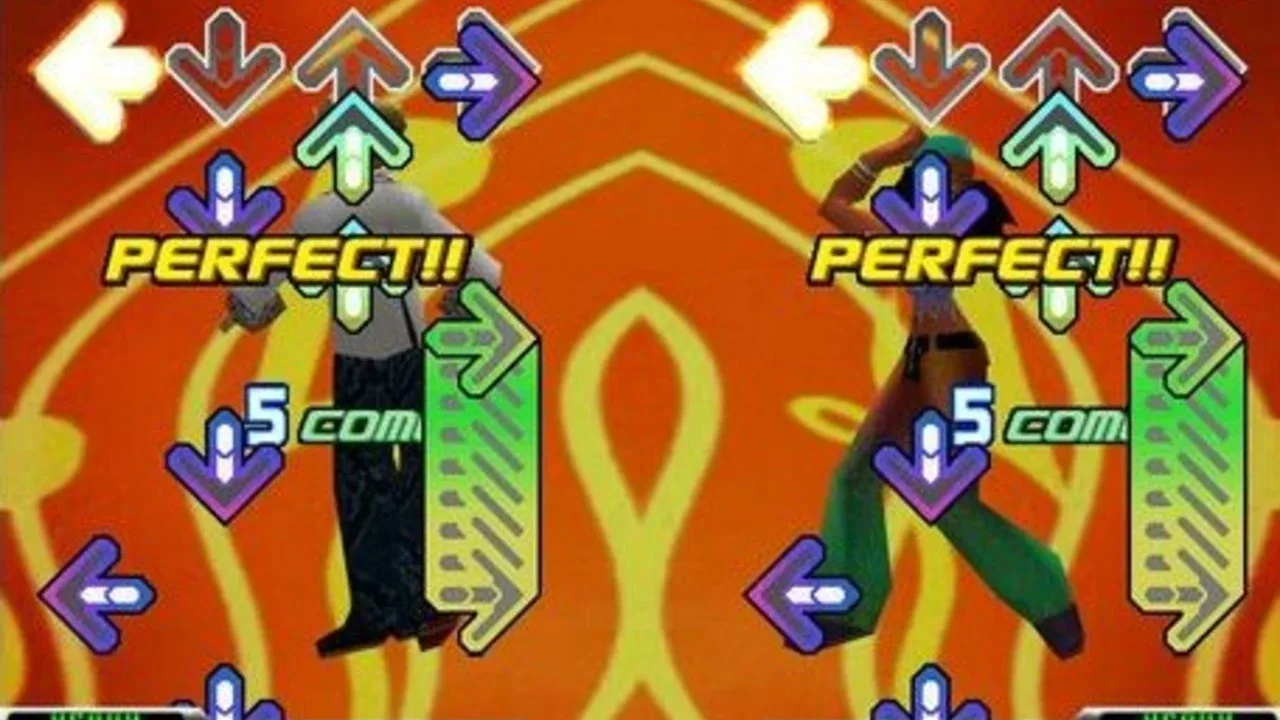
Dancing Stage Max was released on November 25, 2005 by Konami to the European PlayStation 2 gaming audience. Dancing Stage Max was modeled after Dance Dance Revolution Extreme 2 in America and Dance Dance Revolution Strike in Japan, containing the new Dance Master Mode and improved EyeToy support. Max featured music by Natasha Bedingfield, Sugababes and Franz Ferdinand as well as new and old Konami Originals. Unlike the previous release, Dancing Stage Fusion, Max was not ported to the arcades.
Dancing Stage Fusion, abbreviated DS Fusion or simply Fusion, is a music video game released by Konami to the European PlayStation and PlayStation 2 gaming audience on November 5, 2004. In April of the following year, Dancing Stage Fusion was released as an arcade game. Fusion featured new gameplay features such as EyeToy support for the PlayStation 2 release as well as new music from hit pop artists. The arcade version of Fusion was the first arcade machine in Europe since Dancing Stage EuroMix 2 and set a milestone as the first Dance Dance Revolution arcade machine produced by Konami since Dance Dance Revolution Extreme in 2002. The arcade release marked a total game engine upgrade from the old PlayStation-based boards to a new system built on top of an off-the-shelf PlayStation 2. This hardware upgrade would be later featured in the global release of Dance Dance Revolution SuperNova in 2006.
Dancing Stage Fever is the second European DDR game to be released for the PlayStation 2, although a port for PlayStation was also released. The PS2 edition uses a recolored DDRMAX2 engine with an aqua blue background complemented with star motifs instead of black and gray, while the PS edition uses a recolored DDR 4thMix engine. Also, the PS edition omits freeze arrows and full motion videos. The PlayStation 2 edition has 29 songs: 8 licenses, 16 Konami originals (of which 14 are also on Dancing Stage SuperNova for arcades) and 5 Bemani crossovers (of which 4 are also on Dancing Stage SuperNova for arcades). The PlayStation edition only features 15 of these songs: 5 licenses, 8 Konami originals and 2 Bemani crossovers. All licensed songs, with one exception, are exclusive to Fever. Both Fever releases include "All That She Wants", "Cool for Cats", "One Step Beyond" and "Virtuality" (by VBirds). On the PlayStation 2, these songs feature their music video, except for "Cool for Cats". The "Virtuality" music video notably shows the VBirds members dancing on flying dance pads to the rhythm of the arrows shown on screen.[3] The PlayStation 2 version also exclusively features "Come On Eileen", "Teenage Kicks" (with its music video) and "The Boys Are Back in Town". "Wannabe" was once exclusive to both Fever releases, but it was later included on Dance Dance Revolution Party Collection.
Could be interesting
In addition to including features from the previous game, PS2 gamers will now have the opportunity to participate in exciting head-to-head DDR online competitions for the first time ever. The 100 top scorers will be recognized through an interactive ranking system, letting novice players test their dancing mettle against top-notch DDR experts. Players can also go online to access new challenge missions which will be refreshed periodically, allowing players a way to continually expand the DDR gaming experience. Whether players are looking to dance to the hottest tracks in town, choreograph, edit and create their own dance steps, or use the 'Work Out' mode to burn off excess pounds, DDR STR!KE will offer players of all ages an interactive and fun way to get up and groove. The game's support for the EyeToy Camera continues to add depth and dimension to the gameplay. While using the camera, players can access fast-paced mini games and use both their hands and feet while dancing and watching themselves on TV. Keeping players on the dance mat is more than 100 minutes of energetic dance music, including exclusively-licensed dance hits as well as smash-hit songs, such as "Genie In A Bottle" and "Oops!...I Did It Again." Also adding to the impressive line-up of songs is new music by the famous video game musician Yuzo Koshiro, whose credits include composing music for hit games such as Streets of Rage series, Revenge of Shinobi and Shenmue.
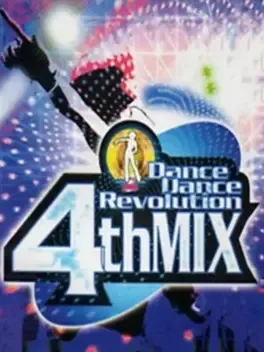
Dance Dance Revolution 4thMix, or 4thMix, is the 4th game in the main Dance Dance Revolution series of music video games. It was released as an arcade game by Konami on August 24, 2000. Although only officially released in Japan, units exist worldwide. 4thMix features 136 songs, 49 of which are new to this mix. Twelve of the songs are initially hidden and must be unlocked by the arcade operator. 12 songs are unlockable in 4th Mix Plus, giving them 150 songs in total. In DDR 4th Mix, new songs that first appears in DDR 3rd Mix Plus, DDR 3rd Mix Korea and DDR Solo appears in this mix. The home version of 4thMix was released in Japan on March 15, 2001, for the Sony PlayStation console. It contains 55 songs, including 3 from Dance Dance Revolution 3rdMix (which were not present in the home version of that version) and six hidden songs: one from 4thMix Plus and one as preview songs for the next arcade version, Dance Dance Revolution 5thMix. The game also features the 6-panel mode, branded as Solo Mode.
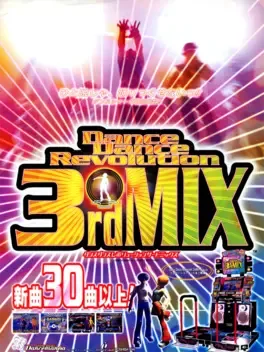
Dance Dance Revolution 3rdMix, or 3rdMix, is the 3rd game in the Dance Dance Revolution series of music video games. It was released in the arcades by Konami on October 30, 1999. Although only officially released in Japan, units exist worldwide. It has a total of 68 songs, 35 of which were new to Dance Dance Revolution. The core gameplay of 3rdMix is the same as the previous Dance Dance Revolution games. 3rdMix featured a brand new scoring system, instead of being heavily combo-based like the last two mixes, combos are of virtually no importance. The maximum score for each song is 10,000,000 (all Perfects). Perfects are worth twice as many points as Greats, and steps toward the end are worth progressively higher points than steps toward the beginning. In nonstop mode, a 2x, 3x and 4x multiplier apply to the 2nd, 3rd and 4th songs respectively, making a perfect nonstop worth 100,000,000 points. 3rdMix was also the first version of DDR where different beats (compared to a 4-beat register) alternate different colors, making 1/4, 1/8, 1/12 and 1/16 steps look different and making it easier for the player to recognize changing rhythms. This color scheme is called "vivid" mode, whereby the old scheme of all arrows being the same color is henceforth referred to as "flat" mode. Flat appears as an option and modifier in later versions of DDR. This release marked the first time lyrics were displayed during gameplay for every song. This can be turned on or off by the arcade operator. This feature was later dropped from future arcade mixes, although some home versions contain this as an option, and most European Dancing Stage versions contain this on by default. 3rdMix also allowed to choose characters, and while their purpose is for the most part aesthetical, the chosen character affects which beatmania remix song can be played at one playthorugh.
Just Dance 2022, the ultimate dance game, is back with new universes and 40 hot new tracks from chart-topping hits like "Believer" by Imagine Dragons, "Level Up" by Ciara, and more! Looking to share some fun with friends and family? Just Dance 2022 is for you!
Enjoy the cult classic arcade rhythm game from Japan in the comfort of your own home! Play to the beat using your own drum with a wide variety of new songs and challenge your friends to prove who has the best taiko skills. Use motion controls to enjoy Taiko like never before! Unlock beloved characters to help you on your journey to become a legendary taiko drummer! Utilize the interactive features of the Nintendo Switch to connect, share, and play with family and friends.
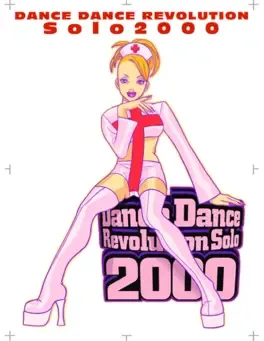
Dance Dance Revolution Solo 2000 is the second special one-player version of the Dance Dance Revolution series of music video games. It was released as an arcade game by Konami on December 15, 1999. Although only officially released in Japan, units exist worldwide. DDR Solo 2000 features 36 songs, 20 of which are new to Dance Dance Revolution.
Dance Dance Revolution Solo Bass Mix is the first special one-player version of the Dance Dance Revolution series of music video games. It was released as an arcade game by Konami on August 19, 1999. Although only officially released in Japan, units exist worldwide. DDR Solo Bass Mix features 16 songs, all of which are new to Dance Dance Revolution. Most of the music comes from the Dancemania BASS albums,hence the name "Solo Bass Mix". A Solo Bass Mix machine can be upgraded to DDR Solo 2000. This is the first game that features a live-action intro.
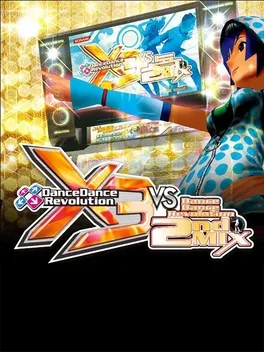
Dance Dance Revolution X3 is a music video game, and a part of the Dance Dance Revolution series. The arcade version of DDR X3 was revealed by Konami on June 2, 2011. The sequel to Dance Dance Revolution X2, X3 began public beta testing on June 8, 2011. Promotional information for the game revealed the full name for the game, called Dance Dance Revolution X3 VS 2ndMix due to the new "2ndMix" mode in the game. It was released in Japan on November 16, 2011 for dedicated cabinets and November 30, 2011 for upgrade kits, and December 16, 2011 in Asia.
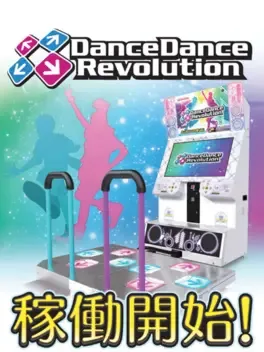
Dance Dance Revolution is a music video game, the 14th installment of the Dance Dance Revolution series, and the sequel to Dance Dance Revolution X3 VS 2ndMix. The game was revealed by Konami on October 24, 2012. Public beta testing commenced on October 26, 2012. It was released in Japan on March 14 and 21, 2013 for dedicated cabinets and upgrade kits, respectively, and in Asia on March 21, 2013. A limited test release occurred at select locations in the United States, beginning on August 4, 2015.
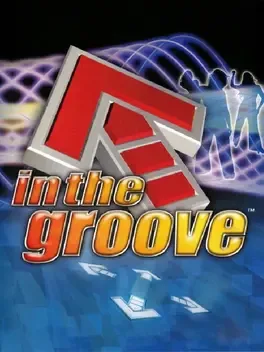
In the Groove (abbreviated ITG) is the first game in the In the Groove franchise, published by RedOctane and developed by Roxor Games, and first released in video arcades around August 30, 2004.