
Deal or No Deal


Buy
Part of collection:
Deal or No Deal
(last 3 games)

A simple web browser edition of the game show Deal or No Deal.

No info
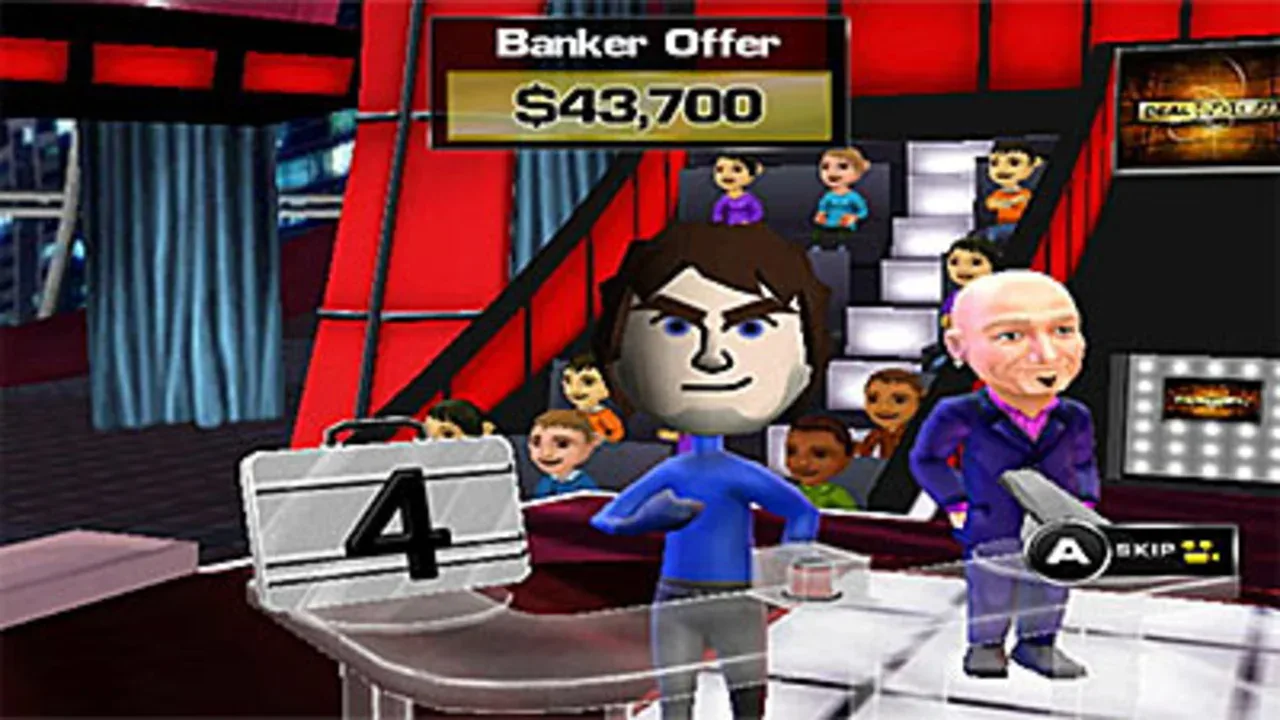
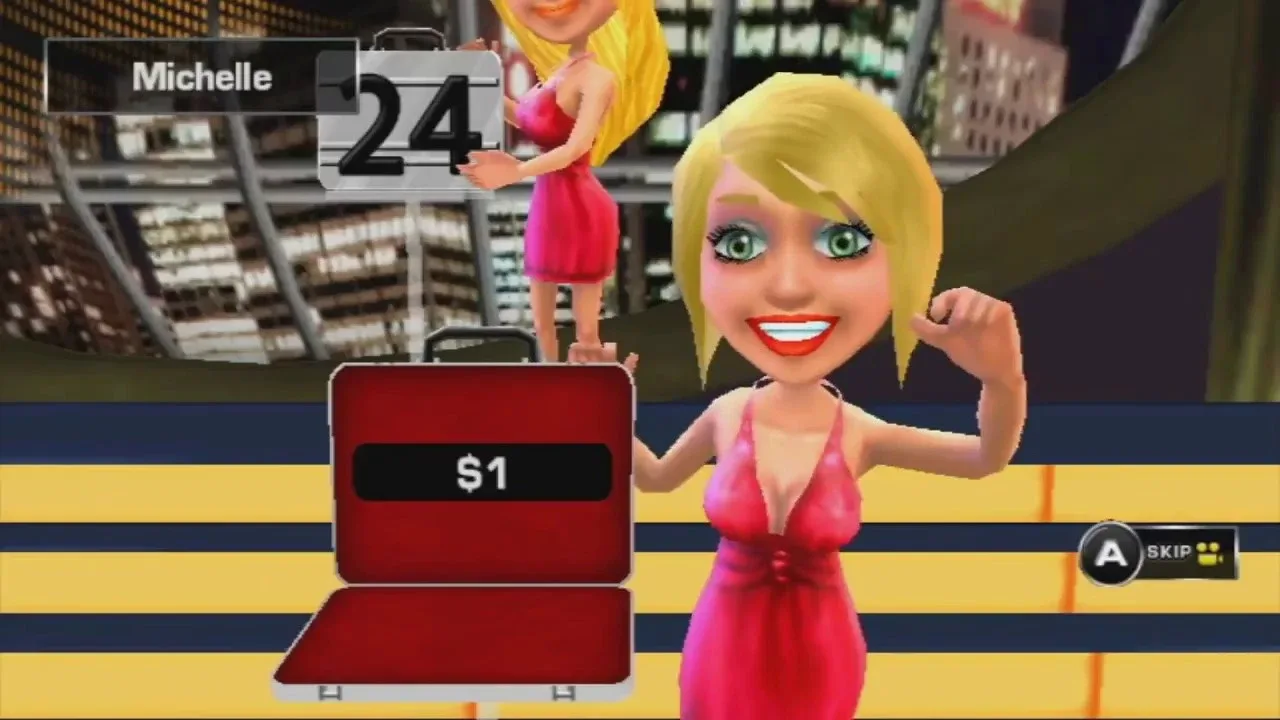
The hit TV show is coming to your favorite video game system! The premise is simple: You have 26 briefcases in front of you. Each one contains a different amount of money. Open each case one by one, and try to find the briefcase with the biggest amount of money. Deal Or No Deal? Single Player 3 single play modes tv game, puzzle game, memory Mulitplay allows you to play as contestant or the banker Multiplayer on Nintendo DS
Part of franchise:
Deal or No Deal
(last 3 games)
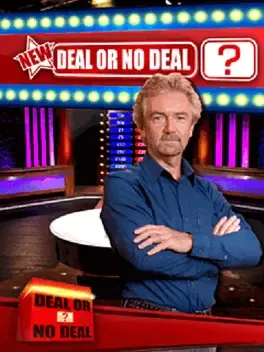
New Deal or No Deal is the second mobile game based on the UK version of the game show Deal or No Deal. The main difference from the previous game is that the player starts out on the Contestant's Row which means he has to wait for his turn while watching other contestants first playing the game. At times, the contestants will ask the player for advice. Once the proper game has started it works like before with the player choosing to open boxes to reveal their contents while deciding whether to accept the banker's offer. If unsure it's possible to ask another contestant for advice. In addition to the main mode, there's a quick play mode that skips the contestant's row, a banker's mode where the player makes the offers and a shortened mode called What would you do now? which lasts for a maximum of four rounds.
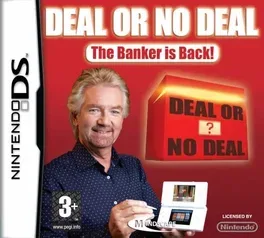
The DS port of Deal or No Deal: The Banker is Back!
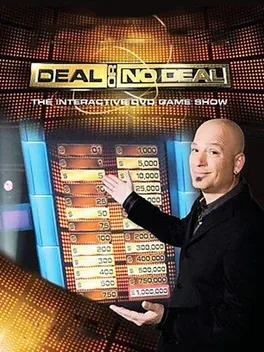
DVD version of Deal or No Deal lets you play the popular game in front of your TV.
Could be interesting
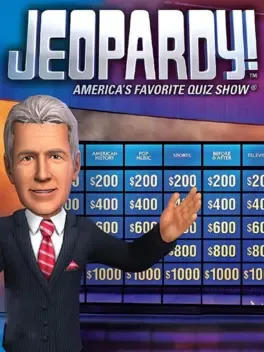
This 2012 update of the classic Jeopardy! quiz game includes 3,000 clues in the Jeopardy!, Double Jeopardy! and Final Jeopardy! formats. The game also includes the premier of the "Jeopardy! Clue Crew" for the first time in a home game format, while also featuring host Alex Trebek and announcer Johnny Gilbert. Between rounds multiplayer mini-games are offered as breaks. Online multiplayer is supported to play against other players.
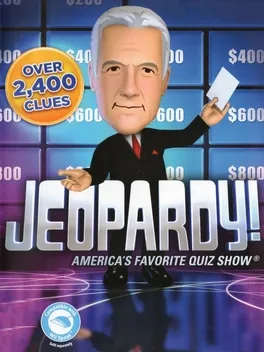
The 2010 version of venerable TV game show Jeopardy! brings Alex Trebek and 2,400 new questions to Nintendo's two major platforms. Both versions allow up to three players to compete in a full episode of the show, with computer-controlled contestants optionally filling in any empty seats. Jeopardy, Double Jeopardy, and Final Jeopardy sections of the show are all recreated, with an authentic virtual recreation of the set, and stat tracking for profiles (including questions successfully answered, lifetime winnings, and more).
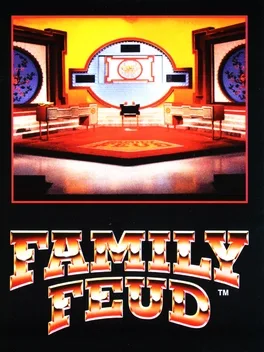
An adaptation of the TV quiz show where two families compete for cash prizes. These versions were all published by GameTek and developed by various developers between 1991 and 1994.
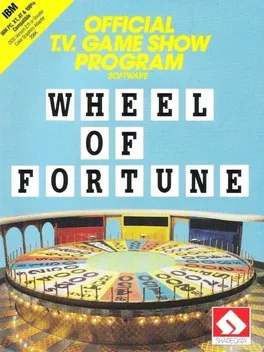
A very basic translation of the popular game show Wheel of Fortune, where you guess letters until you can guess the phrase. This CGA version has three old-school rounds of Wheel of Fortune (where the puzzles are simply "Phrase", "Title", "Person", etc.) and then a bonus round. You can compete against two computer players or up to three people can play against each other.
America’s favorite quiz show, Jeopardy!, makes its long-awaited return to home consoles in full HD. Master your lightning-quick reflexes with new streamlined controls to solve over 2,000 clues, constantly putting your smarts to the test. Compete with friends, family, or players online to see if you have what it takes to make it all the way to Final Jeopardy!
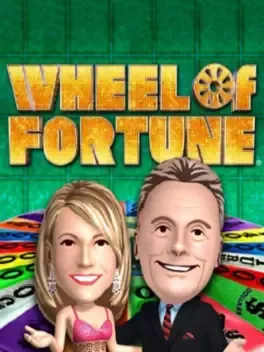
Spin the wheel along with Pat Sajak and Vanna White on the virtual version of America's Game!
Family Feud: Decades, also known as Family Feud: 2011 Edition, is a trivia game based on the TV game show Family Feud. The game is set across four different decades: the 70s, 80s, 90s and 2000s decades. Each decade is represented by a different stage set, which is based on the TV set of that era. In the show, 100 people have been surveyed on different subjects and their answers have been collected. It's up to the two families who battle each other to guess what the top survey answers were for every question; the family with the most points wins.
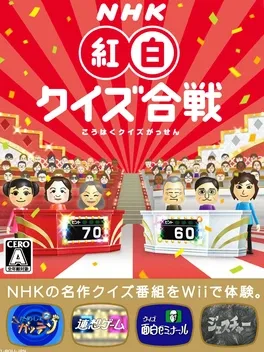
NHK Kohaku Quiz Kassen is a trivia game published by Nintendo and developed by Eighting in cooperation with NHK Enterprises. It was released on December 17, 2009 in Japan only.
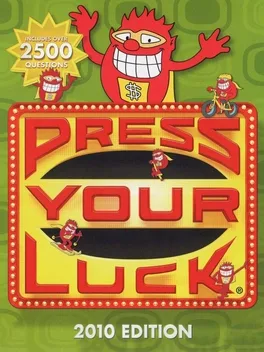
Don't let the "2010 Edition" fool you - this is based off of the original version of the popular 80's game show Press Your Luck. The garish 1980s set and the flow of the show have both been faithfully replicated in digital form. The game features a single player mode, where the contestant plays through 20 shows of different opponents and increasing difficulty. Alternatively, up to three players can play an episode as contestants in the game's "Party Mode." Gameplay mirrors the game show it is based on. There are two rounds, each with a question phase and a board phase. Players are asked four multiple-choice questions in the question phase. Ringing in first and giving the correct answer nets you 3 spins. The other two players then get a chance to pick their answer to earn 1 spin. Incorrect answers gain no spins. In the board phase, players use their accumulated spins to rack up cash. The board "spins" at random until the player hits a button to stop the cycle, earning whatever cash on the space the board stopped on. If the board stops on a cartoon "Whammy," that contestant's score is set to zero. Four Whammies removes that contestant from the game. The idea is to "press your luck" as long as you can, and then dump remaining spins off on another player in hopes of forcing them into a Whammy. As players win games, they unlock new costumes and hairstyles for their avatar.
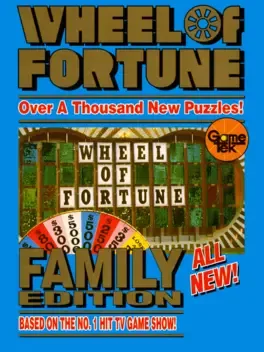
Wheel of Fortune: Family Edition is one of a series of NES games based on the famous TV game show. The goal is to solve a word puzzle by guessing letters. The players take turns spinning a wheel that has designated money amounts in most spaces, but can also bankrupt the player in the wheel lands on the wrong space. A player can guess a letter and if that letter is in the puzzle, those spaces are flipped to reveal the letter and the player earns the cash amount specified by the wheel spin, multiplied by the number of occurrences of the letter. Only English consonants can be guessed-- the 5 English vowels can be purchased using a player's earnings.