
Final Fantasy IX




Part of collection:
Final Fantasy
(last 3 games)
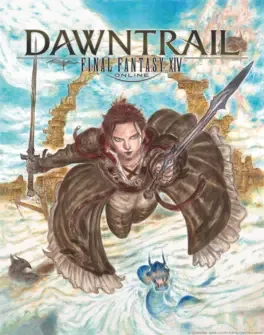
The Collector’s Edition includes Final Fantasy XIV: Dawntrail, the in-game bonus items, Dawntrail Special Art Box, Expertly Crafted Viper Figure, Adventurer’s Cloth Map, the Unending Journey and Adventurer’s Pen Case.
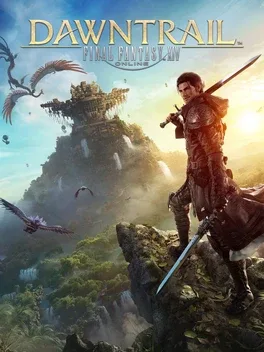
Final Fantasy XIV: Dawntrail is the fifth expansion pack to Final Fantasy XIV Online. The expansion will bring an abundance of fresh content, including an increased level cap, multiple new jobs, sprawling new areas, new allied tribes, new dungeons, and new core battle content such as FATEs, Hunts, Treasure Hunts, and sidequests, and much more.
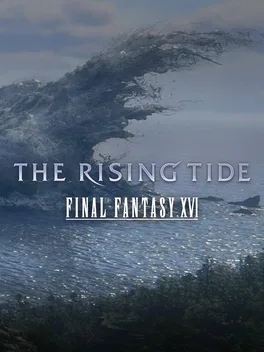
The Rising Tide is the second DLC for Final Fantasy XVI, which will bring new challenges, new locations and more, including the confrontation between Clive and the legendary Eikon, Leviathan.
Part of franchise:
Final Fantasy
(last 3 games)
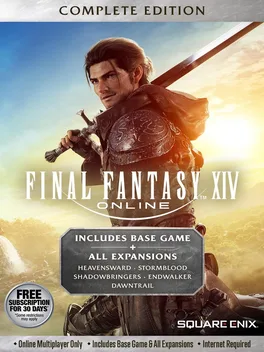
This bundle includes Final Fantasy XIV: A Realm Reborn, Final Fantasy XIV: Heavensward, Final Fantasy XIV: Stormblood, Final Fantasy XIV: Shadowbringers, Final Fantasy XIV: Endwalker, and Final Fantasy XIV: Dawntrail.
Final Fantasy XIV: Dawntrail is the fifth expansion pack to Final Fantasy XIV Online. The expansion will bring an abundance of fresh content, including an increased level cap, multiple new jobs, sprawling new areas, new allied tribes, new dungeons, and new core battle content such as FATEs, Hunts, Treasure Hunts, and sidequests, and much more.
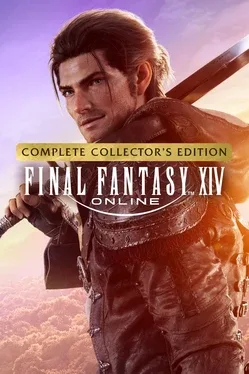
This bundle includes "Final Fantasy XIV: A Realm Reborn", "Final Fantasy XIV: Heavensward", "Final Fantasy XIV: Stormblood", "Final Fantasy XIV: Shadowbringers", "Final Fantasy XIV: Endwalker" and "Final Fantasy XIV: Dawntrail". All in-game bonus items from the Collector’s Editions are included.
Could be interesting

Final Fantasy VIII is the eighth main installment in the Final Fantasy series. The gameplay makes a departure from many series standards. While it still uses the Active Time Battle system, it deviates from the series' traditional means of boosting a character's power via leveling, although levels are not completely abandoned as they were in Final Fantasy II. In addition, it does not have a Magic Point-based system for spell-casting. Instead, magic is collected, drawn, and created from items, and is used to power up the characters via the junction system.

The game takes place in the fictional land of Ivalice, where the empires of Archadia and Rozarria are waging an endless war. Dalmasca, a small kingdom, is caught between the warring nations. When Dalmasca is annexed by Archadia, its princess, Ashe, creates a resistance movement. During the struggle, she meets Vaan, a young adventurer who dreams of commanding an airship. They are quickly joined by a band of allies; together, they rally against the tyranny of the Archadian Empire.
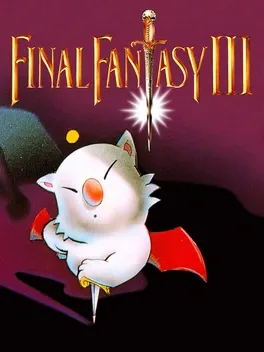
Final Fantasy VI is the sixth main installment in the Final Fantasy series, developed and published by Square. It was the final title in the series to feature two-dimensional graphics, and the first story that did not revolve around crystals. The game gives players up to fourteen playable characters, the largest cast in the series, and features the Active Time Battle pseudo-turn based menu command system. A party can consist of up to four characters, though some events require the player to assemble three different parties of up to four and switch between them. Each character has a unique command ability, such as Terra's Trance, Locke's Steal, Edgar's Tools or Sabin's Blitz, and can also learn Magic spells from earning AP from battles with magicite equipped. Each character's rare Desperation Attack will randomly activate after using the Attack command when at critical health.
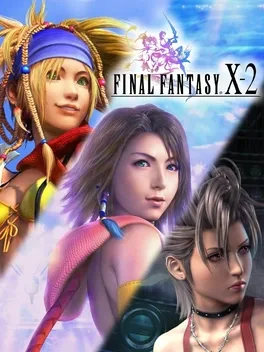
Final Fantasy X-2 is the direct sequel to Final Fantasy X, developed and published by Square Enix. It was the first direct sequel game in the Final Fantasy series and the first to feature an all-female playable cast. It also returned to the job system not seen in the main series since Final Fantasy V. The game uses a character class system where the equipped dressphere determines her abilities and stats. Party members can switch to any dressphere in their Garment Grid to swap to new skills and adapt to different opponents. It makes use of the Active Time Battle system that was absent from Final Fantasy X. The party has access to all locations early on and can visit them through the Celsius, complete several minigames and sidequests in a chapter before progressing through the story to the next one.
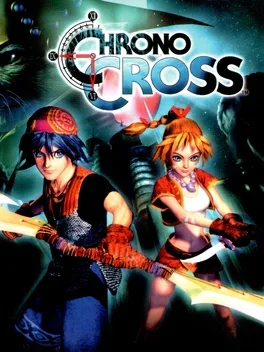
CHRONO CROSS, the sequel to the SNES favorite CHRONO TRIGGER, is one of the most ambitious role-playing games ever made. There are over 40 playable characters, each with their back-story, special moves, abilities, and weapons. The story spans two discs and follows the story of Serge, a young man who is able to cross dimensions. Suddenly he is pulled between worlds, trying to figure out his own past at the same time. The graphics are bright and beautiful, utilizing the PlayStation's capabilities to the fullest. The polygonal character models are huge and detailed, and the pre-rendered backgrounds are immaculately detailed. The music is composed and arranged by Yasunori Mitsuda, and features very realistic-sounding synthesizers. The battle system revolves around Elements, which are used to grant magical powers, as well as to summon huge monsters. For anyone that wanted to see the story of CHRONO TRIGGER continue, this is your chance.

Lead epic battles in a new FINAL FANTASY world. Betrayal and darker dealings await in Squaresoft's game of war. Fight hundreds of battles across dangerous 3D terrain as an ancient blood feud awakens a deadlier foe.
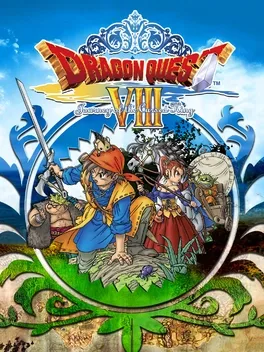
Dragon Quest VIII: Journey of the Cursed King is the eighth installment in the Dragon Quest series, developed by Level-5 and published by Square Enix for the PlayStation 2 video game console. It was also later released for the Nintendo 3DS in 2015. It is a traditional Japanese-style role-playing game with random enemy encounters, simple turn-based combat mechanics, and management of a party consisting of four characters, each belonging to a clearly defined class. Unlike its predecessors in the series and most Japanese RPGs in general, the game features a continuous world with fairly vast landscapes and integrated towns and dungeons, as opposed to world map traveling and locations represented by icons. The game features full camera rotation and optional first-person view. Like in the previous Dragon Quest games, many objects can be interacted with; for example, barrels can be physically lifted, carried, and broken, to reveal items hidden within.
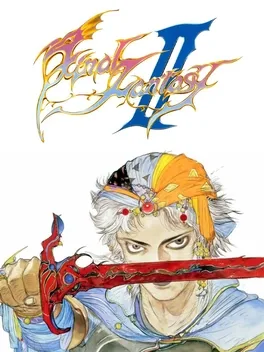
Final Fantasy II is the second installment in the Final Fantasy series, developed and published by Squaresoft. It was directed by Hironobu Sakaguchi, with Yoshitaka Amano designing the characters and Nobuo Uematsu composing the score. It was notable for being one of the first story-intensive RPGs released for console systems, and introducing many series staples, including chocobos and a character named Cid. Its story is unrelated to the original FINAL FANTASY, and its gameplay is a major departure from the previous title for eliminating the traditional experience-based progression system.
Final Fantasy XI Online is the franchise's first MMORPG as well as the eleventh installment in the main series. FFXI was the world's first cross-console MMORPG, available for Windows, PlayStation 2, Xbox 360 and Steam. Since its release in 2002, it has become the most financially successful title in the Final Fantasy series. Due to the nature of online RPGs, FFXI differs in that the player is not the only hero. Instead, each player creates a customizable character and adventures through the world of Vana'diel with other players; leveling up, exploring, completing missions, quests, and much more. Leveling up requires a group of people working together in what is called a Party, with each participant contributing their own skills to help take down a foe and gain Experience points. Battles occur in real-time, taking the ATB system to a new level, which was emulated again to a certain extent in Final Fantasy XII.
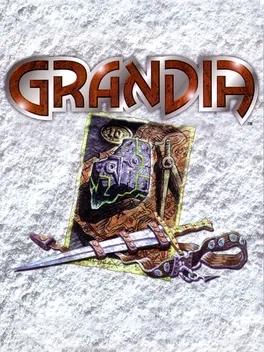
Grandia is a role-playing video game developed by Game Arts and published by Entertainment Software Publishing for the Sega Saturn console as the first game in their Grandia series. Initially released in Japan in 1997, the game was later ported to the PlayStation in 1999, with an English version of the game appearing on the platform in North America in the following September by Sony Computer Entertainment America, and later in Europe in March 2000 by Ubisoft. The game was produced by much of the same staff who worked on the company's previous role-playing endeavor, the Lunar series, including producer Yoichi Miyagi and music composer Noriyuki Iwadare. Since its release, Grandia has become notable for its combat mechanics, which have been carried over to future games within the franchise, and has spawned two spin-off titles – Grandia: Digital Museum and Grandia: Parallel Trippers – both released exclusively in Japan. In celebration of the announcement of renewing development on Grandia Online, which acts as a prequel to Grandia, the game was re-released on Sony's PlayStation Network platform in Japan as a downloadable title in April 2009 and in North America on February 25, 2010. It was re-released in Europe on November 10, 2010.