
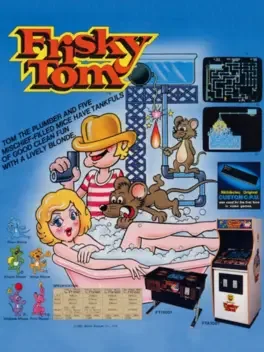
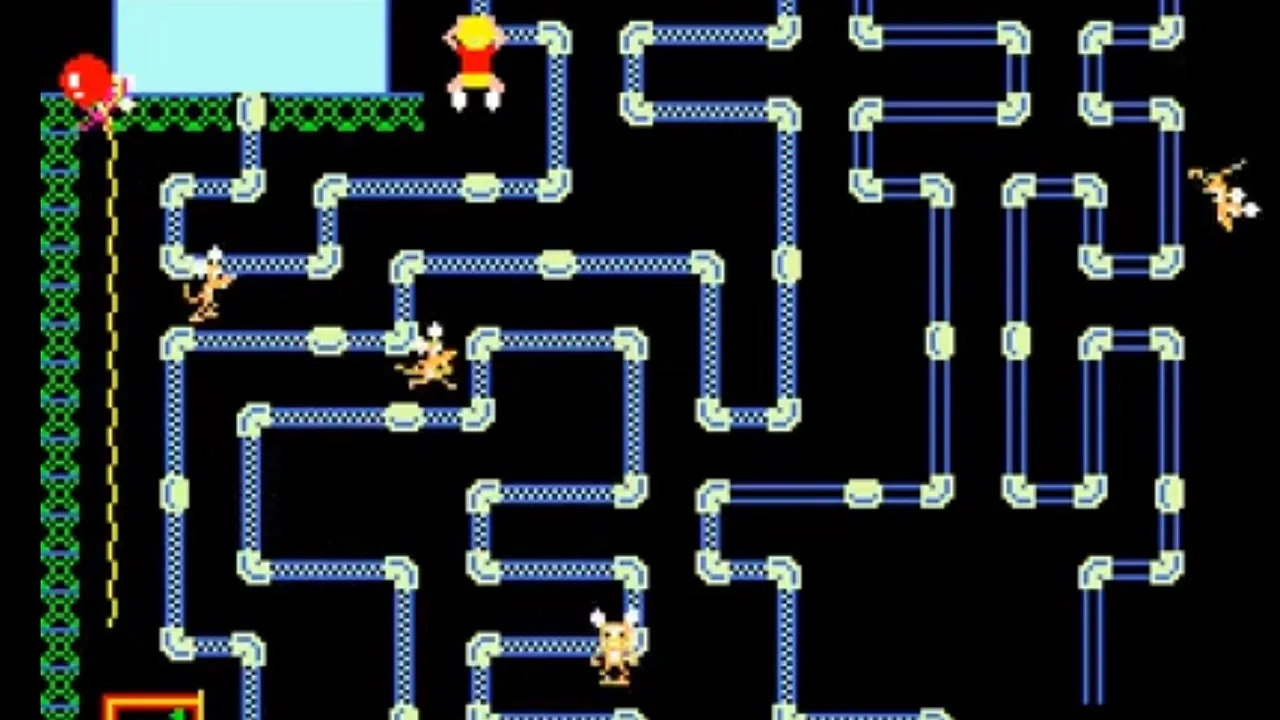
Frisky Tom



Buy
Could be interesting
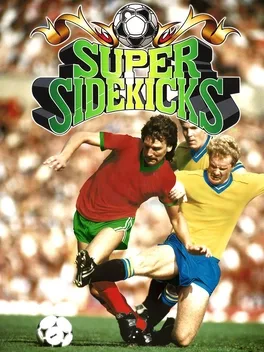
Published in 1993, the original Super Sidekicks (known as Tokuten Ou, "Goal-Scoring King" in Japan) was SNK's first soccer video game. It features 12 teams divided into two groups which compete for the "SNK Cup" (the main differences between teams is their formations on the field): Group A: Germany, Italy, Spain, England, Mexico, Japan Group B: Argentina, Holland, Brazil, France, United States, South Korea The players' team plays against all the others in their group, then it goes into an elimination tournament's semifinals and then the final to win the cup. There was also a hidden feature in the game, which wasn't documented, and affects a single player game. During a free kick for the CPU if the player has tapped button A for player two, the CPU performs a short-shot, while pressing the button A performs a longer kick.
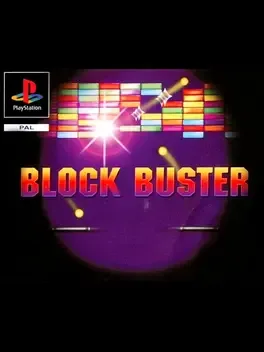
Block Buster (or Block Kuzushi or Simple 1500 Series vol.014 - The Block Kuzushi in Japan) is a good breakout game that can be played by 2 players in cooperative or VS mode. The game offers some interesting special moves like the one in which you can hit the ball with effect pressing a buttom. There are 3 different game modes: Attack mode, Endless mode & VS mode. With roots in the classic Breakout game from a few decades ago, Block Kuzushi continues where Arkanoid left off and updates the theme with colorful jewels to hit in addition to the standard rows of bricks. During the course of play, weapon upgrades may be picked up such as multiple balls, shooting power and other brick bashing powerups. Roaming objects on-screen may deflect your ball so watch out for surprise changes in trajectory when these nuisances are afoot. 60 levels of cleverly designed boards (and some not so clever ones) should hold your attention for a few hours.Show less

R4: Ridge Racer Type 4 is the fourth game in the Ridge Racer series. It includes eight tracks (with reverse variants, for a total of 16 layouts) and 321 vehicles, all of which are fictional. This iteration was one of the first PlayStation titles to feature Gouraud shading on polygons, giving the game a visual depth that was previously missing. It was also the first Ridge Racer game on the system to feature two-player split-screen mode and offered two different driving models.
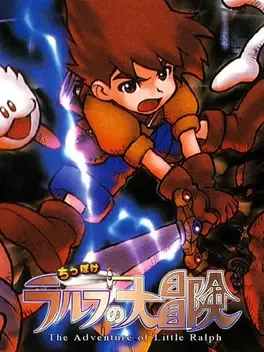
The Adventure of Little Ralph is a 2D platformer. In this game the player controls Ralph, who has been turned back into a child by the evil demons who have invaded his homeland. In order to stop them and return to his former self, he must get through each area filled with enemies, traps, and many hidden routes. Ralph is armed with swords and various magic powers and also has the assistance of a small furry companion. The game's levels are interconnected, unlike the "stages" of most other platform games.
XI JUMBO was released as a sequel to Devil Dice only released in Japan. The rule is similar to its predecessor, but in this version, you can stack the dice vertically by lift up or jump with a die. The classical "Trial - Time Limited" and "Puzzle" modes are also available on this version. For new features, The "Battle" mode is entirely renewed with a garbage-attacking style. In addition, a new task-solving trial, named "Norma Attack," is introduced.
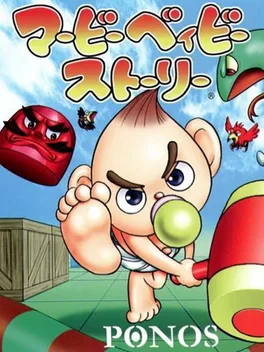
Marby Baby Story is a game in which the player controls Marby, a baby trapped in a mysterious maze and have to help him to get out.
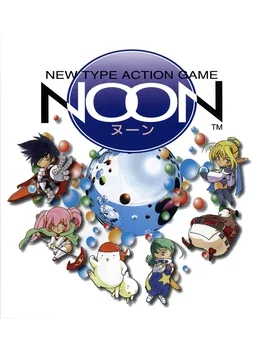
Noon is a Action-Puzzle game, published by Micro Cabin, which was released in Japan in 1998.
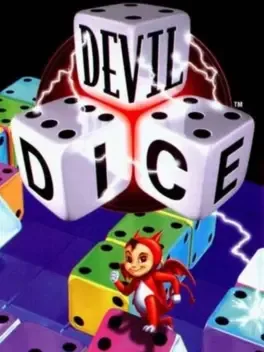
Devil Dice is a unique puzzle game, where the player controls a small devil that runs around a grid covered in large dice. The player can both stand atop dice, and stand on the ground (with the dice towering above). When standing on the dice, the player can move from die to die, or can roll a die in the direction he or she runs, revealing a different face as the die rotates. Creating a group of adjacent dice with identical pips—the size of which must be at least the number of pips—causes those dice to slowly sink into the field before disappearing. Chain reactions are possible by adding additional dice to a sinking set. Different types of dice are available in some modes, with different properties to make the game more challenging. It was originally created by developer Shift on the "homebrew" Yaroze platform, and later turned into a commercial game. Released in 1998, it is one of only a handful of games to make the leap from the Yaroze to commercial release. The game is a million-seller and a demo version was released as a PlayStation Classic game for the PlayStation 3 and PlayStation Portable on November 7, 2007.
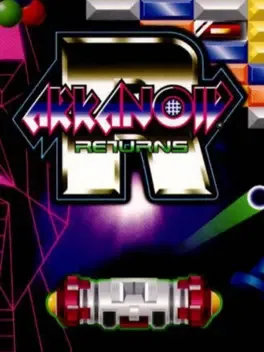
Arkanoid Returns is an arcade game released by Taito in 1997 as part of the Arkanoid series. It was the fourth overall, and third to be released in arcades. The game was since ported to the PlayStation, with an updated home release being released afterwards titled Arkanoid R 2000. All versions were released exclusively in Japan, currently making it the only game in the series to never receive an international release. The enemy known as 'DOH' still did not get the message and after many years of silence decides to attack once again. The 'Vaus' space vessel better be ready to face new, yet familiar challenges, in order to stop 'DOH' once again. The gameplay remains similar to Arkanoid: Doh it Again, the previous game in the series released for the Super Nintendo, in that it features the same powerups , some re-used level designs, and the same board size. The initial arcade game contains only 50 levels, the environment changing every 9 levels.
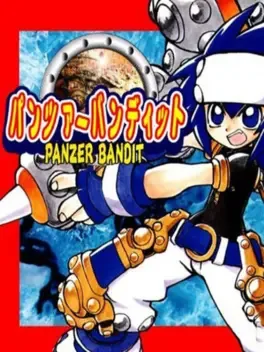
Full of magic and mecha fighting action takes place in a different world turns. Set in 2D with depth of field, with a comical action Ri Gemasu melee battle finishing moves and colorful quirky characters who are in disarray. In addition to story mode, and up to four people can play simultaneously mode also comes with VS.