
Google Maps Snake


Buy
Could be interesting
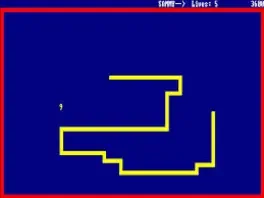
Nibbles is a simple video game and variant of Snake. It was inspired by an early 1980s game called Hustle from the Radio Shack TRS-80 micro-computer. (It was not influenced by Mozaik Software's 1984 Amstrad CPC game, Nibbler, despite the similar names.) Nibbles was written in QBasic by Rick Raddatz, who later went on to create small business companies such as Xiosoft and Bizpad. The game's objective is to navigate a virtual snake (or worm) through a walled-space while consuming numbers (from 1 through 9) along the way. The player must avoid colliding with walls, other snakes or their own snake. Since the length of the snake increases with each number consumed, the game increases in difficulty over time. After the last number has been eaten, the player progresses to the next level, with more complex obstacles and increased speed. There is a multiplayer mode which allows a second player to control a second snake by using a different set of keys on the same keyboard. Nibbles originally became popular because it was included with MS-DOS version 5.0 and above. Written in QBasic, it is one of the programs included as a demonstration of that programming language. The QBasic game uses the standard 80x25 text screen to emulate an 80x50 grid by making clever use of foreground and background colors, and the ANSI characters for full blocks and half-height blocks. Microsoft's 24kB QBasic version was copyrighted in 1990. Because of MS-DOS's prevalence at that time, it was available on almost every PC in the early 1990s. Modern computer speeds have rendered the game-speed-delay timing loops invalid, and thus the QBasic version of Nibbles requires some code changes to operate correctly on modern PCs. However, the adjustable clock rate on the DOSBox DOS emulator allows the original code to run at speeds similar to those on the original hardware. Nibbles is also runnable on QB64 as a way to avoid emulation.
It's like snake, but it's knot!
Develop your skills, try to survive as much as you can and become the biggest snake. You start as a small snake, get bigger by eating other snakes who try to do the same. You have to attack wisely but defend skillfully. How long can you survive? Attack fast with the mass-eject booster and get in front of other snakes to beat them when they hit you head on, no matter how small you are or how big they are. The best one wins. Snake.io has no lag issues or performance problems caused by internet connection. Play wherever and whenever you like.
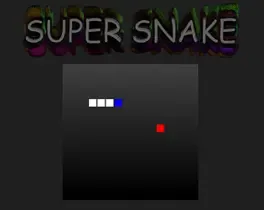
Use WASD or the arrow keys to move. Try to get 20 points! This was my first web/html5 game I made back in 2013. My high school multimedia teacher did not understand how or why I made this.
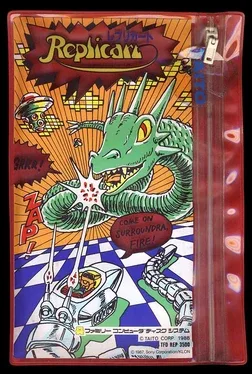
An upgraded version of the Arcade and mobile phone game Snake developed by Dual, published by Sony for the MSX 2 and later published again by Taito for the Famicom Disk System and PC-88. Replicart takes the basic Snake formula and transforms it, similarly to how other simple Arcade games (like Breakout to Arkanoid) were receiving contemporary make-overs for home console versions that expanded the basic concept and added plenty of extra features. In Replicart, as in Snake, the goal is to move a robotic snake in the four cardinal directions around a single screen level and collect items that will increase the snake's size. Once the snake is long enough the exit will appear and the player will be able to progress to the next level. Each level has a different smattering of obstacles that the player must avoid, which also includes any other part of the snake itself. Though originally released on the MSX 2 home computer by Sony, it was later ported by Taito to the PC-88 and Famicom Disk System. The FDS version saw the biggest differences from the original, as every ten stages includes a boss that the player's snake must chase around and shoot down before they are able to proceed. It also reduces the number of levels from 300 (in the MSX and PC-88 versions) to 100.
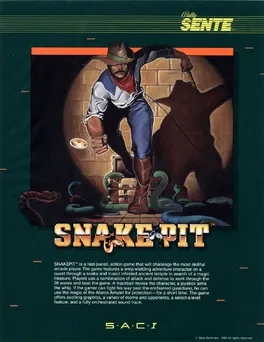
Whip snakes, scorpions, and spiders in this trackball-based arcade game from 1984.
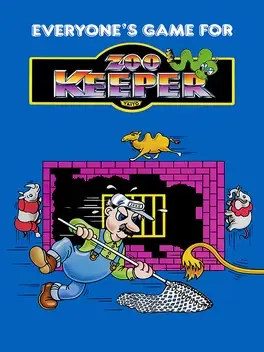
You control Zeke the zookeeper who must rescue his girlfriend Zelda from the Zoo. There are four levels or "adventures". Each level has its own task such as trapping the animals in the zoo, jumping ledges up the screen and jumping animals to earn a bonus keeper.
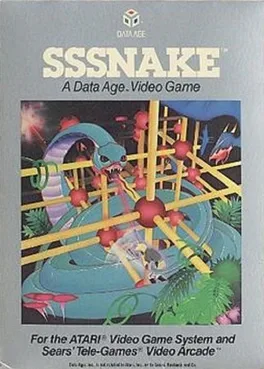
You are a daring big game hunter on an expedition into the heart of the Amazon's legendary lost world. But you find that the game being hunted is you -- by Pterodactyls, Trachodons, and other prehistoric creatures. Luckily you find refuge in an ancient abandoned fortress, where you're protected from the jungle outside. Or are you...
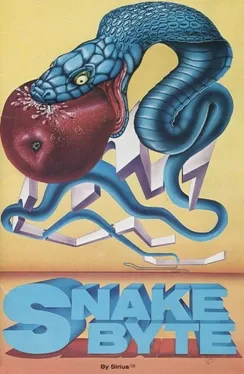
You are a hungry snake and set out to eat apples which appear on the screen. After each devoured apple your snake grows longer. Having eaten ten apples a door to the next level appears. The difficulty of the game lies within the fact that you are not to touch any obstacles within the levels or any part of your ever growing body.
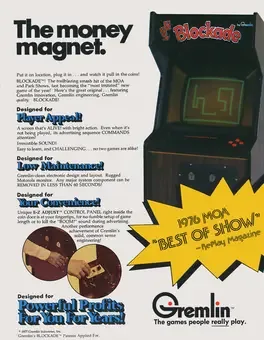
Blockade is a black and white arcade game developed and published by Gremlin in October 1976. Using four directional buttons, each player moves their character around leaving a solid line behind them, turning at 90 degree angles. To win, a player must last longer than the opponent before hitting something, with the first person to hit something losing. The game ends after one player gains six wins. Blockade is the first of what have become known as snake games.