
Grandia III


Buy
Part of collection:
Grandia
(last 3 games)
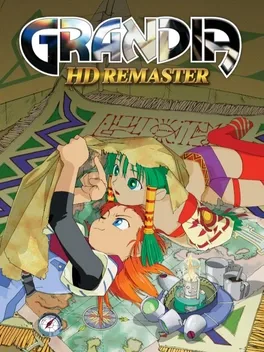
GRANDIA HD Remaster brings enhanced visuals to both gameplay and cinematic videos.
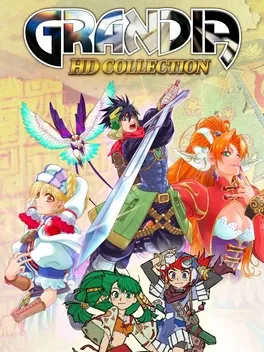
Two quintessential RPGs have finally gone portable on one of gaming's most popular console/handheld hybrid platforms. The highly anticipated GRANDIA HD Collection for the Nintendo Switch is here.
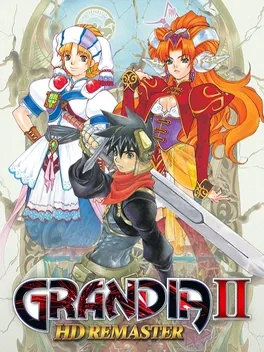
15 years after the stunning Dreamcast debut of Ryudo and his epic adventure, Grandia II is back and better than ever! The classic Japanese RPG returns with enhanced visuals, new difficulty level, and features both keyboard and gamepad support! Grandia II is famous for its great characters, mature storytelling, memorable music and fantastic battle system, and there’s no better way to experience one of the most beloved console RPGs of the 32-bit era than this special Anniversary Edition!
Could be interesting
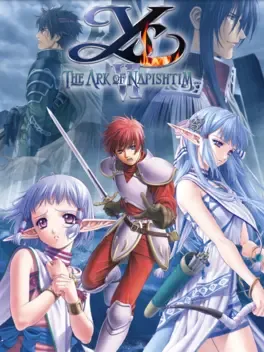
Ys VI: The Ark of Napishtim is an action role-playing game in which adventurer Adol Christin is shipwrecked on the Canaan Islands after the Romun fleet attacks his expedition. Rescued by members of the native Rehda tribe, he explores the archipelago and investigates the forces threatening its inhabitants. Combat takes place in real time and centers on three elemental swords, each providing distinct attacks and magical abilities. Players explore interconnected areas, collect equipment and items, and battle regular enemies and large bosses.
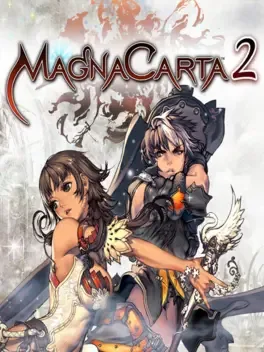
Magnacarta 2 introduces an original new storyline driven by intense themes of love, hate, politics, betrayal and the ultimate question of choosing one’s own fate. Players are immersed in the world of the Lanzheim Continent, a conflict-ridden land deeply divided by a fierce civil war.
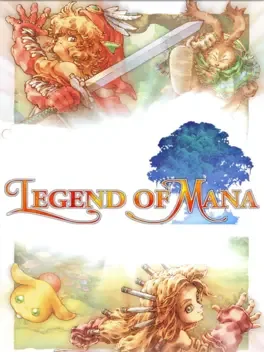
While incorporating action role-playing game elements from the three games which preceded it, Legend of Mana has its own distinct style of gameplay. Most notably, it gives the player the ability to shape the game's world of Fa'Diel according to his or her desires, a system which was incorporated through the use of "artifacts," which are gained as the player progresses through the game. The player uses the artifacts to create different towns, dungeons, etc., called "Lands", to venture to and explore. This creates a non-linear gameplay, since the game is driven by a series of what would be considered side-quests in other games. Legend of Mana features three different plots which can occur simultaneously, and which do not necessarily need to be completed for the player to finish the game. Legend of Mana was a financial success in Japan. While the game garnered considerable praise for its graphics and presentation, many critics and fans were turned off by the game's lack of a main storyline.
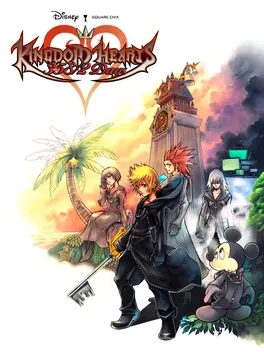
Kingdom Hearts 358/2 Days revolves around Roxas, the "other" hero from Kingdom Hearts II. Players follow Roxas through his days among Organization XIII's ranks, unraveling the events that took place during the year that Sora was asleep, and ultimately revealing one of the Kingdom Hearts saga's most shocking secrets. Players and their friends will join Roxas, his friend Axel and the mysterious fourteenth member of Organization XIII on a journey across charming, vibrant worlds full of Square Enix's and Disney's beloved characters.
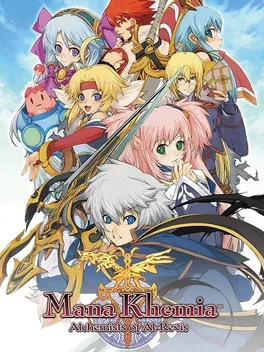
The 9th core Atelier game and the first of the two Mana Khemia games. The game's main focus is on the lead protagonist, Vayne Aurelius, the son of a legendary alchemist named Theofratus who had disappeared sometime after Vayne's birth. Since then, Vayne has led the life of a hermit, his only companion being a Mana in cat form named Sulpher. Vayne is invited to the Al-Revis Academy for alchemy training by Zeppel, one of the professors. He is quickly indoctrinated into the school by becoming part of an atelier led by Flay Gunnar (an older student who is known as The Defender of Justice) along with two other students, Jess (a clumsy girl who is nevertheless adept at alchemy), and Nikki (an impulsive beastgirl). They are soon joined by Pamela (the school's resident ghost), Anna (an 11-year-old master swordsman), Roxis (the son of a famous family of alchemists who is quickly forced to join the workshop by Flay), and Muppy (an alien the group discovers on an assignment). The eight of them are able to succeed at completing assignments, learn the skills of alchemy, and allow the workshop to prosper.
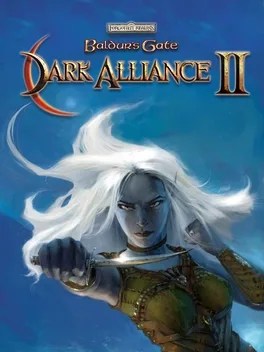
Using the 3rd Edition Dungeons & Dragons rules set, Baldur's Gate: Dark Alliance II features four new acts of hack-and-slash combat and powerful spell casting. Even more monster types will engage in real-time battles using the same overhead perspective as witnessed in the original game. Each selected character can parlay the experience gained from combat into acquiring new feats and enhanced abilities over time. To help in battle, a new item creation system lets players craft magical weapons and armor using raw materials found during their travels. As before, two heroes can join the adventure in cooperative play on the same screen, with each character differing in the types of feats and powers under his or her command. Equipment can be found or purchased from local merchants using the gold looted from felled creatures or received as payment for quests. Baldur's Gate: Dark Alliance II also features a number of hidden areas, secret characters, and literally hundreds of items to find and use, including potions, scrolls, and wands. In addition, the game features a new branching storyline that offers players a choice where to go next for fortune and honor.
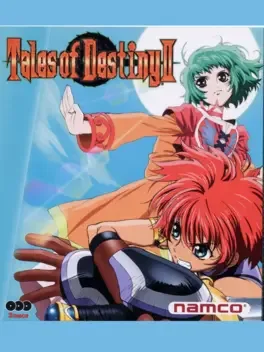
Tales of Eternia is an action japanese role playing game, with real time battle scenes (combos and spells can be assigned to the face buttons). The game is set in the fantasy world of Inferia, follows the story of a young hunter named Reid Hershel and his friends, Farah and Keele, as they meet a mysterious girl who speaks an unknown language. Their subsequent quest to discover her origins leads them across a dimensional boundary to an entirely different realm known as Celestia, where they become involved in an age-old conflict between the two worlds. It would later inspire a 13-episode anime co-produced by Production I.G loosely based on the game's plot.
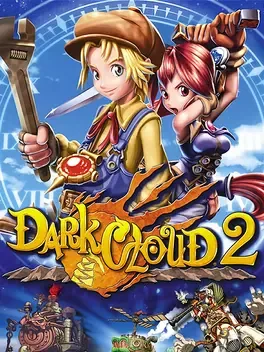
BUILD your world. INVENT your weapons. CREATE your adventure. Discover a secret binding the past, present and future. A secret where an innocent inventor, a temporal warrior and an ageless evil hold the key. Experience an epic action/RPG adventure that relies on your innovation as much as exploration and fighting reflexes.
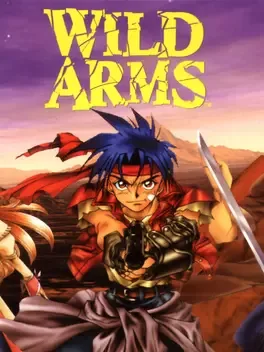
Wild Arms is a Western-themed role-playing video game developed by Japanese software company Media.Vision. Originally released in Japan in 1996 for the Sony PlayStation video game console, it was later translated and released in North America in 1997 and Europe in 1998 by Sony Computer Entertainment. It is noteworthy for not only being one of the first role-playing video games on the PlayStation, but also one of the few to feature a Western American setting and motif. The game features 2D computer graphics for normal gameplay, while battle sequences are rendered in 3D.
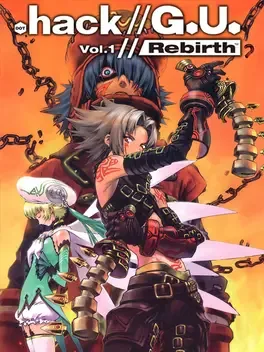
.Hack//G.U. simulates a massively multiplayer online role-playing game; players assume the role of a participant in a fictional game called The World. While in The World, the player controls the on-screen player character, Haseo, from a third-person person perspective (with optional first-person mode). The player may control the camera using the game controller's right analog stick. Within the fictional game, players explore monster-infested fields and dungeons as well as "Root Towns" that are free of combat. They also can "log-off" from the game and return to a computer desktop interface which includes in-game e-mail, news, and message boards, as well as desktop and background music customization options. In Reminisce, an optional card game called "Crimson VS" becomes available. The player may save the game to a memory card both from the desktop and within The World at a Save Shop. After the player completes the game, a Data Flag appears on the save file, which allows the transfer of all aspects of the player character and party members to the next game in the series. This can also be applied to previous games if the player first finished the Reminsce or Redemption. Players can attack monsters in real time. However, the action pauses whenever the menu is opened in order to select magic to cast, items to use, or skills to perform. The player only directly controls Haseo, while the other characters are controlled by artificial intelligence. The player may either provide guidelines ("Free Will", "Rage", "Life", etc.) or issue direct commands (for example, to cast a particular magic at a particular enemy) to the computer-controlled characters. Monsters roam the environments freely or guard treasure chests. Once combat is initiated, via a "surprise attack" or the player being spotted, a wall erects around the combat area to prevent escape. Weapons give the player access to the Skill Trigger feature which allows them to perform a powerful attack at the cost of losing SPs. As an adept rogue character, Haseo can wield multiple weapons for close combat. Although Haseo can only use one weapon per battle, during Reminisce the player can change weapons in the middle of Skill Triggers. Under certain conditions, the player may execute an enhanced type of Skill Trigger called "Rengeki". These attacks deal greater damage and fill a Morale gauge, which allows the player and his team members to use a combination attack. Certain plot-related fights, called "Avatar battles", use a different interface which incorporates shoot 'em up gameplay elements. After depleting the opponent's health, players must charge up a "Data Drain" to end the battle. Root Towns are non-combat areas in The World. The player may restock on items, buy equipment, or chat and trade with other "players" of The World. The player may also undertake optional quests and visit guilds. A key feature of all towns is the Chaos Gate. This blue portal is used to travel between towns (called "servers") as well as access the fields and dungeons where battles take place. A password system controls the characteristics of each area. Depending on the characteristics of each word in the three word phrase, the resulting area may have different attributes such as prevalence of monsters or items, among other features.