
Hiouden: Mamono-tachi to no Chikai



Buy
Parent game
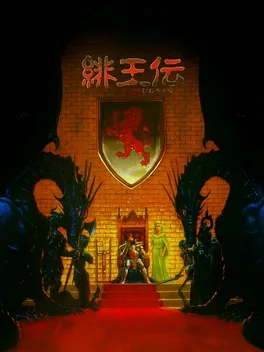
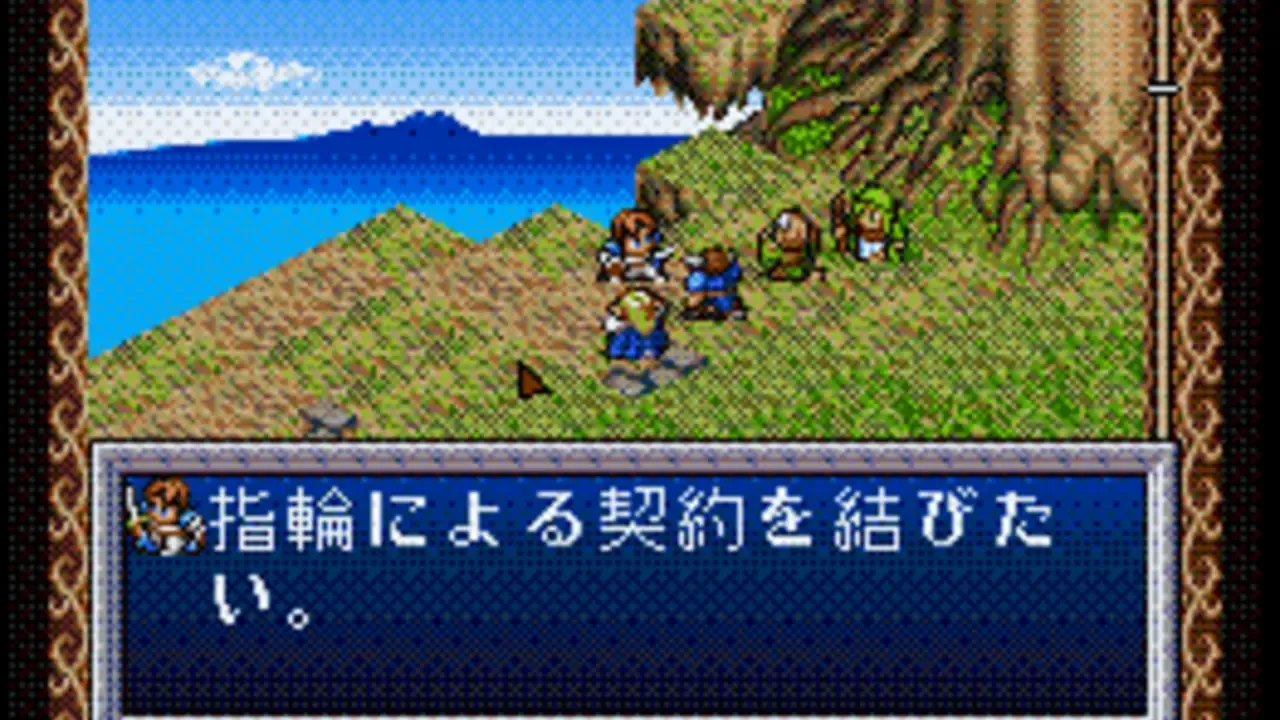
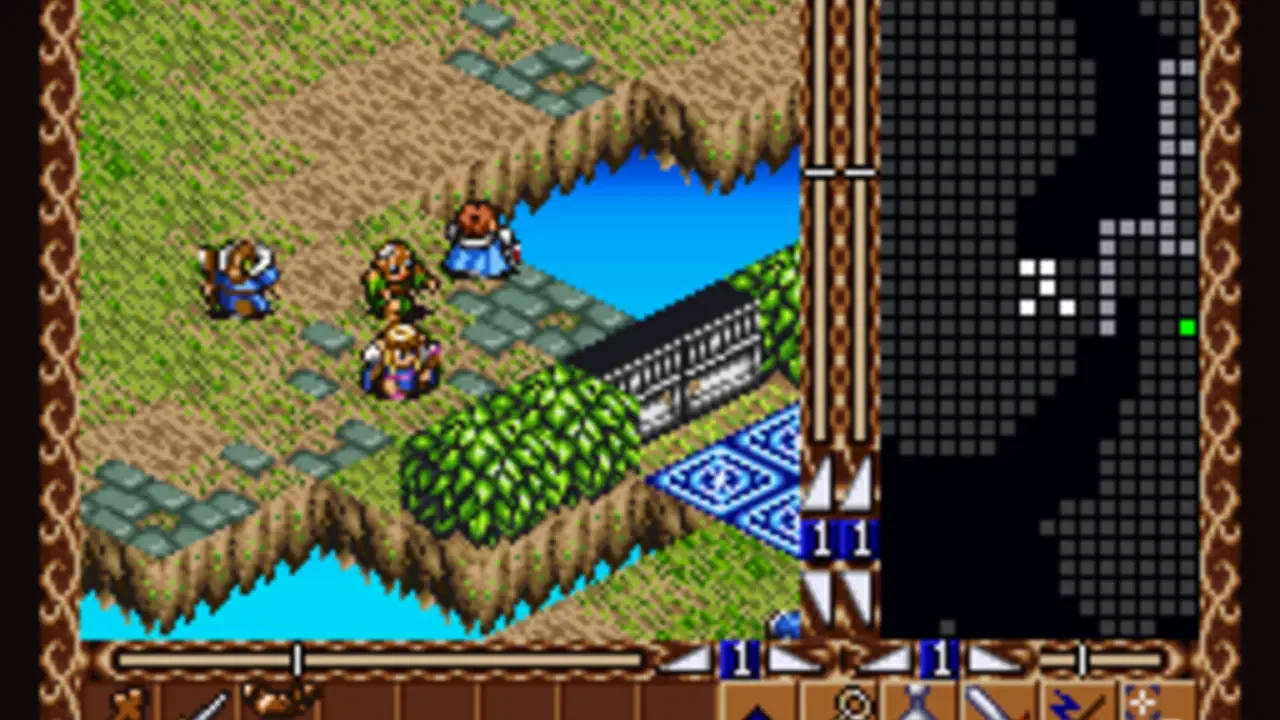
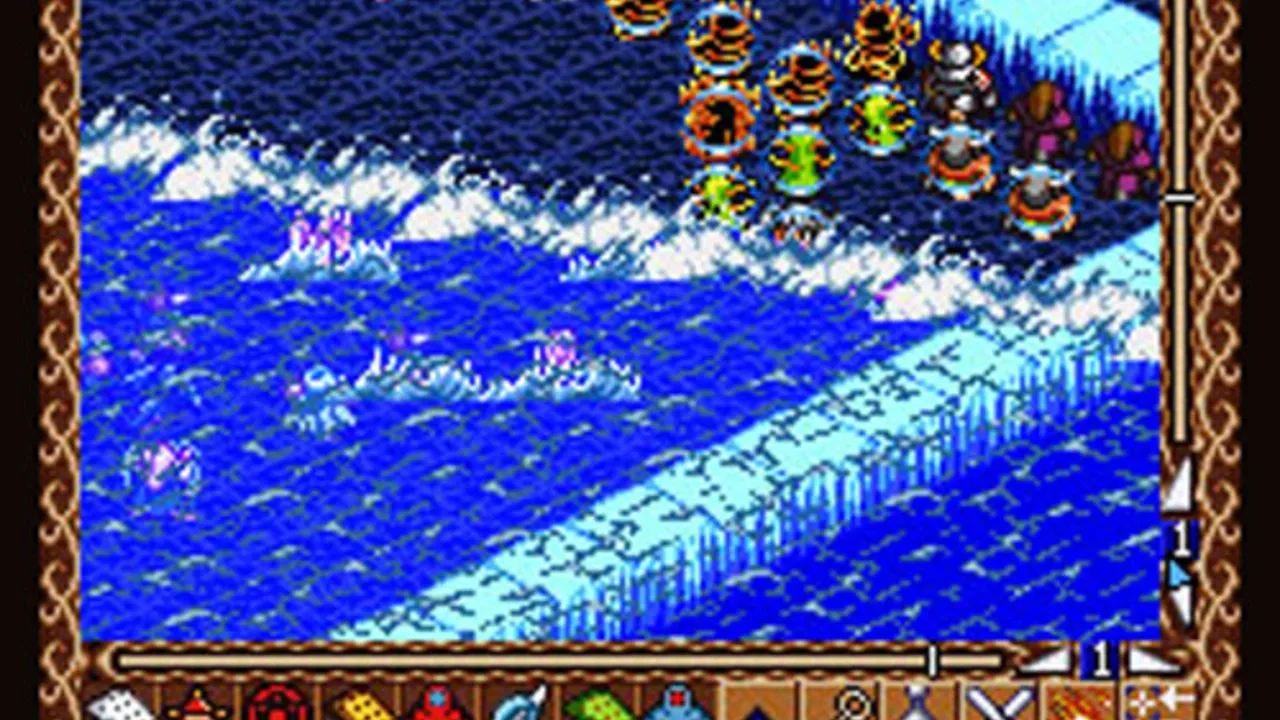
Hiōden is a strategy game with RPG elements. The player navigates several teams of characters, mostly monsters (up to six in each team) through isometric environments. Sometimes cooperation between different player-controlled teams is required to advance. The game plays in real time, i.e. enemy parties also move and perform actions without waiting for player's input. The RPG angle is present in form of character levels - characters grow stronger after defeating enemies. It is possible to put the teams on "auto-mode", having some of them move and perform actions on their own. The game has a mouse-driven interface with a somewhat unusual feature for its time: windows. The movement field of different teams, character statistics, overview map, team management screen - everything has its own window. It is possible to enlarge any window to full screen, close it, open several small windows at the same time, and drag windows to arrange them on the screen in any way.
Part of collection:
Hiouden
A PC-98 RPG from Wolf Team with an isometric perspective. It later saw an enhanced Super Famicom port.
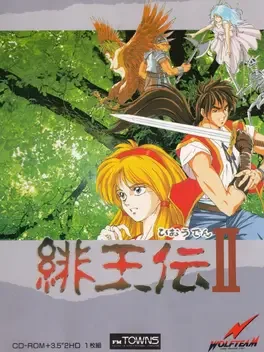
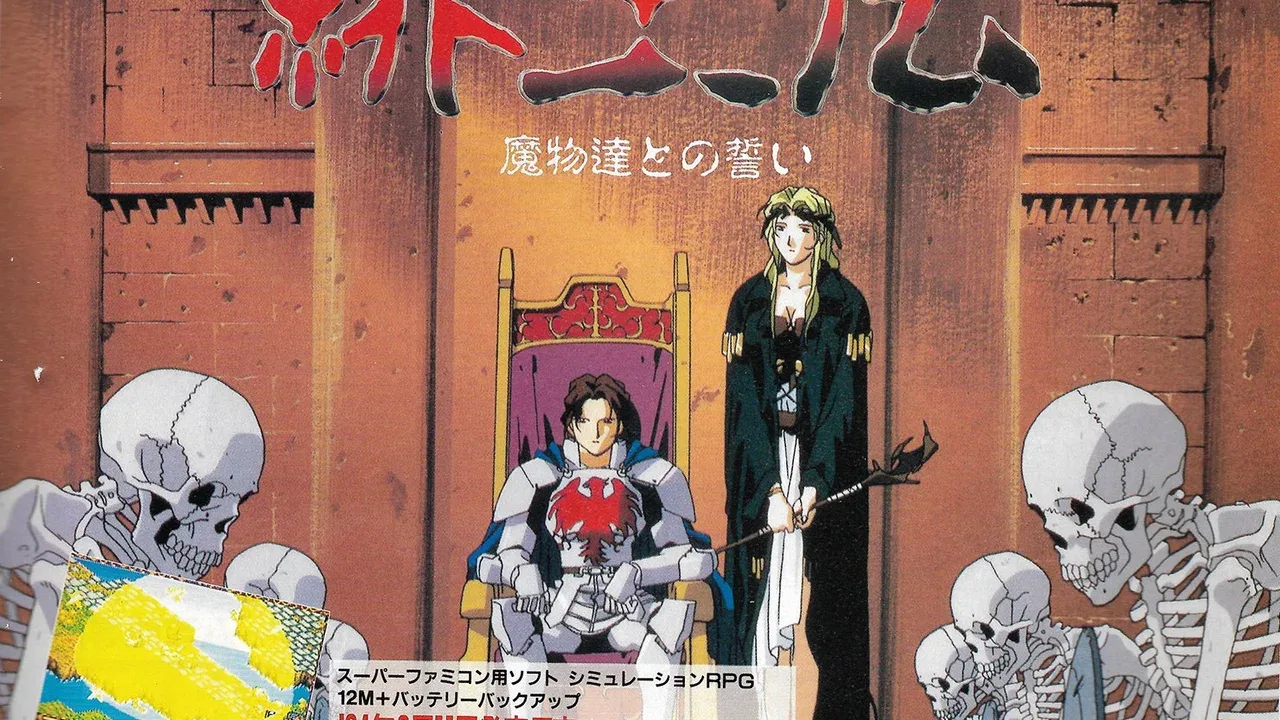
Like its predecessor, Hiōden 2 is a mixture of RPG and real-time strategy. The player commands one or more teams at the same time. The battles are mostly automatic, with preparation having more weight that the actual commands during battles. There is an option to "stop the clock" and adjust the strategy. Most of the gameplay involves exploring the maze-like isometric location with the player's teams, fighting enemies on the way, gathering treasure, and solving (mostly very simple) puzzles to advance to the next area. RPG element comes in form of character levels. The windows-based interface from the previous game returns, with slight adjustments (point-and-click navigation through the main area instead of clicking on arrow keys; more comfortable menu with items displayed next to the character's portrait, etc.).
Hiōden is a strategy game with RPG elements. The player navigates several teams of characters, mostly monsters (up to six in each team) through isometric environments. Sometimes cooperation between different player-controlled teams is required to advance. The game plays in real time, i.e. enemy parties also move and perform actions without waiting for player's input. The RPG angle is present in form of character levels - characters grow stronger after defeating enemies. It is possible to put the teams on "auto-mode", having some of them move and perform actions on their own. The game has a mouse-driven interface with a somewhat unusual feature for its time: windows. The movement field of different teams, character statistics, overview map, team management screen - everything has its own window. It is possible to enlarge any window to full screen, close it, open several small windows at the same time, and drag windows to arrange them on the screen in any way.
Could be interesting
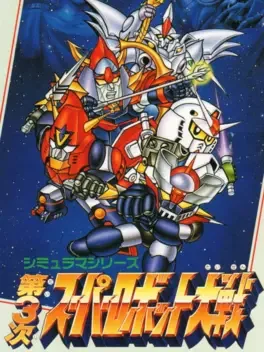
Dai-3-ji Super Robot Taisen ("3rd Super Robot Wars") is the third game in Banpresto's immense Super Robot Wars/Taisen series.Six months after the DC War (as chronicled in Super Robot Wars 2), the DC seems to be regaining their former combat strength thanks to the Zabi family. In response, the United Nations has decided to reorganize itself into the Earth Federation.
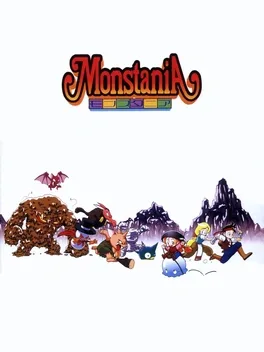
The hero of the game is Fron, a sixteen-year old boy who lives on the island of Monstania. One day, strolling in the forest, he notices a strange light. The light lead him to a clearing, and then suddenly disappeared. But Fron realized what was the meaning of that light - it was a fairy! Of course, everybody knew that fairies had been long extinct, but Fron never believed in that. All his life he wanted to meet a real fairy, and now, when the opportunity has come, he firmly decides to find her. His girlfriend Tia helps him on the dangerous journey, during which they meet a mysterious little girl named Chitta, and get involved in a grand adventure, that will ultimately lead them to the battle against the dark force that threatens the whole Monstania! "Monstania" has a somewhat unusual gameplay within the frames of console RPGs. You don't explore the world in the game: it is entirely linear and takes you to the next destination by itself (only at a few points you can choose where to go next by selecting an appropriate answer). Once within the location, you cannot leave it until you complete all your objectives there, which then take you to the next location. The objective is usually a large strategic battle. You navigate your party members on the battle field, attack with melee and long-ranged weapons, and use special technique which require action points. Unlike most other turn-based strategy games, an enemy makes a move immediately after you did the same with one of your characters, without waiting for the "enemy turn". The RPG element is not very significant: your characters level up automatically after each battle. There are also some puzzles to solve in certain locations.
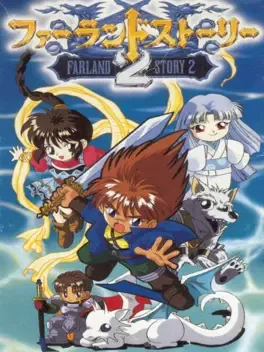
Farland Story 2 is an independent side-story to the Farland Story series (this game shouldn't be confused with Farland Story Denki: Arc Ou no Ensei, which is also known as "Farland Story 2"). The game is set in the same time line as the second and the third "mainstream" Farland Story games, 20 years after Arc has become a king. Peace has returned to the world, but on the continent of Ionia, an emperor is plotting an evil scheme. His son Riad refuses to accept the methods of his father, especially when he wants to use Serena, a girl he loves, for his plans of war and conquest. During a quarrel, Riad attacks the emperor's minister, and is forced to flee the castle together with Serena. The adventure of the runaway prince begins... Graphically and gameplay-wise, the game is similar to other Farland Story games, although its setting is generally more dark. The game consists of large strategic battles, during which you move your party over the battle location, attacking enemies physically when they are in range of your weapons, and casting healing and offensive magic. Like in other Farland Story games, the death of the main character (Riad in this case) means instant Game Over.
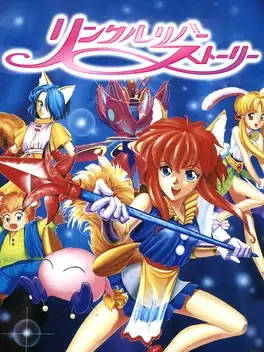
Linkle Liver Story is an action-oriented RPG that takes place on a distant planet called Mamuuna whose inhabitants are humans with animal qualities. The story centers around the "Mother Flower" which gives life to all new beings on the planet when one day it disappears.
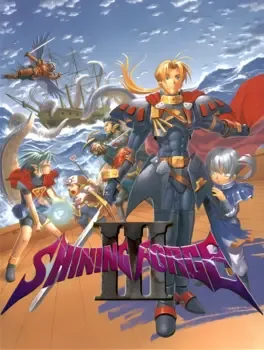
Scenario 2, Target: Child of God, features Medion, Prince of Destonia, and youngest of three sons of Emperor Domaric. Although loyal to his father and his country, he senses that there are other forces at work beneath the tensions between Aspinia and Destonia. He attends the conference in Saraband on behalf of Destonia, along with his brothers Arrawnt and Mageron. As discovered in Scenario 1, much of this influence comes from the Bulzome sect, as well as collaborating separatist factions within both Destonia and Aspinia. Medion works parallel to Synbios of Aspinia, often disposing of rogue Aspinian elements to spare Synbios's force from fighting against its own countrymen. At the end of the game, Medion is forced to battle with Synbios' force when Julian steps in to stop them.
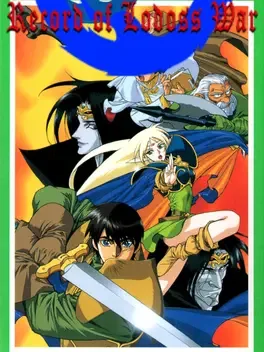
This game is a prequel to the popular anime series, which draw heavily from the look and feel of Dungeons & Dragons. Choose from one of four adventures to play through in this strategy RPG!
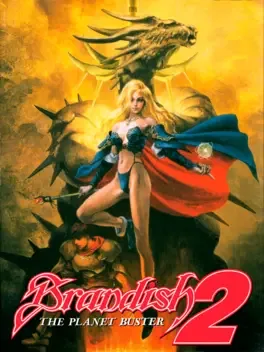
The Planet Buster continues the story that was told in the first Brandish game, and depicts the events that happened three years after the evil demonic king was defeated in his lost kingdom, sunken deep underground. You take control of a young warrior named Ares, who wields a magical weapon, a powerful sword called the Planet Buster. One day, while traveling through a desert, Ares is captured by a warlock named Karl, who is after the powers hidden within the magical sword. Suspecting Ares might have some valuable information, Karl doesn't execute him, but takes away the Planet Buster and throws Ares into his underground prison. Now your primary goal is to guide Ares out of the huge prison full of various dangers, and to get your mighty weapon back. The game is an action RPG with a heavy emphasis on dungeon crawling. You guide Ares through rotating dungeons, fighting enemies in real-time combat, casting spells, and solving an occasional puzzle. You have the ability to jump forwards and to attack inanimate objects such as doors to cause damage and to break the object. The particularity is that your character doesn't rotate in the screen, he always face up and if you rotate all the screen will rotate.
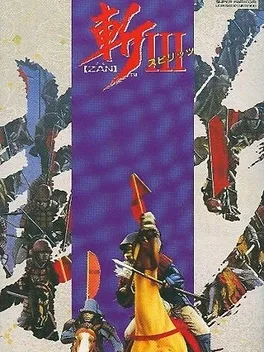
A strategy sim from Wolf Team based on Japan's Sengoku era and the third in their Zan Spirits series. Zan III Spirits is the third game in Wolf Team's series of warring states era-set strategy war sims. While similar to Koei's Nobunaga's Ambition series in many ways, the Zan games are far more focused on warfare and logistics. Zan III is also the second in the Zan series to be released on the Super Famicom: most of the Zan series only appeared on Japanese home computers like the PC-9801 and FM Towns. The player is once again asked to lead the armies of their chosen daimyo (warlord) in an effort to conquer the rest of 16th century Japan. Zan III Spirits is an adaptation of Zan III: Tenun Ware ni Ari for the PC-9801, which was originally released in December 1993 four months prior. Zan III Spirits, like its SFC predecessor Zan II Spirits, was modified for its console release to make it work with the limitations/strengths of the system.

Dark Law is a Role-Playing game, developed by SAS Sakata and published by ASCII Entertainment, which was released in Japan in 1997.

In a fantasy world inspired by Indian folklore, the end of mankind draws nigh. Can you break the cycle before humanity is doomed? Up to four separate scenarios are available for players to enjoy, with a magic system that gives the player total creativity in combat!