
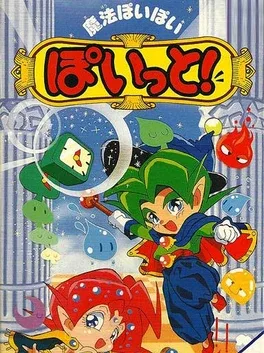
Mahou Poi-poi Poitto!
Buy
Could be interesting
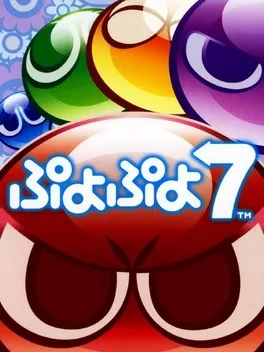
This is the 7th game in the main Puyo Puyo series, which is denoted by the 7. A break from the previous Fever series games, the game is set in a world similar to the real world instead of Primp Town. In this game, a new game mode known as Transformation was added as the default mode. Five new characters were introduced, and a few characters from past games in the series were reintroduced, either as playable characters or cameos.
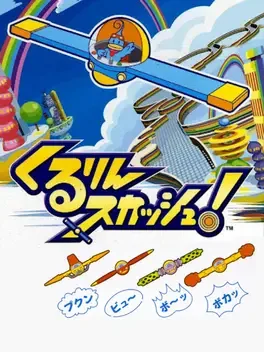
Kururin Squash! is an action-puzzle video game developed by Eighting and published by Nintendo. It was released only in Japan on October 14, 2004. The game is the successor to Kururin Paradise and is the only title of the Kururin series with 3D computer graphics.
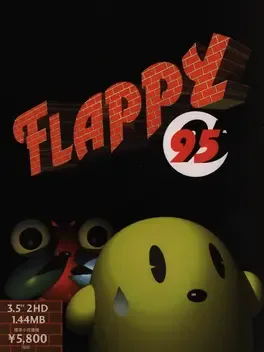
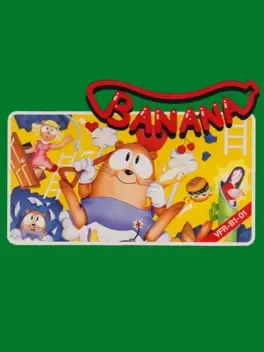
The game takes place in a world called Banana Land, which is populated by anthropomorphic moles. Mr. Mole is on a picnic with his wife and son when an earthquake strikes, trapping his wife and son underground! Help Mr. Mole rescue his wife (and sometimes son) and find their way to the exit through underground areas of varying design. The game features 105 stages and a custom stage design mode. The object of each stage is to make it to the exit after picking up all the various food items and Mr. Mole's family members. There is no way to "die" as such, but the player can make a mistake and make a stage impossible to complete; for this reason the player can "give up" by pressing the A and B buttons simultaneously to re-try the stage.
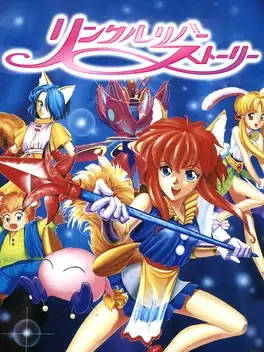
Linkle Liver Story is an action-oriented RPG that takes place on a distant planet called Mamuuna whose inhabitants are humans with animal qualities. The story centers around the "Mother Flower" which gives life to all new beings on the planet when one day it disappears.
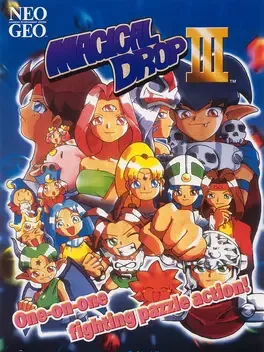
Control a clown to pull in and throw back balloons hurled from the top of the screen. If you line up three or more balloons of the same color in a vertical row, they will burst. If you're not quick enough, the balloons will squash the clown and the game is over. Once you've got the hang of bursting balloons, you'll need to master combos and chains. The third Magical Drop game, first released in 1997, was also developed for the Neo Geo. This games adds representatives for the remaining Tarot Major Arcana, as well as introducing a "daughter" Strength character that more closely resembles the traditional depiction of Strength. The game adds a third button, which allows players to add rows to their field at any time. Additionally, attacks now sends lines to the opponent in non-even rows that vary by character. Hirameki mode is replaced by Adventure Mode, which is a board game that challenges players to reach Empress before CPU-controlled rivals. The English versions of Magical Drop III remove the hardest difficulty setting in Vs. CPU Mode and rival opponents in Adventure Mode.
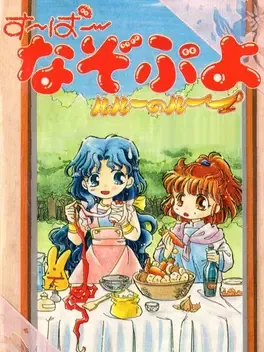
Super Nazo Puyo: Rulue no Roux is the sequel to Nazo Puyo: Arle no Roux. It was succeeded by Super Nazo Puyo Tsu: Rulue no Tetsuwan Hanjouki. A Nuisance Puyo variation known as Iron Puyo was introduced in this game. Super Nazo Puyo: Rulue no Roux uses the basic rules of Puyo Puyo. The game controls like a normal Puyo Puyo game with all five colors available and the ability to roate clockwise and counter clockwise, except the ability to double rotate and climb is not possible. Each puzzle gives the player different objectives to clear. The objectives range from clearing all of a specific color of Puyo, clearing all Nuisance Puyo, creating a specific chain length, clearing a certain amount of Puyo simultaneously, or simply clear the whole board. Every time the player fails to complete a puzzle, the player's health will deplete, as indicated by Arle or Rulue's expression gradually getting more distressed. If the player's health depletes completely, they'll receive a Game Over and can either choose to continue from the last save or quit back to the title. The player can recover completely if the gauges on the right side of the screen fills completely and rank up, with each cleared puzzle filling it gradually. On the pause menu, the player has the option to skip a puzzle at the cost of health. There are five game modes: Arle's Roux, Rulue's Roux, Road to Chains, Endless Puyo, and Editor. In the first three modes, the player must solve the presented tasks with a set of available Puyo. Arle's Roux focuses on a scenario with Arle, acting as the normal course with her puzzles only involving standard Puyo. Rulue's Roux is the mode that focuses on Rulue and acts as the expert mode, with her puzzles including Iron Puyo and Blocks. In both modes, the objective is to clear puzzle sets from varies characters within an area, with one character acting as a boss that cannot be challenged until the others are beaten. Once the boss of a given area is beaten, the player will progress to the next area. Road to Chains acts as a challenge mode where the player is given a series of puzzles to solve at a gradually increasing difficulty, with the player being unable to restore health. The Endless Puyo mode is a regular endless mode except that 6 next Puyo are shown instead of 1 next Puyo, and that nuisance Puyo will fall in the higher levels of difficulty. The Editor mode allows you to place Puyo freely in a manner similar to Practice Notebook in Puyo Puyo 7. You can also set a list of next Puyo and the task to be solved.

In a fantasy world inspired by Indian folklore, the end of mankind draws nigh. Can you break the cycle before humanity is doomed? Up to four separate scenarios are available for players to enjoy, with a magic system that gives the player total creativity in combat!
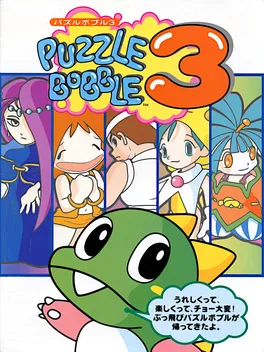
The second sequel to Puzzle Bobble. It was released into arcades in September 1996 and later ported to the Sega Saturn, Sony PlayStation, Game Boy, Nintendo 64 and Microsoft Windows. It would be the final appearance of Puzzle Bobble on the Sega Saturn. Like its predecessors, the player is tasked with shooting balls at groups of balls, creating groups of 3 or more, which are then removed from play. A European remake is entitled Bust-a-Move 3 DX. released in America as Bust-a-Move '99.
Bust-A-Move (also known as Puzzle Bobble) is a real-time puzzle game in which the player controls a device called "pointer" at the bottom of the screen, aiming and releasing randomly colored bubbles upwards. Depending on the aiming, the bubbles may float up directly or bounce off the walls, changing their trajectory. The goal is to aim the bubbles in such a way that they will touch identically colored ones. When such bubbles form a group of three or more, they pop and disappear from the screen.