
Ninja Hamster
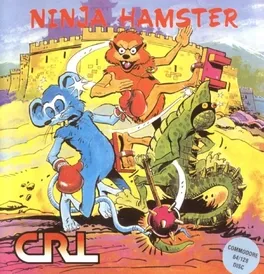
Buy
Could be interesting
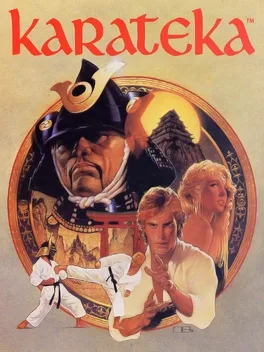
Karateka is a 1984 beat'em up video game by Jordan Mechner, and was his first game created while attending Yale University. It was originally programmed for the Apple II, and was later ported to several other home computers and early gaming consoles. The game was published in North America by Brøderbund, and in Europe by Ariolasoft. The player controls an unnamed protagonist who is attempting to rescue his love interest, the Princess Mariko, from Akuma's castle fortress. The game exhibits a combination of a side-scrolling platform and fighting game elements. The player uses punches and kicks to defeat Akuma and his guards and make his way deeper into the fortress. The game, as with most at the time of development, lacked checkpoints or the ability to save the game, making it a challenge to complete in a single sitting. Karateka has been well-received, particularly for its realistic animations used for the game's characters. The game was considered a breakthrough success for Mechner, and would eventually result in his development of the Prince of Persia franchise. A high-definition remake, spearheaded by Mechner, was released as a downloadable title for the Xbox 360, Microsoft Windows, PlayStation 3, with planned ports for the iOS and Wii U systems.
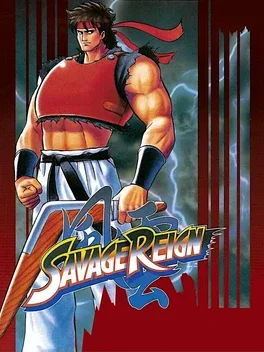
Savage Reign is a vs. fighting game that offers a dozen fighters, mixing fighting with weapons and a two-plane system like the one seen in the Fatal Fury saga, with which it is possible to get to the back of the stage by climbing to a higher level or climbing up pipes. Each stage has interactive elements that intervene in the fights, such as falling stalactites, lava jets, spotlights that can be knocked down, and all the characters, have the ability to execute movements based on projectiles, which can be used to chase the opponent when he changes planes, and which can even be reflected.
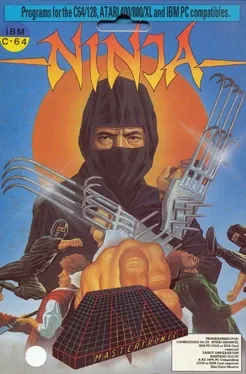
Ninja is a beat 'em up game. As a Ninja, the player attacks a fortress made of individual fixed screens which can be explored non-linearly.
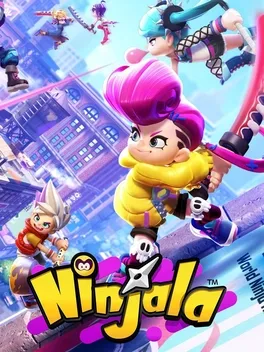
An online action battle game featuring ninja and gum! Assume the role of a modern-day ninja and take part in the Ninjala tournament!
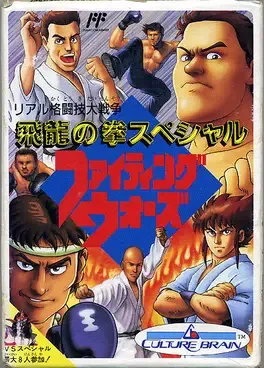
MMA-styled fighting game where each character represents a fighting style, and each style is represented by two characters.
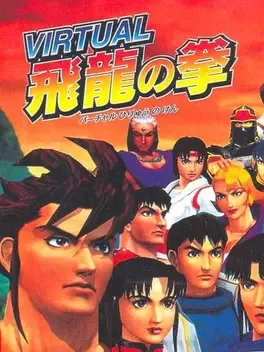
Virtual Hiryu no Ken is an entry in the Flying Dragon series for PlayStation.
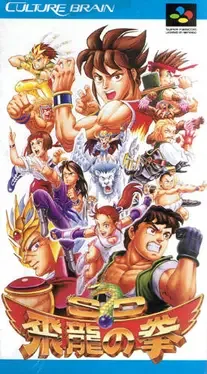
SD Hiryuu no Ken is an Action game, published by Culture Brain, which was released in Japan in 1994.
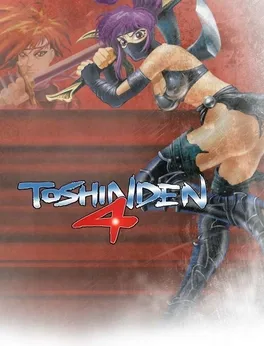
Battle Arena Toshinden 4 is a spectacular 3d combat tournament that goes beyond the limits in an all-out battle where reflexes, skills and timing are essential to defeat the many adversaries. Each bout is played within an incredible 3d location, with every move and counter attack displayed in stunning detail. Toshinden 4 blends a wealth of stunning showcase moves with all the traditional moves. The result is a free-flowing fight boasting cinematic visuals. New "overdrive" mode allows you to produce devastating combinations of moves and the innovative team battle mode creates a truly incredible battle royale.
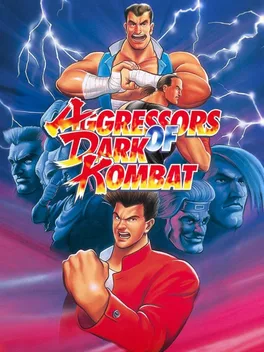
Aggressors of Dark Kombat offers virtually no storyline to explain its fights. In fact, the prefight conversation sequences show that the fights are not much more than chance meetings. The player's chosen character will advance through a series of stages fighting a series of opponents because he doesn't like the way the other guy looks. The game is viewed from the side perspective that virtually all 2D fighting games use. One player can fight against a computer-controlled opponent, or two players can fight against each other. Each character's life bar appears on the upper left or right of the screen, depending on starting location. A timer is located between the two life bars. When one character is drained of energy or the timer runs out, the match is over and the character left standing (or with more life, if neither characters were drained of energy) wins.

Dead or Alive is a 1996 arcade fighting game by Tecmo for the Sega Model 2 (2A CRX and 2B CRX) arcade hardware and the first game in their Dead or Alive franchise. It was ported to the Sega Saturn in 1997. A limited edition was also released for the Saturn which came with an art book. An enhanced port including new characters was released for PlayStation, and later backported for arcade under the title "Dead or Alive++".