
Pick 'n Pile

Buy
Could be interesting

Klax is a 1989 computer puzzle game designed by Dave Akers and Mark Stephen Pierce. The object is to line up colored blocks into rows of similar colors to make them disappear, to which the object of Columns is similar. Atari Games originally released it as a coin-op follow up to Tetris, about which they were tangled in a legal dispute at the time.
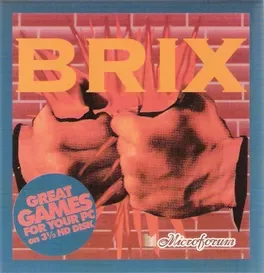
Brix is a puzzle game that can keep you playing for hours. The goal sounds simple: unite the colorful pairs of blocks. Once you see the lasers, lava pits, acid pools, elevators, and other hazards in Brix, however, you'll realize--it ain't so easy! In this logic game You can move different cubes. Place two or more cubes together to make them disappear. The goal is to make all the cubes disappear before the time runs out.

A surreal and very original game by Geoff Crammond The game plays out on a 3D landscape with hills and valleys made up of several levels. At the highest vantage point stands The Sentinel, a statue-like being with an energy draining stare, you begin at the lowest. "Energy" plays an important role, there's a constant amount in the game world and each object is worth a certain number of units - including you. The object of each level is to absorb The Sentinel and Hyperspace to the next from his vantage point. The Sentinel scans further round the landscape every few seconds - if you're caught in his gaze, or rather the square you are standing on can be seen, you'll have about 5 seconds to teleport to another location (or hit a key to teleport to a random location - which will never be higher, and may be lower than your current level) before the Sentinel begins absorbing your energy, when it reaches zero you will be destroyed. To travel a "robot hull" must be created on a visible square then teleported to, making sure you absorb your old hull to avoid losing energy. Boulders and trees can also be created, trees to block The Sentinels view and boulders can be stacked to gain higher ground. There are a few other elements to the game - on later levels there will be other Sentries positioned around the landscape. If only part of you can be seen i.e. not the square you are standing on, a nearby tree can be changed into a "Meanie" which will ultimately force you to teleport. There are 9999 levels in the game but the next level number is based on the current level + how much energy you have remaining.
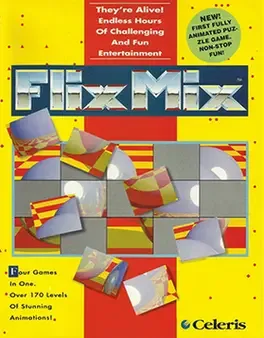
FlixMix is a jigsaw puzzle game featuring a variety of animated images to reassemble. But there is a catch: the jigsaw puzzle is an animated picture, so each piece is not a static part of a picture but a small part of a large animation you have to assemble. You can set a number of options such as the number of pieces and whether the animation randomly plays back and forth or just in one direction. There are also four different modes of play for single or multi player, in this case more like party play. The animations vary from optical illusions to simple CG. The object of the game is to place all the rectangular pieces into the correct positions. Puzzle pieces can be varied in size to as few as 2x2 to over 10x10, depending on the puzzle. Additional options to increase difficulty include mirrored or flipped pieces, locking correctly placed pieces, blanking placed pieces after a time delay, and occasionally playing the video clip in reverse. There are four game modes in FlixMix. In Single Mingle, the player has unlimited time to solve a single puzzle. In Scramblecade, the player rotates through all the puzzles in a tileset, with the pieces shrinking in size almost each round. The player has a time limit, which can be extended by placing pieces, placing pieces in bonus spaces worth extra time and points, and solving puzzles. In Joint Venture, up to nine players take turns solving a sequence of puzzles with the winner being the one to solve the most puzzles within a time limit. In Mix'n'Match, up to nine players take turns solving the same puzzle in sequence, with the player with the lowest time declared the winner
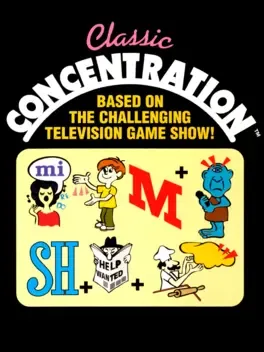
Concentration was a popular game show in the mid-to-late 1980s and this game was adapted from that television program. Two players can play against each other, or one person can play against a computer generated opponent. The answer to the puzzle is hidden by tiles. The tiles have words denoting game prizes ("Mexico", "Camera", "Telescope", for example) and your object is to find the two matching worded tiles. Exposing two at a time, your memory is taxed as more prize tiles are revealed and then covered over again. As more tiles are matched, the hidden puzzle is revealed. Solve the puzzle and you win the game.
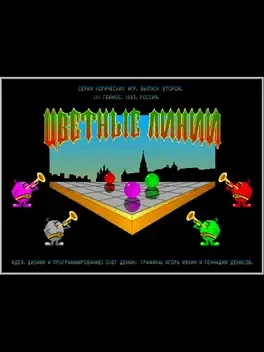
Players rearrange colored balls in order to create five in a row of the same color.
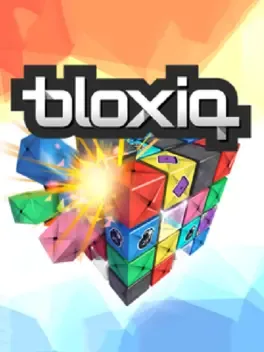
A 3D block matching game for the PlayStation Vita.
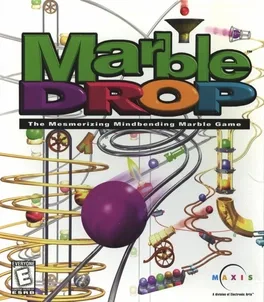
Players are given an initial set of marbles that are divided evenly into six colors: red, orange, yellow, green, blue, and purple, with two more colors available to purchase: black and silver (steel). These marbles are picked up and dropped by the players into funnels leading to a series of rails, switches, traps and other devices which grow more complex as the game progresses. The aim is to ensure that each marble arrives in the bin of the same color as the marble. Players must determine how the marble will travel through the puzzle, and how its journey will change the puzzle for the next marble. When a marble runs over certain sections of the puzzle, the paths may be rerouted or cut off, either temporarily or permanently. For example, if the marble runs over a button, it might hop, skip and jump a diversion that sends the next marble down a different road.
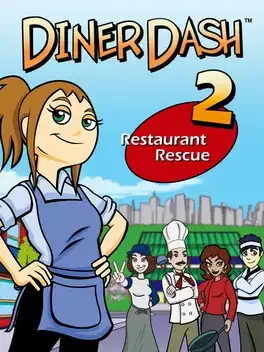
Diner Dash 2: Restaurant Rescue is the second installment to the popular game series Diner Dash preceded by Diner Dash. It is published by PlayFirst, like all other Diner Dash series.

aa is the "hello world" app for iPhones, iPads & iPods. i.e. aa is like snake on an old brick phone, it's fundamental.