
Pink Sweets: Ibara Sorekara
Buy
Part of collection:
Ibara
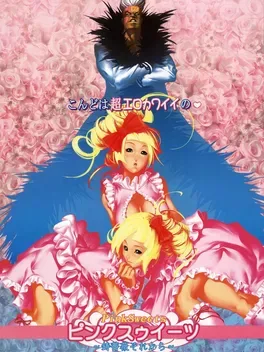
Pink Sweets is a manic shooter. Its story presents an alternate universe version of Ibara; in this universe, none of that game's villains died, and the player controls one of the four boss characters from the previous game. It presents a similar rose-draped steampunk aesthetic which provides an excuse for the player's ships to fly through a very floral 19th century. Designer Shinobu Yagawa drew on his experience working on Raizing games such as Battle Garegga to present a game that plays a bit differently from the traditional Cave mold. The player's ship has a traditional shmup-style shot, but is also able to charge a special attack by not firing. A fully-charged, unfired special attack acts as a form of shield that can cancel certain enemy bullets; when fired, the fully-charged special attack acts as a kind of miniature bomb.
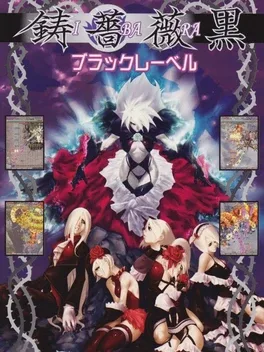
Ibara Kuro: Black Label is a revisited version of the arcade game Ibara, featuring some changes introduced in its PlayStation 2 conversion, along with further ones. While graphics, sound, characters and plot are reproduced with no alterations, gameplay and the HUD are changed. It is now possible to choose between Bond and Dyne as one's avatar, which implies choice between two different spaceships, and four different settings power-speed balance for each of the two. Holding the fire button now makes shots more powerful, while also slowing the ships. The current player's rank, a measure of how well we are playing affecting both score multiplication and the amount of bullets fired by enemies, is now visible, indicated in a bar at the top of the screen. Extra weapons (missiles, napalm, homing missiles, sway missiles, machine gun, and burnar) are now all keepable, and switched by the press of a button (in the former version of the game, Rob and Dyne could use only the last collected one). There is an overall increase in firepower, both ours and the enemies', particularly in regards with the Guardians. Some of the background music tracks are different.
Could be interesting
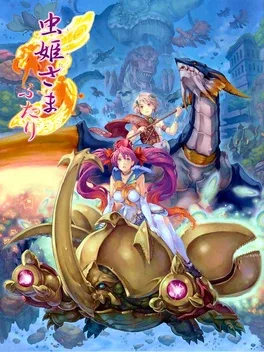
Mushihime-sama Futari is a bullet-hell shoot 'em up where players control one of two insect-themed warriors through relentless waves of enemy fire. The game blends precise dodging with strategic weapon use in a vibrant, high-speed world filled with colorful enemies and bosses. Originally released in arcades, this version delivers the purest form of the game's challenging gameplay, requiring sharp reflexes and pattern recognition to survive its intense bullet patterns. The iOS adaptation, titled Bug Princess 2, brings the same core experience to mobile devices, adapting controls for touchscreens while maintaining the game's signature intensity.

Espgaluda II is a manic shooter originally released by Cave in the arcades in 2005 as a sequel to Espgaluda.
Giga Wing 2 (ギガウイング2?) is a 2000 vertical scrolling shooter arcade game developed by Takumi and published by Capcom on Sega's NAOMI arcade system board and later ported in 2001 to the Dreamcast console. The arcade version is notable both for its excessive scores (scores in the quintillions are not unheard of), and for using a horizontally aligned monitor (much like Treasure Co. Ltd's Radiant Silvergun), something that is considered rare for a vertical shooter.
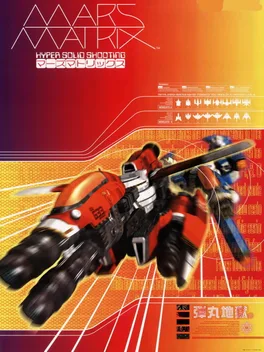
A prediction is that before human civilization, there was once an advanced civilization on Mars. A sorceress destroyed the civilization and everything that was remembered of it, except a chip called "INFINITY". In 2100, millions of people were starving due to massive food shortages and has caused civil wars around the world. Centuries later, however, the world government had sent colonists to Mars which began to solve these problems. At a nearby farm, the Infinity chip was discovered and it revealed all the technology of the advanced civilization. In 2309, a Declaration of Independence has been sent to Earth. Large armies have been amassed on Mars, and a gigantic armada was waiting for any attack from Earth. The Earth government sends out a fleet of battleships followed by a special air raid unit called ACID; ACID is equipped with a new fighter ship known as the Mosquito. Their mission is to enter Mars, stop the rebel violence, locate and destroy the rebel leader, whoever... or whatever it may be...
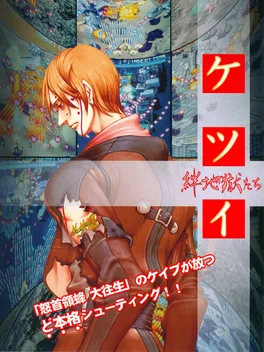
Ketsui: Kizuna Jigoku-tachi is a vertical bullet hell shoot 'em up developed by Cave and released in 2003.
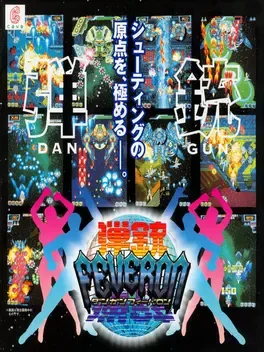
Dangun Feveron is a vertical scrolling shooter game developed by Cave and published by Nihon System Inc. in 1998. The gameplay is typical of manic shooters, with numerous swarms of enemies onscreen at any given time, and bosses that shoot intimidatingly large clusters of bullets. Unique to this title, the score of the game is disco music, which is a particularly unusual choice for a shoot 'em up.
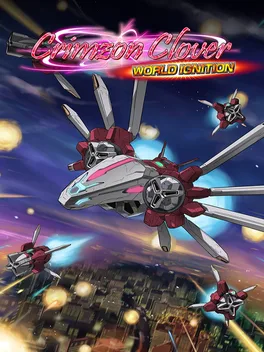
Crimzon Clover: World Ignition is a fast-paced, top-down bullet-hell shooter where players command one of three unique ships through relentless waves of enemy fire. The game expands on the original with multiple play modes: Boost (adaptive difficulty), Original (classic arcade-style), Unlimited (brutal bullet chaos), and Time Attack (speedrun challenge), plus a Novice setting for beginners. Core to the experience is the Break Meter, which fuels powerful bombs and temporary power-ups: Break Mode amplifies firepower, while a full meter unleashes the devastating Double Break Mode, turning the tide against even the toughest bosses. A robust Training mode lets players customize scenarios to hone their skills. With vibrant visuals, precise controls, and escalating intensity, World Ignition delivers a thrilling test of reflexes and strategy
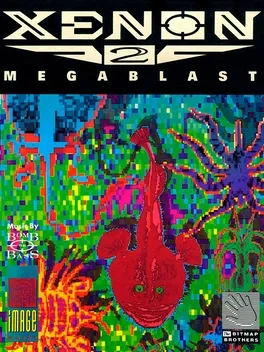
No-one likes a and loser. And no-one comes more universally despised than Xenites. For a thousand years they have been plotting revenge for their humiliating defeat in the last Galactic Conflict. Now the very fabric of time is in danger. The Xenites have planted five Time Bombs through history. Only you can save the day - not to mention the Universe. The last time you met it was a playground scrap. This time it is war.
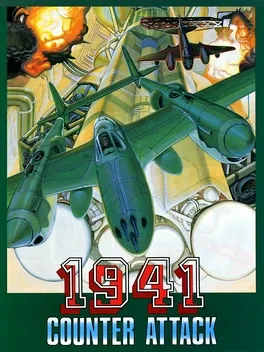
The year: 1941. The place: 20,000 feet in the air over the North Atlantic. Lightning flashes across the skies of war-torn Europe. Your mission: beat back the imperial forces before they can use their new weapon! In 1941: Counter Attack, the goal is to shoot down enemy airplanes and collect weapon power-ups. It is the prequel to 1942, and the third game in the 19XX series.
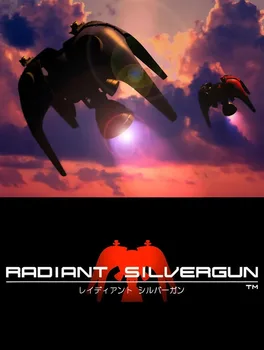
Unlike in most other shoot 'em ups, there are no power-ups. All weapons are available from the start. Weapons can 'level up', however, becoming more powerful as the player uses them to score points. There are a selection of 7 weapons that can be used at any given time: The game is designed so that there is almost always a 'right' weapon for any situation. The bosses in the game are designed so that they have multiple 'sections' which, if all destroyed before the 'core' of the boss, will award the players with point bonuses. Being able to apply the right weapons on any different boss is key to obtaining these bonuses. For example, a boss may have two sections located on either side of the screen. You could immediately go up to one and begin shooting it with a vulcan, or you could hover in the centre and hit both at the same time with the side bombs. This would increase your chance of obtaining the bonus before the time limit runs out and the boss self-destructs. The game rewards players for "chaining" enemies of just one of three colors, red, blue, or yellow. Whenever the player kills three enemies that are of the same color, who can obtain a points bonus. This also facilitates faster upgrading of weapons.