

Buy
Part of collection:
Pole Position
(last 3 games)
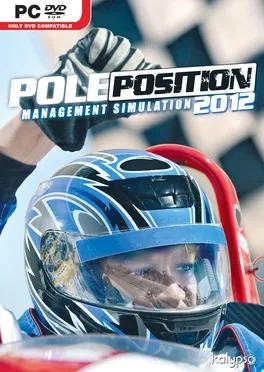
Pole Position 2012 will put your manager skills to the test by putting you in charge of your Formula 1 racing team. It’s your responsibility not only to buy spare parts, but also to design the car and to recruit the members of your team. And then, you have to decide which training sessions are the most appropriate for your pilots. Pole Position 2012 offers you more features than ever in a Formula 1 racing team management simulation. The whole technology tree was revised from the ground up and you have to pick your own research from over 100 new technology projects. The team management system is easier to use and is even more interesting.
An updated version of Pole Position for the click wheel iPod and iOS.
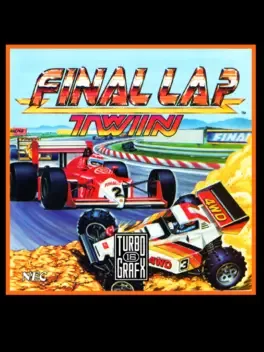
Final Lap Twin is a hybrid racing/role-playing game released for the PC Engine in 1989 and the TurboGrafx-16 in 1990, as a spin-off to the 1987 arcade game Final Lap. The protagonist is on a quest to live up to the reputation of his racing-champion dad. He travels over the map, meeting small-time racers, and must race his car to earn money that he spends on upgrading his car, eventually facing the local racing champion. After beating the rest of the local racing champions in the various cities, the protagonist must go through a maze to find the final upgrades of the different parts of his car, and then face the world racing champion.
Could be interesting
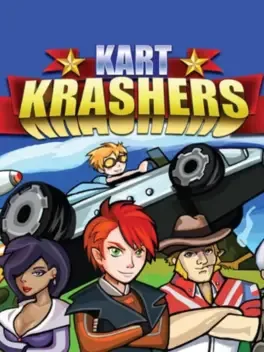
Kart Krashers is a racing game for DSiWare.
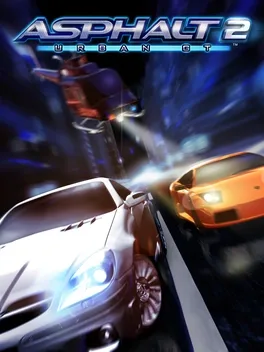
Asphalt: Urban GT 2 shifts into gear with six game modes, numerous tuning possibilities, 30 tracks and 36 licensed cars and motorcycles - taking handheld racing simulations to a new level. To keep the action hot, Asphalt: Urban GT 2 features music from Moby and music and appearances from the Pussycat Dolls.
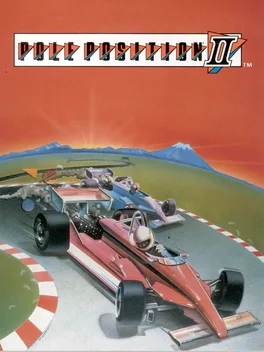
Just like the first game, but with improved graphics and 4 different tracks to choose.
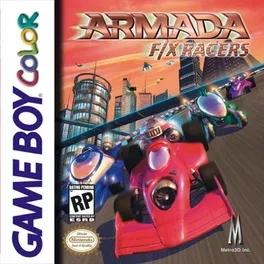
Put adventure into overdrive, as you captain a futuristic vehicle, and race through six alien worlds to face off in a battle of wills, thrills, chills and spills. Take on opposing high-tech vehicles, obstacles and obstructions - all as you approach a final showdown against multiple-bosses in a good 'ol game of bumper cars, minus the bumpers.
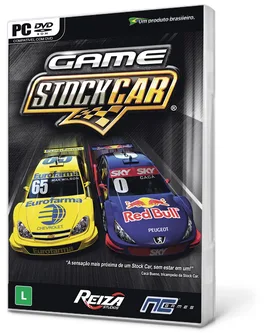
Racing game.
Racing game developed by Reiza Studios.
Drive in circles, racing another car, and do as the title tells you.
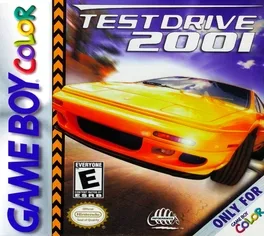
All of the action and excitement of sports car racing comes to the Game Boy Color with TEST DRIVE 2001. You can choose from 13 real world cars including the Lotus Elise, Dodge Viper, Jaguar XK-R, and a 1985 Ford Mustang and customize any of them to meet your driving style. Then you can hit one of 48 tracks in 12 different locations. While on the track, you need to watch out for jumps, shortcuts, and traffic that will ram into your vehicle. Try to learn all of curves of a track in a Single Race, or if you are looking for extended competition, try to win a Tournament. For the ultimate challenge, try to catch speeding criminals in the Cop Chase. If your friends want to race you, they can with the link cable option. Get a car and lay some rubber on the street in TEST DRIVE 2001.
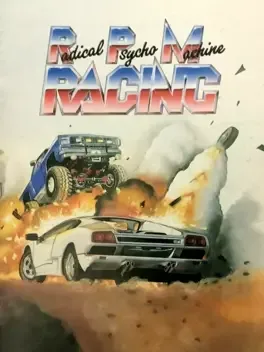
RPM Racing was preceded by Rareware's R.C. Pro-Am in 1988 and Electronic Art's Racing Destruction Set in 1985, with the latter being the larger influence. It is a precursor to Rock 'n Roll Racing, which was done by the same developer. Combat, obstacles and traction on the non-flat tracks play a significant role. There are 3 vehicle types to choose from that perform differently on pavement, dirt, ice, flat or bumpy tracks. Cars can be armed with oil, nitro and mines. Additionally, there are 3 levels of tires, engines, shocks and armor. There are full race season, single race and custom track modes. In 1 player games, the 2nd player is replaced with one of 8 AI opponents who are each associated with their own vehicle. In season mode, each track has an entrance fee and cash prize for placing 1st; often lesser cash prizes for lesser placements are also awarded. For an additional fee, racers can opt to move to a higher racing class (levels) where fees and prizes are bigger. Each class has its own set of tracks that the player may choose from. No track is mandatory or unavailable within a class. The player also has the option of going back to a lower class for free, which may become necessary if funds are eaten up be fees without winning prizes. However, going up always incurs a fee, even if the player has been there before. Custom track designing is not intuitive but fairly easy to learn. Players can set the track's laps, gravity and starting line type. Each track section can be pavement, dirt, or ice. Track sections are laid out like puzzle pieces on a 2D non-isometric grid (Pipe-Mania style). Sections include horizontal and vertical straights, four standard 90° turns, eight T-sections for diverging and converging multiple paths in any direction and a criss-cross. Either a horizontal or vertical special straight section is used as the starting grid. The starting grid can be oriented forward, reversed, face-off with player 1 forward, or face-off with player 1 reversed. 7 points are used to adjust the 6 slopes in straight sections to 5 different heights. Slopes can be flat (0:1), inclined (1:1), or steep (2:1). Non-straight sections can only be adjusted for height for the entire section at once. An isometric view of individual sections is provided to help to orient the section's design to the adjacent sections. If the edge of a section does not match the height of the adjacent section(s), the player is warned immediately but may proceed without correcting the error immediately. But such error must be eliminated before the track can be saved. Also required for a track to be saved is no dead ends, and a starting grid section. The track verification is surprisingly liberal, even allowing diverging and converging paths that are against the flow of traffic (like turning around and going the wrong way up a freeway merging lane). The AI opponents are generally not able to discern the fastest or shortest route and can even be diverted into a path with no natural exit, or with very clever path designs, valid lap paths can be entirely different for player 1, player 2 and AI players; which can lead to interesting traffic patterns.
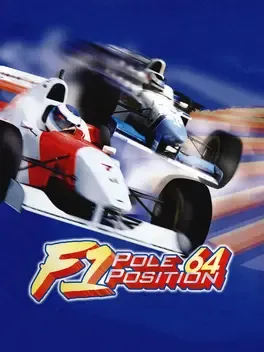
The game featured all the tracks from that Formula One season, at a time when the racing began in Australia, and ended in Japan. Teams would be set up with relevant drivers, however there was a roster-feature included, which allowed the player to swap drivers from one team to another, and even removing a real driver and replacing him with unknown drivers named Driver 1-6. Grand Prix Mode allowed players to progress through the racing calendar, you could also choose single races or a time trial on various tracks. Battle mode allowed you to pick who you wanted to race against over a however many laps you chose.