
Populous: The Beginning - Undiscovered Worlds

Buy
Parent game
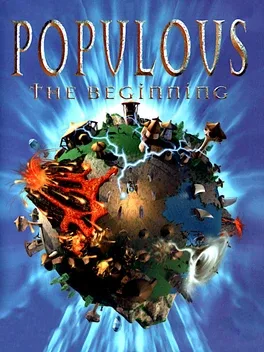
Populous: The Beginning is a strategy and god-style video game. It is the third entry in the Populous video game series, developed by Bullfrog Productions in 1998. The PC version of the game was released November 30, 1998 and a PlayStation version was later developed and released on April 2, 1999. Unlike earlier games in the series, which cast the player in the role of a god influencing loyal followers, The Beginning took a radical departure and placed the player in the role of a shaman, who directly leads her tribe against opponents. Throughout the twenty-five missions of the campaign, the player leads their tribe across a solar system, dominating enemy tribes and tapping new sources of magic, with the ultimate goal of the shaman attaining godhood herself. Populous: The Beginning was the first entry in the series to use true 3D computer graphics; Bullfrog waited four years after Populous II: Trials of the Olympian Gods so that the graphics technology could catch up to their vision for a new and different game in the series. The developers considered the addition of terrain deformation and manipulation, combined with "smart" villagers who automatically attended to tasks, to add an entirely new dimension to the series. The game's original title was Populous: The Third Coming before being changed prior to the beta release. Populous: The Beginning plays very differently from earlier titles and received mixed reviews. Reviewers positively noted the excellent graphics, while complaints were directed at the artificial intelligence and the indecision in game design between being a real time strategy title and a god game. GamePro's Peter Olafson wrote that Populous: The Beginning was not a bad game, in fact a good one; "but it's a different game—one without a quintessential quality that defined Populous."
Part of collection:
Populous
(last 3 games)

Peter Molyneaux's pioneering "God game" gets resurrected and re-imagined for a new generation of handheld strategists in Populous DS. This time players take control of five different deities, and make use of each God's unique elemental miracles to manipulate terrain and encourage the growth of a civilization. Solo gamers can take part in the 50-mission campaign or tackle the "Warrior Hunt" mini-game in the "Free Play Mode," and multiplayer action lets up to four people battle one another using earthquakes, tidal waves, and volcanic eruptions.

Undiscovered Worlds is the official expansion pack to Electronic Art's 1998 real time strategy game; this mission pack adds 12 new levels and follows the storyline on from Populous: The Beginning.
Populous: The Beginning is a strategy and god-style video game. It is the third entry in the Populous video game series, developed by Bullfrog Productions in 1998. The PC version of the game was released November 30, 1998 and a PlayStation version was later developed and released on April 2, 1999. Unlike earlier games in the series, which cast the player in the role of a god influencing loyal followers, The Beginning took a radical departure and placed the player in the role of a shaman, who directly leads her tribe against opponents. Throughout the twenty-five missions of the campaign, the player leads their tribe across a solar system, dominating enemy tribes and tapping new sources of magic, with the ultimate goal of the shaman attaining godhood herself. Populous: The Beginning was the first entry in the series to use true 3D computer graphics; Bullfrog waited four years after Populous II: Trials of the Olympian Gods so that the graphics technology could catch up to their vision for a new and different game in the series. The developers considered the addition of terrain deformation and manipulation, combined with "smart" villagers who automatically attended to tasks, to add an entirely new dimension to the series. The game's original title was Populous: The Third Coming before being changed prior to the beta release. Populous: The Beginning plays very differently from earlier titles and received mixed reviews. Reviewers positively noted the excellent graphics, while complaints were directed at the artificial intelligence and the indecision in game design between being a real time strategy title and a god game. GamePro's Peter Olafson wrote that Populous: The Beginning was not a bad game, in fact a good one; "but it's a different game—one without a quintessential quality that defined Populous."
Could be interesting

Call of Dragons is an MMO fantasy conquest game from the creators of Rise of Kingdoms, offering an incredible strategic combat experience.
Three Kingdoms: Fate of the Dragon is a Real Time Strategy game based on the Romance of the Three Kingdoms.
A real-time strategy game continuing the story of the fantasy world of Khaldun. Even as the world erupts in civil war, an ancient evil gives out a call, and the Shadow-touched begin to gather.

Real-time strategy game for web browsers and PC. Play online with friends!
DwarfHeim is a class-based co-op RTS for 1-3 players. Survive against endless waves of trolls either alone or with friends in Survival mode, defeat enemy clans in Multiplayer Conquest, or build your Dwarven settlement in Sandbox mode
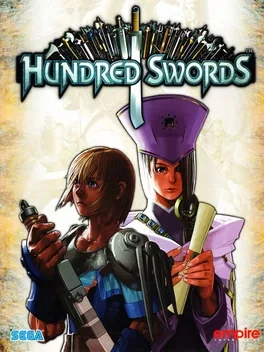
A Hundred Swords is a fantasy based strategy game with a medieval tone, developed by Smilebit initially for the Sega Dreamcast, and later released for the PC.
The countries of Draco and Phoenix have come to blows in Eastland, the land of the gods. After an uneasy peace, they have both decided to conquer the entire land. But is it their own idea, or has the wizard Horus corrupted them both? Battle for Eastland is a real-time strategy game, with a large number of magical forces. Each of the two sides has a distinct class list, and ranges from the basic (shamans and warriors), to the magical (dragons and golems). In total, 30 different troops are included. In addition, as a powerful wizard, you have the ability to drop game-changing spells on the battlefield, running off a recharging mana bar. By having your troops kill enemies, you will increase in level, which gives you access to the higher-end troops, spells, and research. Your experience is kept between battles in the campaign and skirmishes, opening up new tactics as time goes on. Single-player campaigns for both Draco and Phoenix are included, and previous levels may be replayed at any time. Also, 16 multi-player and skirmish maps are included. Finally, a level editor will let you create your own levels.

Takeover is a strategy game, with the goal of the game being to takeover all buildings (Castles, Towns, and Magic Towers) on the map. It has multiple aspects and several factions. The main factions the player can choose to play as are the Icedales Cult, Duchy of Westaria, and Crimson Horde. A fourth, unplayable faction, is the Rivadis empire, the main antagonists.

A real-time strategy game from Nihon Falcom that serves as a spin-off to Lord Monarch, this time with an isometric perspective.
Lord Monarch Online was released as freeware over the internet. It’s basically the same as the other versions but features totally new maps. Despite the “online” in the title, there is no network multiplayer. A fanmade map editor was created for the previous Windows versions, and this version can play those maps. This is also the only version of Lord Monarch translated into English, which also included an extensive online manual. Since there’s no real story in any of the computer versions, the only thing you need to know are the menu commands. Therefore, you can practice on the English version, and then use that knowledge if you want to play the other Japanese versions.