
Power Stone 2



Buy
Part of collection:
Power Stone
(last 3 games)
Capcom ported the entire Power Stone series to the PlayStation Portable with a few enhancements: most notably, the PSP version of the original Power Stone included the four new characters introduced in Power Stone 2.
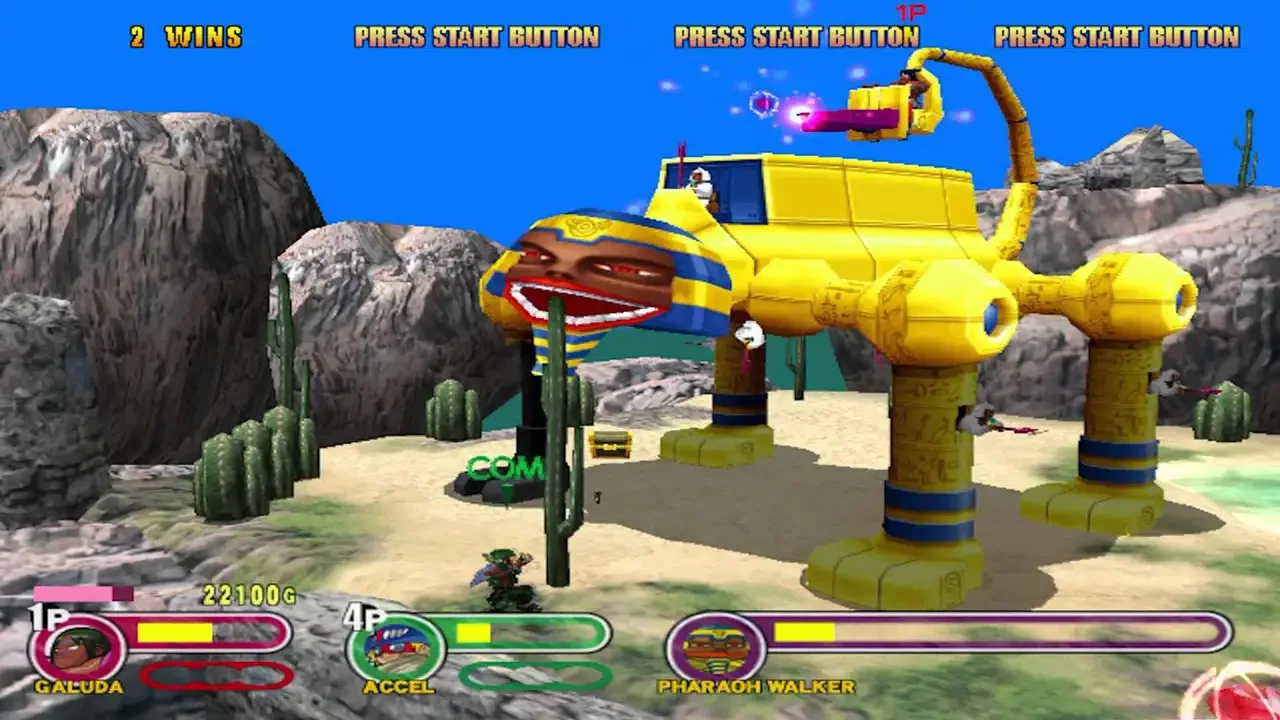
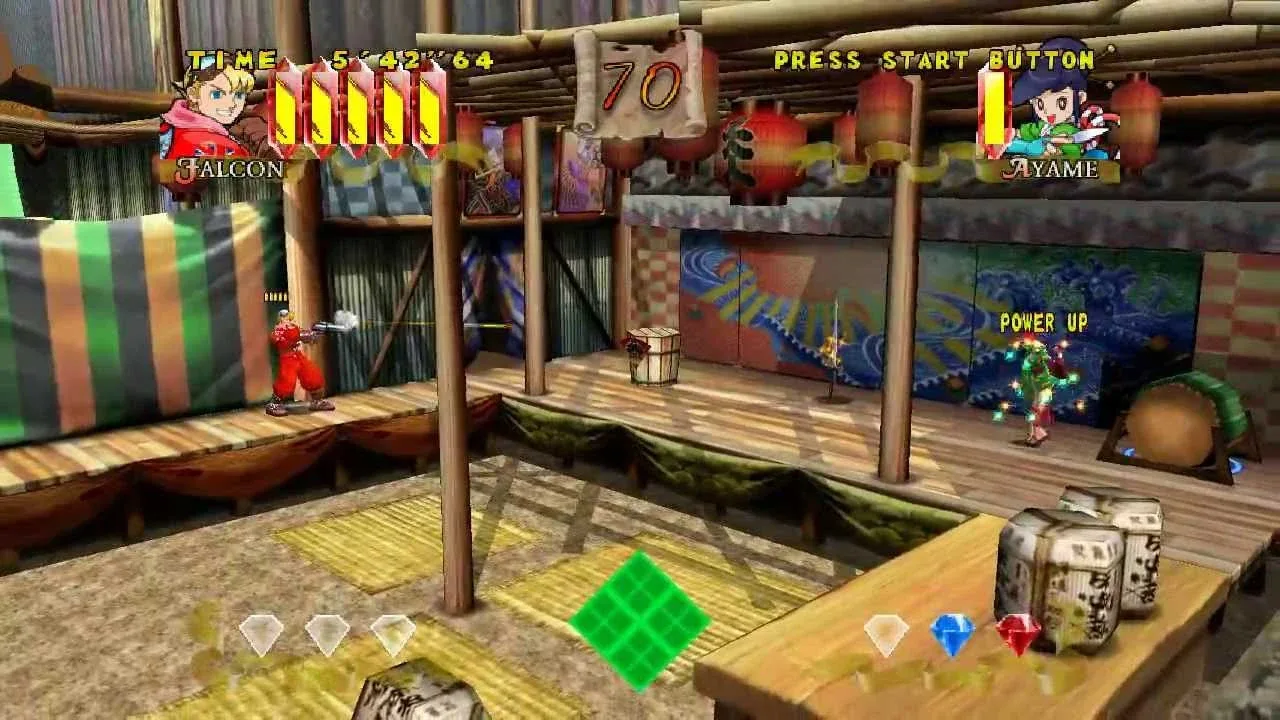
is a multiplayer fighting game that built on the innovative gameplay introduced by its predecessor, Power Stone. Power Stone 2 allows up to four players to choose from multiple characters and utilize items such as tables, chairs, and rocks in battle. There are four different modes available for the game 1-on-1: Much like the original Power Stone, a two-character storyline game. Arcade: A four-character storyline game, with two characters advancing each round. Original: Multiplayer mode, with free choice of characters and stages. Adventure: An unpredictable storyline game, where players can collect items, cards and money. Power Stone 2 offers five interactive 3-D stages to begin with, plus the two boss stages which players can also access in Original mode. All but the Original mode is played out like a storyline, where two battles are fought on the regular stages, followed by the Pharaoh Walker boss, then another battle, and ending with the Dr. Erode boss stage. Three extra stages may be unlocked for Original mode by meeting certain requirements in Arcade mode, as well as a desert area stage, which is essentially the Pharaoh Walker boss stage, but without the boss. Though each player has their own set of default ground and air attacks, the character can execute more powerful fusion attacks after collecting three Power Stones and transforming. Power Stone 2 does not offer an opportunity to block, although tapping on the control pad just before an enemy attacks will cause you to dodge. Most of the stages are dynamic and will change as the battle progresses. For example, the airplane stage starts out on a warplane. After a set amount of time, the plane will fall apart, forcing all the players to battle while skydiving toward the ground. Shortly after, the players will fall onto a floating platform, where the remainder of the battle will be held. This, in essence, creates three sub-stages within a single one. Each stage is also littered with item boxes, which hold a random item that a player has acquired and unlocked in Adventure mode or created in the Item Shop. They may also contain Power Stones. Items are extremely diverse. Damaging items range from guns, flamethrowers, gigantic hammers, a wide assortment of swords, to bear traps, roller blades, and even a magazine that can be thrown. Non-damaging items include food that will replenish health, shields for defense, elixirs for invisibility, adhesive sprays to slow your opponents, and wings for extra jumps. Cards that can be used to mix items can also be found in Adventure mode. Furthermore, most stages also have their own collection of unique items and fixtures that the player can use. For example, the submarine level comes with turrets, small planes to drop bombs, and icebergs to throw at opponents. Each level is also highly interactive, as players can use many of the stage elements themselves. All players can also gain extra height by jumping off a wall.
A VMU game released with Power Stone.
Could be interesting
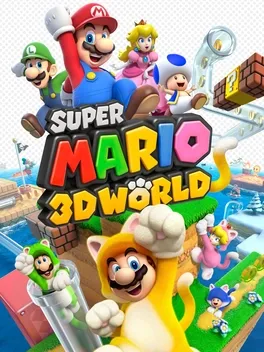
Super Mario 3D World is a 3D platformer action game for the Wii U, and a follow-up of the Nintendo 3DS installment Super Mario 3D Land. The game builds upon the previous installment, following a similar 3D level-design convention inspired from the 2D platformer titles where players must navigate through a linear-designed level within a time limit to reach a level's Goal Pole. One key aspect introduced in this title is the simultaneous multiplayer: while not the first game in the series to do so, it is the first 3D title in the Mario series to incorporate up to four players cooperating with each other to reach the goal. Players can select their character from a pool of playable characters prior to starting the game, and each of these characters have their own unique playstyle that gives them advantages and disadvantages over other characters. The game makes use of several Wii U exclusive features, such as tapping blocks with the touch screen on the GamePad and blowing into the mic to reveal hidden items and blow away enemies. Various new power-ups are introduced in this title, with the trademark suit being the Cat power-up, which enables characters to perform a melee attack, climb up walls, and leap while midair, as well as the game generally having a cat-based theme.
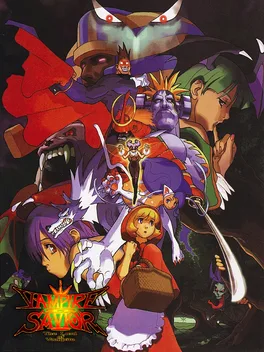
This is the 3rd in the Darkstalkers series. It plays much the same as the first, but features better animation, more playable characters, and a deeper storyline.
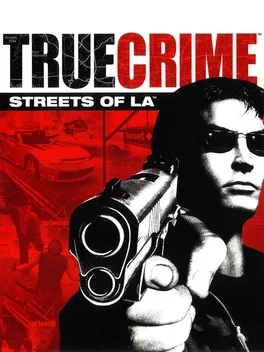
True Crime: Streets of LA is a free-roaming driving and action game similar in concept to Grand Theft Auto III. The game's structure is mission-based; most of the missions are dictated by the story and initiate following a cutscene that advances it. Failing a mission still allows the player to continue playing through the chapter and undertake subsequent missions; in some cases this will lead to branching paths and optional missions. However, in order to complete the whole chapter the player must eventually succeed in all the main missions.
Mortal Kombat 3 brings new elements to the 2D fighting series: multi-level playfields, "Dial-A-Combo" attacks, a "Run" button to speed up the battles, and "Vs." codes, which unlock new powers and abilities once both players enter a code sequence in pre-match-up screens. Also included are more stage fatalities and finishing moves as each warrior attempts to go one-on-one with the Centaurian enforcer Motaro, and Shao Kahn himself.
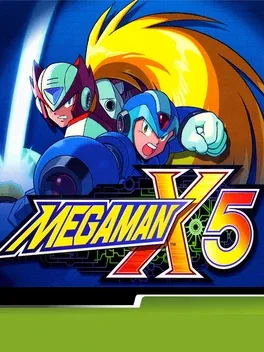
Mega Man returns for more wild action in MEGA MAN X5. This time around, terrorists have attacked an asteroid colony and turned off its artificial gravity. Now, it is up to Mega Man and his friend Zero to defeat the terrorists, turn the gravity on, and keep the colony from crashing into the Earth. The gameplay is what fans of the series have come to expect: Mega Man must use his blasters and bombs to make his way through eight levels of running, jumping, and shooting action. If you decide to play as Zero, you will have to use a plasma sword and some cunning to get through the same levels. In either case, the characters will have to face tough bosses that have unique abilities. Once a boss is defeated, Mega Man and Zero can utilize the boss's talents. Only Mega Man and Zero can save the colony and the Earth in MEGA MAN X5.
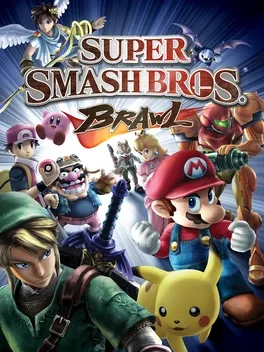
Super Smash Bros. Brawl is the third installment in the Super Smash Bros. series and the follow-up to Super Smash Bros. Melee. This edition introduces super attacks referred to as final smashes, as well as a brand-new adventure mode in The Subspace Emissary which is a side-scrolling adventure in the style of a platformer. It retains all basic mechanics of the Super Smash Bros. series, such as a damage meter, stocks, and Smash-style attacks.
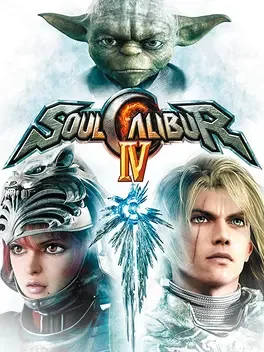
"Swords will be honed and weapons optimized as the world renowned weapon-based fighting series Soulcalibur unveils a fourth installment. Delivering new gameplay modes, characters and enhanced features with unprecedented 3D modeling and animation, Soulcalibur IV strives to be the definitive fighting game experience. The unrelenting pursuit of two legendary swords continues as Soulcalibur IV re-introduces classic warriors from the series as well as debuting new characters bringing new conflict and intrigue. Soulcalibur IV propels the fighting genre into the next-gen era with visually realistic environments, interactive stages, enhanced AI, and a new battle system." Exclusive to the Xbox 360 version is Yoda from Star Wars, who’s inclusion was meant to represent the colours of the Xbox Logo.
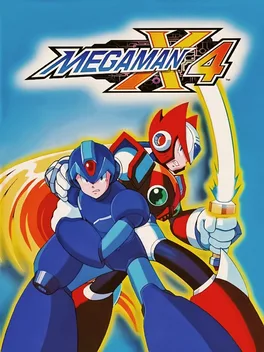
Mega Man X4, known as Rockman X4 in Japan, is the fourth game from the Mega Man X series. It was the second game in the series to be released on the Sega Saturn and Sony PlayStation (although it is the first original game; Mega Man X3 was ported to the systems), released in 1997 (and also re-released onto PlayStation as part of its greatest hits in 2002). It was later ported to the PC in 1998 and then re-released as part of the Mega Man X Collection
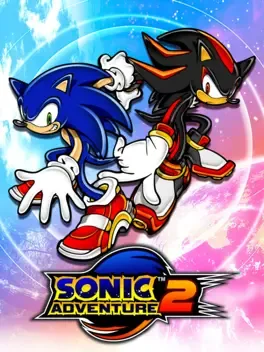
Sonic Adventure 2 is the sequel to Sonic Adventure. It was the final Sonic game for the Dreamcast after Sega discontinued the console. Two new playable characters were introduced, Shadow and Rouge, who would go on to become two of the most recurring characters in the Sonic series. The story features good vs evil: Sonic, Tails and Knuckles attempt to save the world, while Shadow, Doctor Eggman and Rouge attempt to conquer it. The levels are divided into three gameplay styles: fast-paced platforming for Sonic and Shadow, multi-directional shooting for Tails and Eggman, and action-exploration for Knuckles and Rouge.
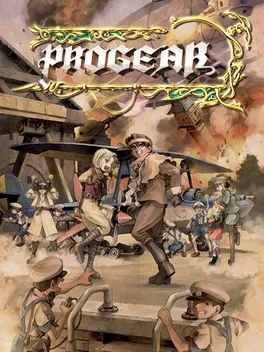
Progear is an arcade video game developed by CAVE and published by Capcom on the CPS-2 arcade system board in 2001. This was Cave's only horizontal scrolling shooter until Deathsmiles in 2007. The game features a steampunk-like style and art design. This game is the second of two CAVE shoot 'em ups to be released in America with the third CAVE NTSC-U/C release being Princess Debut, and in limited print; and as a result, the US version is somewhat rare. Sometime in the past, the people of the country of Parts had found a way to become immortal, but only with elderly nobles. Five of these elders—Ballossum Pench, Gabriel Hammer, Jimchuck Spanner, Olsorro Slasher, and Leonard Drill—obtained immortality, and became known as the Motoruin sages. Eventually, they attempted to take over the Parts kingdom and start a new world order, collapsing the government and destroying parts of the country in the process. As their plans unfold, five children of one of these villages decide to battle the Motoruin using another new invention: the semi-automatic propelling engine, known as "Progear". At the start of the game, the player is given a choice between two pilots/planes and three gunners, which determines the effectiveness of their respective modes. Each character's costume can be changed by holding the start button at the selection screen.