Power Stone Mini


Buy
Part of collection:
Power Stone
(last 3 games)
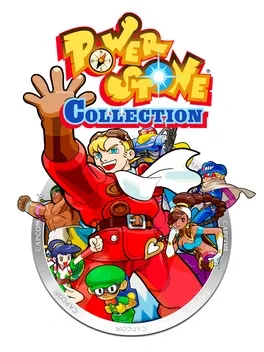
Capcom ported the entire Power Stone series to the PlayStation Portable with a few enhancements: most notably, the PSP version of the original Power Stone included the four new characters introduced in Power Stone 2.
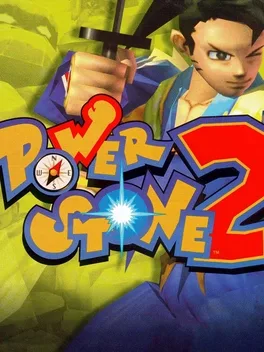
is a multiplayer fighting game that built on the innovative gameplay introduced by its predecessor, Power Stone. Power Stone 2 allows up to four players to choose from multiple characters and utilize items such as tables, chairs, and rocks in battle. There are four different modes available for the game 1-on-1: Much like the original Power Stone, a two-character storyline game. Arcade: A four-character storyline game, with two characters advancing each round. Original: Multiplayer mode, with free choice of characters and stages. Adventure: An unpredictable storyline game, where players can collect items, cards and money. Power Stone 2 offers five interactive 3-D stages to begin with, plus the two boss stages which players can also access in Original mode. All but the Original mode is played out like a storyline, where two battles are fought on the regular stages, followed by the Pharaoh Walker boss, then another battle, and ending with the Dr. Erode boss stage. Three extra stages may be unlocked for Original mode by meeting certain requirements in Arcade mode, as well as a desert area stage, which is essentially the Pharaoh Walker boss stage, but without the boss. Though each player has their own set of default ground and air attacks, the character can execute more powerful fusion attacks after collecting three Power Stones and transforming. Power Stone 2 does not offer an opportunity to block, although tapping on the control pad just before an enemy attacks will cause you to dodge. Most of the stages are dynamic and will change as the battle progresses. For example, the airplane stage starts out on a warplane. After a set amount of time, the plane will fall apart, forcing all the players to battle while skydiving toward the ground. Shortly after, the players will fall onto a floating platform, where the remainder of the battle will be held. This, in essence, creates three sub-stages within a single one. Each stage is also littered with item boxes, which hold a random item that a player has acquired and unlocked in Adventure mode or created in the Item Shop. They may also contain Power Stones. Items are extremely diverse. Damaging items range from guns, flamethrowers, gigantic hammers, a wide assortment of swords, to bear traps, roller blades, and even a magazine that can be thrown. Non-damaging items include food that will replenish health, shields for defense, elixirs for invisibility, adhesive sprays to slow your opponents, and wings for extra jumps. Cards that can be used to mix items can also be found in Adventure mode. Furthermore, most stages also have their own collection of unique items and fixtures that the player can use. For example, the submarine level comes with turrets, small planes to drop bombs, and icebergs to throw at opponents. Each level is also highly interactive, as players can use many of the stage elements themselves. All players can also gain extra height by jumping off a wall.
A VMU game released with Power Stone.
Could be interesting
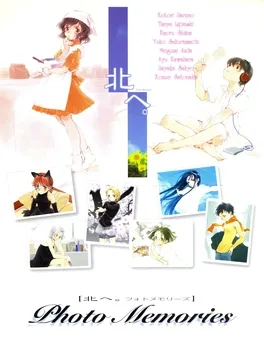
Kita e. Photo Memories (北へ。Photo Memories) is a visual novel released for the Sega Dreamcast by Hudson Soft as part of the Kita e. series. This fandisc includes additional content and a sequel story. This story has you returning to Hokkaido in the summer following your special kiss from the White Illumination festival. There are actually eight separate adventures, one for each girl. You start off by selecting the character with whom you'd like to share your upcoming exploits, and when you arrive back at the Hokkaido airport, she greets you. You travel off through Hokkaido, with the girl conversing with you and showing you around. As you travel, you can surprise the girl by taking a picture of her with the snap of a button, and this picture can be saved to the VMU and viewed later in a photo album.
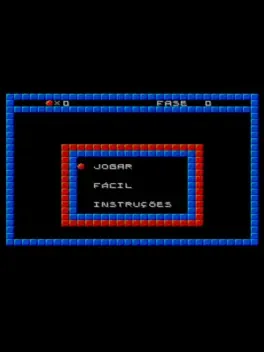
A game usually released in Master System-based Plug & Play consoles.
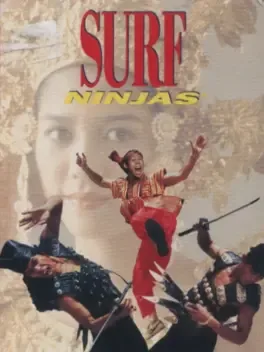
Surf Ninjas was created as a tie-on for the 1993 New Line Cinema movie of the same name and is loosely based on its content. The entire introduction of how the surfers discover they are the sons of a Patusani king is not mentioned and instead the player is thrown in the story as a ninja trainee right away. Colonel Chi wants to overthrow the kingdom and kill the last heirs, so he sends troops of ninjas to kill the two brothers. Players control one of the brothers as he travels through different locations such as the Palace restaurant, the docks at Venice (California), the island of Patu San and more. The 2D side-scrolling platforms missions contains platforms, enemies and ninjas and various hazards. One button is used to jump while the other, in combination with the D-pad, launches punches, kicks, throws and various combos. Attacks can also be performed from the air or using very high jumps. During gameplay an options screen can be accessed to review the statistics (health, strength, reflex and fight), get a hint through Adam's Game Gear, call the ninja Zatch to launch a powerful attack or select a weapon such as shurikens, fireballs, a knife and a sword. By defeating enemies coins are collected to be spent on bonus time on the clock, Zatch power-ups, a bonus life, complete regeneration, a hint, a weapon or a continue.
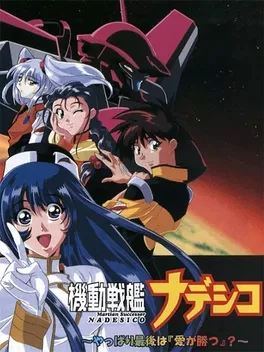
"Martian Successor Nadesico ~Yappari Saigo ha [Ai ga Katsu] ?~" is the first game released for the Nadesico franchise. It is a dating sim with players taking the role of Akito Tenkawa and attempting to build relationships with the female crew members, although there are a few mecha elements included.
Cross Tantei Monogatari: Motsureta Nanatsu no Labyrinth is a Japanese adventure game about a young man named Ken Koruso that hopes to become a detective and solve the mystery behind the car accident that killed his father. The title was the very first game created by WorkJam, a developer founded by Yutaka Kaminaga that famously took over the Tantei Jinguji Saburo franchise after the closing of Data East. Cross Tantei Monogatari was initially released for the Sega Saturn in Japan on June 6, 1998 and featured seven different episodes that had their own mysteries to solve. The following year a PlayStation port was released that contained several enhancements including the main character being fully voiced among other improvements. A discounted version was also published in 2000 that was separated into two titles with episodes 1-4 being in the first game and episodes 5-7 in second game.
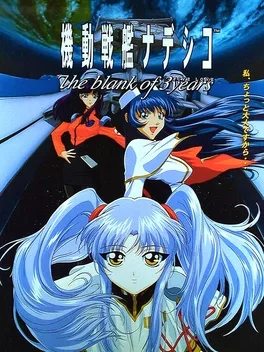
Martian Successor Nadesico: The Blank of 3 Years is the second Martian Successor Nadesico game to be released. It is the direct sequel to the TV series, bridging the gap between the events of the final episode and Prince of Darkness.

Cyber Doll is a dark, cyberpunk RPG set in a dystopian future where you play as an amnesiac protagonist turned into a heavily modified cyborg. Hunted by mysterious enemies in a crime-ridden metropolis, you must fight rogue cyborgs, piece together your shattered memories, and salvage mechanical body parts from your enemies to survive and uncover a massive corporate conspiracy.
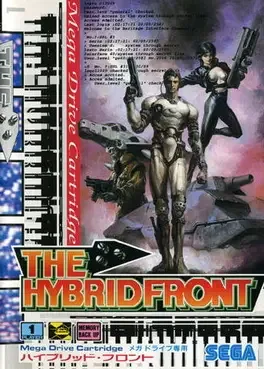
The Hybrid Front is a 1994 strategy game released exclusively in Japan.