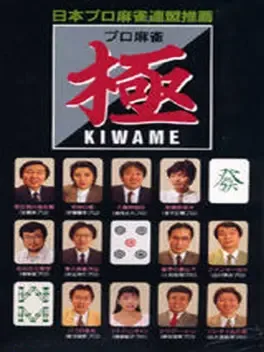
Pro Mahjong Kiwame for WonderSwan
Buy
Part of collection:
Pro Mahjong Kiwame
(last 3 games)
Pro Mahjong Kiwame for WonderSwan is a Miscellaneous game, developed and published by Athena, which was released in Japan in 1999.
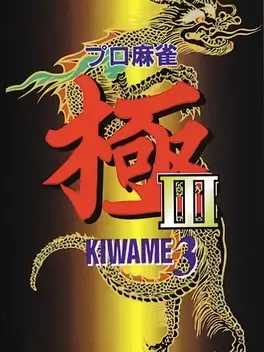
Pro Mahjong Kiwame III is a Miscellaneous game, published by Athena, which was released in Japan in 1995. The game was later released as a downloadable game for the Satellaview.
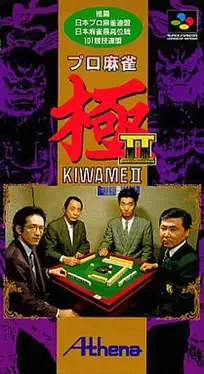
Pro Mahjong Kiwame II is a Miscellaneous game, published by Athena, which was released in Japan in 1994.
Could be interesting
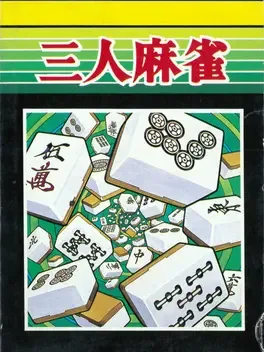
A three player mahjong game for the Othello Multivision/Sega SG-1000.

Atari's Blackjack employs a variant of blackjack rules that is so extremely unfavorable to the player, that it would almost certainly never be seen in a real casino because no one would play with them. Splitting pairs is not allowed, and even more substantially, draws are won by the dealer (your bet is not returned to you if you and the dealer get the same card total and neither busts). This represents over a 10% house advantage. The player uses the paddle controller to enter a bet of up to 25 chips from an initial pot of 200. An up card is then presented, and the player decides whether to "hit" (accept another card) or stand. The player breaks the bank by obtaining a score of 1,000 chips, or is "busted" upon losing everything. Due to a glitch in the program, while a player is selecting among the options of what to do with the current hand by pressing left or right with the paddle controller, the amount of the player's next bet is modified even though it is defined by a variable that will not be visible until the end of the hand, requiring the player to carefully re-enter it at the start of every hand without pressing the button carelessly or risk wagering an unintended amount.
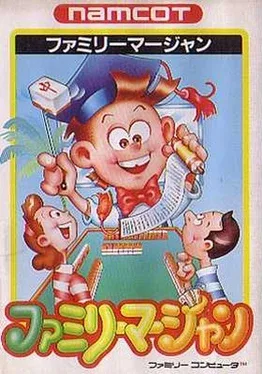
A mahjong game by Nihon Bussan and published by Namco for the Famicom. Family Mahjong is another in a long line of mahjong games for the Famicom. Uniquely, at least for the time, it does include a full tutorial mode that will teach the player how to actually play mahjong. It also includes rules for mahjong gambling, which is another feature included in the game. After the player has learned how to play, they can compete against a series of CPU opponents in one-on-one matches, most of whom are attractive blonde women for whatever reason.
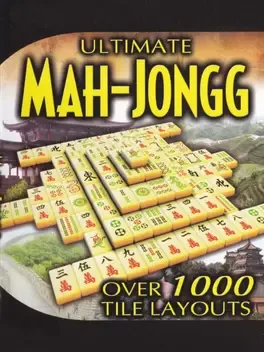
Ultimate Mah-Jongg which allows the player to play of the 1001 tile layouts, using any of seven tile images, in either 2D or 3D. This is the mode where the player has access to the editors that create new tile layouts and tile sets. This game mode plays in a window only.
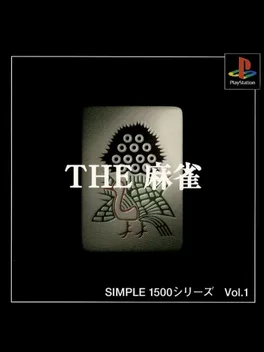
This is a video game version of the ancient game of Mahjong for the PlayStation. The player can go up against up to three computer opponents. It is a budget title released only in Japan, and was the first release in the Simple 1500 Series.

The fourth entry in Sega's MJ series of arcade games. Most notably, this installment adds a Sanma (3 Player) league, a training mode, and an improved 16:9 Live terminal. It received numerous minor updates, with features such as a customizable narrator and a visible tile wall when spectating being added, before eventually receiving a significant upgrade in 2010 called Sega Network Taisen Mahjong MJ4 Evolution.
The third entry in Sega's MJ series of Riichi Mahjong arcade games. This entry adds a Jansou Mode where you can bet your gold to potentially earn more, as well as general enhancements over MJ2.
The sequel to Sega Yonin Uchi Mahjong MJ, and the second overall entry in Sega's MJ series of Riichi Mahjong arcade games. This game had a higher focus on online play than its predecessor, introducing the League Battle mode. In addition to the buttons, a touch screen was also added for ease of operation, something the original game lacked.

The first installment in Sega's MJ series of Riichi Mahjong arcade games. Although the game initially only supported local play with linked cabinets, it would later be updated in 2003 to support online play. Online service was discontinued on March 31, 2005.