
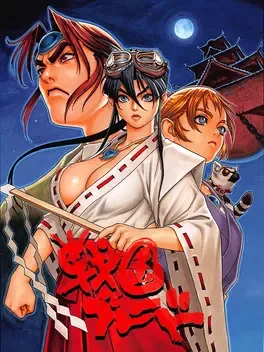
Sengoku Blade: Sengoku Ace Episode II

Buy
Part of collection:
Sengoku Ace
(last 3 games)
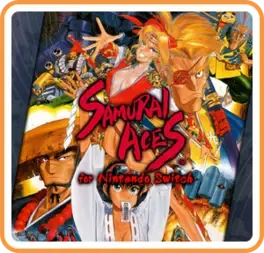
Samurai ace is the first shooting game of Psikyo. Of course, "Psikyo Bullet" was born from this game. Let’s enjoy the history of Psikyo and shooting game NOW!!!
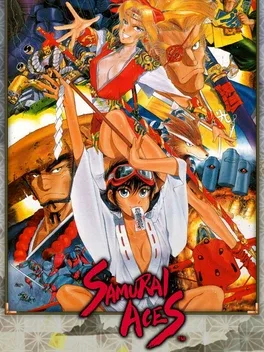
Also known as Psikyo Shooting Collection Vol. 2: Sengoku Ace + Sengoku Blade in Japan, is a two game compilation.
Sengoku Blade: Sengoku Ace Episode II, originally released in Japan as Tengai, is a horizontally scrolling shoot 'em up video game released for arcade machines in 1996 by Psikyo as a sequel to the 1993 shooter Sengoku Ace. It was later released as a part of Psikyo Shooting Collection Vol. 2: Sengoku Ace & Sengoku Blade for the PlayStation 2. The game is set in a historical fantasy version of the Sengoku period of Japanese history, featuring demons, magic and steam-powered robotics. It was followed by Sengoku Cannon: Sengoku Ace Episode III, released for the PlayStation Portable in 2005.
Could be interesting
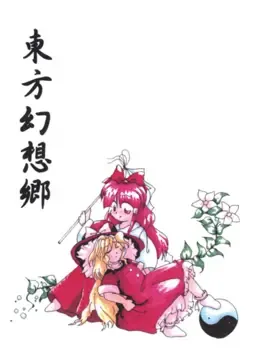
This game features two playable characters to choose from, with two different attack types each. Reimu Hakurei can pepper a wide area of the screen with weaker attacks, while Marisa Kirisame relies on her power to compensate for her narrower attack spread. The bombs also exhibit unique behavior and damage amounts depending upon the character chosen. Lotus Land Story is the first game in the Touhou Project to feature bombs that auto-collect items, graze counting, the ability to move more slowly by holding the shift key, and a non-trivial scoring system that involves the collection of special dream items that boost the player's ultimate scoring potential. The game's scoring system also marks the series' first instance of score bonuses for the elimination of bullets following the defeat of mid-bosses and bosses.
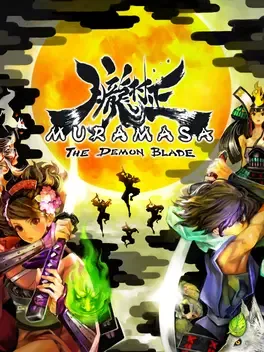
Based on ancient Japanese lore, Murumasa: The Demon Blade plunges players into the mystical Genroku era, ruled by the skilled shogun Tsunayoshi Tokogawa. But this culture is threatened; Tokugawa's thirst for power leads to a conflict over the enormously powerful, though cursed, Demon Blades. Used in hatred, drenched in blood, the cursed blades condemn those who use them to tragedy, madness, and untimely deaths. As chaos spreads, denizens from the netherworld breach their realm as these malevolent swords summon evil spirits -- and the Dragon and Demon Gods as well. Featuring hand-drawn 2D art reflecting the heritage and tone of the storyline, Muramasa: The Demon Blade transports players into a little known mythology, envisioned by the creators of the critically acclaimed Odin Sphere. Players take on the role of a male ninja or female kunoichi, utilizing their ninja prowess to traverse the clever side-scrolling levels that feature vertical progression as well as the traditional horizontal stage advancement.
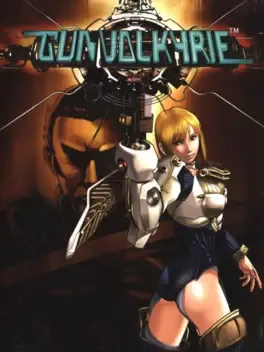
Gunvalkyrie is an alternate history/science fiction video game developed by Smilebit and published by Sega for the Microsoft Xbox. Originally developed for the Sega Dreamcast, its visual style was very similar to the final Xbox version. The Dreamcast version's distinguishing feature was that during the game's development, GunValkyrie utilized a unique control scheme using both a light gun and a controller. This control scheme was dropped when development shifted to the Xbox version. The gameplay is very different from most third-person shooters, due to a unique dual analog control scheme, which is the main contributor to the steep learning curve of the game. Players travel to various worlds investigating the disappearance of several colonies, with only giant mutated insect creatures left behind. These insects comprise the bulk of the enemies you face along the way. Players control Kelly or Saburouta with both analog sticks, the left controlling forward/backward movement and turning, while the right aims their weapons, and when clicked, allows quick-turns. Clicking in the left stick while pointing in a direction causes the character to boost. The left trigger is a boost/jump, and when combined with the left analog boost, can be strung together into combos to keep the player off the ground entirely, which is a necessity for some levels. Face buttons are used to select weapons, and the right trigger fires the selected weapon. The game comprises ten levels, the story unfolding via text between levels, or the occasional in-game cutscene. At the beginning of most levels, excluding boss battles, you have the choice of picking either Kelly or Saburouta. Kelly's primary weapon is fast but weaker, and she's overall faster and more maneuverable. Saburouta is slower, has more limited maneuverability in the air, and carries a stronger primary weapon, the Matchlock Cannon. Basically the two characters make up the two difficulty settings, with Kelly being the "Normal", and Saburouta being the "Advanced" setting. The real difference being that Kelly's style allowed several lock-on targets, while Saburouta's weapon splashed and was aimed at specific targets. Because of this, Kelly's gameplay is more frantic and requires less direct focus, while Saburota required specific aiming and direct attacks to be effective. Kelly is also the only character to upgrade her gearskin. The artistic style of the game is similar to the steampunk subgenre of fiction, but the game's designers prefer to call it "elec-punk," described as a step even further, with the harnessing of electricity for imaginative new uses. The game's stages are divided into indoor mechanical looking levels, with lots of gears and ornate metalwork, and outdoor stages, set in very organic looking valley's, craters, and other fantastic otherworldly locations.
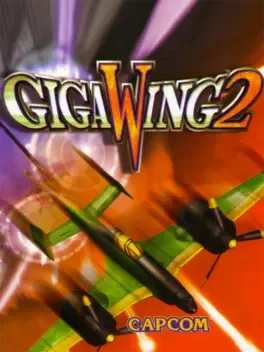
Giga Wing 2 (ギガウイング2?) is a 2000 vertical scrolling shooter arcade game developed by Takumi and published by Capcom on Sega's NAOMI arcade system board and later ported in 2001 to the Dreamcast console. The arcade version is notable both for its excessive scores (scores in the quintillions are not unheard of), and for using a horizontally aligned monitor (much like Treasure Co. Ltd's Radiant Silvergun), something that is considered rare for a vertical shooter.
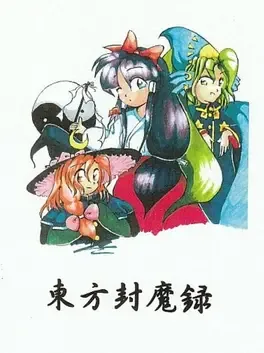
The Story of Eastern Wonderland casts the player as the Shrine Maiden Reimu Hakurei and offers three distinct attack types to choose from: a wide-range type with weak attack power, a mid-range type with moderate attack power and auto-targeting capabilities, and a narrow-range type with high attack power but lowered movement speed. The bombs also exhibit unique behavior depending on the type chosen. As the first danmaku shooting game in the Touhou Project, the Story of Eastern Wonderland introduces many features that are now hallmarks of the series as a whole: relatively small hit boxes, boss characters who are not much larger than the player character however are highly mobile, a power-up system, variable-worth point items, an unlockable Extra Stage, and a semi-complex scoring system. The game also marks the first appearance of Marisa Kirisame, who would become a major character in the series, appearing as often as Reimu Hakurei herself.
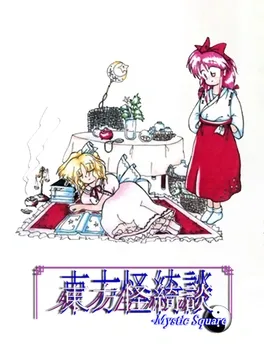
Mystic Square allows the player to select from among four unique protagonists, each hailing from one of the 2 prior danmaku shooting games in the series. Series mainstays Reimu Hakurei and Marisa Kirisame are joined by former enemies Mima and Yuuka Kazami for a journey reaching to the depths of the Makai. Mystic Square also marks the first appearance of Alice Margatroid as an opponent, who later stages a comeback in Perfect Cherry Blossom. Although limited by the PC-98 hardware, Mystic Square is the most refined of the PC-98 Touhou titles, and features gameplay quite similar to Windows Touhou games. It employs a variant of Lotus Land Story's Dream Bonus system, rewarding the player for taking risks (i.e. collecting point items from the top of the field area). Its rank system, however, is more lenient than Lotus Land Story's.

In Mega Man ZX Advent, the main characters discover the power of the mysterious "Biometal model A," which on its own has several attacks, but also has a special Megamerge ability which allows the character to transform into one of eight "Pseudoroid" bosses that each have a unique set of abilities. Once a boss is defeated, players can emulate their powers to find hidden routes, discover rare items and aid their battles against more powerful enemies. The title takes full advantage of the Nintendo DS features to enhance the action-packed gameplay and story line of the popular series.
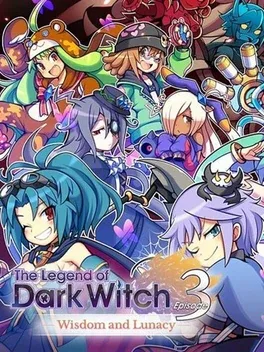
The Legend of Dark Witch 3 focuses on refining the Dark Witch series' gameplay mechanics, removing many features present in The Legend of Dark Witch and The Legend of Dark Witch 2 while modifying others to create a more streamlined game. Dark Witch 3 does not feature Technical Skills or player-available Revenge Magics. Additionally, the Enhancement Gauge has been simplified to Speed, Wing, and Width, with Width functioning as a combination of the Liner and Power slots in previous games.
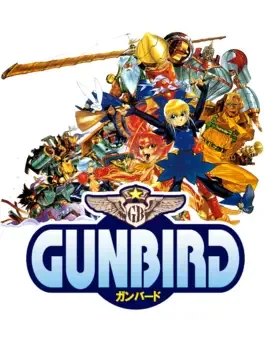
Gunbird uses anime-styled character as the player's chosen craft. A story plays out in between levels and before boss fights, telling a tale of how the protagonists are trying to collect pieces of a magic mirror to make a wish.
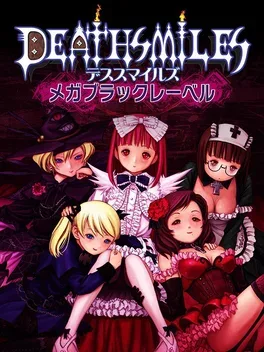
Deathsmiles Mega Black Label is an especial edition of the game released for arcades in Japan. It added Sakura as playable character, as well as the Crystal Shrine stage, and Level 999 difficulty level. There are other scoring changes.