
Simsig


Buy
Could be interesting

Build And Operate The Railroad Of Your Dreams....With Your Friends! TS12 includes the most exciting new feature in the history of Trainz. The players have asked for it and we have delivered Trainz Multiplayer. Now players from all over the world can build, play and operate railroads together!

Microsoft Train Simulator (abbreviated to MSTS) is a train simulator for Microsoft Windows, released in July 2001 and developed by UK-based Kuju Entertainment.
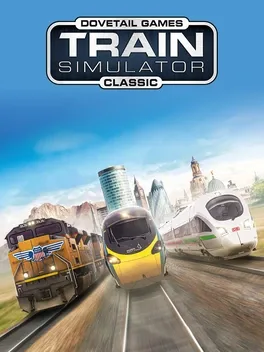
Welcome to the ultimate railway hobby! Master complex operations on the DB BR 411 ICE T, BR Class 390 Pendolino, Union Pacific AC4400CW, and more as you explore authentic routes. Whatever you love about trains, Train Simulator Classic lets you take your hobby to the next level.

Climb aboard the latest installment in the 10-year strong Train Simulator series and challenge yourself to drive diesel, electric and steam locomotives from across the globe with Train Simulator 2020.

Ports of Call is a classic German business simulation with some action sequences. In this sequences you must steer your ship into the port or have to rescue some shipwrecked people.

Little Computer People is a social simulation game representing a fully furnished house on a computer. This "House on a Disk" is based on the theory that every computer has an "occupant" (i.e. Little Computer People - LCP), which can be made visible by providing accommodation. Every computer should have a different LCP, who is usually accompanied by a dog as a pet.

Classic Cabon City is a large city with over 180 stations and a two-track system enabling full choice in the route to your destination. Drive two different Trams with their own cab and follow your route on the HUD interface, Switch junctions directly from the Driver's cabin and explore the vast city laid out before you. The scenery and ambience bring life to the city with attention to detail, high-resolution textures, lighting and Shadows and a great night mode make this the most realistic driving experience to date. In addition, Classic Cabon City provides multiple locations for you to discover, such as Fun Fairs, a large Airport and a 1000m tall Skytower you can approach.
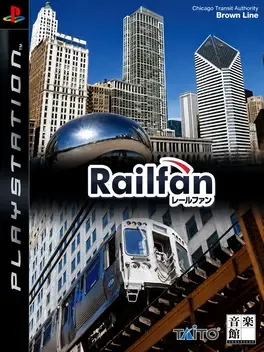
The first PS3 installment of Ongakukan's Train Simulator series. It features three different rail lines - JR East's Chuo Line between Mitaka and Tokyo, the Keihan Electric Railway's Main Line between Demachiyanagi and Yodoyabashi, and the Chicago Transit Authority's Brown Line between Fullerton and the Loop. In a first for the series, it features full HD video, as well as the ability to view the train from an external viewpoint. In addition, the game also features a "Densha de Go!" mode emulating the gameplay of that series.

Transport Fever is a railroad-focused tycoon game. You start in 1850 and build up a thriving transport company. As an emerging transport tycoon, you construct stations, airports, harbors and makes money by connecting areas requiring transport services.
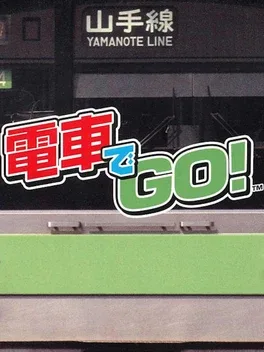
Densha de GO! is a 1997 train simulator arcade game developed and published by Taito in Japan. Players are tasked with driving a train, adhering to the schedule and obeying signals and speed restrictions. It features real-world train lines from Japan, including the Yamanote Line and Keihin-Tohoku Line. The game was ported to the PC, Sega Saturn, and PlayStation. The concept for Densha de Go! was inspired by designer Akira Saito's personal fascination with Japanese train lines and railroads. He wanted to create a game that allowed players to familiarize themselves with driving a train. The controls were his primary focus as he wanted them to be accurate and responsive, and to mimic the controls of a real train—his father worked for the Kyoto City Transportation Bureau Facilities Division, which made this easier to accomplish. Saito included real-world railroads and trains to appeal towards other railroad enthusiasts, thinking that it could also attract more "ordinary" players for its realistic, familiar theme. As arcades at the time were dominated primarily by racing and fighting games, he believed its unique concept could make it stand out. Densha de Go! is among Taito's most successful games, preceded only by Space Invaders. The PlayStation version sold over one million copies. The game was well-received by critics for its controls, attention to detail, and unique concept. Some felt that its home releases lacked enough content and had poor visuals. It was followed by a long series of sequels, spin-offs, and reimaginings, beginning with Densha de Go! 2 in 1999.