
Solomon's Key


Buy
Part of collection:
Solomon's Key
(last 3 games)
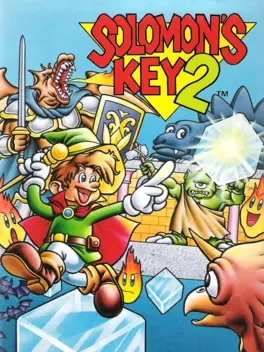
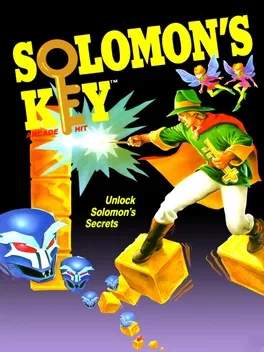
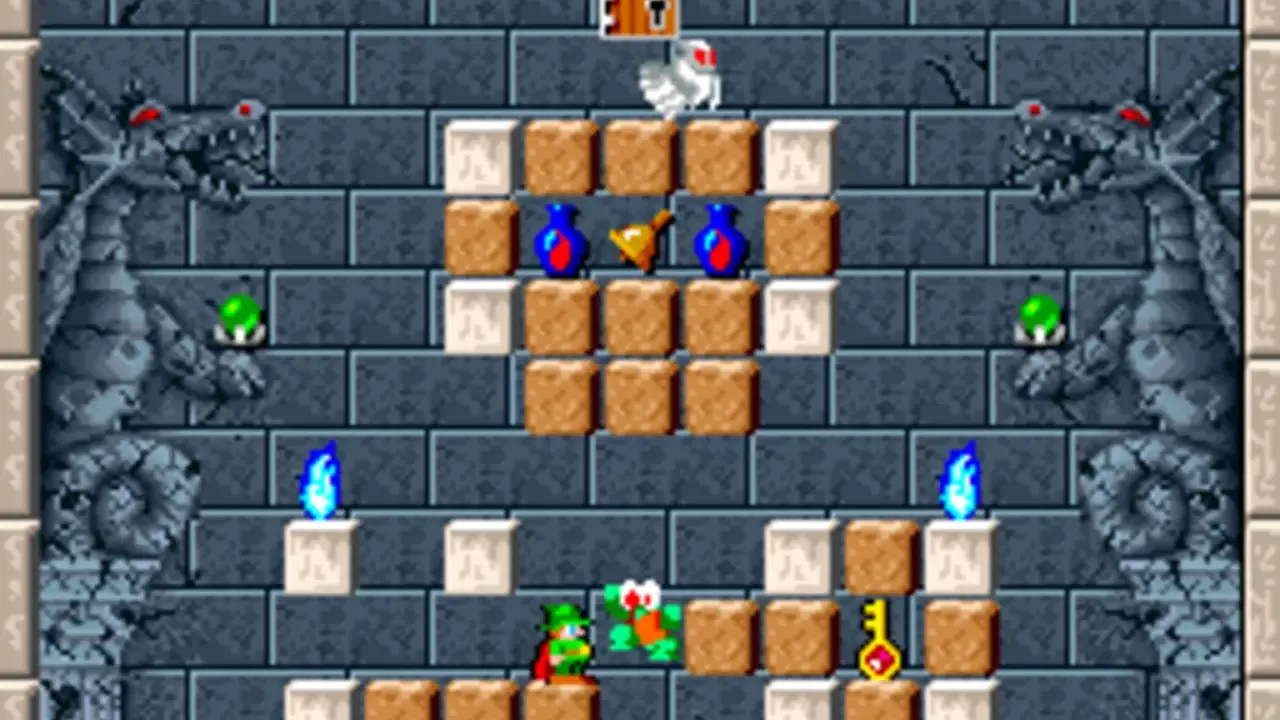
Some levels contain pipes through which Dana can go, burning jars that melt ice or moving monsters instead of flames. There are ten worlds plus five secret worlds that contain ten levels. The first nine worlds can be played in any order. The tenth level of a world usually features a special challenge like moving flames or monsters and lava that is slowly rising from the bottom.
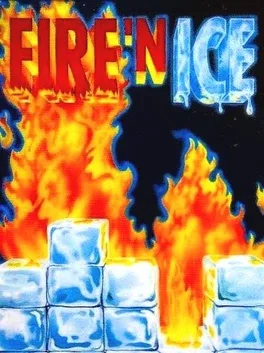
The aim of the game involves players extinguishing all fires in a level in order to proceed. They do this by creating and melting ice (in a Lode Runner style) or kicking ice onto the fires. This game also has a level editor (which may expose some bugs that substantially affect the game mechanics).
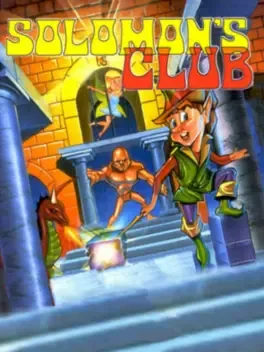
Solomon's Club is a puzzle game, developed by Graphic Research and published by Tecmo, which was released in 1991.
Could be interesting
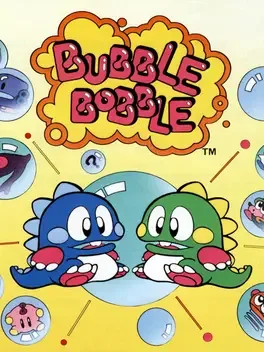
In the game, each player controls one of the two Bubble Dragons, Bub and Bob. The player can move along platforms, as well as jump to those above and to the side, similar to most platform games. The player can also blow bubbles. These can trap enemies, who are defeated if the bubble is then burst by the player's spiny back. Bubbles that contain enemies can be popped at the same time resulting in different foods being projected around the level. Each enemy trapped in a bubble equates to a different food. Food is consumed and transferred to points (an increasing scale of 1000 points is awarded for each enemy burst in tandem with another meaning: one enemy burst equals one food item worth 1000 points, two enemies burst equals two food items worth 1000 and 2000 points, three enemies burst equals three food items worth 1000, 2000 and 4000 points, and so on), which results in earning lives. These same bubbles also float for a time before bursting, and can be jumped on, allowing access to otherwise inaccessible areas. Players progress to the next level once all enemies on the current level are defeated. Enemies turn "angry" — becoming pink-colored and moving faster — if they are the last enemy remaining, escape from a bubble after being left too long or a certain amount of time has been spent on the current level. A monster will also become angry if either player collects a skull (the only negative item in the game), and the monster is hit by the resulting comet crossing the screen (however, this is a rare occurrence). After a further time limit expires, an additional invincible enemy appears for each player, actively chasing them using only vertical and horizontal movements. These do not need to be defeated to complete the level, and disappear once a player's life is lost. Contact with enemies and their projectiles (rocks, lasers, fireballs, etc.) results in death.
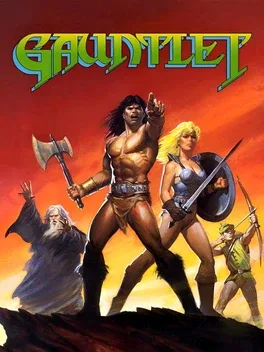
The players, up to four at once in the arcade version, select among four playable fantasy-based characters; Thor the Warrior, Merlin the Wizard, Thyra the Valkyrie, or Questor the Elf. Each character has his or her own unique strength and weaknesses. For example, the Warrior is strongest in hand-to-hand combat, the Wizard has the most powerful magic, the Valkyrie has the best armour and the Elf is the fastest in movement. Upon selecting a playable character, the gameplay is set within a series of top-down, third-person perspective mazes where the object is to find and touch the designated exit in every level. An assortment of special items can be located in each level that increase player's character's health, unlock doors, gain more points and magical potions that can destroy all of the enemies on screen. The enemies are an assortment of fantasy-based monsters, including ghosts, grunts, demons, lobbers, sorcerers and thieves. Each enters the level through specific generators, which can be destroyed. While there are no bosses in the game, the most dangerous enemy is "Death", who can not only drain a character's health, but is difficult to destroy. As the game progresses, higher levels of skill are needed to reach the exit, with success often depending on the willingness of the players to cooperate by sharing food and luring monsters into places where they can be engaged and slaughtered more conveniently. While contact with enemies reduces the player's health, it also slowly drains on its own, thus creating a time limit. When a character's health reaches zero, that character dies. The character can be revived in place with full health by spending a game credit (i.e. inserting a coin) within a certain short time window after it died. This allows even the least proficient players to keep playing indefinitely, if they are willing to keep inserting coins.
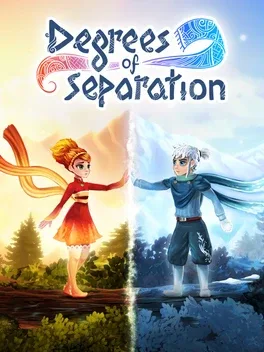
Degrees of Separation is a puzzle platformer where cooperation is built into every move. Two contrasting souls, Ember and Rime, fall in love, but are separated by an enigmatic force, and must use their powers to progress through a spectacular world of fantasy and adventure. Players solve environmental obstacles by drawing upon the contrasting temperatures of warm and cold in single-player and cooperative multiplayer.
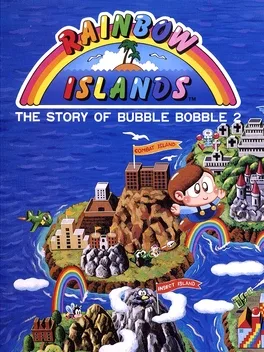
Rainbow Islands is a 1987 arcade game developed and published by Taito. The arcade version was licensed to Romstar for North American manufacturing and distribution. The game is subtitled "The Story of Bubble Bobble 2" and is the sequel to Taito's hit game Bubble Bobble from the previous year. It is the second of four arcade games in the Bubble Bobble series. The game was ported for numerous home computers and game consoles.
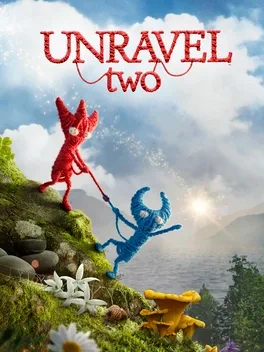
Unravel Two is the sequel to the 2015 puzzle platforming game Unravel. In the game there are two Yarny's (made out of yarn) which can be controlled by one player, though the game can also be played in co-op. Together the Yarny's explore area's and solve the puzzles within them.
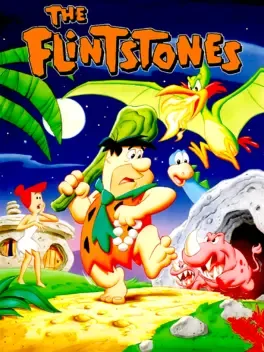
This is a platform game based on the famous Flintstones series. The game features many original Flintstones characters, such as Fred, Wilma, Barney, and others. Instead of the usual "save the princess" or "liberate the world" kinds of a plot, "The Flintstones" is mainly based on small quests: Fred has to retrieve a lost item, etc. The large levels are divided into smaller stages. In the end of each level there is a boss battle. The gameplay involves mostly jumping and hitting the enemies on the heads with a club. The health is measured by hearts. During the game Fred will find many useful items, including some that will increase his health level.
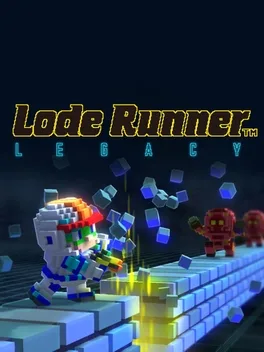
Lode Runner Legacy is the latest edition in the popular Lode Runner series. Players control “Runner” to recover stolen gold while avoiding enemies and minefields. Enjoy the ingenious balance of puzzle and action gameplay, an updated Voxel visual style and powerful game editors.
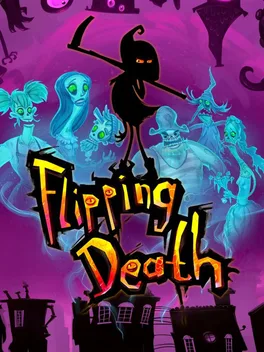
Possess the living, aid the dead and flip between the worlds of Flipping Death - a puzzling adventure platformer where you find yourself filling in for Death. Maybe your new powers will help you solve the mystery of your own demise?
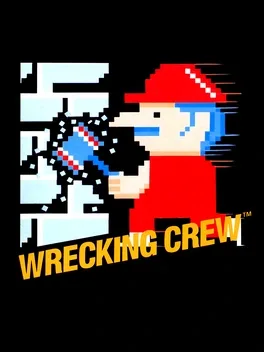
Wrecking Crew is a platform action game for one or two players. The player controls Mario (Player 2 as Luigi) working on a demolition site. The goal is to break down all of the stone walls on each stage. The game features a custom level maker, where players can make their own Wrecking Crew levels. The game had the ability to save those custom levels. However, the required peripherals (the keyboard and Data Recorder accessories) were released only in Japan.
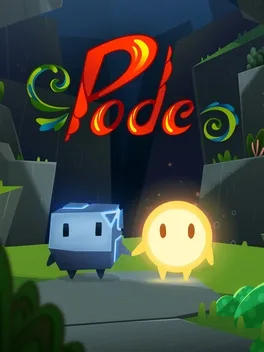
"Pode is the story of a little rock helping a fallen star find its way home. As they travel through the insides of a mysterious and magical mountain, Bulder and Glo breathe life into an ancient sleeping world and explore the ruins of a long lost civilization with their unique talents and abilities. Only by helping each other can these unlikely adventure companions solve the ancient puzzles that open the secret passageways up the caverns of Mount Fjellheim. Pode is a co-op puzzle exploration game built around the themes of friendship and cooperation, with a strong emphasis on positive actions, relaxing atmosphere and beautiful art inspired by Norwegian culture. "