
Space Age: Director's Cut


Parent game
An arcade game for the Uzebox.
Could be interesting

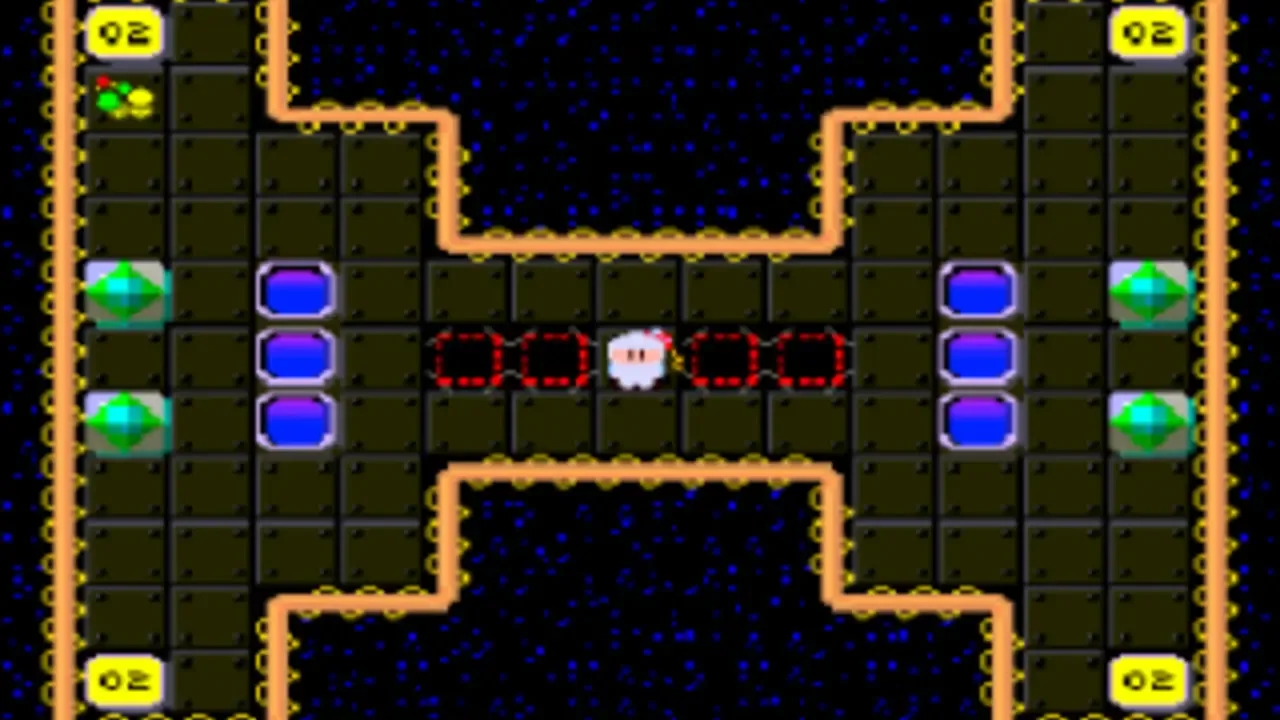
Fast-paced action-puzzle game where the player eliminates colored shapes that are approaching his alter ego, another colored shape, before they reach the top, ala Tetris. In order to eliminate the other shapes, you must point your piece at it and 'fire'. If the shape is the same color as your piece, the shape is eliminated, as well as all of the shapes of the same color behind it, until your piece hits a piece of a different color. If the shape is of a different color, or it is hit when collecting a line of similar shapes, your piece exchanges colors with the shape.
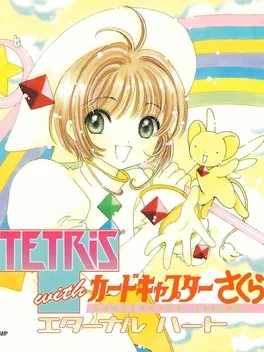
Tetris with Cardcaptor Sakura: Eternal Heart was released on August 10, 2000 and was published by Arika for the PlayStation 1.
A clone of Puzzle Bobble developed and released by SemiCom in 1995.

Lufia II: Rise of the Sinistrals serves as a prequel to Lufia & the Fortress of Doom, unfolding its events ninety-nine years before. The narrative delves into the origins of the series' antagonists, the Sinistrals, a group of super-humans. Players take on the role of the ancestor of Maxim, the protagonist from the first game, as he embarks on a quest after encountering Iris, a mysterious woman. Maxim seeks other heroes to join forces in preventing the Sinistrals from wreaking havoc and destroying the world. Like its predecessor, Rise of the Sinistrals follows the Japanese-style turn-based RPG format with an infusion of puzzle elements. The game incorporates intricate puzzles into its dungeon designs, requiring players to use various items and accessories for solving. Additionally, it introduces the "Capsule Monsters" system, allowing summoned monsters to participate in battles. These creatures evolve through the consumption of weapons, armour, or special fruits. Unlike the first game, dungeons in Rise of the Sinistrals lack random battles, with enemies visibly moving on-screen.

Mini Cookie is a tech demo where the player controls a hungry bear, eating the cookies scattered all over the screen.
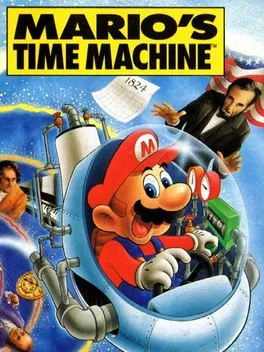
Mario's Time Machine is an edutainment title and the successor of Mario is Missing! The game is meant to teach younger players basic world history and is the last Mario Discovery Series game before discontinuation. This game and Hotel Mario are the only games in the Mario franchise in which Mario as a protagonist has full lines of dialogue. The objective of the game is to return the historical artifacts to their proper time periods thanks to the central hub. As soon as you enter a certain time period you need to explore and interact with various residents of the area in order to get more information about the artifact, the period itself and the person connected to it.
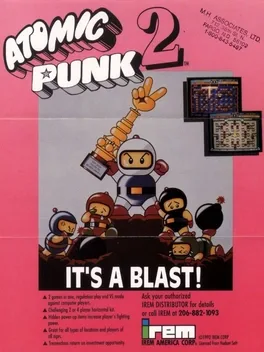
New Atomic Punk: Global Quest is a 1992 video game released by Irem under license from Hudson Soft for arcades. It is part of the Bomberman series. It was the second Bomberman game to be released for arcades, preceded by Bomberman (1991), which was also released by Irem.

Pokémon Picross is an unreleased Game Boy Color Game. It was meant to be Super Game Boy compatible.
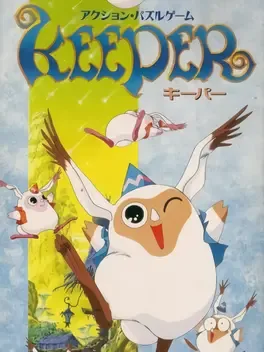
Keeper is an action/puzzle game developed by Fupac and published by Bullet-Proof Software, and released only in Japan for the Super Famicom.
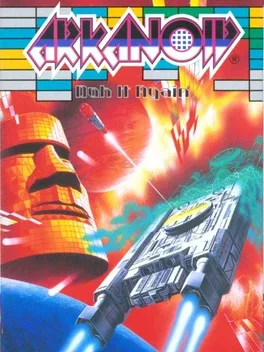
Much like the game Breakout, the player controls the "Vaus", a space vessel that acts as the game's "paddle" which prevents a ball from falling from the playing field, attempting to bounce it against a number of bricks. The ball striking a brick causes the brick to disappear. When all the bricks are gone, the player goes to the next level, where another pattern of bricks appear. There are a number of variations (bricks that have to be hit multiple times, flying enemy ships, etc.) and power-up capsules to enhance the Vaus (expand the Vaus, multiply the number of balls, equip a laser cannon, break directly to the next level, etc.), but the gameplay remains the same.