
Stratovox

Buy
Could be interesting

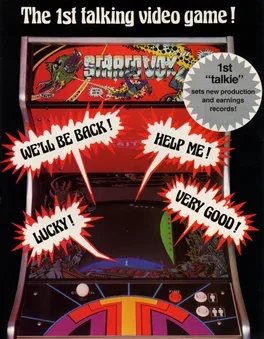
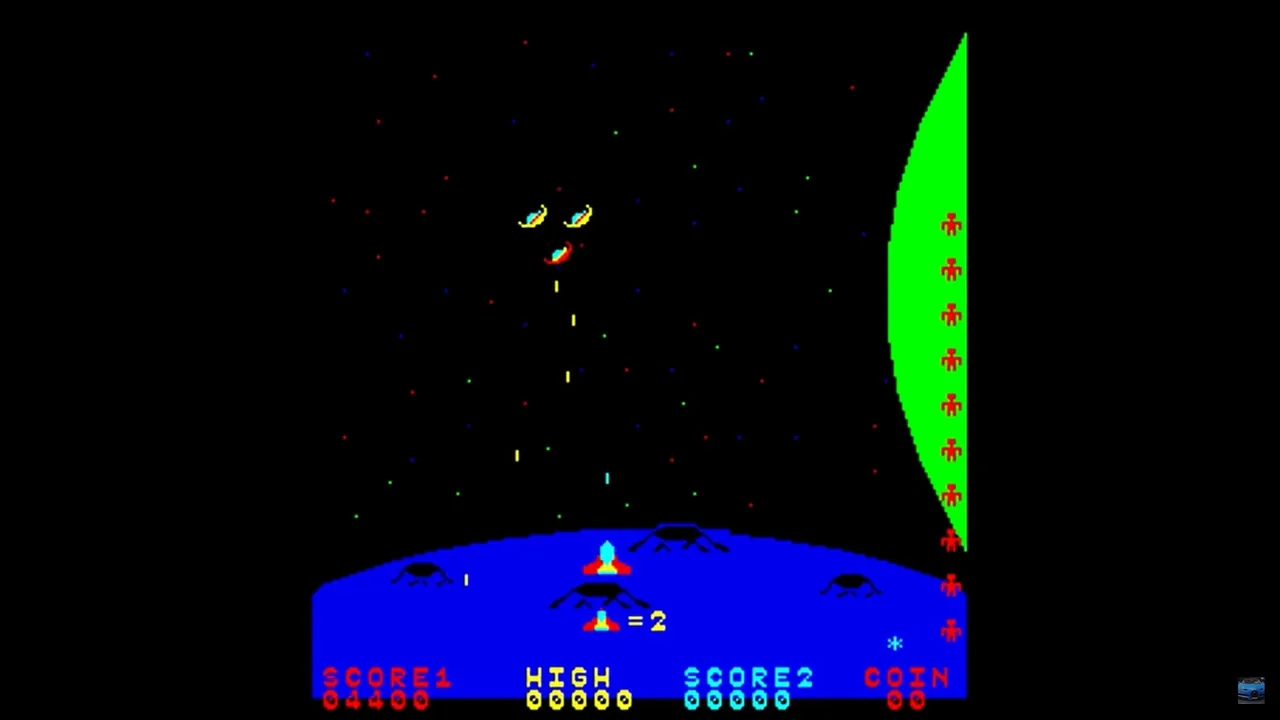
You are Frald Rancer and control a space ship which must journey from your home planet to outer space to defeat enemy invaders. Once all the enemies are defeated then return home. The game moves in a forward direction where the screen objects move towards and down to the player. Approaching enemy ships are small, in the distance, and become larger and move faster as they approach the player. The player controls a fighter at the bottom of the screen, which can only move from side to side. Shots can be fired at a diagonal, as well as straight, by twisting the joystick from side to side. At certain stages, ground targets will appear and can be destroyed by using the "Burn" button. The laser disc generated backgrounds are largely non-interactive during game play. They form the backgrounds on which the game is played on. Scenes do work in with the backgrounds, however that is the extent. Some backgrounds appear as they should have elements of interactively, however, were not used in the release of the game. These include scenes where the player is going through an asteroid field and asteroids fly towards the player. Another scene is in the crystal caverns, where there are many obstacles which could have been made to be avoided. These are only two of many scenes which could have had interactive elements. The game may have been decided to have been too hard to play with these background obstacles and computer fighters to play. Hence removing the background interactively to make the game more playable. The game starts with the player in Frald Rancer's home city, then taking off into outer space via a fly-by of the city. The backgrounds are very Sci-Fi and are fantasy themed. They are very interesting, more so than the game. The music from the laser disc also complements the laser disc video very well and makes up for the sometimes annoying, computer generated sounds.
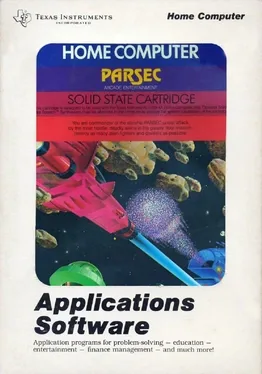
Parsec is a computer game for the Texas Instruments TI-99/4A. Perhaps the best-remembered of all TI-99/4A games, it is a side-scrolling shooter, programmed in 1982 by Jim Dramis (who also programmed the popular TI-99/4A games Car Wars and Munch Man) and Paul Urbanus. The player in Parsec pilots a spaceship through sixteen differently-colored levels of play which scroll horizontally over the screen. The objective is to avoid being shot by an enemy ship, colliding with any flying object and/or the ground, and destroy all enemy ships without overheating one's laser cannon. Three waves of fighters attack, alternating with three waves of cruisers. Enemy ships enter the screen one at a time. A ship flying off the left edge of the screen wraps around to the right side and attacks again. A new fighter can appear with others still on the screen, whereas a new cruiser will not come until the previous one is destroyed. The fighters pose only the threat of collision, while the cruisers fire on the player's ship. The fighter types are named Swoopers, LTFs (Light Triangular Fighters), and Saucers. The cruisers are called Urbites, Dramites, and Bynites. Each level ends with an asteroid belt, in which an array of asteroids advance on the ship and must be avoided or shot. At the end of each asteroid belt, any remaining asteroids are cleared away and the color of the ground is changed, then a new wave of Swoopers begins. Starting with level 4, the Swoopers are preceded by a random number of Killer Satellites, which come without the usual computer warning. The Urbites and Dramites appear to be named after the developers of the game, while the Bynites were apparently named after Don Bynum (the manager of TI's Personal Computer Division) or possibly named after the fact that they have invisibility (by night). In fact, Paul Urbanus signed Internet posts as late as 2005 as "urbite".
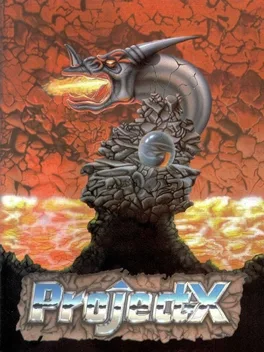
Project-X is a scrolling shooter game for the Amiga computer released in 1992. It was also ported to DOS. Developed and published by Team17, it was regarded as one of the best shooter games for that platform at the time, both for its technical excellence in graphics and sounds, and for its difficult and interesting gameplay. The game resembles Konami's side-scrolling shooter games such as Gradius, Salamander and Parodius.
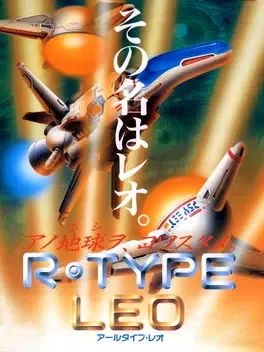
R-Type Leo is a horizontally scrolling shooter arcade game. It is a spin-off of the R-Type series and the last entry to be released in Arcades. R-Type Leo was initially an original shoot 'em up game in development by Nanao before Irem retooled it into an R-Type project instead. It is also the first R-Type game to feature simultaneous two player gameplay.
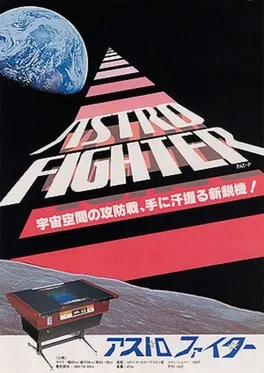
The game of Astro Fighter consists of 4 waves and a refueling stage, which are then repeated with increasingly higher difficulty. The player's task is to eliminate the four successive waves of different types of attacking craft, while avoiding being hit by missiles and bombs, and then refuel by shooting the 'GS' ship before repeating the process. The player starts with 3 lives and receives a bonus life on reaching a score of 5000. 300 bonus points are received for shooting each 6 falling bombs and for 950 for hitting the GS ship accurately on the first shot. A very large bonus of 10,000 is given for getting through 4 waves and refueling by using exactly 2 shots more than the minimum needed. As the higher levels of Astro Fighter are difficult to survive consistently, even for the best players, the highest scores have been achieved by the achieving the 10,000 bonus deliberately.
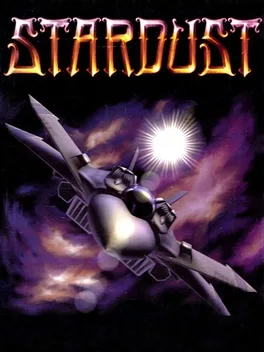
This is where it all began – way back in 1993 with the original Stardust, a legendary shoot-em-up for the Amiga 500 (an Atari STE version followed in ‘94) that wowed critics and gamers alike. Stardust dazzled with its tight controls, solid gameplay and stunning technical achievements like ray-traced graphics, full-screen animations & 3D hyperspace tunnel sequences. Players controlled an upgradeable starship equipped with various weapons, missiles and shields. The playfield “wrapped”, so if anything went off-screen it reappeared on the opposite side. Stardust featured five different worlds (all connected by 3D hyperspace tunnels) and 30 action-packed levels full of asteroids, enemies, and bosses bent on destruction. At game’s end, the evil mutant penguin Professor Schaumund made his first-ever appearance (and subsequent escape), meaning he could (and did) return to wreak cosmic havoc in future Stardust titles!
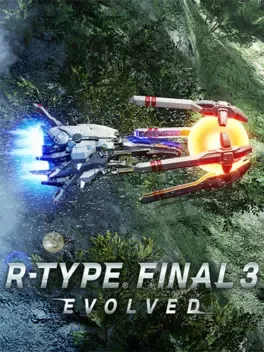
R-Type Final 3 Evolved serves simultaneously as a sequel to R-Type Final 2, offering a whole new 7-stage campaign made in the engine of Final 2, whilst also serving as a compilation of most of content released for R-Type Final 2. Additional features such as R-Park, an online area where one can interact with other players.
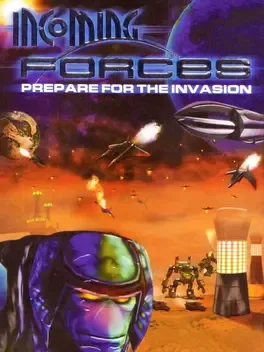
Prepare for one of the most action packed-shooters in PC gaming history! Every level is full of enemies and targets for you to destroy! You will become a soldier of the alien species and protect your home world from the forces of the Human armada.
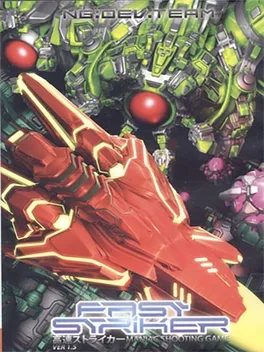
Fast Striker is a Shoot-'Em-Up game, developed and published by NG:DEV.TEAM, which was released in Japan in 2012D arcade shooting game with emphasis on scoring originally developed for NEO·GEO. The game lets the player choose between 3 game modes with different scoring systems. Novice Mode for beginners, Original Mode for classic Shoot’ em Up players and Maniac for very experienced players. It features six stages of excellent 2D arcade game play with over 40 unique enemy types, super smooth 3D scrolling backgrounds, huge CGI bosses and it features the biggest megabit count ever since the beginning of NEO·GEO games0.
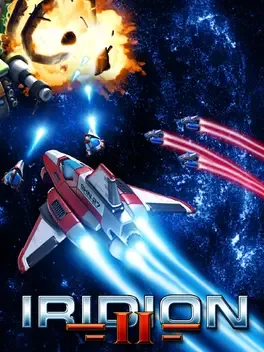
Be the new saviour as the Iridion force strikes back! A century has passed since the Iridion Empire was defeated. Humans have populated the old Iridion galaxy giving mankind freedom and peace. Suddenly, all communications with the human outposts are lost. The Iridions are back! Planet Earth is too far away to offer help. The only chance? A lone powerful spaceship...Yours!