
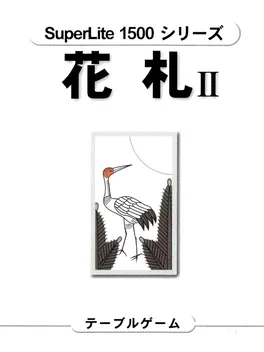
SuperLite 1500 Series Hanafuda II

Buy
Part of collection:
SuperLite 1500
(last 3 games)
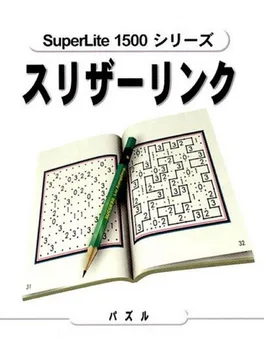
Slitherlink (also known as Fences, Takegaki, Loop the Loop, Loopy, Ouroboros, Suriza and Dotty Dilemma) is a logic puzzle developed by publisher Nikoli. Slitherlink is played on a rectangular lattice of dots. Some of the squares formed by the dots have numbers inside them. The objective is to connect horizontally and vertically adjacent dots so that the lines form a simple loop with no loose ends. In addition, the number inside a square represents how many of its four sides are segments in the loop. Other types of planar graphs can be used in lieu of the standard grid, with varying numbers of edges per vertex or vertices per polygon. These patterns include snowflake, Penrose, Laves and Altair tilings. These add complexity by varying the number of possible paths from an intersection, and/or the number of sides to each polygon; but similar rules apply to their solution. SuperLite 1500 Series - Slither Link is a puzzle game based on the Slitherlink logic puzzle featuring over 200 different stages.
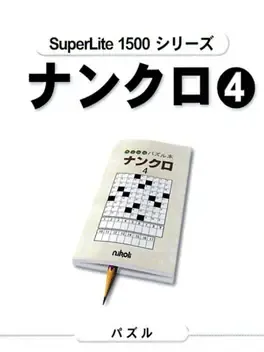
A crossword is a word puzzle that normally takes the form of a square or rectangular grid of white and shaded squares. The goal is to fill the white squares with letters, forming words or phrases, by solving clues which lead to the answers. In languages that are written left-to-right, the answer words and phrases are placed in the grid from left to right and from top to bottom. The shaded squares are used to separate the words or phrases. Squares in which answers begin are usually numbered. The clues are then referred to by these numbers and a direction, for example, "4-Across" or "20-Down". At the end of the clue the total number of letters is sometimes given, depending on the style of puzzle and country of publication. Some crosswords will also indicate the number of words in a given answer, should there be more than one.
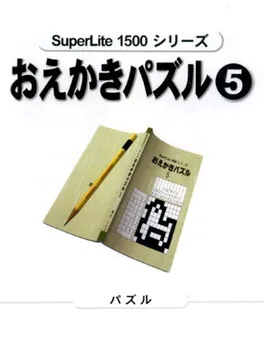
Popular collection of puzzle games will fill the picture will be completed based on the mass number of vertical and horizontal scratching puzzles first whenever visiting. The 200 questions included a wide range of offers from beginner to advanced, the size 10x10, 15x15, 20x20 sizes available 3. Configuration of the popular features button operation, and display position adjustment function, you can enjoy a comfortable play.
Could be interesting
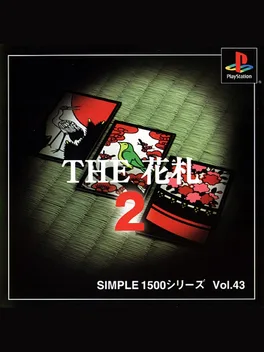
Simple 1500 Series vol. 43: The Hanafuda 2 is the second hanafuda game in the Simple 1500 series and also features a character creation mode in which the player can customize his character appearence (hair, eyes, face, etc) and them compete against different computer opponents in a sort of story mode. The game also has a free mode.

Pro Mahjong Kiwame Plus II is a mahjong game and is the second game in the series released for the Playstation One console. The game features 16 different real mahjong players as opponents and the game mode is a 4 player vs mahjong. The game got 3 game modes: Professional, Gamble & Training. Mahjong is a game for four players that originated in China. It was called, meaning sparrow in ancient China, which is still the name most commonly used in some southern Chinese dialects such as Cantonese and Minnan, as well as in Japanese. However, most Mandarin-speaking Chinese now call the game má jiàng. Mahjong involves skill, strategy, and calculation, as well as a certain degree of luck (depending on the variation played, luck can be anything from a minor to a dominant factor in winning). In Asia, mahjong is also popularly played as a gambling game. In the game, each player is dealt either thirteen or sixteen tiles in a hand, depending on the variation being played. On their turn, players draw a tile and discard one, with the goal of making four or five melds (also depending on the variation) and one pair, or "head". Winning comes "on the draw" by drawing a new or discarded tile that completes the hand. Thus, a winning hand actually contains fourteen (or seventeen) tiles.
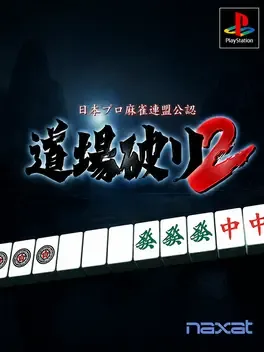
Nippon Pro Mahjong Renmei Kounin: Doujou Yaburi 2 is a Majong board game, developed by Naxat Soft and published by Chat Noir, which was released in Japan in 1999.
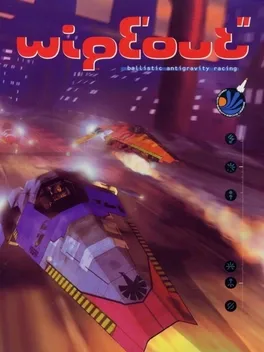
Wipeout is a racing game that is set in 2052, where players compete in the F3600 anti-gravity racing league. The game allows the player to pilot one of a selection of craft in races on several different tracks. There are four racing teams to choose from, and two ships for each team. Each ship has its distinct characteristics of acceleration, top speed, mass, and turning radius. By piloting their craft over power-up pads found on the tracks, the player can pick up various weapons and power-ups such as shields, turbo boosts, mines, shock waves, rockets, or missiles. The power-ups allow the player to either protect their craft or disrupt the competitors' craft.
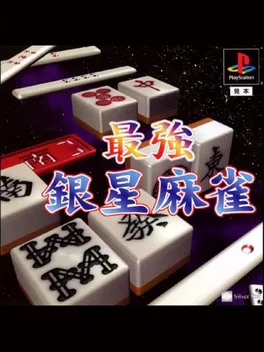
Silver Star's WiiWare mahjong simulator.
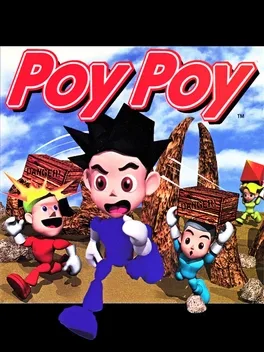
Poy Poy is a multiplayer party game at heart. Grab a multi-tap and four friends and take part in an ultimate battle of skill and wit. The idea is to be the last man standing in this arena based combat game. But don't worry if you can't find a multi-tap or four friends. There's plenty of AI characters to battle in various tournament modes and you can also play a 2 player deathmatch (with or without computer opponents). If it sounds fun now, wait 'till you play it... Set in seven different 3D environments strewn with throwable objects, the game challenges you to a match against three other opponents armed with logs, rocks, ice blocks, and atomic bombs. If you run out of stuff to throw, you can toss your opponents around too. Each hit drops your life meter, so be careful who you pick a fight with.
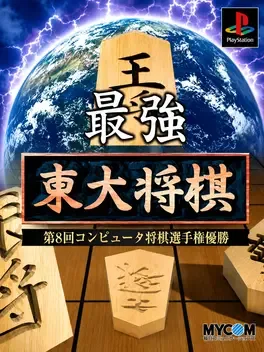
Saikyou Todai Shogi (aka Saikyou Toudai Shougi) is a shogi game with different game modes vs another human player or computer opponents.

Simple 1500 Series vol. 49: The Casino is a gambling game with some adventure elements, the game has a story mode in which the player is a man that arrives at a town and when he is in the airport he lost all his money but finds a coin of 50 and he decide to play in the casino to earn enough money to leave town. In the Casino he can play gambling games like Roulette, Card Slot, Card games, Horse racing bet, Tetris, etc
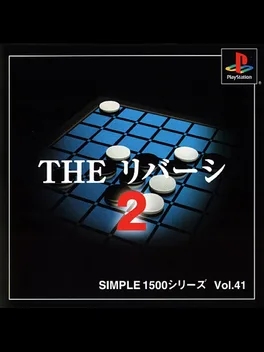
Simple 1500 Series vol. 41: Reversi 2 is a reversi game that features a character creation mode in which the player can customize his character appearence (hair, eyes, face, etc) and them compete against different computer opponents in a sort of story mode. The game also has a free mode.
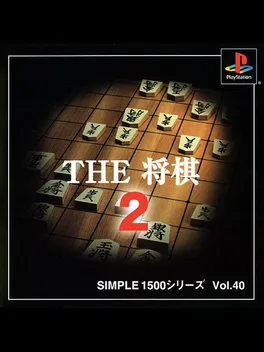
Simple 1500 Series vol. 40: The Shogi 2 is a shogi game that some difficulty levels and a tutorial.