
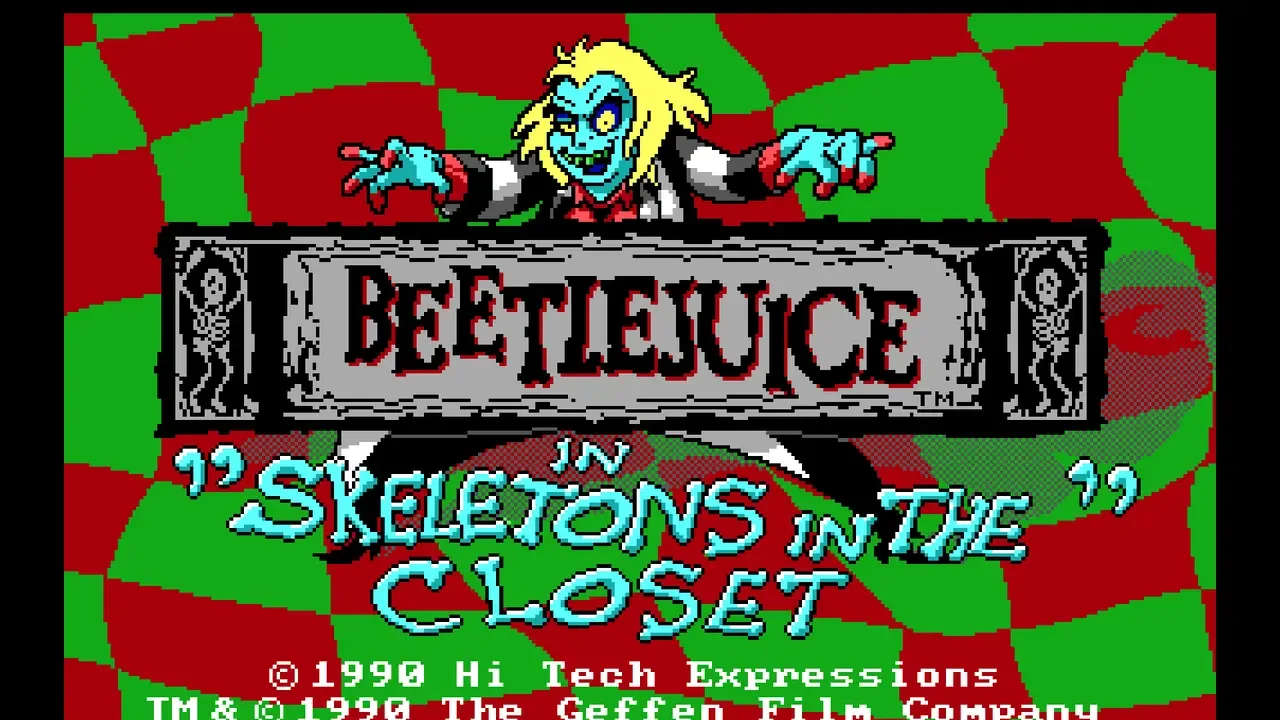
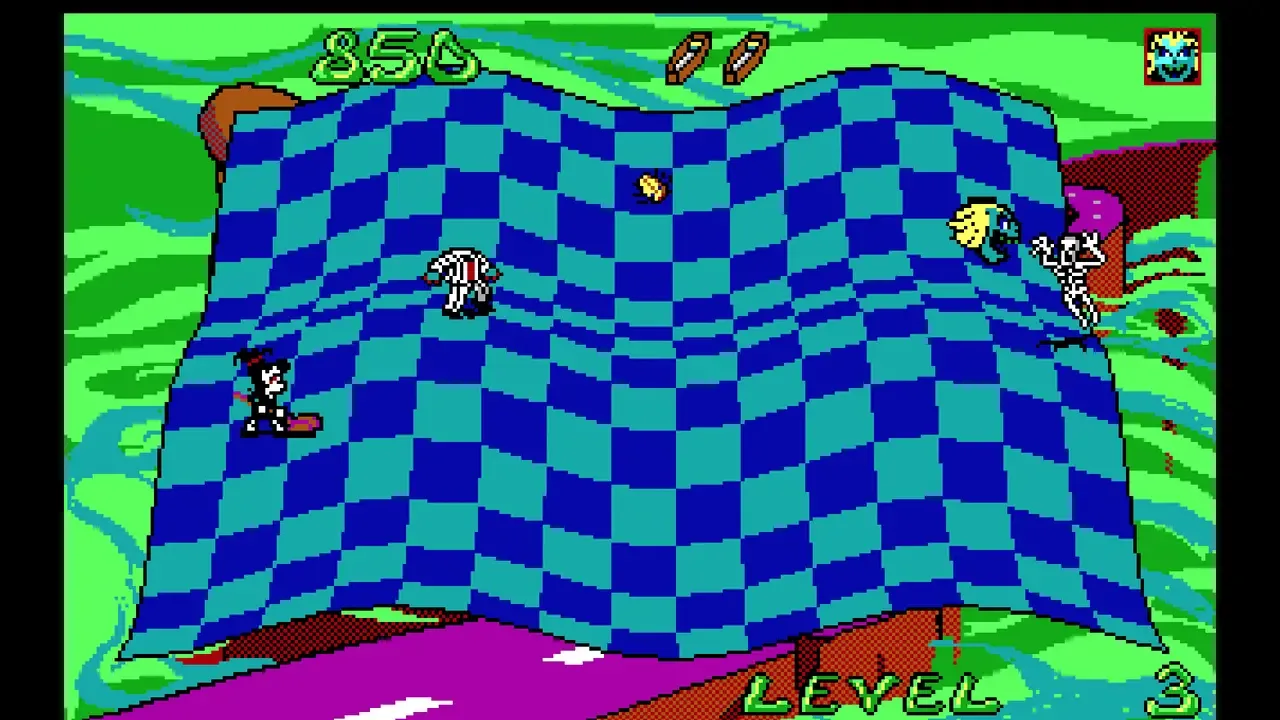
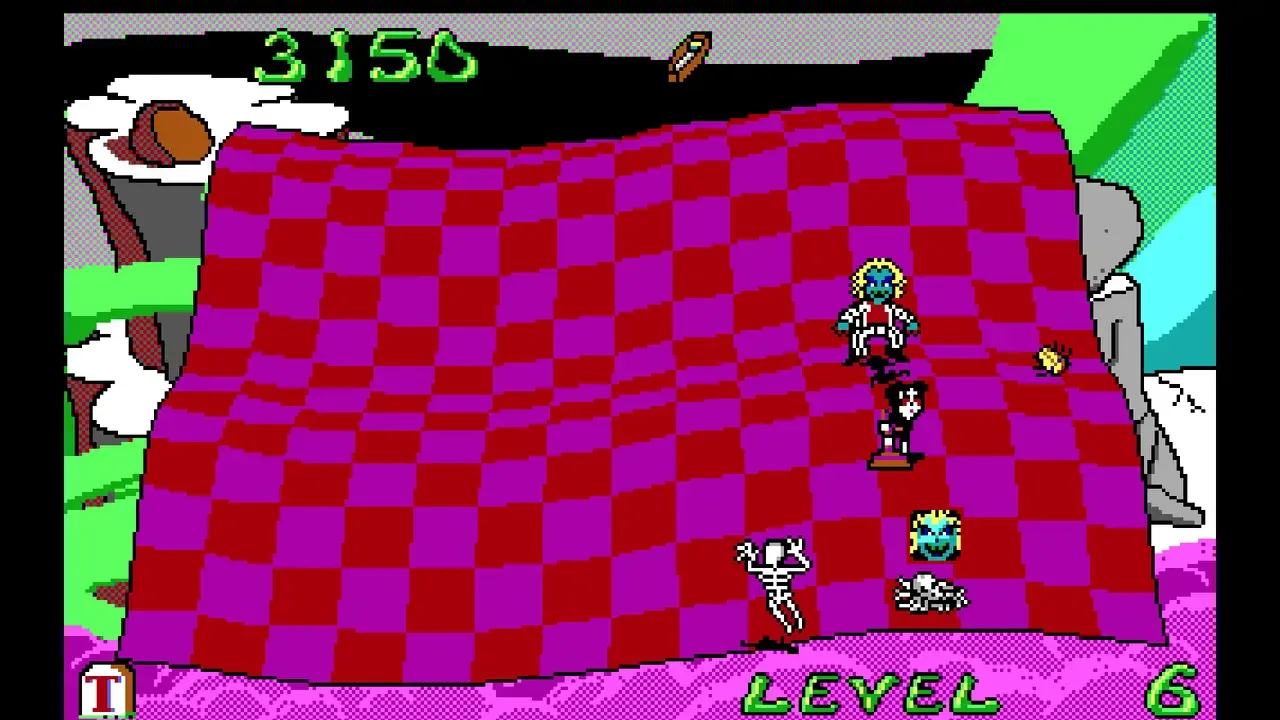
Adventures of Beetlejuice: Skeletons in the Closet


Buy
Part of collection:
Beetlejuice
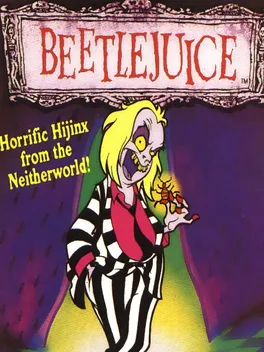
Beetlejuice: Horrific Hijinx from the Neitherworld! is a video game created by Rare and published by Acclaim Entertainment for the Nintendo Game Boy in 1992. It is based on the Beetlejuice animated television series. The game begins with the player taking control of Beetlejuice as he attempts to get rid of all the ghosts that he invited into Lydia Deetz's house (where she lives with her father and step-mother). He must rescue Lydia from the evil Astoroth. Using bio-exorcist magic, players must defeat undead creatures through the cemetery and inside the Neitherworld.
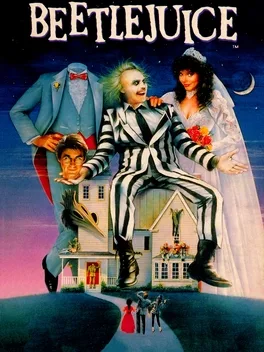
In the game you control Beetlejuice through various side-scrolling and overhead view levels in an effort to scare the yuppie Deetz family and friends that have taken over the house. You stomp on cockroaches in order to gain points that you used to buy various scare tactics that you use to defeat various enemies and bosses. Although the initial levels of the game are based upon the film, with Beetlejuice venturing through the Maitland House to find and scare away Otho, the later levels are original and involve Beetlejuice fighting mythical creatures in such locations as a sewer system and the afterlife.
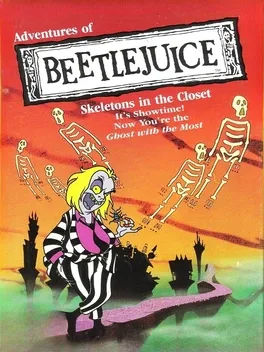
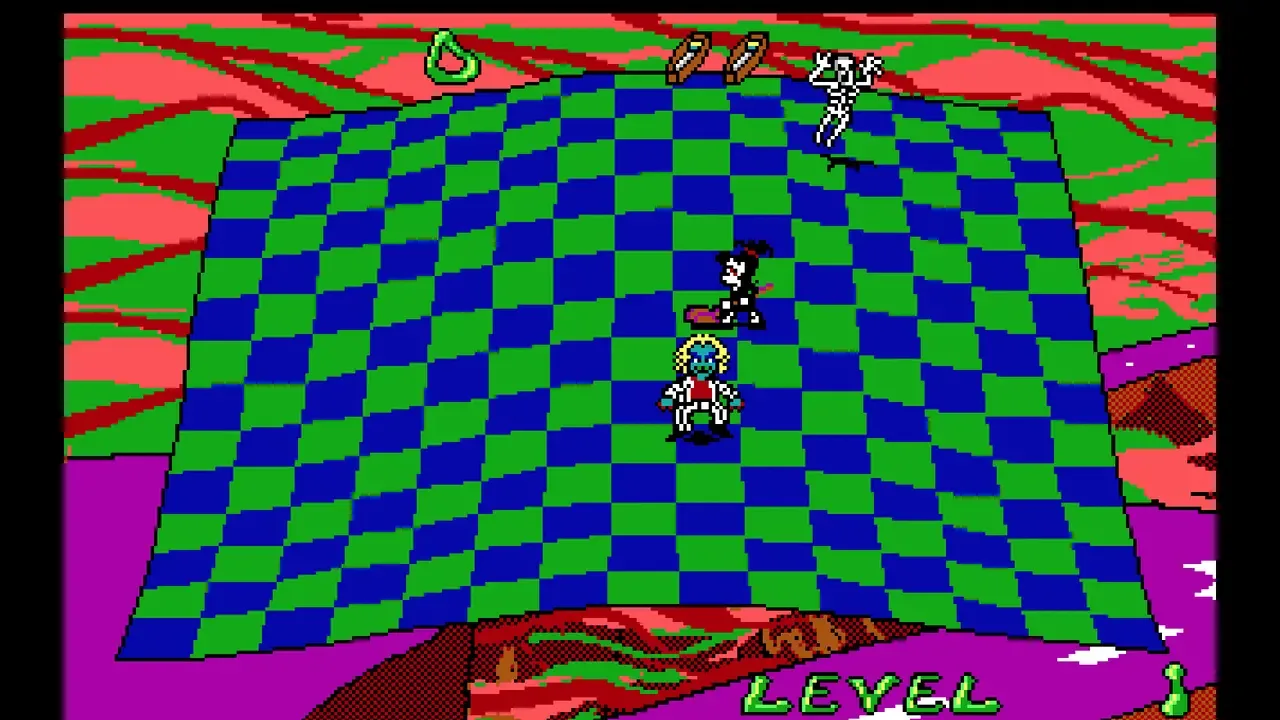
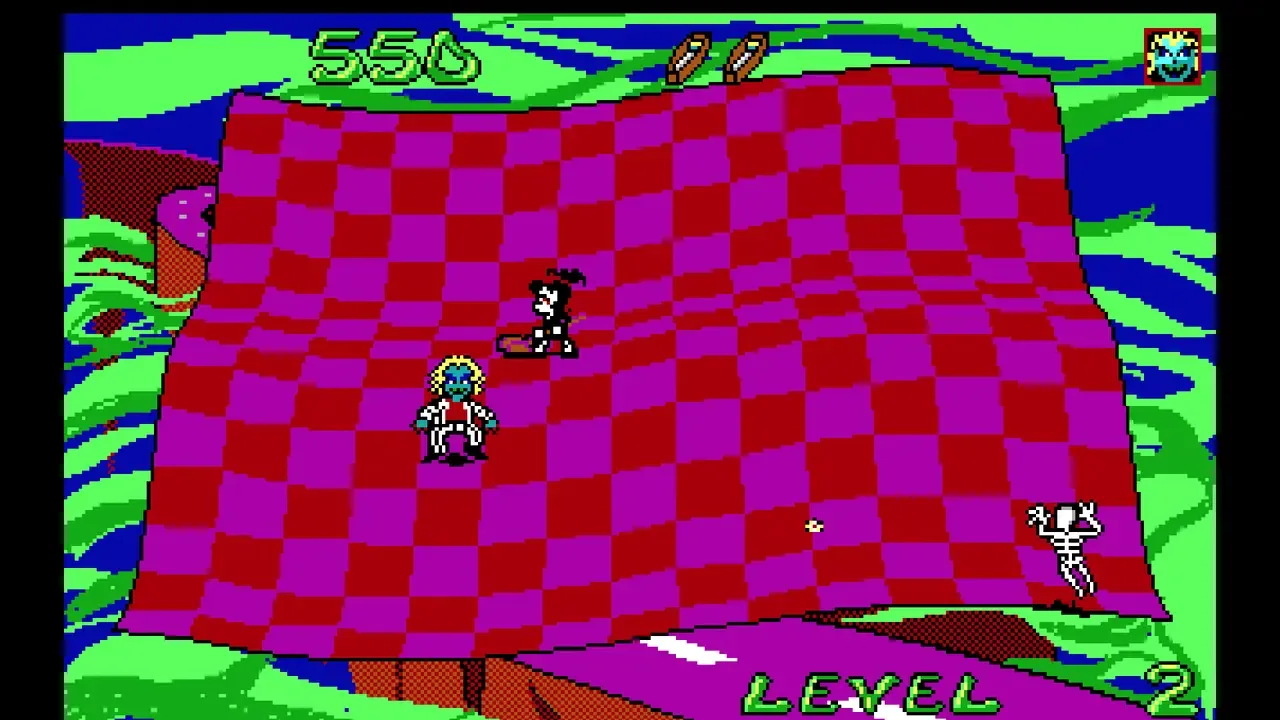
A truly bizarre game which was rather popular at the time. It's an action game of sorts, in which you play Beetlejuice himself and you have to kill (?) all kinds of skeletons with weapons -- you start with the ability to shoot a single loogie at the skeletons and, by collecting bonuses from destroyed skeletons, you may get additional loogies per shot or completely different weapons. Also, after you hit a skeleton, your friend Lidia has to collect the skeleton's remains with a vacuum cleaner; however, if a skeleton find Lidia she becomes imprisoned in a cage and you have to release her by hitting another skeleton and taking a "lightning bonus" from his remains. Another nice touch is the worm, which comes out of the playground every now and then and, should it hit you, kills you.
Could be interesting
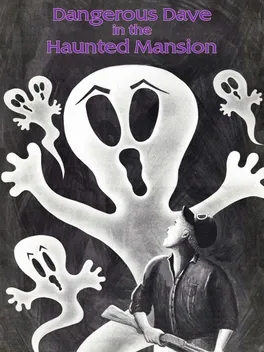
You're a one-of-a-kind dangerous guy named Dave. Born and raised in the hill country of Backwater, USA, you're quite deft with the shotgun, and afraid of nothing. Then again, you haven't been in the haunted mansion up on the hill. As you hunt for your lost little brother, Delbert, you must enter a house full of zombies, spooks, and bad guys and turn them into hamburger meat, before they make a meal out of you in Dangerous Dave in the Haunted Mansion!
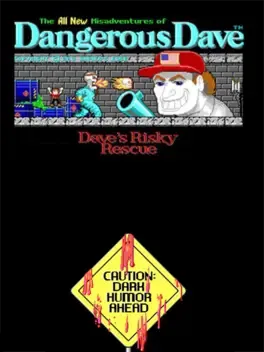
Unfortunately for our hero, his little brother is afflicted with “always getting kidnapped” syndrome. Dangerous Dave must battle wolves, mummies, ghosts, and other ghastly apparitions on his way to save Delbert from the clutches of the evil Dr. Nemesis. With 11 levels of spine-tingling platforming action, you’ll be shooting up a storm in Dangerous Dave’s Risky Rescue!
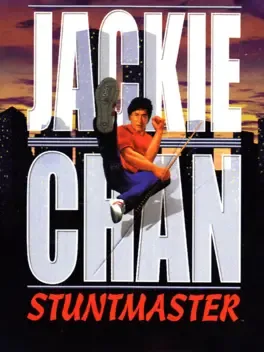
Unbelievable stunt sequences performed by Jackie Chan! Classic Jackie weapons that include chairs, brooms and more! Movie sequences that feature hilarious Jackie Chan outtakes! Tons of enemies and high-powered bosses to kick around! Motion-captured animations of the real Jackie Chan! Innovative fighting system includes throws and combos!
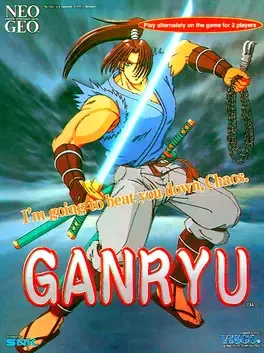
Musashi Ganryuki, known outside Japan as Ganryu, is a platformer and hack and slash video game developed by Visco Corporation and published by SNK in 1999 on Neo Geo MVS. It is loosely based on Miyamoto Musashi's fight with Sasaki Kojirō. Sasaki went by the fighting name of Ganryū, hence the game's name "Ganryu Musashi". The game's selectable characters are the samurai swordsman Miyamoto Musashi and his female kunoichi counterpart Suzume. The mission of the game is to rescue Musashi's love Otsu from a clan of evil ninja led by Kojiro Sasaki. Players are armed with a sword (katana for Musashi/kaiken for Suzume) and a grappling claw. The claw serves as a long-range weapon, and can act as a grapnel in certain settings to reach higher ground or ascend over chasms. A powerful projectile attack can also be achieved by holding down the attack button, although this takes time to charge. Additional temporary weapons can be found throughout the game, such as shuriken for Musashi, kunai for Suzume, and an "energy ball" weapon. Upon rescuing hostages, rewards are given to the player in form of food (onigiri, takoyaki), which can restore health, or ryo coins for extra points.
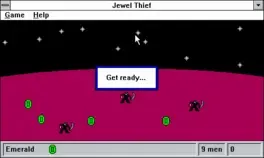
Collect jewels while avoiding enemies that bounce around the screen.

Platform game starring the clown Charly.

Jersey Devil, as the title implies, is loosely based upon the legendary New Jersey beast of the same name. Instead of the horrific beast the legend describes, the protagonist of the title is cute purple creature with long-ears and small wings. Dr. Knarf -- the villain of the piece -- has created a legion of mutated vegetables to do his evil bidding, and it falls to Jersey Devil to stop the maniacal scientist. To do this, the purple protagonist must venture through a series of 3D platform stages spread across themed environments such as a museum, cemetery, forest, and even a haunted house. Endowed with an ample set of abilities, Jersey Devil must jump, glide, and tail whip his way through the hordes of vegetables and undead minions, the latter comprising such mainstays as zombies, bats, and spiders.
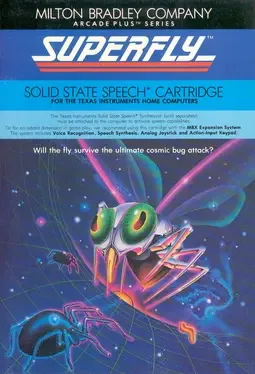
Play as a fly swatter and kill waves of flies. After enough flies have been killed, a 'SuperFly' will appear; progress to the next level by killing the SuperFly on each level.
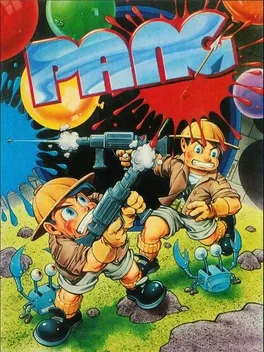
Pang, originally released in Japan as Pomping World and in North America as Buster Bros., is a 1989 arcade action game developed by Mitchell Corporation. Its core gameplay is similar to the 1983 Japanese MSX game Cannon Ball, also released that year for the ZX Spectrum as Bubble Buster. Players embark on a round-the-world quest to destroy bouncing balloons that are threatening landmarks and cities across the globe. The game features 50 stages set in 17 locations, including Mt. Fuji, Mt. Keirin, the Temple of the Emerald Buddha, Angkor Wat, Ayers Rock, the Taj Mahal, Leningrad, Paris, London, Barcelona, Athens, Egypt, Kenya, New York, Maya ruins, Antarctica, and Easter Island. Later versions added additional locations. Each stage includes a background depicting local landmarks, along with a unique arrangement of blocks, some destructible, some permanent, and some hidden with bonus items. Stages begin with balloons of various sizes; the largest balloons split into smaller ones three times before disappearing after the fourth hit. Players start with a single harpoon, though special weapons can drop when balloons are popped. At certain points, food items worth bonus points may also appear. Contact with any balloon results in the loss of a life. In two-player mode, if both players touch a balloon at the same time, only Player 1 loses a life. Similarly, when both reach a bonus or weapon simultaneously, only Player 1 collects it. Players begin with three to five lives depending on dip switch settings, with extra lives awarded upon reaching specific score thresholds. A stage is cleared when all balloons are destroyed, and the game concludes after all stages are completed, ending with the heroes driving their jeep into the sunset on an Easter Island beach.
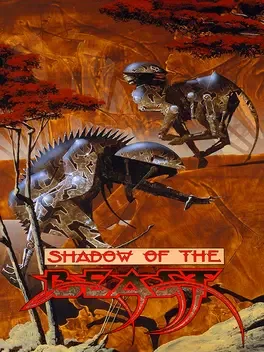
Shadow of the Beast is a platform game developed by Reflections and published by Psygnosis in 1989. The original version was released for the Amiga and later ported to many other systems. The game was known for its graphics, with many colours on screen and up to twelve levels of parallax scrolling backdrops, and its atmospheric score composed by David Whittaker, which used high-quality instrument samples.