
Art Style: Light Trax


Buy
Parent game

Racing game where you control a tiny line and guide it through various shapes and swerves at super-high speeds. Surprisingly fast and challenging for those that attempt it. You will find yourself with quickening reflexes on extended play.
Part of collection:
Art Style
(last 3 games)

Take an unusual journey into a microscopic world in this unique action game from the genre-redefining Art Style series.
Control a beam of light through multiple sectors, shifting between 2-D and 3-D views. Go for 1st place or a high score! Art Style: light trax takes racing to whole new (and very surreal) levels as you control a white beam of light moving perpetually forward while your viewpoint shifts between 2-D and 3-D perspectives. Start by choosing one of the two main modes of game play, each with its own distinct goal. In light tours mode, you vie with other light beams for the most points in a three-course racing tour. Watch out for obstacles, use items, and strategically use your dash ability to finish first. In freeway mode, your objective is to set a high score by traveling the greatest distance within a set amount of time. Mastering the intricacies of each setting is crucial: you’ll have to alternate between them in order to progress through the game and unlock all of its modes. With precise controls packed in and a driving techno soundtrack, Art Style: light trax offers an experience unlike any other. Are you ready to compete in a mind-bending race at the speed of light?

Digidrive (also known as Art Style: Intersect) is a puzzle game for the Nintendo DSi's DSiWare service. It is the last game of the Art Style line of video games, and was originally released for the Game Boy Advance in the bit Generations series. It is currently the only game in the Art Style series to not have been developed by skip Ltd. The objective of the game is to propel the disc-shaped core as many meters as possible before the piston collides into the core and ends the game.
Could be interesting
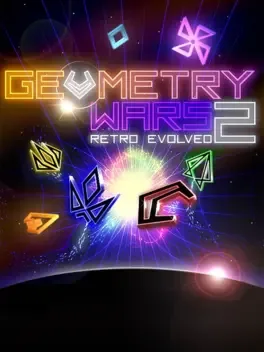
Geometry Wars: Retro Evolved 2 contains six different game modes: Deadline, King, Evolved, Pacifism, Waves and Sequence. Multiplayer was introduced in this sequel.
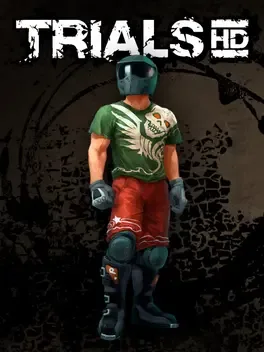
Trials HD is a full-featured, physics-based motorcycle racing game with more than 50 tracks in two unique game modes. Race Mode emphasizes balance, skill, and control as you tackle indoor obstacle tracks. Skill Mode features extreme skill games in which explosions, crashes, and injuries cannot – and sometimes should not – be avoided.

The classic game play of Excitebike is combined with new controls and features in this exclusive WiiWare title! Prepare to face daredevil jumps, crazy obstacles, and other racers in the newest member of the venerable Excitebike franchise, exclusively available on the WiiWare service. Choose from multiple camera angles as you tilt your way to smooth landings using the motion-sensitive controls and compete in races around the world in four championship circuits. Better yet, use Nintendo Wi-Fi Connection to invite friends to a race, or if you’re feeling brave, take on anyone else looking for a match. Feel like tackling a challenge of your own design? Use the intuitive Track Editor to choose from the available obstacles and put together your dream course, then share your masterpiece with friends (and vice versa) to see whose creation skills reign supreme. After all, you know what they say about riding a bike—once you’ve learned how, you never forget...

Picross 3D is the sequel to the popular Picross DS puzzle game. The original game was a number-based grid puzzle that challenged players to reveal a hidden picture. Picross 3D moves the action into three dimensions. Picross 3D blends the logical challenge of a sudoku puzzle with the excitement of discovering the hidden images within.

Much like the original, the core gameplay in Crazy Taxi 2 centers around picking people up at destinations which are highlighted with colored rings, and dropping them off at stated destinations. Crazy Taxi 2 added multiple pickups, which enabled the player to carry multiple passengers, (previously it was restricted to one passenger per journey). The game also saw the introduction of the "Crazy Hop" feature, which allows the player to jump over certain surfaces to save time, as they taxi passengers around the locations. By performing moves such as the "Crazy Hop" and the "Crazy Dash", the driver accumulates tips from their passengers, which increases the total score. This sequel includes a modified soundtrack with rock bands The Offspring and Methods of Mayhem. The game also has some online modes in the form of a scoreboard, and replay-sharing.
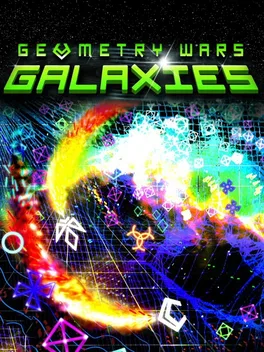
Geometry Wars: Galaxies is set in a space-like environment where the player must shoot geometrical shapes in order to score points, gain lives, acquire bombs and survive as long as possible. The game is played to an upbeat electro soundtrack.

In Edge players take direct control of the cube and roll their way around the game's dozens of levels. Search for all the prisms and find the shortcuts to improve your times.
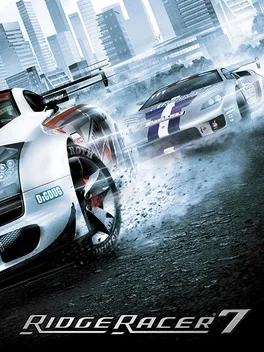
Ridge Racer 7 is the seventh console installment in the Ridge Racer series of racing games, released on PlayStation 3. The game has around 40 cars, many of which return from Ridge Racer 6 and the PSP incarnations of the game. There are also 22 courses, available in forward, reverse and mirror mode. The game runs at 1080p resolution and at 60 frames per second. It also features Dolby Digital 5.1 surround sound and free online gameplay via the PlayStation Network. The game was first unveiled at the 2006 E3 event in a teaser trailer, and the first trailer of game footage was shown at the 2006 Tokyo Game Show. Like many other games in the series, it features a full motion video opening that stars Reiko Nagase. The game has since been re-issued under Sony's "Platinum" and "The Best" budget lines. A patch was made available in October 2010 titled "Ridge Racer 7 3D License Version" that enables Ridge Racer 7 to be played in 3D.

Take anarchic driving destruction on a world tour and experience the pure arcade adrenaline-rush of Burnout 3: Takedown. Combine aggressive high-speed racing with the ultimate in slamming crash action to boost your way to the top. Takedown the competition across the USA, Europe and the Far East in over 60 Race events, or crush all comers with Burnout 3: Takedown's junction-jamming Crash event pileups. Push it to the next level with five competitive multiplayer models, then move the mayhem online to compete against up to seven players. Reap the rewards of dangerous driving, earning Crash $ and Burnout Points to unlock over 60 hot vehicles, coveted skill trophies, front-page headlines and much more. (Source PS2 Game Manual)
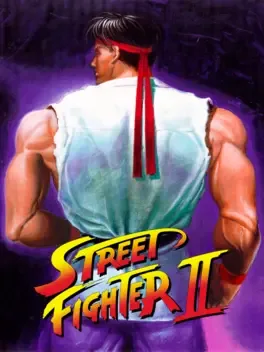
A sequel to Street Fighter, Street Fighter II improved upon the many concepts introduced in the first game, including the use of command-based special moves and a six-button configuration, while offering players a selection of multiple playable characters, each with their own unique fighting style and special moves. Street Fighter II is credited with starting the fighting game boom during the 1990s. Its success led to the production of several updated versions, each offering additional features and characters over previous versions, as well as many home versions. Some home versions of the Street Fighter II games have sold millions of copies, with the SNES port of the first Street Fighter II being Capcom's best-selling consumer game of all time as of 2008. Street Fighter II follows several of the conventions and rules already established by its original 1987 predecessor. The player engages opponents in one-on-one, close-quarters combat in a series of best-of-two-out-of-three matches. The objective of each round is to deplete the opponent's vitality before the timer runs out. If both opponents knock each other out at the same time or the timer runs out with both fighters having an equal amount of vitality left, a "double KO" or "draw game" is declared. Additional rounds will be played until sudden death. In the first Street Fighter II, a match could last up to 10 rounds if there was no clear winner; this was reduced to 4 rounds in the Champion Edition and onward. If there is no clear winner by the end of the final round, then either the computer-controlled opponent will win by default in a single-player match, or both fighters will lose in a 2-player match. After every third match in single-player mode, the player will participate in a "bonus game" for additional points. The bonus games include (in order) a car-breaking event; a barrel-breaking bonus game where the barrels are dropped off from a conveyor belt above the player; and a drum-breaking bonus game where drums are flammable and piled over each other. The bonus games were removed from the arcade version of Super Street Fighter II Turbo. As in the original, the game's controls use an eight-directional joystick and six attack buttons. The player uses the joystick to jump, crouch, move the character towards or away from the opponent, and guard against the opponent's attacks. There are three punch buttons and three kick buttons, each with varying strength and speed (Light, Medium, and Heavy). The player can perform a variety of basic moves in any position, including grabbing/throwing attacks, which were not featured in the original Street Fighter. Like in the original, the player can perform special moves by inputting a combination of directional and button-based commands. Street Fighter II differs from the original in that it features multiple playable characters, each with distinct fighting styles and special moves. Additionally, the player can "cancel" an animation by performing another move, enabling combinations of basic and special moves. Both of these features would be expanded upon in subsequent installments.