
Bomberman '94


Buy
Part of collection:
Bomberman
(last 3 games)

Based on the block-destroying gameplay of Bomberman, Bombergirl tasks players with destroying the opposing team’s base before the other team in four-versus-four cooperative battles. By adding new game properties such as this, it is not only fun to play, it is also fun to watch. And with the button that pops out at the end, a match of Bombergirl is a sight worth seeing.

A Bomberman game by Konami available for iOS and Android devices. Includes single player and online public/private multiplayer for up to four players.

Bomberman is a free multiplayer game for mobile phones (iOS and Android) available in the Google Play Store, developed and published by Konami, exclusively in Japan. The game features a single or multiplayer battle mode, as seen in many other entires in the Bomberman series.
Part of franchise:
Bomberman
(last 3 games)

A sequel to Super Bomberman R, featuring an expanded story mode, and a new "Castle" battle mode which has one group teaming up to build castle defenses while the other attempts to breach the castle and take the treasure.

This add-on pack contains 14 additional characters equipped with special types and abilities, as well as the feature to create private matches with your friends.

Drop bombs and collect power-ups to blast your way through Super Bomberman R Online! You can compete against up to 64 players from around the world in this explosive survival battle. With the new Battle 64 mode, move from one area to another and blast away your rivals in an epic online survival battle! Fight your way to the end and outlast all other players to be Bomber One!
Could be interesting
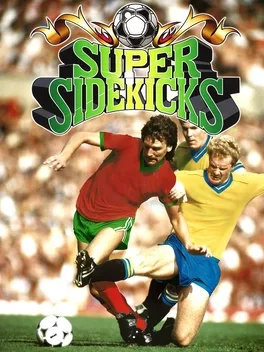
Published in 1993, the original Super Sidekicks (known as Tokuten Ou, "Goal-Scoring King" in Japan) was SNK's first soccer video game. It features 12 teams divided into two groups which compete for the "SNK Cup" (the main differences between teams is their formations on the field): Group A: Germany, Italy, Spain, England, Mexico, Japan Group B: Argentina, Holland, Brazil, France, United States, South Korea The players' team plays against all the others in their group, then it goes into an elimination tournament's semifinals and then the final to win the cup. There was also a hidden feature in the game, which wasn't documented, and affects a single player game. During a free kick for the CPU if the player has tapped button A for player two, the CPU performs a short-shot, while pressing the button A performs a longer kick.
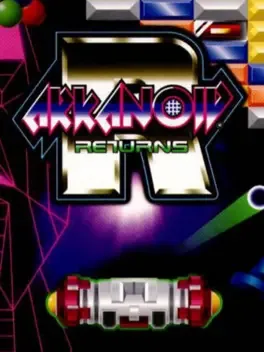
Arkanoid Returns is an arcade game released by Taito in 1997 as part of the Arkanoid series. It was the fourth overall, and third to be released in arcades. The game was since ported to the PlayStation, with an updated home release being released afterwards titled Arkanoid R 2000. All versions were released exclusively in Japan, currently making it the only game in the series to never receive an international release. The enemy known as 'DOH' still did not get the message and after many years of silence decides to attack once again. The 'Vaus' space vessel better be ready to face new, yet familiar challenges, in order to stop 'DOH' once again. The gameplay remains similar to Arkanoid: Doh it Again, the previous game in the series released for the Super Nintendo, in that it features the same powerups , some re-used level designs, and the same board size. The initial arcade game contains only 50 levels, the environment changing every 9 levels.
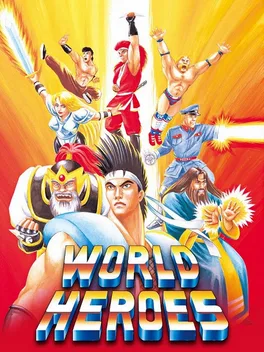
Are you ready for a fierce battle in an ultra-deathmatch!? Who is the greatest hero in the world? You will find out today! A scientist has created a time machine that eight heroes will travel through time with to prove who is the greatest fighter of all time!
Should you enter Tecmo's Deception you should be warned! You must decide who lives and who dies. As in life, Tecmo's Deception will hold you responsible for your actions. Everything you do, everywhere you go, everyone you meet has a reason. Are you seeking revenge, resurrection, or redemption? It's your decision.
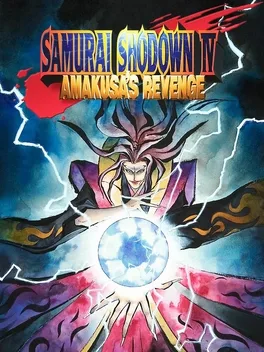
Samurai Shodown IV: Amakusa's Revenge, also known as Samurai Spirits: Amakusa's Descent in Japan, is the fourth in SNK's flagship Samurai Shodown series of fighting games. Chronologically, it is the second and final chapter of a story between Samurai Shodown and Samurai Shodown II, with Samurai Shodown III being the first chapter.
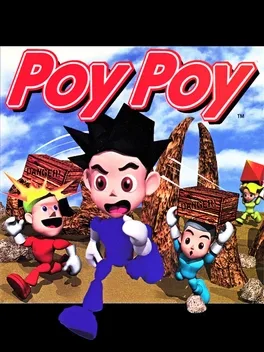
Poy Poy is a multiplayer party game at heart. Grab a multi-tap and four friends and take part in an ultimate battle of skill and wit. The idea is to be the last man standing in this arena based combat game. But don't worry if you can't find a multi-tap or four friends. There's plenty of AI characters to battle in various tournament modes and you can also play a 2 player deathmatch (with or without computer opponents). If it sounds fun now, wait 'till you play it... Set in seven different 3D environments strewn with throwable objects, the game challenges you to a match against three other opponents armed with logs, rocks, ice blocks, and atomic bombs. If you run out of stuff to throw, you can toss your opponents around too. Each hit drops your life meter, so be careful who you pick a fight with.
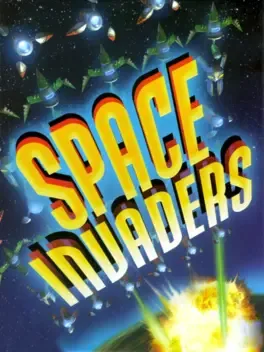
Space Invaders is a game in which the player controls a laser cannon by moving it horizontally across the bottom of the screen and firing at descending aliens. The aim is to defeat five rows of eleven aliens—some versions feature different numbers—that move horizontally back and forth across the screen as they advance towards the bottom of the screen. The player defeats an alien, and earns points, by shooting it with the laser cannon. As more aliens are defeated, the aliens' movement and the game's music both speed up.
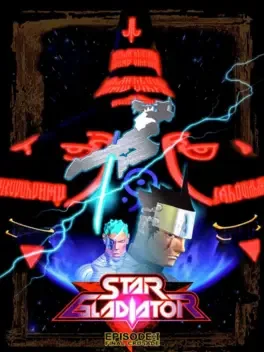
Star Gladiator Episode I: Final Crusade is a 1996 weapon-based 3D fighting game released by Capcom for the PlayStation-based ZN-1 arcade hardware. It was Capcom 's first polygonal fighting game, preceding the original Street Fighter EX (which Capcom had co-produced with Arika) by a few months A PlayStation port was released in October 1996. It was followed by a single sequel, Plasma Sword, in 1998.
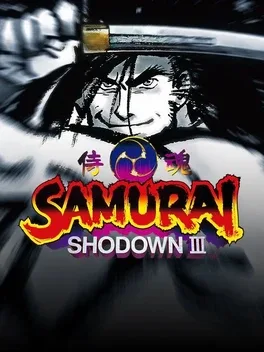
Samurai Shodown III was to be the start of a bold new direction for the franchise. The most obvious difference between this game and the others in the series is the notably darker aesthetic. The more light-hearted characters (Earthquake, Cham Cham, and Gen-an to name a few) from the previous games have been excised, and even the kabuki master, Kyoshiro Senryo, received a redesign, transforming him from a flamboyant stage performer into a grim-faced, muscular man. All of the characters have been completely redrawn. The animation is very smooth for all characters, another departure from the graphical style of the second game.

R4: Ridge Racer Type 4 is the fourth game in the Ridge Racer series. It includes eight tracks (with reverse variants, for a total of 16 layouts) and 321 vehicles, all of which are fictional. This iteration was one of the first PlayStation titles to feature Gouraud shading on polygons, giving the game a visual depth that was previously missing. It was also the first Ridge Racer game on the system to feature two-player split-screen mode and offered two different driving models.