
Centipede


Buy
Part of collection:
Centipede
(last 3 games)
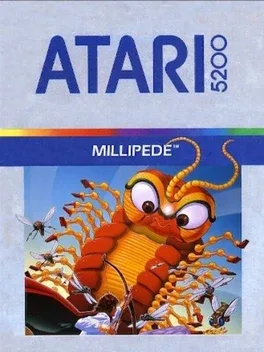
Millipede 5200 was an unreleased version of Millipede which happens to be the most accurate version to that of the original arcade. Sadly was never released due to it's arcade version's poor performance. Originally slated to be releasing in March of 1984, however it can be assumed that not only did the poor performance in it's arcade versions caused it to never be released, but also due to the fact that the 5200 was a commercial flop due to it's lack of innovation in the technology it had built within it, along with it's awful controller, and lack of exclusives worth playing. Another factor most likely was due to Atari's reputation after the Video Game Crash of 1983. Millipede 5200 is tragic victim of Atari, being the most accurate emulation of the Arcade experience except with a more of the Home Console touch of quality worth experiencing. The game was later released as part of Atari compilations.
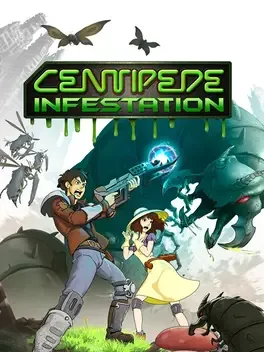
Centipede: Infestation is a video game developed by WayForward Technologies and published by Atari, SA for the Nintendo Wii and the Nintendo 3DS. It is a re-imagining of the Centipede video game franchise. Centipede: Infestation is set in a post-apocalyptic world, and features a "run 'n' gun" shooting style gameplay with a mix of tower-defense style objects. The player's goal is to fight off giant bugs while seeking to use special seeds to bring plant life back to the world. Players control a character named Max as well as secondary character named Maisy who possesses a collection of special needs. She is often in need of rescue. The game has co-op gameplay,and a wide variety of weapons and stages. The co-op part of the game features a selection of characters to choose from and it is much easier to get through the game with a friend.
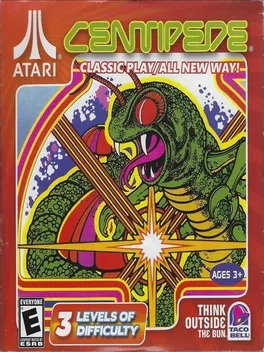
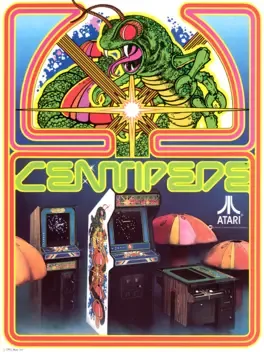
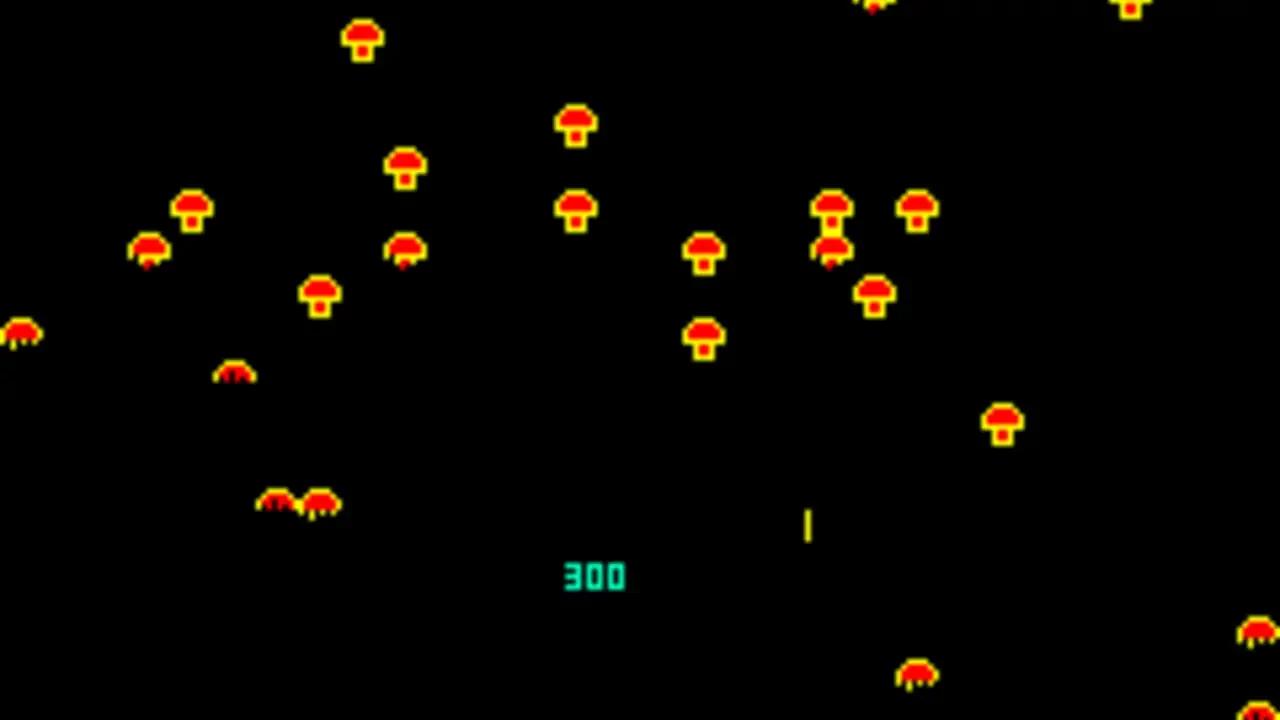
Port of the original Centipede Arcade for Windows.
Part of franchise:
Centipede
(last 3 games)
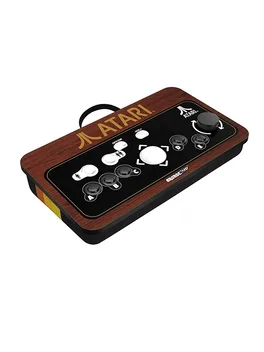
Have a seat, get comfy, and Play Again with an Arcade1Up Couchcade! Easily connect the Micro Game Console to your TV via HDMI port, the wireless control deck features real-feel arcade controls on top, and a soft bean bag bottom. Yep, retro gaming just literally fell into your lap! When looking back at the history of video gaming, there is no doubt which company was the trailblazing pioneer: Atari. A name that became synonymous with the arcade boom, and a powerhouse in broad entertainment. Atari titles captivated the world with vibrant graphics, easily learned yet challenging gameplay, and instantly recognizable imagery. Now, relive an amazing Atari line up from the comfort of your own couch…no matter what your age! Packed inside this Couchcade, you’ve got ASTEROIDS and ASTEROIDS DELUXE. CENTIPEDE and MILLIPEDE. Yes, MISSILE COMMAND and TEMPEST are here. Oh, and yeah, you’ve also got MAJOR HAVOC, LUNAR LANDER, CRYSTAL CASTLES, and GRAVITAR! Yes, ALL are included. Switch up to any game at will, with the easy to navigate on-screen menus. Ten games, unlimited retro gaming fun. If there is any reason to become a couch potato (with no apologies), this is it. your Arcade1Up Couchcade is here!
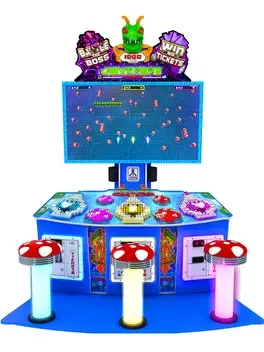
Centipede Chaos, the hit 80’s classic crawler game is back to take over arcades around the globe! Cosmetically this game has some incredible features that make it stand out from the crowd. The three LED-lit stools not only provide comfort for the players but are also very appealing in the game room. The huge 75-inch monitor brings the graphics to life and “Chaos” even closer. The oversized joysticks offer intuitive gameplay for all ages! Players must use the joystick and fire button to move their ship and blast down the creepy crawlies. Incorporating many fun power-ups and challenging bosses adds excitement as well as depth to the gameplay. Get through all 10 waves using the continue feature, to defeat the Mega Spider Boss and win the mega ticket bonus.
Millipede 5200 was an unreleased version of Millipede which happens to be the most accurate version to that of the original arcade. Sadly was never released due to it's arcade version's poor performance. Originally slated to be releasing in March of 1984, however it can be assumed that not only did the poor performance in it's arcade versions caused it to never be released, but also due to the fact that the 5200 was a commercial flop due to it's lack of innovation in the technology it had built within it, along with it's awful controller, and lack of exclusives worth playing. Another factor most likely was due to Atari's reputation after the Video Game Crash of 1983. Millipede 5200 is tragic victim of Atari, being the most accurate emulation of the Arcade experience except with a more of the Home Console touch of quality worth experiencing. The game was later released as part of Atari compilations.
Could be interesting
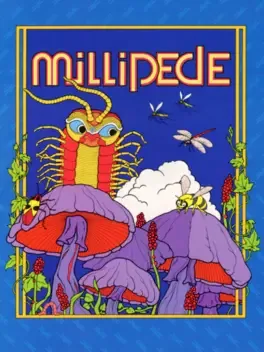
Millipede is a 1982 arcade game by Atari, Inc. and is the sequel to the arcade hit, Centipede. The objective of the game is to score as many points as possible by destroying all segments of the millipede as it moves toward the bottom of the screen, as well as destroying and avoiding other enemies. The game is played with a trackball and a single fire button, which can be held down for rapid-fire. The game is over when the player's last life is lost.
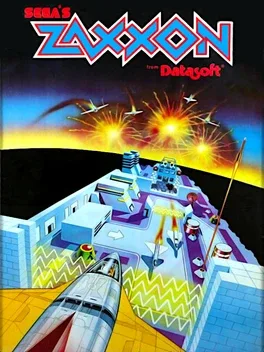
Zaxxon is a 1982 isometric shooter arcade game developed and released by Sega. The game gives the player the experience of flying a fighter craft through a fortress while shooting at enemy entities (missiles, enemy gunfire, etc.) The object of the game is to hit as many targets as possible without being shot down or running out of fuel, which can be replenished paradoxically, by blowing up fuel drums.
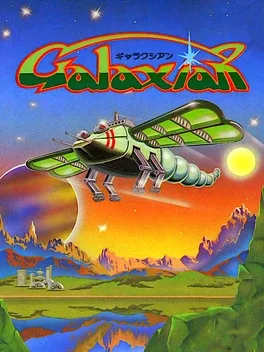
Galaxian is a shooter arcade game developed by Namco in 1979. It was released by Namco in Japan and a few months later by Midway Games in North America. The game was developed to compete with Taito Corporation's Space Invaders, released a year earlier, and featured a similar space theme. The player controls a space ship in the bottom part of the screen and shoots at enemies descending from the top of the screen. The game was received very well by the public and has continued to be a game with a competitive community to this day. It was followed by a successful sequel called Galaga in 1981 and two less known sequels called Gaplus in 1984 and Galaga '88 in 1987. Galaxian was one of the most popular games in the golden age of arcade video games.
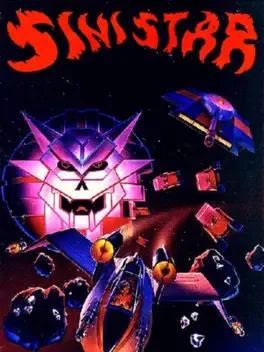
The player pilots a lone spacecraft, and must create "Sinibombs" by shooting at drifting planetoids and catching the crystals that are thereby released. Sinibombs are needed to defeat the game boss, Sinistar, an animated spacecraft with a demonic skull face. Sinistar does not exist at the start of the game, and is continuously under construction by enemy worker ships. Though time is crucial, attempting to mine too quickly will destroy a planetoid without releasing any crystals. Enemy worker ships are also gathering crystals (often stealing them from the player) which they use to construct the Sinistar. Enemy warrior ships can directly attack the player's ship. The player is given a head-start before the enemy ships have enough crystals to begin construction. Game ends when the player's ships are all destroyed. Once the Sinistar is completely formed, a digitized voice makes various threatening pronouncements, including "Beware, I live!," "I hunger, coward!," "I am Sinistar!," "Run! Run! Run!," "Beware, coward!", "I hunger!," "Run, coward!," and a loud roaring sound. The Sinistar has no weapon attacks, but if it contacts the player's ship while it darts about the playfield, the player's ship will be "eaten" and destroyed. A total of 13 Sinibombs are required to destroy a fully built Sinistar, although an incomplete Sinistar can be damaged to slow construction. Each short-range Sinibomb automatically targets the Sinistar when fired, but can be intercepted by a collision with an enemy ship, enemy fire, or a planetoid. The player moves from one zone to the next each time he defeats the Sinistar. A sequence of four zones repeats continuously after the first zone. Each is named for the most numerous feature of that zone: Worker Zone, Warrior Zone, Planetoid Zone, and Void Zone (the Void Zone is especially difficult because it has very few planetoids). Beginning with the first Worker Zone, a completed but damaged Sinistar can be repaired/rebuilt by the enemy ships by gathering more crystals, extending its "lifespan" if the player is unable to kill it quickly.

There are many scrolling shooters but none of them is like "Sky Force". This stunning shoot ‘em up game combines the classic arcade elements with the new possibilities offered by current technology. The new installment in the series just came out in a spectacular style. "Sky Force 2014" was a huge success, acclaimed by gamers and critics. "Reloaded" gives players more of what they loved in the previous "Sky Force". Get ready for your device getting hot and your finger getting sore. Prepare yourself for exciting new missions, more powerful enemies and breathtaking boss battles! "Sky Force Reloaded" offers gorgeous 3D graphics, intense gameplay and a lot of new features. The options to boost up your planes are incredible. Yes, that’s right, PLANES! There’s a satisfying number of planes to choose from. Each with different strengths and weaknesses. Cater to your inner collector by hunting in-game buff cards and unlocking a number of achievements.
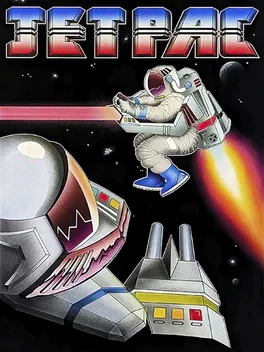
The 'Acme Interstellar Transport Company' is delivering spaceship kits to various planets in the solar system throughout the Galaxy; and as chief test pilot, all you have to do is assemble the Rockets, and thrust on to your next destination. As you don't often get the chance of a free trip across the Galaxy, this is a great opportunity to get rich! Stop off on several planets on your journey, collect the odd sack of precious gems, elements or gold, and take them back with you. Sounds simple doesn't it! But before you make yourself the richest person in the whole Universe, remember to refuel your Spaceship - with 6 fuel pods - every time you land on a planet. Any other goodies you collect are yours to keep. Upon landing, you will find yourself equipped with the very latest Hydrovac Jet Pac, which can automatically air lift almost any rocket stage, fuel pod or valuables that you care to land upon, and release them over the rocket ship base. Don't forget your mega-powerful, Quad Photon Laser Phasers can blast any nasty, mean aliens who might object to your visit.
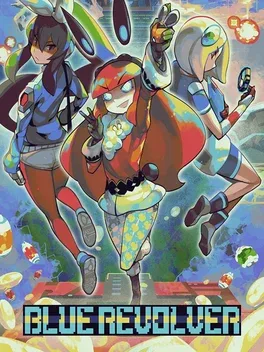
BLUE REVOLVER is a fresh new shoot-em-up built for newcomers and psychos alike. An adaptive difficulty system tailors the game to your skill level as you fight and flourish to evade the maniac environmental force, "Blue Revolver"!
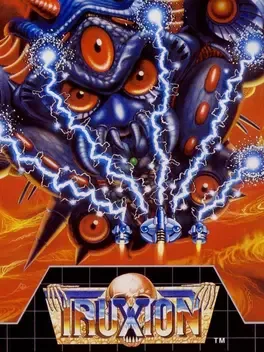
Truxton is a 1988 vertically scrolling, shoot 'em up arcade game developed by Toaplan, later ported to the Mega Drive (worldwide) and the PC Engine (Japan-only). Like many other scrolling shooters, the game is set in outer space, where the player takes control of a small spaceship across several planets. The game is played with an eight-way joystick and two buttons (a shot and a bomb button) through five large levels and their bosses (which then loop forever, at higher difficulties).
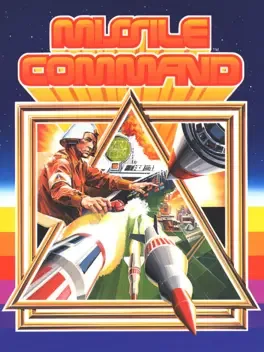
As a regional commander of three anti-missile batteries, the player must defend six cities in their zone from being destroyed. The player's six cities are being attacked by an endless hail of ballistic missiles, some of them even splitting like multiple independently targetable reentry vehicles (MIRVs). New weapons are introduced in later levels: smart bombs that can evade a less than perfectly targeted missile, and bomber planes and satellites that fly across the screen and launch missiles of their own.
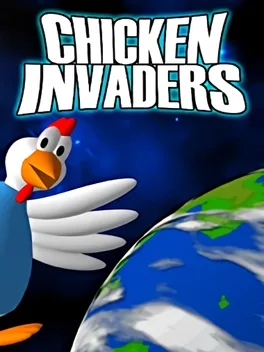
Sometime in the near future, Earth is invaded by chickens from another galaxy, bent on revenge against the human race for oppressing earth chickens! Take the world's fate in your hands (or at least have an omelette) in this modern rendition of the 80's classic. Save the world today!