
Crimson Gem Saga

Buy
Part of collection:
Astonishia Story
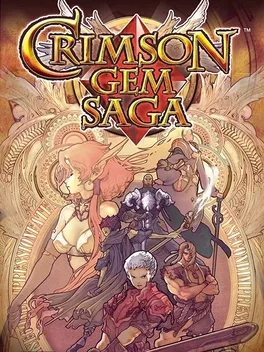
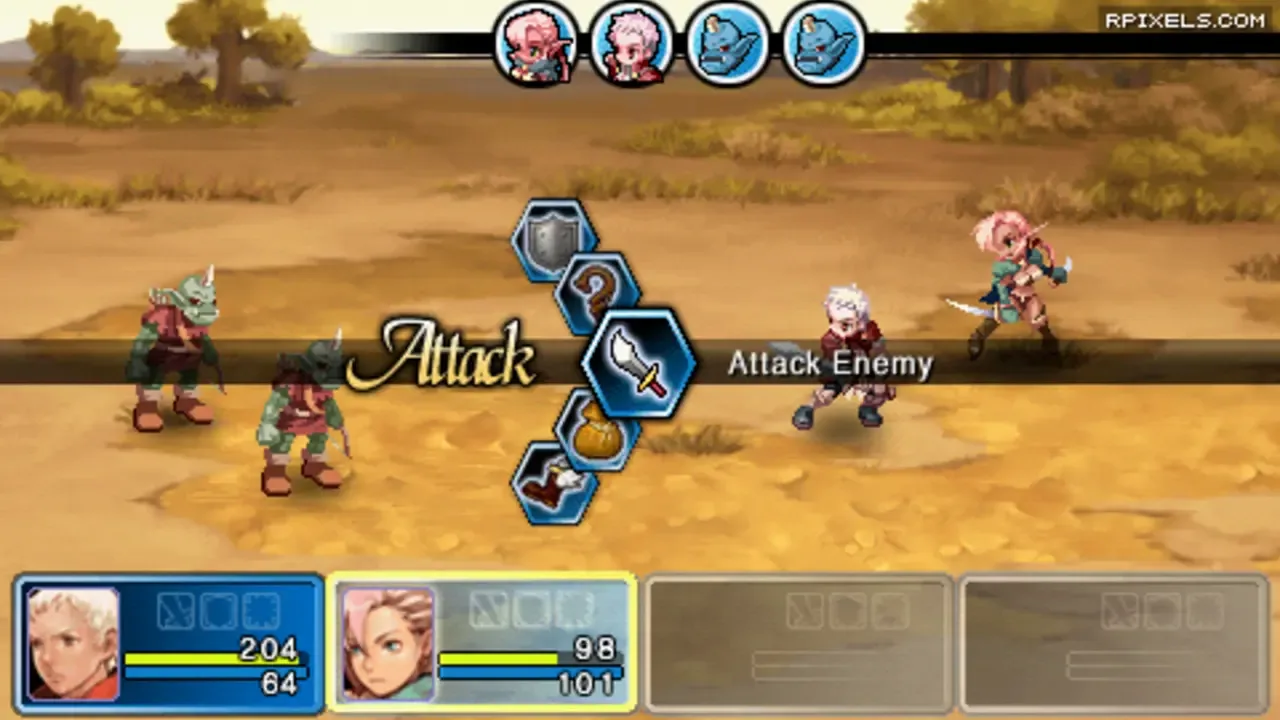
With beautiful, high-resolution 2-D artwork, novel battle mechanics, and a classic tale of fantasy, adventure, and heroism, Crimson Gem Saga delivers the pure, classic Japanese RPG play experience PSP owners have been clamoring for since the hardware's launch. Taking full advantage of the crisp, clear PSP screen and boasting a colorful, catchy musical score, Crimson Gem Saga is a blast from the past presented just as you'd expect a modern RPG to be.
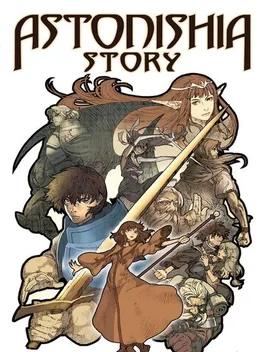
In Astonishia Story, players embody an honorable royal knight and embark upon an epic journey to recover a stolen sacred relic that symbolizes prosperity and fortune. Players must seek the help of wizards and many other mysterious allies to succeed.

Astonishia VS is a rock-paper-scissors PVP game in the Astonishia Story universe.
Could be interesting
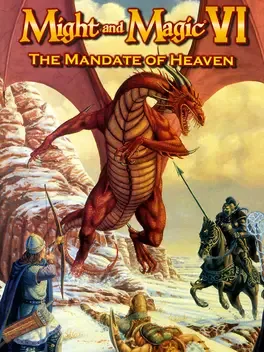
The Ironfist Dynasty is tottering on the brink of ruin. As endless calamities plague the kingdom of Enroth, evil doomsday cultists plan to overthrow child Prince Nicolai and claim the throne for their charismatic leader. Fear grips the land and the people wonder if their sovereign has lost the Mandate of Heaven - the divine right to rule. The enemies of reason are at the gate and only extraordinary heroes can stem the tide of darkness. Will you answer the call? From the depths of the deepest dungeons, to the intrigues of the royal court, you will lead a band of adventurers on a dangerous journey of amazing depth and intelligence. With a completely new 3D graphics engine and a non-linear adventure system, Might and Magic VI: The Mandate of Heaven brings a unique role-playing experience to life.
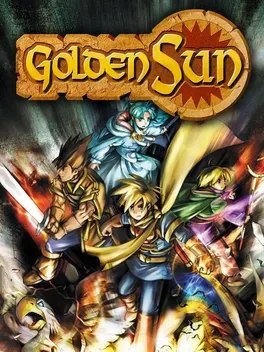
Evil is slowly covering the world. Forces of darkness are pursuing the lost art of Alchemy, and the fate of mankind hangs in the balance. You and your companions, armed with weapons, Psynergy magic, and a host of elemental creatures, must return peace to the world. Golden Sun is an epic role-playing game with an engrossing story, set in a massive world. Gather the elemental Djinn – fire, water, wind and earth – and combine them in unique ways to produce awesome magical effects.

Breath of Fire IV is a single-player game that continues the story with these "dragon people," who gave their lives to eradicate the evil goddess and restore peace in their world. This time around, battle has broken out between two powerful continents, and the fair Princess Elena has disappeared during a tour of the war-torn region. The princess's sister, Nina, who reigns o'er the Windia Kingdom, vows to retrieve her missing sibling. She meets Ryu along the way, who joins the epic quest
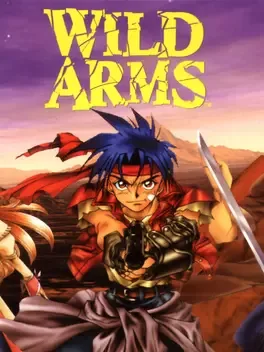
Wild Arms is a Western-themed role-playing video game developed by Japanese software company Media.Vision. Originally released in Japan in 1996 for the Sony PlayStation video game console, it was later translated and released in North America in 1997 and Europe in 1998 by Sony Computer Entertainment. It is noteworthy for not only being one of the first role-playing video games on the PlayStation, but also one of the few to feature a Western American setting and motif. The game features 2D computer graphics for normal gameplay, while battle sequences are rendered in 3D.
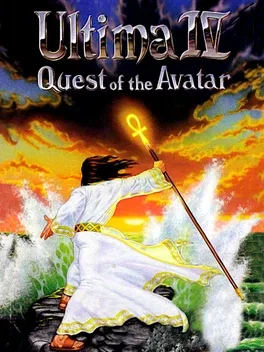
Following the defeat of the evil triad in the previous three Ultima games, the world of Sosaria changed beyond recognition: continents rose and sank, and new cities were built, heralding the advent of a different civilization. Unified by the reign of the benevolent monarch Lord British, the new world was renamed Britannia. Lord British wished to base people's well-being on the ethical principles of Truth, Love, and Courage, proclaiming the Eight Virtues (Honesty, Compassion, Valor, Justice, Sacrifice, Honor, Spirituality, and Humility) as the ideal everyone should strive for. The person who could accomplish full understanding and realization of these virtues would serve as a spiritual leader and a moral example for the inhabitants of Britannia; he alone would be able to obtain holy artifacts, descend into the Stygian Abyss, and access the Codex of Ultimate Wisdom. This person is the Avatar. The fourth game in the Ultima series features an improved game engine, with color graphics and enhanced character interaction: the player can have conversations with non-playable characters by typing names of various topics. However, the main difference between Ultima IV and its predecessors in the series (as well as other role-playing games) lies in the game's objectives and the ways to fulfill them. Instead of building up a character by any means possible in order to face a villain in the end of the game, in Ultima IV the player is trying to become the Avatar, a role model for people. This means upholding the Eight Virtues, basically trying to become a better person. Making morally conscious decisions and helping other people is not done expecting a material reward, but because it is the actual goal of the game and the main focus of its gameplay. The game frowns on behavior typical of most other RPGs, such as backstabbing fleeing enemies or picking up everything that isn't nailed down even if it does not belong to the protagonist. This different approach established the game's reputation as the first "true" Ultima, influencing the design philosophy of later installments and the overall spirit of the series. Character creation is done by choosing responses to morally ambiguous questions. Each of the Eight Virtues corresponds to a character class; by determining the player's personal priorities in the virtues, the game assigns a class and a starting location for the Avatar. After emerging in Britannia, the player is free to explore it in various ways (on foot, moongate teleportation, on horseback, by ship, etc.). Certain items must be collected in any order to enter the Stygian Abyss and complete the game. The Avatar also has to reach the highest level in all virtues. This is achieved by various means: donating blood increases Sacrifice, not fleeing from combat increases Valor, etc. The process, however, is not irreversible: should the Avatar overpay a blind seller, he gains Compassion points; should he, on the other hand, cheat the seller by underpaying, his level in several virtues would decrease. These unorthodox features of the game co-exist with plenty of traditional RPG elements, such as dungeons to explore and hostile monsters to kill. Enemies are encountered on the world map as well as in dungeons; combat takes place on separate top-down screens, allowing player-controlled and enemy parties freely move on them. Characters accumulate experience points and level up, gaining higher amount of hit points and access to stronger magic spells. Like in the previous installments of the series, world map, town exploration and combat are presented from a top-down view, while the dungeons are pseudo-3D and are explored from first-person perspective. Ultima IV also introduces several new gameplay features to the series and role-playing games in general. A number of initially non-playable characters living in various areas of the game world are able to to join the party and fight alongside the hero, replacing traditional player-generated characters or mercenaries and adventurers available only in special locations. Additional new elements include buying and combining reagents in order to cast spells, puzzle rooms in dungeons, and others.
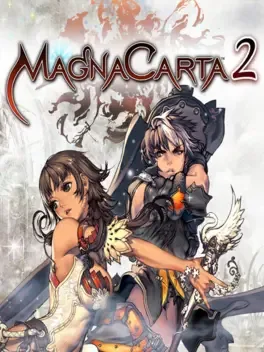
Magnacarta 2 introduces an original new storyline driven by intense themes of love, hate, politics, betrayal and the ultimate question of choosing one’s own fate. Players are immersed in the world of the Lanzheim Continent, a conflict-ridden land deeply divided by a fierce civil war.
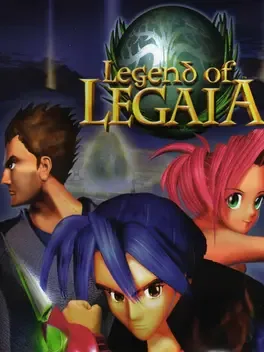
A legendary tale of betrayal and self-destruction. Abuse derived from the greediness of man. the powers of a magical creature betrayed. Will man realize his mistakes before irreparable damage is done? Armed with a magical ally and the will to survive, lead Vahn and his cohorts to the redemption of man. Pursue a quest to save the world and discover place where legends are born. New combat system bases on fight games. Discover special combinations for more effective attacks. Beautiful realistic graphics with full polygons. 100s of 3D enemies that react with a full range of motion.
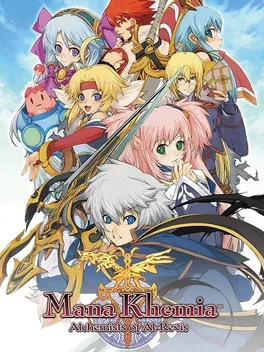
The 9th core Atelier game and the first of the two Mana Khemia games. The game's main focus is on the lead protagonist, Vayne Aurelius, the son of a legendary alchemist named Theofratus who had disappeared sometime after Vayne's birth. Since then, Vayne has led the life of a hermit, his only companion being a Mana in cat form named Sulpher. Vayne is invited to the Al-Revis Academy for alchemy training by Zeppel, one of the professors. He is quickly indoctrinated into the school by becoming part of an atelier led by Flay Gunnar (an older student who is known as The Defender of Justice) along with two other students, Jess (a clumsy girl who is nevertheless adept at alchemy), and Nikki (an impulsive beastgirl). They are soon joined by Pamela (the school's resident ghost), Anna (an 11-year-old master swordsman), Roxis (the son of a famous family of alchemists who is quickly forced to join the workshop by Flay), and Muppy (an alien the group discovers on an assignment). The eight of them are able to succeed at completing assignments, learn the skills of alchemy, and allow the workshop to prosper.

Glory Quest is a 2d top-down hack and slash RPG Features: Large map to explore 6 types of creatures to hunt down and kill Battle System
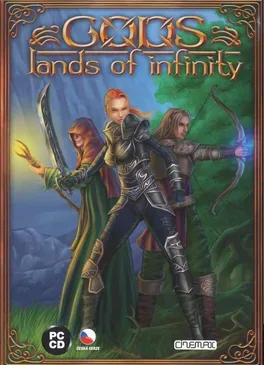
Gods: Lands of Infinity is a blend of adventure and action in a turn-based setting. There is an array of missions and NPCs who players can add to their team. Players must fight, gain experience, level and acquire new skills. The game is played out in the first-person perspective, until gamers enter a battle encounter, at which point the game goes into third-person turn-based mode.