
Ultima IV: Quest of the Avatar


Part of collection:
Ultima
(last 3 games)
Are you tired of the same old games that lack accomplishments, true friendships, epic battles, and a sense of free will? Come and join Kingdom of Britannia Were anything is possible. † Explore a mysterious land, tame wild creatures, and powerful beasts? ‡ Perhaps you would rather pick up a sword and shield, and hunt murderous bandits, or master the dark secretes of necromancy. † Maybe you are a more of a merchant, or craftsman, with many professions and craftables to choose from.
Play as a fighter or a mage as you take on Lady British's challenge in this free-to-play Ultima IV follow-up.
A browser based city building strategy game by EA. Create your own empire and defend it from others!
Part of franchise:
Ultima
(last 3 games)
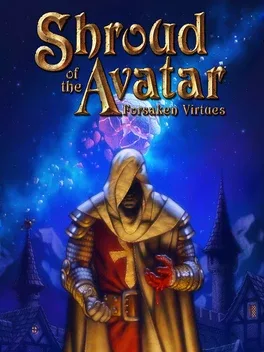
Journey to the world of Shroud of the Avatar: Forsaken Virtues, a computer role playing game created by Lord British (aka Richard Garriott), creator of the genre defining Ultima series of computer games, Starr Long, director of Ultima Online, and Tracy Hickman, author of the Dragonlance series. It combines rich story, like those of the single player Ultimas, with deep and varied multiplayer experiences, like Ultima Online.
A browser based city building strategy game by EA. Create your own empire and defend it from others!
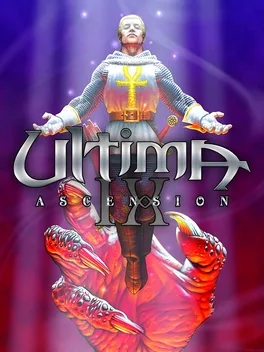
Prepare to embark on an adventure beyond imagination with the return of the best selling role-playing series of all time. In the 9th and final chapter in the 20-year legacy you return to Britannia for your last epic quest. As the heroic Avatar, only you can save Lord British and his people from the evil Guardian who has devastated the landscape and tainted the 8 sacred virtues. Valiant combat, magical prowess and knowledge of the 8 virtues are your weapons against evil in Ultima IX: Ascension, the most epic role-playing game ever created for the PC.
Could be interesting
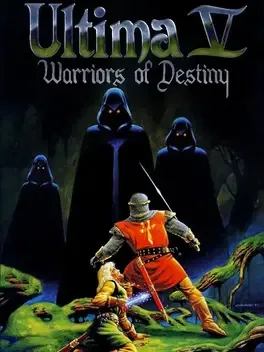
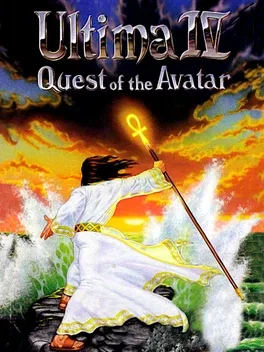
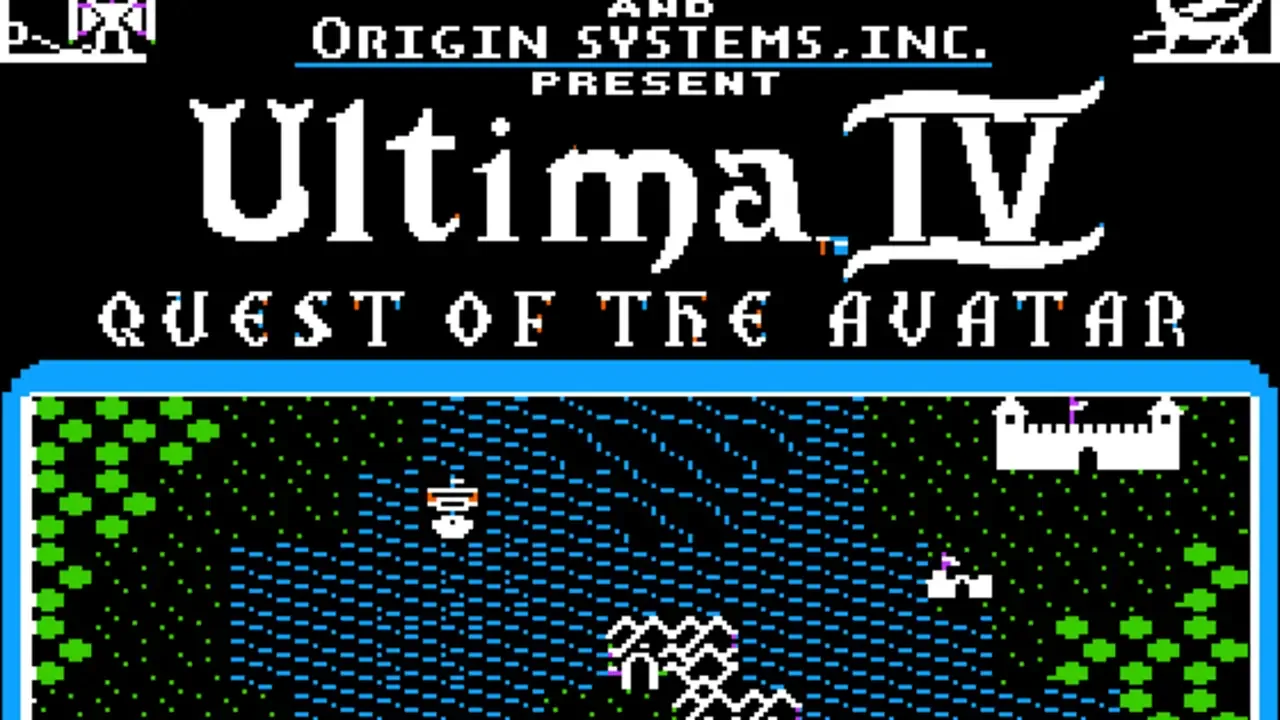
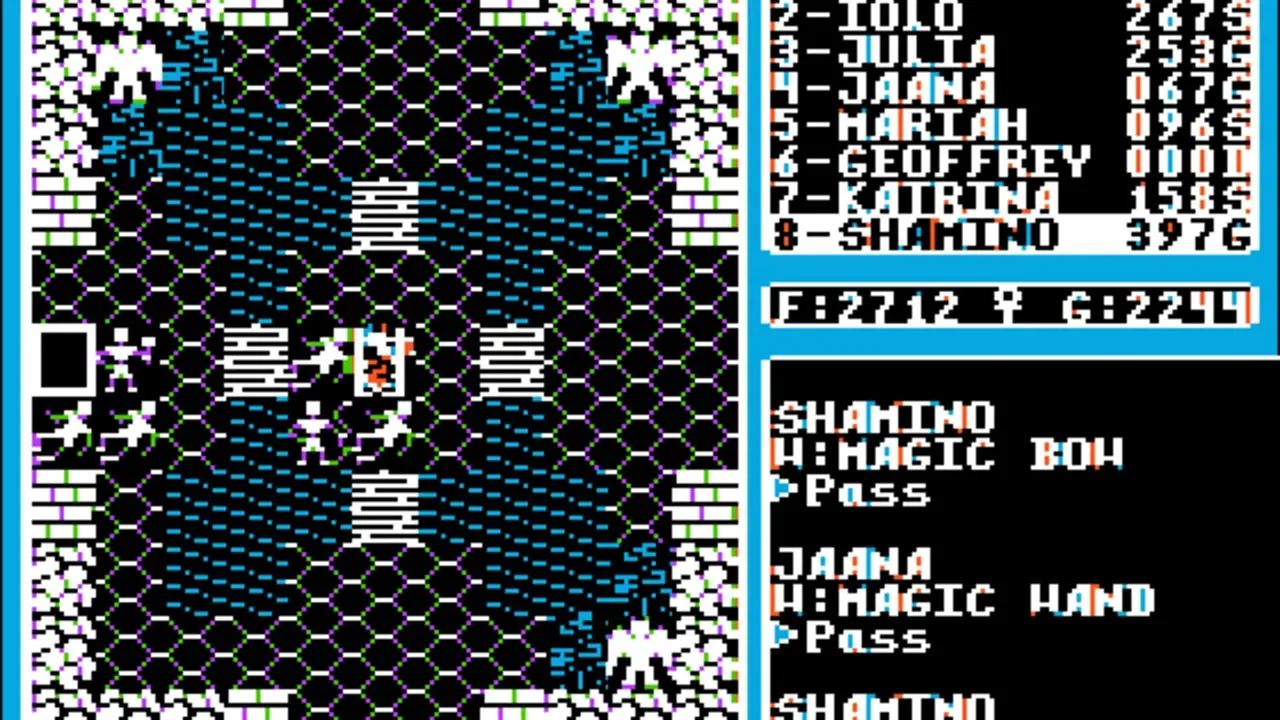
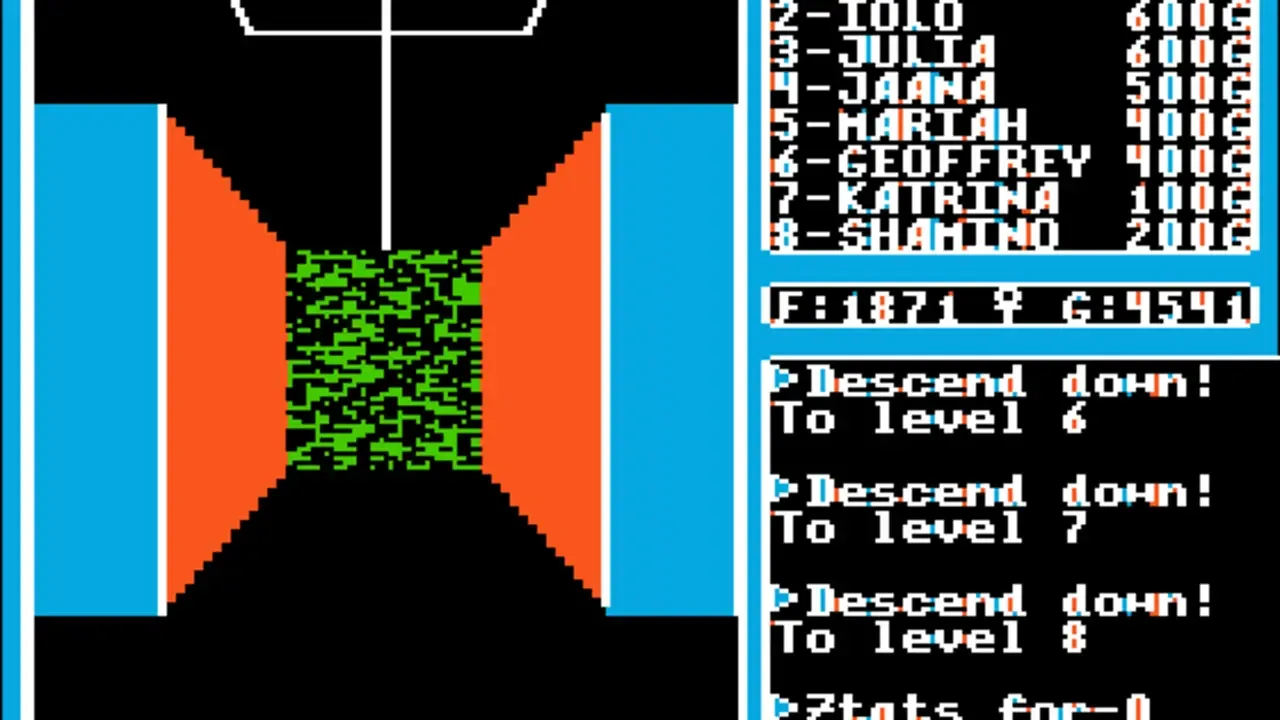
After a century of relative peace, the Avatar of Virtue is summoned back to the medieval kingdom of Britannia to deal with a new threat: the usurper Lord Blackthorn, a formerly honorable nobleman who has been corrupted by strange new creatures called the Shadowlords. After the recent disappearance of the true king, Lord British, the realm has fallen under martial law. Blackthorn now rules the land by brutally enforcing the eight Virtues upon the people of Britannia - corrupting their meaning in the process. The Avatar must gather together his former companions, now made outlaws by Blackthorn's regime, and venture forth to defeat the vile Shadowlords and recover the true king from the shadowy depths of the Underworld.
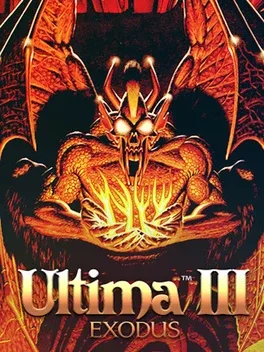
Eons ago Lord British came unto the lands of Sosaria. Since that time it has been united under his rule as the Kingdom of Britannia and has gone through two major crises. A few years ago there were political upheavals among the city states of the kingdom. The ringleader of this political instability was Mondain, the Magician. Under his horrible rule, the people's lives were devastated. A valiant warrior was called forth from another world by Lord British. This warrior overthrew Mondain. Britania survived the first crisis. But peace in the Kingdom of Britannia did not last long. Minax, the Witch, a disciple of Mondain, became very powerful and ruled the world of darkness. Minax had power to sway the time axis of the universe. However, a legendary hero again came to the rescue, overthrew Minax, and brought peace back to the kingdom. Now, the Kingdom is about to face its third crisis. Rumours abound about a fiery island which has emerged in the southwestern seas. Little is known of the evil that dwells there. It is known only as Exodus.
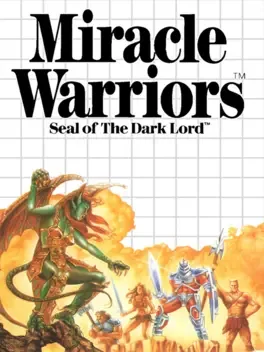
Japanese RPG. Two editions exist, one for the MSX1 on cartridge, and one for the MSX2 on 3.5" diskette. The seal of the Dark Lord Terarin has been broken and Terarin has been unleashed into the world again. She has stolen the Golden Seal and opened pandora's box, unleashing evil creatures into the world. A young hero is tasked by a king to stop Terarin. He must step into footsteps of Iason, a shepherd that once accidentally unleashed Terarin and fought to seal the Dark Lord again. The hero must enlist the aid of three companions, Guy the warrior, Medi the amazon and Treo the pirate (called Turo in the manual) and find the three keys to Terarin's lair. To face the Dark Lord, they must find the mystical weapons and armor of old and then defeat Terarin and seal the Dark Lord from the world.
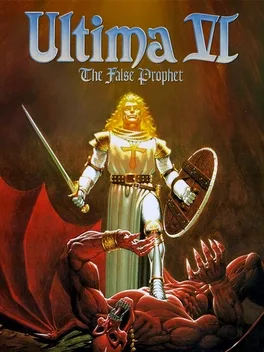
Ultima VI sees the player return to Britannia, at war with a race of gargoyles from another land, struggling to stop a prophecy from ending their race. The player must help defend Britannia against these gargoyles, and ultimately discover the secrets about both lands and its peoples.
It has been two centuries since the Avatar last appeared in our good kingdom. Some have written that at last it is possible to interpret the tales of the Avatar as they should be, with the proper historical perspective. Some argue that as time moves on, the truth of what actually occurred will fade even further away and that we have a responsibility to preserve the legends as we now know them. However, most agree when it comes to a number of basic theories. While there are those who maintain that the stories of the Avatar are only myths, practically all credible scholars say that at least some elements of the Avatar’s tales are historical fact. In reality, one need look no further than the Isle of the Avatar to see very persuasive evidence that the Avatar did indeed exist - at least as a person if not as a spiritual being! It is most likely that there has been more than one Avatar. All of the writings insist that the Avatar who negotiated the peace between Britannia and the gargoyles is the one and same person who first appeared to vanquish the sorcerer Mondain those many years ago. While saying it is most unlikely, historians do not firmly deny the possibility of there having been only on Avatar. After all, our good sovereign monarch, wise Lord British, has himself displayed an amazing longevity! Whatever interpretation of history proves to be most accurate, it seems undeniable that the Avatar will not return to our fair kingdom. By all indications the age of magic is coming to an end. With the decline on reliability of mages, and with the kingdom turning away from the magical arts, it is doubtful that extreme danger - that which would require an Avatar’s aid to defeat it - will ever return to Britannia. And thankfully so. Upon us is the age of The Fellowship, in which one does not simply wait in anticipation for a heroic savior when a crisis occurs. In this less spectacular but more practical day, we are left to solve our problems with our own minds and our own will.
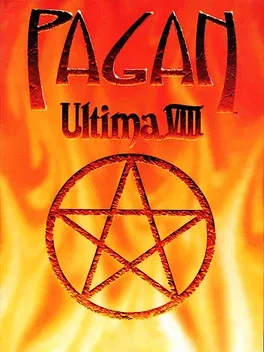
The Ultima VIII Pagan starts exactly where Ultima VII ended. Avatar is cast to the world of Pagan by the Guardian. In the meantime, the Guardian is taking control over Britannia and Avatar has to find the way to leave Pagan and save Britannia from the Guardian. The world of Pagan is ruled by four titans that prevent any interworld travel. To open a portal to Britannia, Avatar has to destroy all four titans ad claim their power.
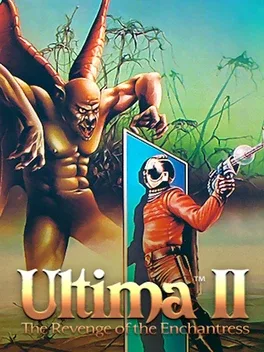
After obtaining aid from the lords of the realm in Ultima I, your character travels back in time, locates the mad wizard Mondain, slays him, and ends his reign of terror. In Ultima II: Revenge of the Enchantress, Mondain's protégé, Minax, who studied the mad wizard's teachings and writings, returns to wreak vengeance on the person who slew her teacher and lover -- you. And, instead of waiting for you to return to her native land of Sosaria, she wreaks havoc on your own Earth. Throughout Ultima II: Revenge of the Enchantress, your quest is quite different in scope from its predecessor. Earth is turned into a half-modern, half-fantasy world by the forces of magic and, as a result, things are much stranger than one might expect. As explained in the introduction, your tasks in the game are to "Battle strange creatures across the face of the Earth, search for clues in careless words spoken at the local pub, traverse deep, dark, deadly dungeons and tall, terrifying towers...and conquer Time itself to battle Minax the Enchantress."
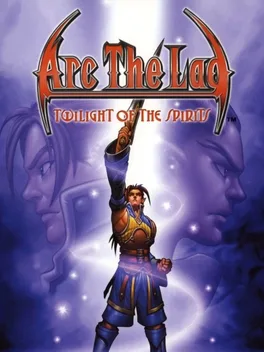
The world of Arc: Twilight of the Spirits is populated by two races: human and Deimos. The two races prefer to avoid contact with each other, but both depend on the Spirit Stones to sustain the balance in the world. Recently, the human army began sweeping across the lands, taking over countries. This army is going after the five great Spirit Stones. The Spirits, however, are determined to prevent this; to achieve their goal, they choose two heroes who would eventually be able to unite the two races in a battle for justice. One of them a is a human nobleman named Kharg, who hates the Deimos and is planning revenge; another is a Deimos slave named Darc, who dreams of uniting and commanding his race. Will the two heroes be able to put aside their differences and save the world?.. Arc: Twilight of the Spirits is the fourth entry in the Arc the Lad series. Like its two immediate predecessors, the game has tactical battles which allow free positioning and movement of the characters on the combat field. However, the game is closer to being a "regular" Japanese-style role-playing game rather than a tactical RPG. The player controls a relatively small party (up to six active combatants), and is able to explore towns and dungeons in a standard RPG fashion. In the beginning, the game puts the player into control of Kharg, but afterwards the chapters alternate between the human hero and Darc, each with his own party. Characters can use a variety of techniques, accumulating SP (spirit points) in battles and them using them to learn special attacks.

Eternal Sonata is a role-playing video game developed by tri-Crescendo and published by Namco Bandai Games. The game is centered on the Polish romantic pianist and composer Frédéric Chopin, who died of tuberculosis at the age of 39. The story envisions a fictional world dreamed by Chopin during his last hours that is influenced by Chopin's life and music, and in which he himself is a playable character, among others. The game's battle system centers on musical elements and character-unique special attacks. Light and darkness play a part in the appearance and abilities of enemies on the battlefield, as well as the types of magic that can be cast. The game features a selection of Chopin's compositions played by pianist Stanislav Bunin, though the original compositions were composed and arranged by Motoi Sakuraba. It is notable for its use of classical piano pieces, educational cutscenes featuring real paintings and photographs (in contrast to the cel-shading graphics of the game) and lush landscape design.
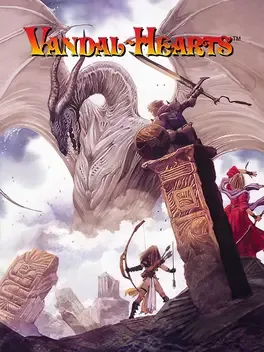
You assume the role of Ash Lambert, a hero torn between saving his country and restoring honor to the disgraced Lambert dynasty. As he struggles with his inner demons and personal problems, he will meet various companions throughout his journey. They will help your character fight to overthrow the oppressive regime and ward off an ancient being that threatens the world. Vandal-Hearts is a 3D turn-based strategy game. Unlike many games of the genre, the various battlefields have sloped surfaces that will either work to your advantage or against you. It will be up to you to accommodate your strategy and amount an appropriate offensive assault against your foes as well as set up defensive measures.