
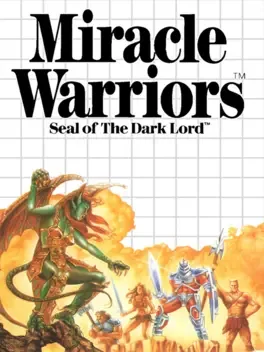
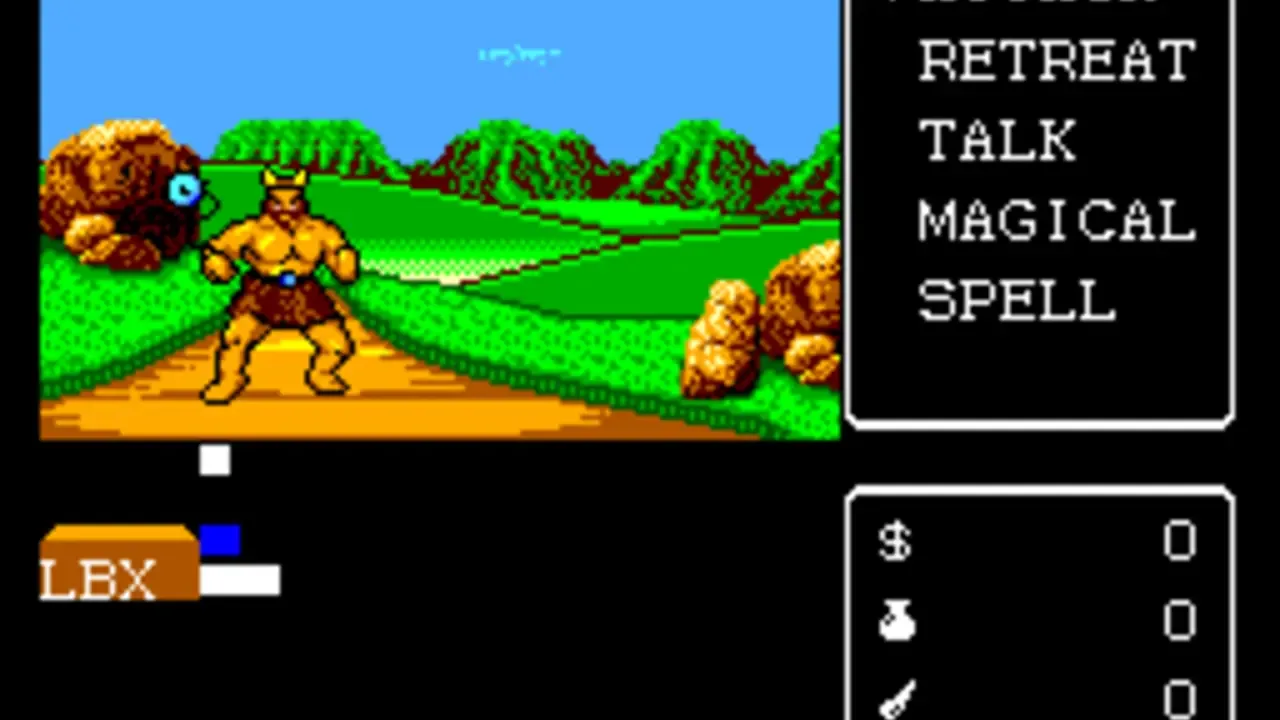
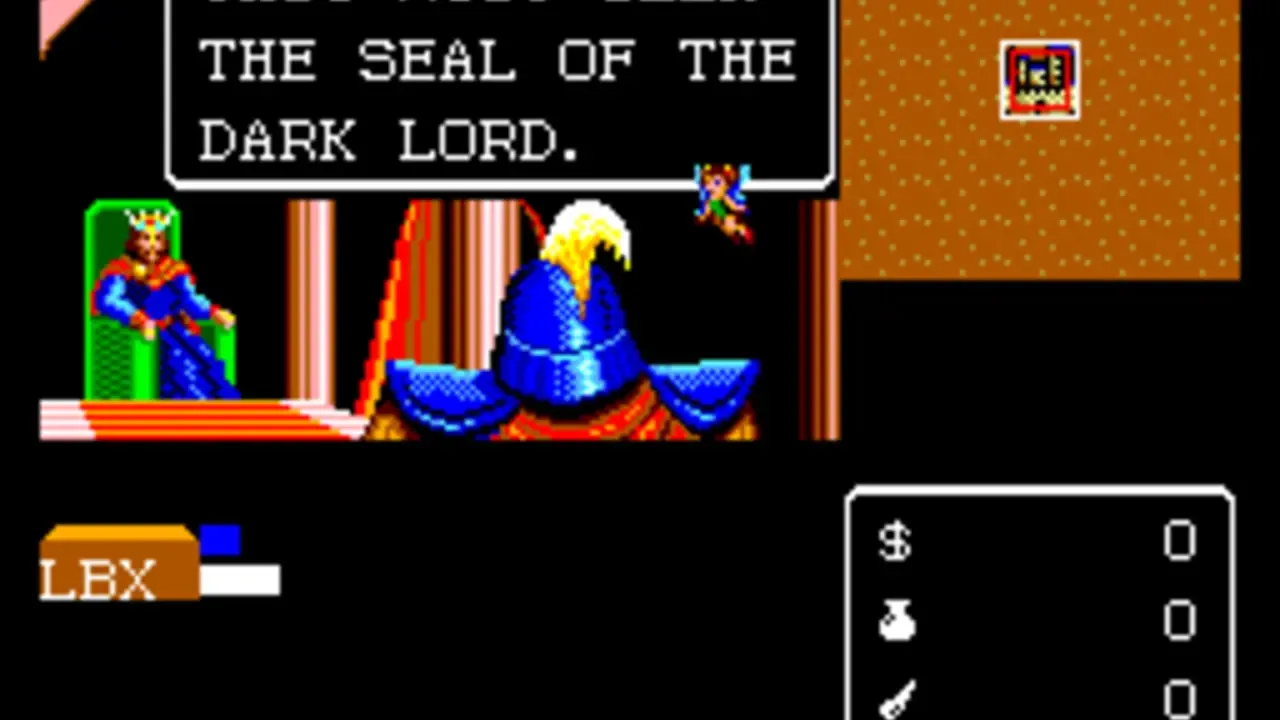
Miracle Warriors: Seal of the Dark Lord


Buy
Could be interesting
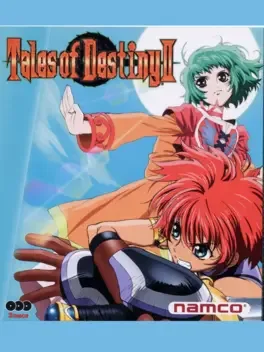
Tales of Eternia is an action japanese role playing game, with real time battle scenes (combos and spells can be assigned to the face buttons). The game is set in the fantasy world of Inferia, follows the story of a young hunter named Reid Hershel and his friends, Farah and Keele, as they meet a mysterious girl who speaks an unknown language. Their subsequent quest to discover her origins leads them across a dimensional boundary to an entirely different realm known as Celestia, where they become involved in an age-old conflict between the two worlds. It would later inspire a 13-episode anime co-produced by Production I.G loosely based on the game's plot.
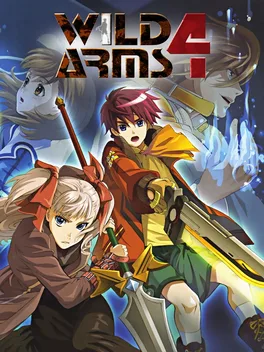
You play as a young teenager named Jude Maverick. You live in a quiet village that floats high above the ground, unaware of the world that lies beneath it. But one day, your world is shattered to pieces, and you descend onto the earth to face the terrible reality: the world of Filgaia was devastated by wars. A few settlements amidst rusty tanks is all that is left of civilization. The democratically elected government has some plans for improving the conditions of the world, but as you meet a young girl whom they used as a tool for their purpose, you realize you must find a better plan to save her, and the world, from complete destruction. The fourth installment of the Wild Arms series abandons its traditional Wild West theme and is set in a post-apocalyptic world. The gameplay system introduces hex-based battles. Battle screens are divided into seven hexes, each one of which can hold several party members or foes. You navigate your characters on the battle field, trying to force the enemy into an uncomfortable position. There is also a variety of skills you can learn and apply in battles to get benefits. As in previous Wild Arms games, the dungeons contain many environmental puzzles to solve.
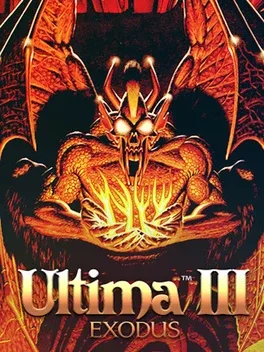
Eons ago Lord British came unto the lands of Sosaria. Since that time it has been united under his rule as the Kingdom of Britannia and has gone through two major crises. A few years ago there were political upheavals among the city states of the kingdom. The ringleader of this political instability was Mondain, the Magician. Under his horrible rule, the people's lives were devastated. A valiant warrior was called forth from another world by Lord British. This warrior overthrew Mondain. Britania survived the first crisis. But peace in the Kingdom of Britannia did not last long. Minax, the Witch, a disciple of Mondain, became very powerful and ruled the world of darkness. Minax had power to sway the time axis of the universe. However, a legendary hero again came to the rescue, overthrew Minax, and brought peace back to the kingdom. Now, the Kingdom is about to face its third crisis. Rumours abound about a fiery island which has emerged in the southwestern seas. Little is known of the evil that dwells there. It is known only as Exodus.
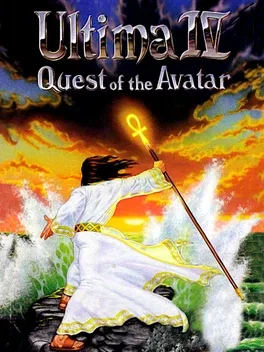
Following the defeat of the evil triad in the previous three Ultima games, the world of Sosaria changed beyond recognition: continents rose and sank, and new cities were built, heralding the advent of a different civilization. Unified by the reign of the benevolent monarch Lord British, the new world was renamed Britannia. Lord British wished to base people's well-being on the ethical principles of Truth, Love, and Courage, proclaiming the Eight Virtues (Honesty, Compassion, Valor, Justice, Sacrifice, Honor, Spirituality, and Humility) as the ideal everyone should strive for. The person who could accomplish full understanding and realization of these virtues would serve as a spiritual leader and a moral example for the inhabitants of Britannia; he alone would be able to obtain holy artifacts, descend into the Stygian Abyss, and access the Codex of Ultimate Wisdom. This person is the Avatar. The fourth game in the Ultima series features an improved game engine, with color graphics and enhanced character interaction: the player can have conversations with non-playable characters by typing names of various topics. However, the main difference between Ultima IV and its predecessors in the series (as well as other role-playing games) lies in the game's objectives and the ways to fulfill them. Instead of building up a character by any means possible in order to face a villain in the end of the game, in Ultima IV the player is trying to become the Avatar, a role model for people. This means upholding the Eight Virtues, basically trying to become a better person. Making morally conscious decisions and helping other people is not done expecting a material reward, but because it is the actual goal of the game and the main focus of its gameplay. The game frowns on behavior typical of most other RPGs, such as backstabbing fleeing enemies or picking up everything that isn't nailed down even if it does not belong to the protagonist. This different approach established the game's reputation as the first "true" Ultima, influencing the design philosophy of later installments and the overall spirit of the series. Character creation is done by choosing responses to morally ambiguous questions. Each of the Eight Virtues corresponds to a character class; by determining the player's personal priorities in the virtues, the game assigns a class and a starting location for the Avatar. After emerging in Britannia, the player is free to explore it in various ways (on foot, moongate teleportation, on horseback, by ship, etc.). Certain items must be collected in any order to enter the Stygian Abyss and complete the game. The Avatar also has to reach the highest level in all virtues. This is achieved by various means: donating blood increases Sacrifice, not fleeing from combat increases Valor, etc. The process, however, is not irreversible: should the Avatar overpay a blind seller, he gains Compassion points; should he, on the other hand, cheat the seller by underpaying, his level in several virtues would decrease. These unorthodox features of the game co-exist with plenty of traditional RPG elements, such as dungeons to explore and hostile monsters to kill. Enemies are encountered on the world map as well as in dungeons; combat takes place on separate top-down screens, allowing player-controlled and enemy parties freely move on them. Characters accumulate experience points and level up, gaining higher amount of hit points and access to stronger magic spells. Like in the previous installments of the series, world map, town exploration and combat are presented from a top-down view, while the dungeons are pseudo-3D and are explored from first-person perspective. Ultima IV also introduces several new gameplay features to the series and role-playing games in general. A number of initially non-playable characters living in various areas of the game world are able to to join the party and fight alongside the hero, replacing traditional player-generated characters or mercenaries and adventurers available only in special locations. Additional new elements include buying and combining reagents in order to cast spells, puzzle rooms in dungeons, and others.
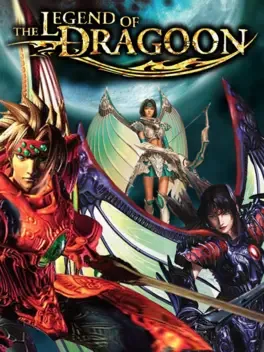
The Legend of Dragoon is a Japanese-style RPG, visually reminiscent of Final Fantasy VII (pre-rendered backgrounds, 3D characters and battle scenes, CG animations to advance the story). Battle mechanics follow the traditional turn-based prototype, with a few additions such as critical attacks dependent on precise timing, and "dragoon" transformations, which allow access to powerful techniques. Game progression is largely linear, with the "world map" replaced by locations represented as connected dots.
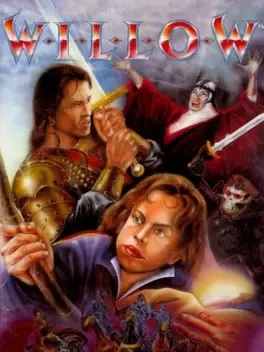
The version of Willow released for the Nintendo Entertainment System and the Famicom is an adventure game in the vein of The Legend of Zelda. The game has the player taking on the role of Willow. Unlike the film and arcade game, Willow generally travels alone, only briefly meeting other characters. In the tradition of The Legend of Zelda, Willow wields a sword and shield and many supplementary items along with a wide variety of magic spells. As the game progresses and Willow defeats enemies, he gains experience points and levels as in a role-playing video game.
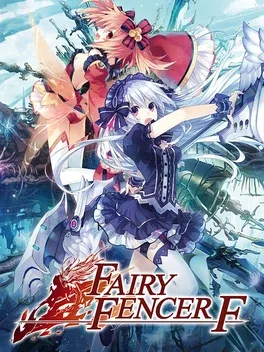
Fairy Fencer F is a fantasy role-playing game under Compile Heart's Galapagos RPG brand for the PlayStation 3. It features Yoshitaka Amano as a concept artist, Nobuo Uematsu as a composer, Tsunako as a character designer, Toshiki Inoue as a screen writer and the "Neptunia Team" as some of the development team. The game uses an evolved version of Hyperdimension Neptunia 's battle system. A Windows PC port for Steam is announced for an unspecified release date in 2015.
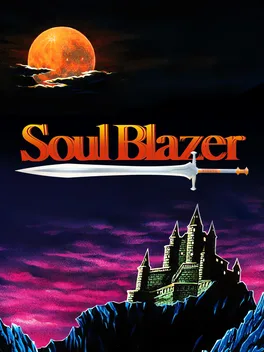
Soul Blazer, known in Japan as Soul Blader, is a Super Nintendo Entertainment System action role-playing game developed by Quintet and published by Enix (now Square Enix). Soul Blazer was released on January 31, 1992 in Japan, on November 27, 1992 in North America, and on January 27, 1994 in Europe. Similar to the company's previous game ActRaiser, the player takes the role of a divine angel, deity or lesser-deity, or avatar, sent by a divinity, called The Master, to destroy monsters and release the captured souls of a world's inhabitants. Soul Blazer was scored by Yukihide Takekawa.
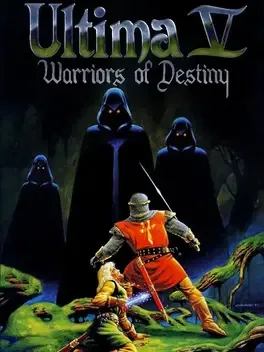
After a century of relative peace, the Avatar of Virtue is summoned back to the medieval kingdom of Britannia to deal with a new threat: the usurper Lord Blackthorn, a formerly honorable nobleman who has been corrupted by strange new creatures called the Shadowlords. After the recent disappearance of the true king, Lord British, the realm has fallen under martial law. Blackthorn now rules the land by brutally enforcing the eight Virtues upon the people of Britannia - corrupting their meaning in the process. The Avatar must gather together his former companions, now made outlaws by Blackthorn's regime, and venture forth to defeat the vile Shadowlords and recover the true king from the shadowy depths of the Underworld.
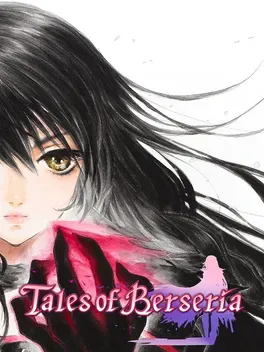
In Tales Of Berseria players embark on a journey as they assume the role of Velvet, a young woman whose once gentle nature has been replaced and overcome with a festering anger and hatred after a traumatic experience three years prior to the events within Tales Of Berseria imbued her left hand with a special ability. Along her journey, Velvet will meet a whole cast of characters, including a young boy named Laphicet. If Velvet is the embodiment of "darkness," then Laphicet is created in the image of "light" and will be an important ally to Velvet.