
Deep Dungeon III: Yuushi he no Tabi
Buy
Part of collection:
Deep Dungeon
(last 3 games)
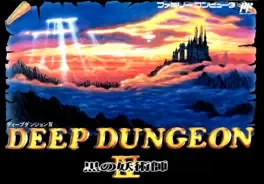
Deep Dungeon IV: Kuro no Youjutsushi is the fourth and final installment in the Deep Dungeon series. Unfortunately this game has removed the custom character feature of the previous game. Through the game, the player will meet up to two additional playable characters with predetermined class. This game also reverts to the standard practice or randomizing characters' stat growth when gaining an experience level. New to this engine is that the player can eventually learn to summon two monsters to function as a temporary additional party member for a single battle. It also removed the feature that stops random battles when the player is significantly more powerful than the enemies. This isn't as bad as it seems as the maps in this game are also much smaller (whereas the previous games used multi-floor dungeons up to 32x32 tiles, the dungeons in this game are either single floor, or multiple floors that can fit within a single 32x32 map) In this game, the player can accept "requests" from the non-player characters. These are optional tasks that will reward the player with bonus items, experience or money when finished.
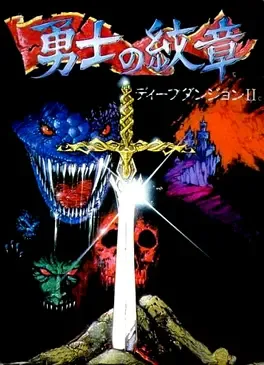
Yūshi no Monshō is the sequel to Deep Dungeon: Madō Senki. Hundreds of years have passed, the spirit of the long forgotten evil Emperor Ruu has returned. A hero claiming to be the descendant of the previous hero Raru appears in the town of Dorl, and sets on exploring a tower in order to defeat Ruu. The game consists of an eight level tower, four of which are underground, while the others are above ground, the underground levels having a higher difficulty than the latter. The game plays like its predecessor, the player exploring the tower in a first-person view, fighting monsters and improving the hero's skills along the way. When the hero levels up, he gains points to be attributed to his different stats rather than having them distributed automatically. When the hero's level is significantly higher than that of the monsters on the level, random battles are suspended; only the battles triggered by stepping on specific spaces have to be fought. The game has two endings, one being a secret good ending.
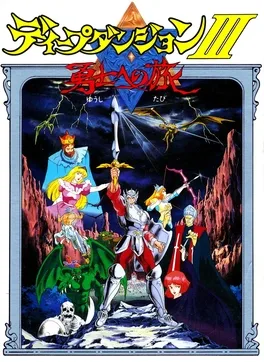
Deep Dungeon III: Yūshi he no Tabi is the third installment in the Deep Dungeon series and the first to be released on the Famicom. This is the first Deep Dungeon title to offer the player a world to explore spanning multiple dungeons and multiple towns. It also allows the player to create their own party with up to three companions in addition to the hero character, with a choice of ranger, magician or priest for each character. Though the player can dismiss a character once the game has started, they will only be able to replace that character if they meet another pre-created playable character in one of the dungeons. However, the game will still end as soon as the protagonist "swordsman" character is defeated. This game retains the player-adjustable level-up stats from the first game, as well as the feature that removes randomized encounters if the player is at a significantly higher experience level than needed for their current location. One exclusive and rather annoying feature of this game engine is that sometimes the player character will fumble (remove) their equipped weapon, wasting that character's turn. If the player wishes to re-arm their weapon, it will cost the player another turn. This is the only game in the series to award the player money (Gold) when defeating enemies. All other games will force the player to re-enter maps to collect respawning chests for money or items (for resale) if they want to gold farm.
Could be interesting
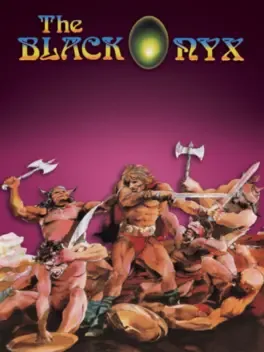
The Black Onyx is a role-playing game developed by Bullet Proof Software. It was released, among other consoles and computers, for the SG-1000 in 1987. It was the last SG-1000 game to be released in card form, and the last to be published by Sega, but it is currently unknown as to whether it was the last SG-1000 game. MSX and PC-8801 versions had been released in 1983 and 1984, respectively, meaning this version is unusually late. The game was followed by The Black Onyx II: Search For The Fire Crystal, which saw its original MSX release in 1984.
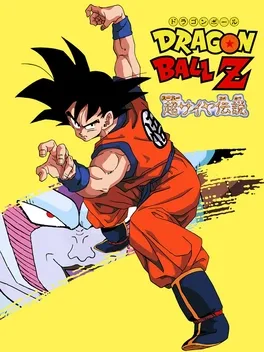
Dragon Ball Z: Super Saiya Densetsu is a role playing video game and the first Dragon Ball game for the Super Famicom. It was released only in Japan on January 25, 1992. Super Saiya Densetsu is a remake combining two earlier Famicom games of the Gokuden series: Dragon Ball Z: Kyōshū! Saiyan and Dragon Ball Z II: Gekishin Freeza, but without the movie characters and anime filler elements that were featured in them.
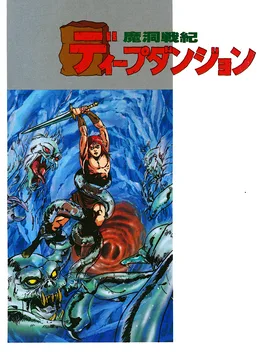
In the town of Dorl, peace was enjoyed. One day, monsters raided the town, stealing both the treasures and Princess Etna's soul. Despite the attempts of brave warriors to retrieve her soul, none have been successful.
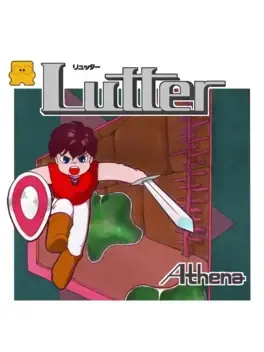
Lutter is a game comprised of single screens full of traps, obstacles, enemies and items that the eponymous hero Lutter must navigate in order to find six missing damsels and the enormous monsters that hold them hostage. The game has some element of non-linearity, as there are numerous paths that split off to explore. The chief goal is to find keys that unlock doors to new areas and eventually to large, screen-sized bosses that Lutter must defeat in shoot 'em up style boss fights. The game also features a few RPG aspects: Lutter has a health bar and can level up, which increases his health and other stats. He defeats enemies by charging into them, similarly to early action RPGs like the first Ys and Hydlide. When defeated, the game will automatically try to bribe the victorious monster with whatever funds the player has accrued: should they have enough to placate the monster (this amount often depends on the strength of the monster) Lutter reappears where he entered the screen with his health restored.
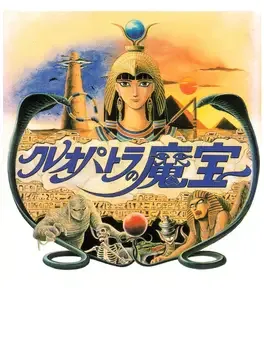
Daisuke Kusano is the son of an archaeologist who disappeared while searching for the Tears of Isis, artifacts once owned by Cleopatra. During the man's excavation for the Tears, demons appeared and abducted him. The boy soon learns that he must find the Tears in order to save his father.
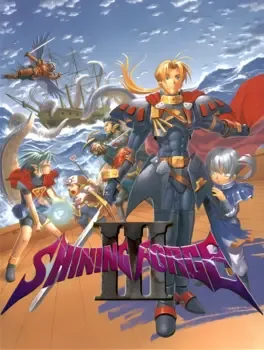
Scenario 2, Target: Child of God, features Medion, Prince of Destonia, and youngest of three sons of Emperor Domaric. Although loyal to his father and his country, he senses that there are other forces at work beneath the tensions between Aspinia and Destonia. He attends the conference in Saraband on behalf of Destonia, along with his brothers Arrawnt and Mageron. As discovered in Scenario 1, much of this influence comes from the Bulzome sect, as well as collaborating separatist factions within both Destonia and Aspinia. Medion works parallel to Synbios of Aspinia, often disposing of rogue Aspinian elements to spare Synbios's force from fighting against its own countrymen. At the end of the game, Medion is forced to battle with Synbios' force when Julian steps in to stop them.
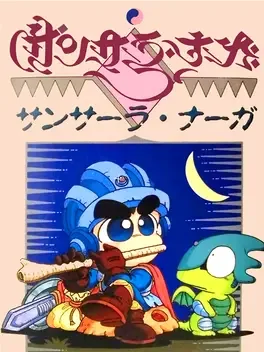
Sansara Naga is a role-playing video game that was published by Victor Music Entertainment exclusively to Japan for the Family Computer on the 23rd of March, 1990. A fan-translation was finished and released in 2013 on the 28th of December for Sansara Naga by the hacking and translation group Stardust Crusaders. Sansara Naga is set in the fantasy-filled lands of India during the Vedic age and also mixes elements of Japanese folklore such as the legend of Brahman Umibouzu ("sea bonze"). Many of the NPCs in game will tell you that Cows are sacred animals and a few will mention the Tower of Ṛta Satya. There is a set of armor in the game called Dharma Armor, which will prevent the player from dealing or being dealt damage. The story revolves around a Boy/Girl that steals a treasured Ostrich egg from the village of Orissa and decides to reflect upon one's actions; aspiring to become a Dragoon to restore their lost honor. The protagonist will set out on an adventure saving lives, performing good deeds, and raising a newly hatched dragon. There are bosses and many NPC street vendors will attempt to scam you with defective items or attempt to mug you. While the main protagonist does not level and their base stats are fixed at 40 STR, 40 DEF—The dragon that you raise does level. More unique game mechanics to this game include the ability to feed dead bodies to your dragon to raise his level, enchanted armors, field map events, hidden landmarks, a few side quests, and mini-games. Sansara Naga's gameplay and gameplay mechanics are similar to those of Dragon Quest I, Pokémon and Earthbound. The Silver Mountains are also referred to as Heaven.
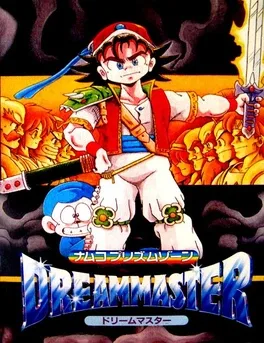
The Kingdom Of Oltaria is a peaceful one, thanks to the power of its Lord King Akinas. The king's daughter, Princess FAQS, is about to turn 16, but one day an evil old man known as the Black Master turns up determined to have FAQS for himself, and he drags her into the world of nightmares: the Black Dream. The Princes is trapped in a deep sleep, and the king summons adventurers from all over the kingdom to kill the villain and rescue the Princess. They enter the Black Dream but never return, at least, never wake up. One day, Sir Kleith, the Captain of the Royal Guard, decides to go to search for the Dream Sage in a forest to the south of Oltaria. Eventually, after a difficult journey, Kleith arrives at his destination, where the Dream Sage is training a young disciple called GAME to be a Dream Master. (A Dream Master's role is to bring peace and tranquillity to dreams and their powers must be used to heal and not to corrupt souls.) Anyway, poor old Kleith dies after delivering his message about the plight of the Princess. The Dream Sage says he's too old to undertake the task of saving the Princess but GAME can do it! This is when the action begins, as GAME falls asleep and the Black Master appears, to transport him into the first Black Dream where his skills are put to the test!
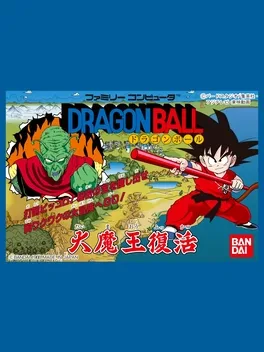
Dragon Ball: Daimaou Fukkatsu is a role playing video game released only in Japan by Bandai on August 12, 1988. It is the second Dragon Ball video game released for the Nintendo Famicom. Daimaō Fukkatsu is the first role playing game based on the Dragon Ball series. Its gameplay was reused in the Goku-den video game series. Daimaou Fukkatsu is also one of the games included in the game compilation J Legend Retsuden for Nintendo 3DS.
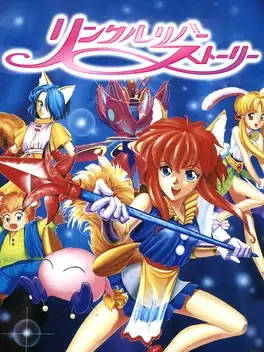
Linkle Liver Story is an action-oriented RPG that takes place on a distant planet called Mamuuna whose inhabitants are humans with animal qualities. The story centers around the "Mother Flower" which gives life to all new beings on the planet when one day it disappears.