
Dragon Valor


Buy
Part of collection:
Dragon Buster
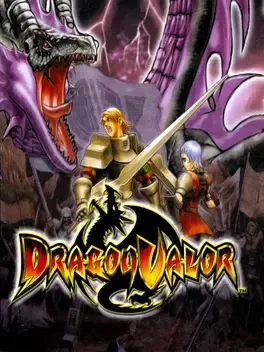
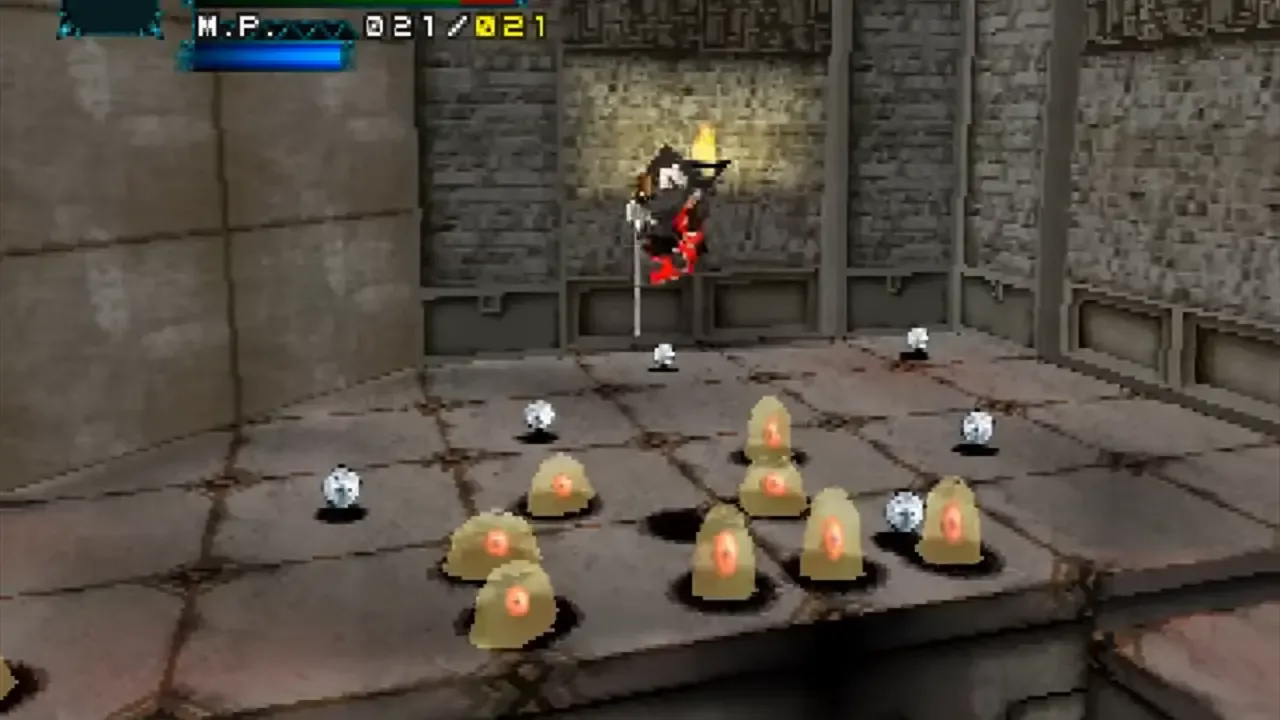
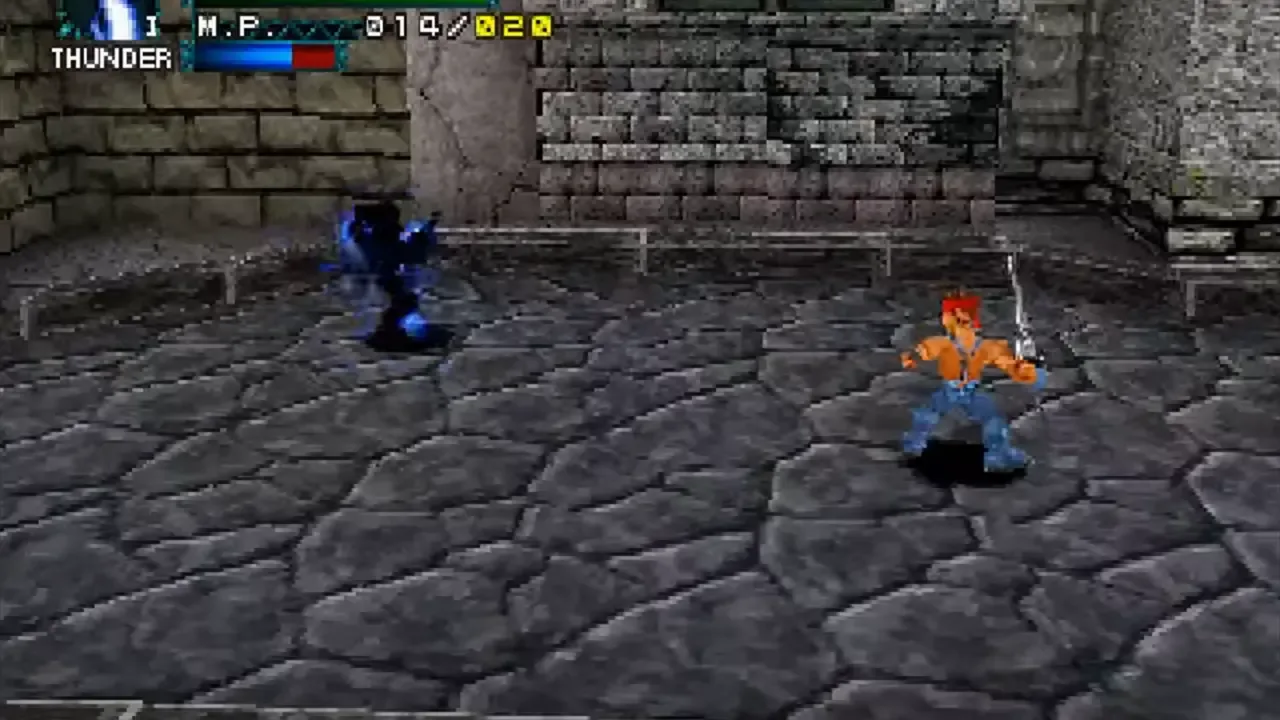
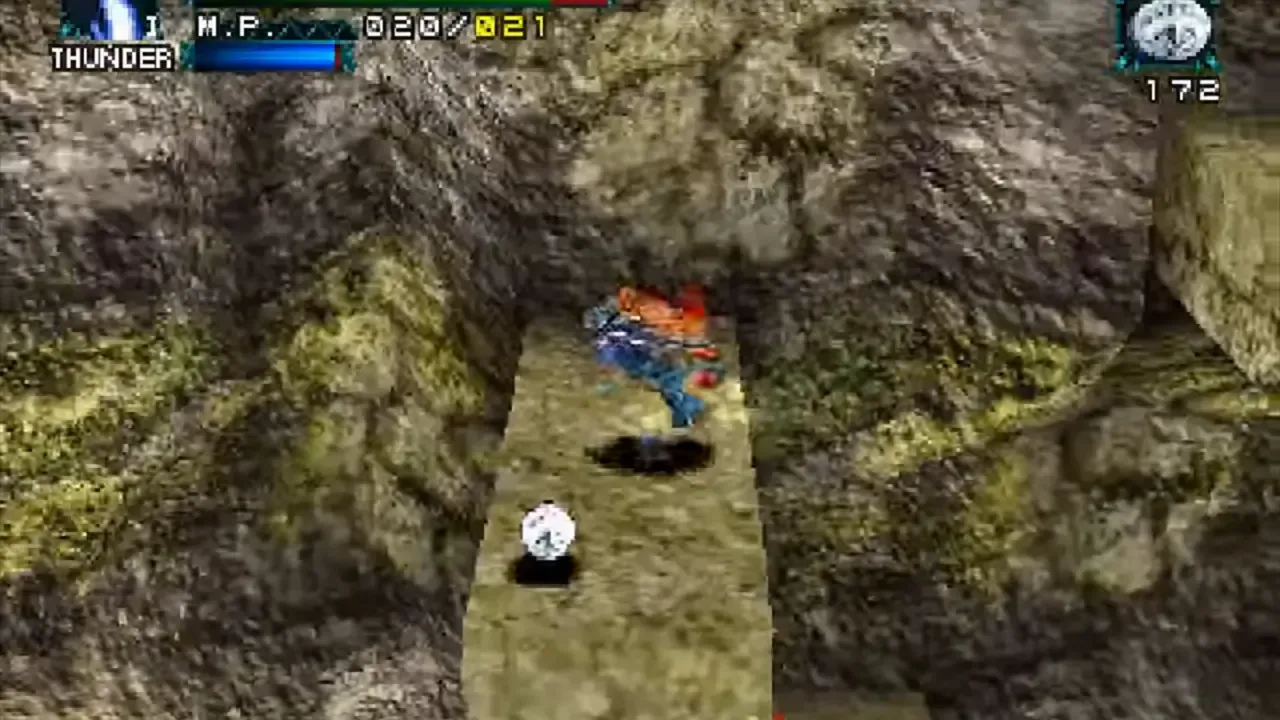
Dragon Valor is a 1999 action role-playing game developed by Now Production and published by Namco for the PlayStation. It is the second sequel to Dragon Buster. In the Dragon Valor world, dragons are powerful monsters. The player's role as a Dragon Valor is to slay them with a magical sword passed down through successive generations. Similar to Phantasy Star III, Dragon Valor differs from other platform action games of the time because who the protagonist marries changes future playable characters, plot events, and which ending the player receives.
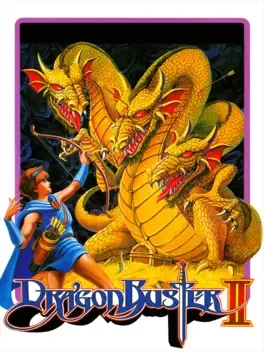
Centuries ago, Dragons and Demons roamed the country and brought terror into the lives of all people. However, a local legend states that the Sword of Thruth can restore peace to the land. It turns out that the almighty weapon is kept by the most ferocious dragon who ever lived but this doesn't stop the young Carl from willing to take on the challenge. He is small but the best archer the land has ever seen!
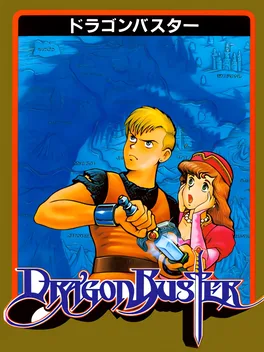
A 1984 arcade platformer with action RPG elements, Dragon Buster is notable as the first game to feature a double jump. It was also one of the first games to include a life meter (along with Flash Boy and Punch-Out), known as vitality in this game. The game featured side-scrolling platform gameplay and a hub "world view" map similar to the later Super Mario Bros. series. It also featured hack & slash combat, like the later Tritorn and Legend of Zelda series. Dragon Buster was developed and published by Namco. The game is a side-scrolling dungeon crawler, where the goal of the game is for the hero, Clovis, to rescue Princess Celia. Dragon Buster was later ported to a variety of home consoles, notably the Nintendo Entertainment System and the MSX. It runs on Namco Pac-Land hardware, modified to support vertical scrolling
Could be interesting
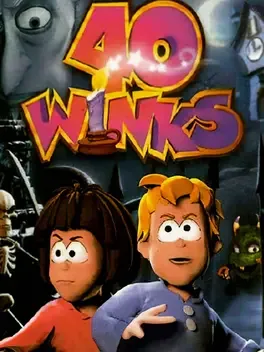
40 Winks (also known as "Ruff & Tumble") is a 3D action-platform game in which you play as Ruff or Tumble, two children who must battle ghosts, goblins and other monsters in their dream-world. They must try to capture 40 winks scattered around the world in order to stop an evil old man named Nitekap. Nitekap wants to turn the winks into hood-winks, the things responsible for nightmares. You also have to find the 12 dream keys to unlock the boss level. A unique aspect of the game allows the players to temporarily morph into different costumes with special abilities. The costumes include a Prehistoric Man, Jester, Super Hero, and Ninja.
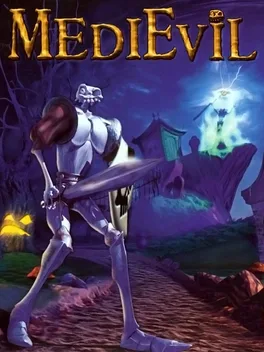
MediEvil is an action-adventure game developed by SCE Cambridge Studio and published by Sony Computer Entertainment. Originally released in 1998 for the PlayStation, the game follows Sir Daniel Fortesque, a skeletal knight accidentally resurrected to battle the sorcerer Zarok and save the kingdom of Gallowmere. The game takes place across a variety of levels, many of which require certain objectives to be performed to progress. Sir Daniel Fortesque can use a variety of weapons, consisting of close range weapons such as swords and clubs to long range weapons such as crossbows. Many of these weapons can be charged for a powerful attack and some weapons, such as the club, can be used to access areas that are otherwise inaccessible. When not possessing any items, Dan is able to rip his own arm off and use it for both melee and ranged attacks. Dan can equip a shield alongside weapons to defend against attacks; though they can only take several hits of damage before breaking. Throughout the game, Dan can visit gargoyle heads of two varieties; green ones offer Dan information while blue ones allow Dan to buy services or ammunition by using the treasures he finds. Dan's health is determined by a single health bar, which reduces when Dan is hit. It will deplete completely if Dan drowns or falls from a great height. If Dan completely runs out of health, the game will end. Dan can extend his maximum health by collecting Life Bottles, which will automatically refill his health bar if it drops to zero. Also hidden throughout the game are Life Vials and Life Fountains that can replenish Dan's health and fill up any empty Life Bottles Dan has. In each level, there is a hidden Chalice of Souls, which can be collected if the player fills it with enough souls from defeated enemies (some Chalices are awarded via other means). If the player clears a level with a Chalice in hand, Dan is warped to the Hall of Heroes, where he can speak to a legendary hero who will give him rewards, such as weapons. If the player finishes the game with all the Chalices, the game's true ending is revealed.
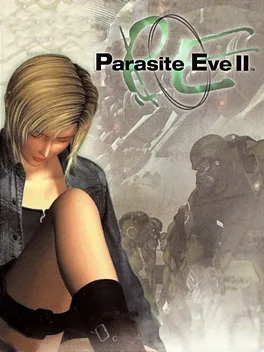
Parasite Eve II is an action role-playing survival horror video game released exclusively for the PlayStation. The game was developed by Square and published in Japan in 1999 and in both North America and, unlike the previous game, in PAL regions in 2000. It is the sequel to Parasite Eve and the second game in the series of the same name. Parasite Eve II is set several years after the events in the original game. The protagonist from the first game, Aya Brea, also features in this game as the playable character. She becomes involved with another outbreak of Mitochondrial creatures. Gameplay diverges from the previous game: battles take place in real time and the area of action is less restrictive. The approach is more typical of traditional survival horror games, although some role-playing elements are retained.
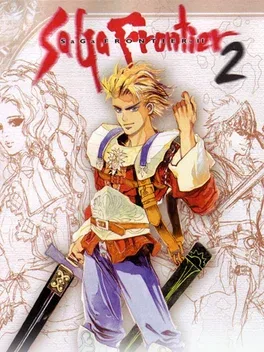
Shape History or Be History Select and control decisive moments during decades of royal conflict. Magic, revenge, and assassination will all play a part in determining who will obtain the country and the crown. -Create a unique history with Multi-Scenario System -Influence a variety of characters in an epic saga -Experience hand-painted watercolor artwork -Play Duel, Team, or Strategic battle modes -Choose from various, realistic sword maneuvers during combat -Form hundreds of possible combo attacks -Cast powerful and spectacular magic attacks
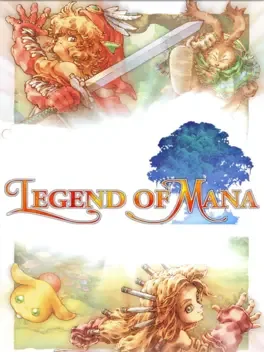
While incorporating action role-playing game elements from the three games which preceded it, Legend of Mana has its own distinct style of gameplay. Most notably, it gives the player the ability to shape the game's world of Fa'Diel according to his or her desires, a system which was incorporated through the use of "artifacts," which are gained as the player progresses through the game. The player uses the artifacts to create different towns, dungeons, etc., called "Lands", to venture to and explore. This creates a non-linear gameplay, since the game is driven by a series of what would be considered side-quests in other games. Legend of Mana features three different plots which can occur simultaneously, and which do not necessarily need to be completed for the player to finish the game. Legend of Mana was a financial success in Japan. While the game garnered considerable praise for its graphics and presentation, many critics and fans were turned off by the game's lack of a main storyline.
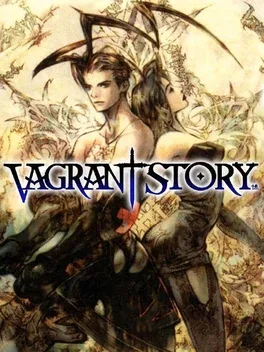
Adventure into a world of unparalleled depth and danger with SquareSoft's Vagrant Story. In this sweeping dungeon-crawling epic you play as Ashley Riot, a young assassin and spy for the organization known as Riskbreakers. Your goal is to unravel a deep and twisted plot and come to terms with the recent death of your wife and child. If this sounds a bit too cerebral never fear. Your path to recapturing your sense of humanity hinges on the destruction of countless vicious monsters and the exploration of dark and dangerous dungeons. Vagrant Story is awash in gorgeous scenery and features designs from Yasumi Matsuno and Akihiko Yoshida, the acclaimed artists and creators behind Final Fantasy Tactics.
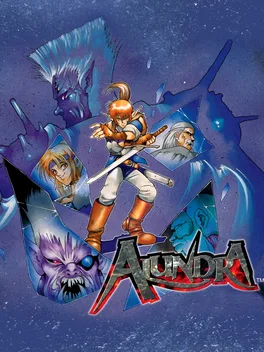
Between the worlds of light and dark lies the world of dreams. A world where the rule of reason loosens its grip. A place where an insidious evil is stealing minds and blackening the hearts of those from the world of light. Grab a weapon and become the dreamwalker Alundra as he struggles to purge the evil Id of an ancient world before it falls to ash. Explore dungeons, find weapons, solve challenging puzzles, and kick some serious monster butt as you weave between tense reality and nightmarish dreams to save the hapless masses. With a wide cast of characters and scores of challenging puzzles created by the people responsible for Landstalker on the Genesis. Alundra will rob you of precious sleep until you finish!

Breath of Fire IV is a single-player game that continues the story with these "dragon people," who gave their lives to eradicate the evil goddess and restore peace in their world. This time around, battle has broken out between two powerful continents, and the fair Princess Elena has disappeared during a tour of the war-torn region. The princess's sister, Nina, who reigns o'er the Windia Kingdom, vows to retrieve her missing sibling. She meets Ryu along the way, who joins the epic quest
Resident Evil 2 is a sequel to the first Resident Evil title. Like the previous game in the series, Resident Evil 2 is a 3D action-adventure using three-dimensional polygon characters over two-dimensional pre-rendered backgrounds, with the action viewed through a variety of cinematic fixed camera angles in each room. Players can choose to play as one of two possible characters; each goes through the same initial scenario but with differences in the type of weaponry they find and the people they meet along the way.
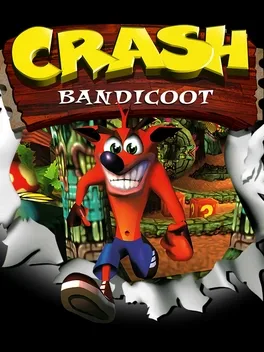
Crash Bandicoot is the first installment in the Crash Bandicoot series that established Naughty Dog's reputation in the video game industry. Its premises chronicle the creation of the titular Crash, a bandicoot who has been uplifted by the mad scientist Doctor Neo Cortex. The goal of Crash Bandicoot is to traverse several levels in sequence in order to progress. The game is played from a third-person perspective in which the camera trails behind Crash, though some levels showcase forward-scrolling and side-scrolling perspectives. Crash is able to defeat enemies by either jumping on them or using a spinning attack that launches them.