
Ganbare Goemon 3: Shishijuurokubee no Karakuri Manjigatame

Buy
Part of collection:
Mystical Ninja
(last 3 games)
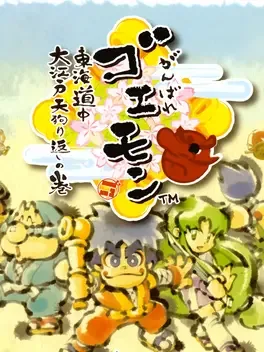
A Ganbare Goemon game released for the Nintendo DS on June 23, 2005 in Japan. Its release marked the revival of the series' medieval Japanese themes and quirky humor, as previous games had taken place in a futuristic setting or with a more serious tone.
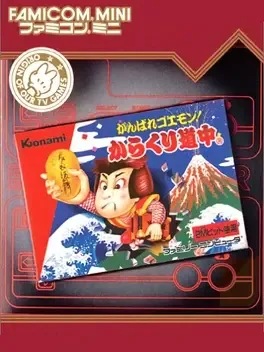
Famicom Mini: Ganbare Goemon! - Karakuri Douchuu is a Game Boy Advance video game released in 2004 by Nintendo. It is a remake of Konami's Famicom game Ganbare Goemon! Karakuri Douchuu, and little to no alterations were made on the game to stay faithful to the original title. The game was not released in America or Europe, and thus was exclusive to Japan. It was part of the Famicom Mini Series that re-released a variety of classic Famicom games for the Game Boy Advance.
Mini Kyodai Robo Goemon Compact is a role-playing game for mobile phones, part of the Ganbare Goemon series. It was published by Konami and released in May 7, 2003 exclusively in Japan.
Part of franchise:
Mystical Ninja
(last 3 games)
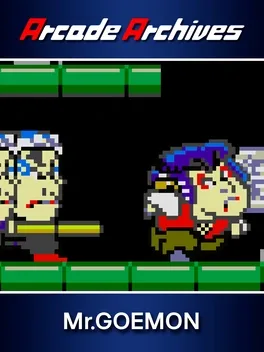
Arcade Archives: Mr. Goemon is a port of the action game Mr. Goemon. The player has to reach the goal by using various items while not getting caught by the enemies. This title is said to be the foundation of the Ganbare Goemon series which is the representative title for Konami at the time.
A Ganbare Goemon game released for the Nintendo DS on June 23, 2005 in Japan. Its release marked the revival of the series' medieval Japanese themes and quirky humor, as previous games had taken place in a futuristic setting or with a more serious tone.
Famicom Mini: Ganbare Goemon! - Karakuri Douchuu is a Game Boy Advance video game released in 2004 by Nintendo. It is a remake of Konami's Famicom game Ganbare Goemon! Karakuri Douchuu, and little to no alterations were made on the game to stay faithful to the original title. The game was not released in America or Europe, and thus was exclusive to Japan. It was part of the Famicom Mini Series that re-released a variety of classic Famicom games for the Game Boy Advance.
Could be interesting
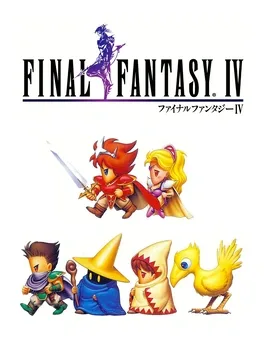
FINAL FANTASY IV is the fourth main installment in the FINAL FANTASY series, developed and published by Squaresoft. It was released in July 1991 for the Super Nintendo Entertainment System in Japan, and released as FINAL FANTASY II in North America in October 1991 with alterations made due to Nintendo of America's guidelines at the time.
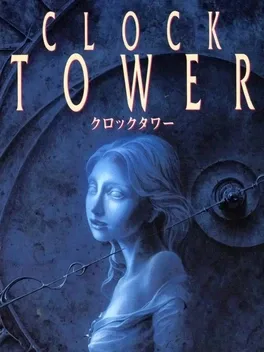
Clock Tower is a survival horror point-and-click adventure game developed and published by Human Entertainment for the Super Famicom in 1995. It is the first installment of the long-running Clock Tower series. The story follows Jennifer Simpson as she learns the secrets of the Barrows Mansion and attempts to escape the game's antagonist, Scissorman.
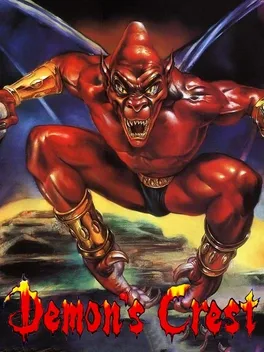
This is the third game featuring Firebrand from the Gargoyle's Quest series. It is side a scrolling platformer.
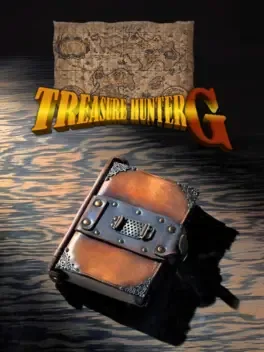
Brothers Red and Blue G. decide to leave their idyllic village in search of their long lost father, who left the kids years ago to go treasure hunting. Unfortunately, as soon as they begin their quest, they become entangled with a mysterious girl on the run from evil monsters who holds the key to the resurrection of a great demon. Now its up to the brothers to save the world if they ever want to find their father. Treasure Hunter G is a top-down RPG in which you control your party of four characters as they explore the fantasy/sci-fi game world in search for quests and grinding their stats while the plot advances. The game is divided in a world-map screen, a top-down "town" mode and a turn-based fight mode in which the characters are taken to generic tiled top-down arenas in which they select each character and move or attack depending on their action points. Enemies can be seen on the map instead of jumping at you at random intervals, and you can freely decide whether to engage them or simply circle them around. The game uses a combination of hand-drawn sprites and CGI pre-rendered one (mostly for the main characters) with a distinct cute or Super Deformed design (as usual for most console RPGs).
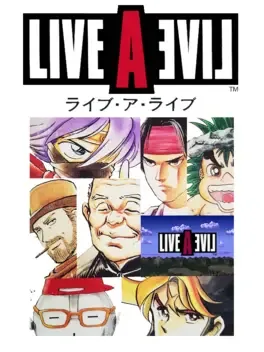
Live A Live's story is split across seven seemingly unrelated chapters that can be played in any order, based on popular genres such as Western, science fiction, and mecha. Each chapter has its own plot, setting, and characters. Although the basic gameplay is the same throughout the game, each chapter adds a new factor to the basic formula, such as the stealth elements in the ninja chapter. After the first seven chapters are completed, two final chapters take place to establish the connection between the seven previous and resolve the story.
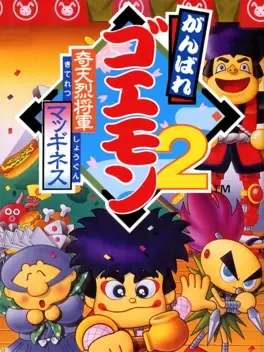
As you may have guessed from the number 2 in the title, this is the second SNES game in the popular blend of the adventure and jump and run genres which is the Goemon series. Again, you (and your partner, in 2 player mode) control Goemon, his friend Ebisu-Maru and, new to the bunch, robot Sasuke, through loads of action stages and villages. Another new feature comes with 3D boss fights, featuring the giant mech type robot called "Goemon Impact".
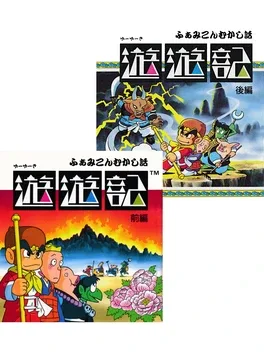
Famicom Mukashibanashi: Yuuyuuki is a 2-part Famicom Disk System game. Yuuyuki is an adventure game played by choosing from several text commands shown on screen. It resembles its predecessor, Shin Onigashima, in its implementation of the "Change Character" command, usage of traditional Japanese fairytales, and general screen layout and appearance. The story-line is a parody of the Chinese novel Journey to the West, where two main characters, Goku and Chao, embark upon separate journeys to find one another. In Yuuyuki, the "Change Character" command can switch between a maximum of five different characters. However, there are very few points in the game where it can actually be used to such extent. Its main use is to switch between Goku and the others accompanying him. Like Shin Onigashima, the character in use can greatly affect the descriptive text shown on screen, and the significant increase in number of characters allowed for more variety in each scene. It is possible to enjoy the game by viewing the reactions towards choosing completely unrelated characters or commands in certain situations. While Shin Onigashima demanded rather complex puzzle-solving abilities, Yuuyuki mainly focuses on having the player carefully read and understand the story-line. Puzzles are solved easily in this game, and very few choices actually lead to a "game over" screen. Easy trivia questions and simple action gameplay emerge at certain points, and players may find themselves searching for the obvious answer on screen more often than thinking hard to solve the puzzle at hand. Main changes in gameplay from Shin Onigashima include the implementation of the "Ittaisan" command, which saves progress at any point during the game, and faster animation of game text. The shortening in load time after choosing commands, and an overall decrease in difficulty allowed Yuuyuki to run at a much quicker tempo than its predecessor.

Onimusha 3 is the third game of the Onimusha series. The game retains elements from previous games in the franchise including the use of multiple special weapons in order to fight enemies and absorb their energy to enhance the weaponry. This time the player primarily controls both Samanosuke and Jacques in separate scenarios. The two are able to exchange items in order to solve puzzles. The development from this game started after the release of the PlayStation 2 which allowed the team to work on a 3D engine to design 3D backgrounds. In order to appeal to the Western market, the team set this game in Paris and chose French actor Jean Reno to portray Jacques. Onimusha 3 has been generally well received by publications for video games. Most of the writer's praise focused on the improved controls and the use of a 3D engine that allowed better combat and visuals, respectively. The game also generated good sales with over 1.5 million copies sold as of May 2008.
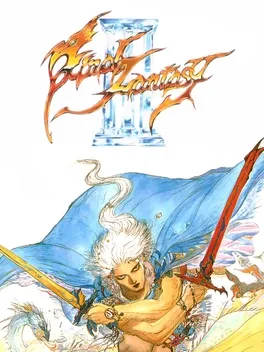
Final Fantasy III is the third FF game for the Famicom. The turn-based battle engine has been improved: if the enemy is defeated, the next character will automatically switch to another enemy, and not hit the air, like in the previous two games. The game itself is, like the previous games, a top-down RPG where your characters travel in the overworld, sometimes entering cities and dungeons to buy equipment, rest and fight random encounters and bosses with turn-based combat. Final Fantasy III also introduces various series staples, such as the Job system and the Moogle species.
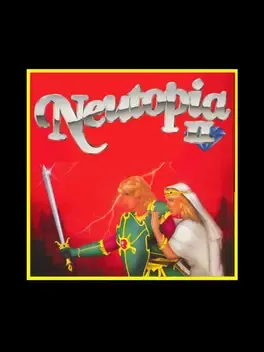
Jazeta brought peace back to the land. But as long as evil and fear live in the human heart, the dreaded Dirth, Emperor of Darkness, will be plotting his return. The Emperor is stirring under the peaceful surface of Neutopia, bringing suffering to its people. Who will save them? Jazeta, the hero, is lost in a labyrinth in a foreign land. Can his son withstand the powers of the Emperor of Darkness to rescue the good people of Neutopia from fear and despair?