
Guilty Gear


Part of collection:
Guilty Gear
(last 3 games)
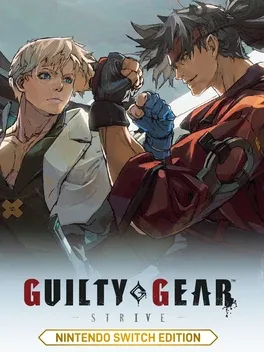
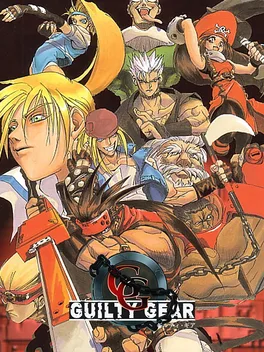
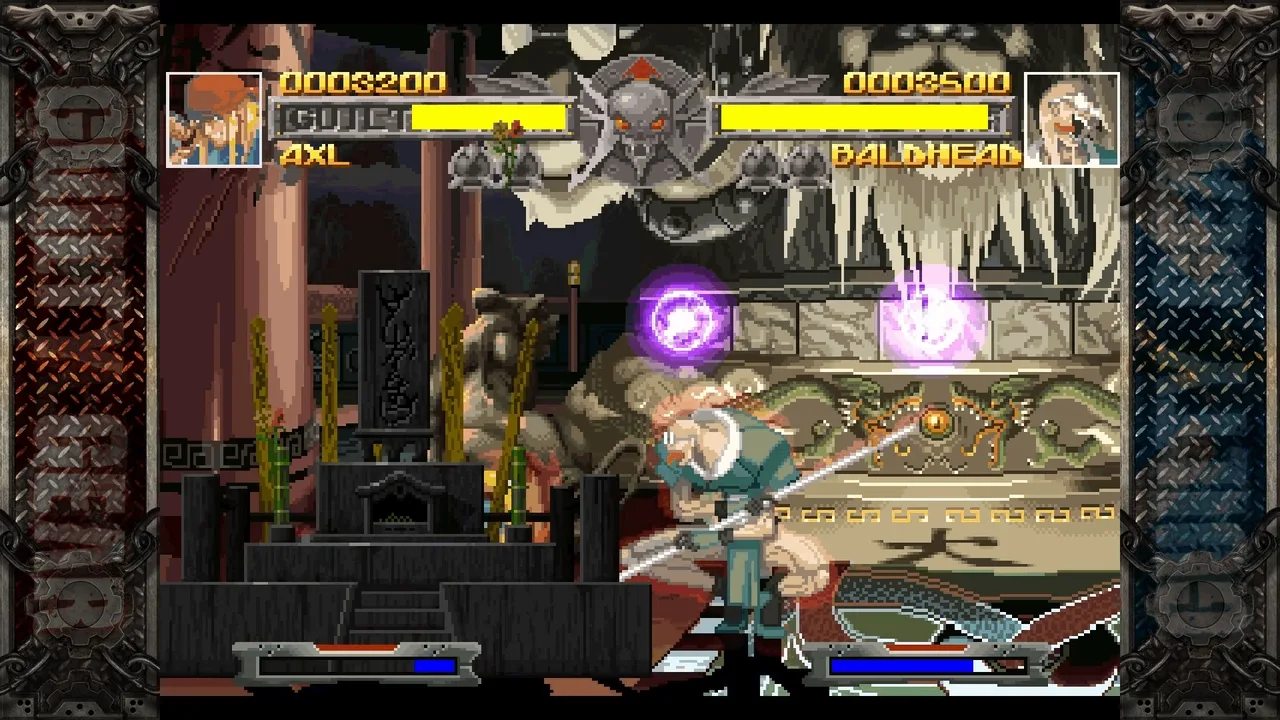
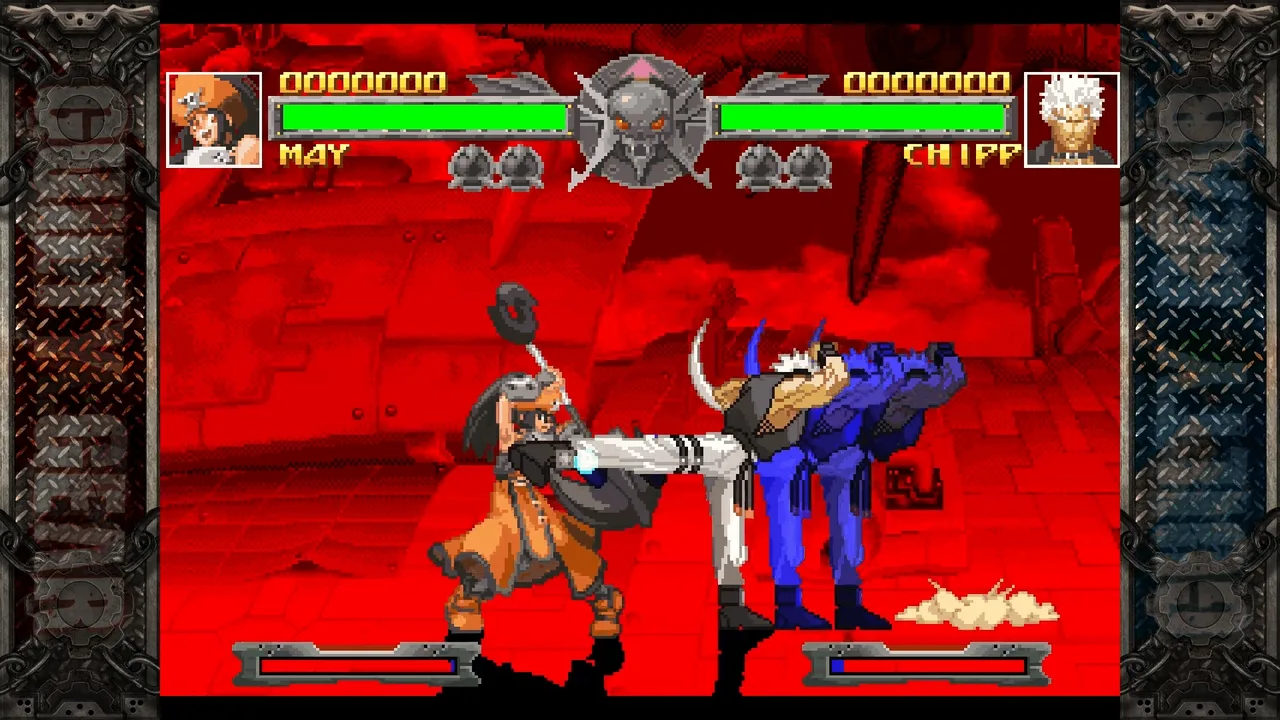
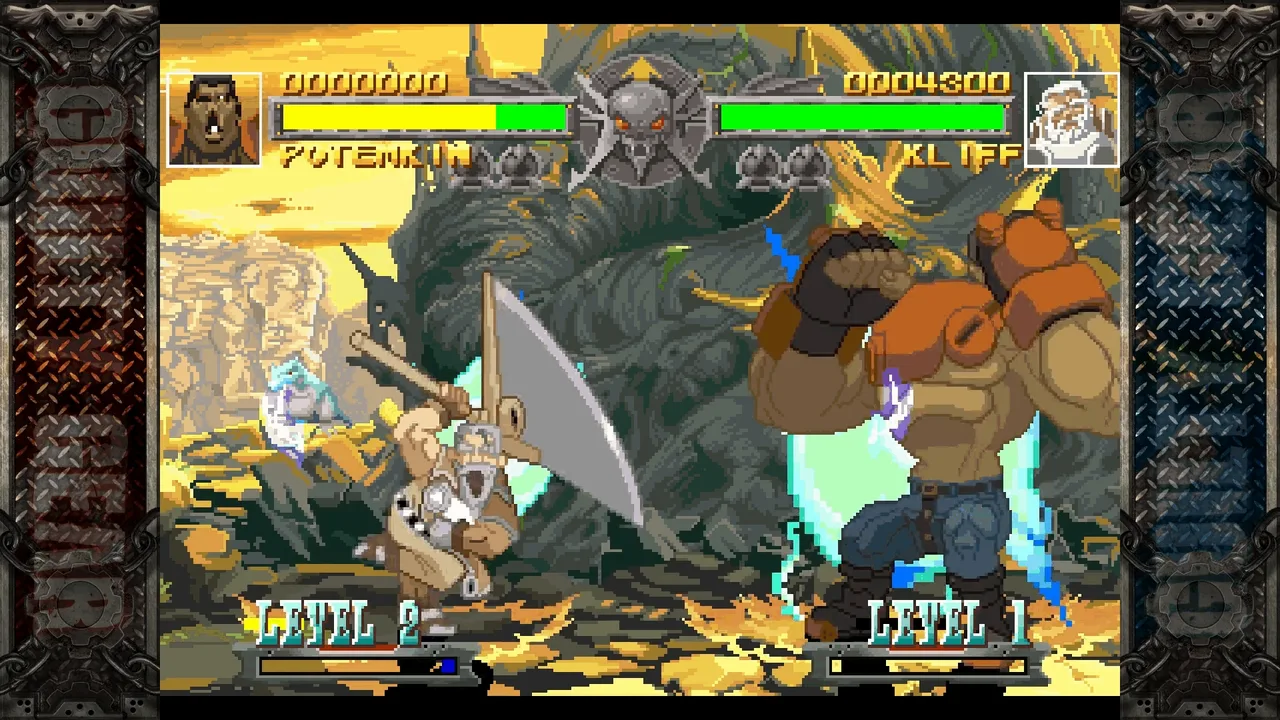
The critically acclaimed Guilty Gear Strive arrives on Nintendo Switch for the first time, complete with the first three season passes of DLC to make for a total of 28 playable characters!
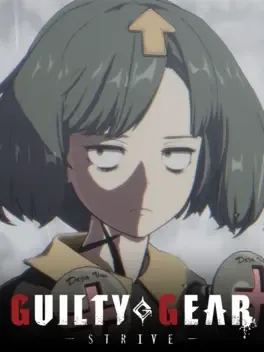
This story expansion is exclusive to Season Pass 1. Another Story provides the player a full look behind the curtain from another perspective featuring appearances from many characters who did not show up during the main story, including Ramlethal, May, and Baiken.
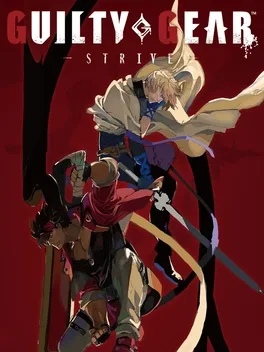
Discover the Smell of the Game with Guilty Gear: Strive! Immerse yourself in new gameplay mechanics designed to be simple and welcoming for fighting game newcomers, yet deep and creative for veterans. Ride the Fire into a heavy metal inspired alternate future full of over-the-top action, style and fun!
Part of franchise:
Guilty Gear
(last 3 games)
The critically acclaimed Guilty Gear Strive arrives on Nintendo Switch for the first time, complete with the first three season passes of DLC to make for a total of 28 playable characters!
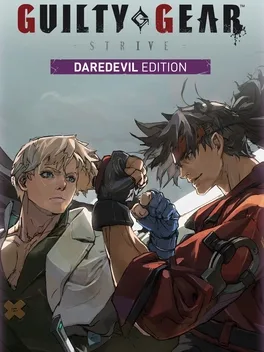
The Daredevil Edition of Guilty Gear -Strive- includes the base game, Season Pass 1, Season Pass 2, Season Pass 3, the Ultimate Edition Content Kit and the Guilty Gear 25th Anniversary: Special Additional Color Pack. Season Pass 1 includes 5 characters, 2 stages, an exclusive story expansion and the Additional Character Color Pack which adds 5 color variations for all 20 characters announced with its release. Season Pass 2 and 3 includes 4 characters, 2 stages and a Color Pack which unlocks 6 color variations for the 4 characters in the related pass. Season Pass 3 also has an exclusive Color Pack with 3 additional color variations for its characters that missed both 25th Anniversary Color Packs. Ultimate Edition Contents Kit includes the Digital Soundtrack, Digital Artwork and the Ultimate Edition Special Colors which adds 1 color variant for all 20 characters available with Season Pass 1. A color variant in the Season Pass 2 and 3 Color Packs matches the Ultimate Edition color variation for their characters. The Guilty Gear 25th Anniversary Special Additional Color Pack unlocks 2 color variations for the 24 characters available at the end of Season Pass 2.
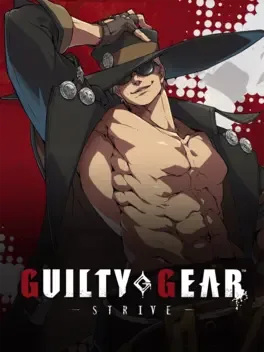
This allows the character "Johnny" to be used in-game.
Could be interesting
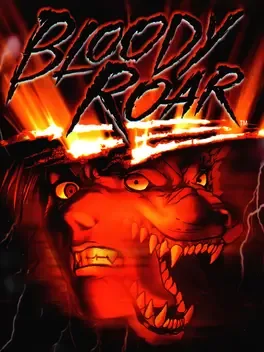
Bloody Roar, known as Bloody Roar: Hyper Beast Duel in Europe and Japan, is a fighting video game originally developed by Raizing (now Eighting) as an arcade game. It was later adapted for the PlayStation by Hudson Soft and published by Sony Computer Entertainment for the PlayStation. The arcade version was released on July 7, 1997 and was titled Beastorizer in North America. The PlayStation version was released in Japan on November 6, 1997, in North America (under the title Bloody Roar) on October 31, 1997 and in Europe on March 1998. Bloody Roar is the first game in the Bloody Roar video game series and was followed by four sequels on multiple platforms. The game's story centers on a group of warriors known as "zoanthropes", who have the power to transform into half-human half-animal "Beasts", and the Tylon Corporation, and underground organization that seeks to use zoanthropes as mind-controlled weapons. The game received generally positive reviews from critics for its originality and graphics, while the audio received mixed opinions. The game's success resulted in its re-release for The Best range on October 14, 1999. The game was re-released on the PlayStation Network in North America on August 20, 2009.
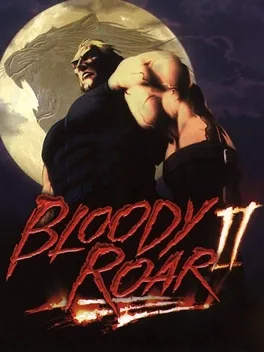
Bloody Roar 2, is a brawler arcade game developed by Eighting/Raizing in 1999. (Also known as Bloody Roar 2: Bringer of the New Age in Japan/Europe and Bloody Roar II: The New Breed in the United States.) Bloody Roar series differs from other fighting games as every character has a beast mode that can be used to use new attacks, recover some of lost health and generally to be faster and/or more powerful with their attacks.
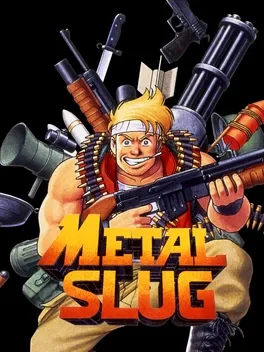
Metal Slug is a 1996 run-and-gun arcade video game originally developed by Nazca Corporation and released by SNK for the Neo Geo MVS. It is the first installment in the eponymous series. Set in 2028, players assume the role of Peregrine Falcon Strike Force soldiers Marco Rossi and Tarma Roving in a fight against the Rebel Army led by Donald Morden and overthrow his coup d'état to prevent a New World Order.
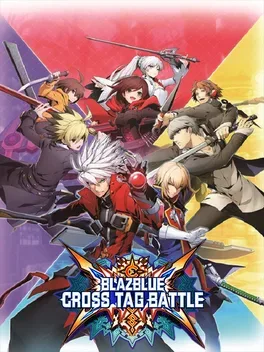
"THE COLLISION IS INEVITABLE! THE IMPACT WILL BE UNAVOIDABLE! An unrivaled clash of explosive proportions! The beloved BlazBlue franchise Crosses universes, Tags in fan favorites, and Battles it out in BlazBlue: Cross Tag Battle! Created through an all-star collaboration between BlazBlue, Atlus’ Persona, French Bread’s Under Night In-Birth, and Rooster Teeth’s hugely popular RWBY web series, Cross Tag Battle celebrates the fighting genre for pros and newcomers alike! Choose your team in fast paced 2v2 team battles filled with the craziness you’ve come to love from BlazBlue, with all the tight mechanics, smooth gameplay, and gorgeous 2D graphics you expect from Arc System Works."
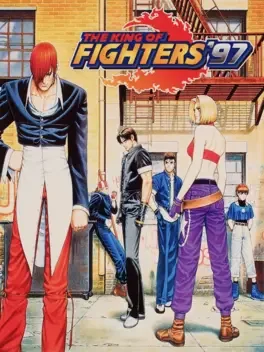
The King of Fighters '97 is a 1997 fighting game produced by SNK for the Neo Geo arcade and home console. It is the fourth game in The King of Fighters series. It was ported to the Neo-Geo CD, as well as the PlayStation and the Sega Saturn in Japan only.
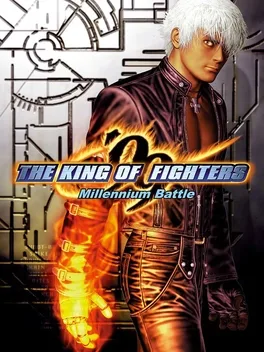
"The King of Fighters '99: Millennium Battle" is the sixth game in The King of Fighters series by SNK. Unlike in previous games of the series, there are four characters per team instead of three, with the fourth serving as a "Striker", a fighter whose function is only to enter a match, attack the opponent and leave without replacing their teammates. In total, there are seven teams, each containing four characters, four Team Edit characters and a boss.
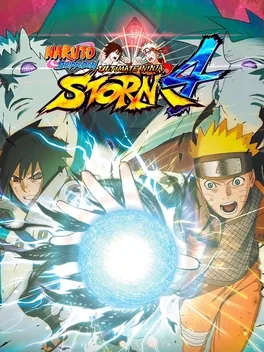
Experience the exhilarating full-adventure Naruto Shippuden and follow Naruto Uzumaki on all his fights. With more than 12 million Naruto Shippuden Ultimate Ninja STORM games sold worldwide, this series established itself among the pinnacle of Anime & Manga adaptations on videogames! As every good story comes to an end Naruto Shippuden: Ultimate Ninja Storm 4 is going to be the ultimate STORM game! For the first time ever, a Naruto/Naruto Shippuden game will take advantage of the graphics power of the new generation of consoles.
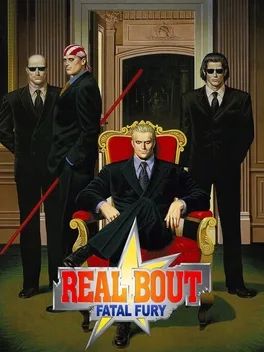
Real Bout changes the play controls from the previous Fatal Fury games, reducing the number of attack buttons from four to three: a standard Punch and Kick button, a "Strong Attack" button which can be either a stronger punch or kick attack, depending on the character. The game retains the three-plane "oversway" system from Fatal Fury 3, which features a main lane for fighting, with foreground and background planes used to avoid attacks or leap towards the opponent. A dedicated button is now used to make an "oversway" (or change plane) towards the background or foreground. Real Bout introduces a Power Gauge, which fills up as the player performs normal or special techniques against their opponent or defend themselves, similar to many super move gauges featured in other fighting games. The Power Gauge allows players to perform one of three types of Special Techniques, depending of the level of the Power Gauge. Real Bout also introduces stages with ring-outs, a gameplay feature previously introduced in 3D fighting games such as Virtua Fighter. If the player performs certain attacks on their opponent while next to the boundaries, the character will eventually destroy the barrier keeping the opponent in the ring and be able to knock them out of the stage for an easy win.
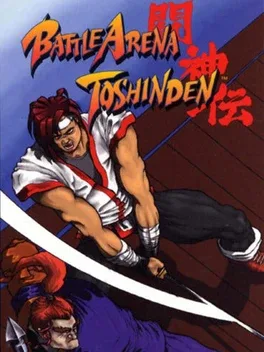
Get Ready To Rumble! The Toshin Daibukai tournament has arrived. Ten of the toughest fighters in the world are taking part in the most grueling slugfest known to man. To win, each combatant must be completely focused. One slip and their fate is sealed. Who will be crowned the champion? That is up to you. So get off your duff and get ready for the fight of your life with Battle Arena Toshinden!
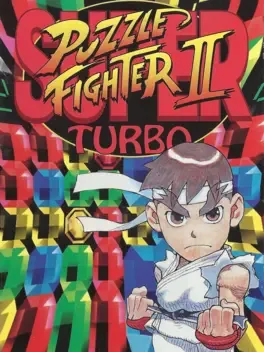
The game's title is a parody of Super Street Fighter II Turbo (or Super Street Fighter II X in Japan), as there are no other Puzzle Fighter games, and the game includes music and interface elements spoofing the Street Fighter Alpha and Darkstalkers games. It was a response to SEGA's popular Puyo Puyo 2 that has been sweeping Japanese arcade. A HD-remake version titled Super Puzzle Fighter II Turbo HD Remix, is available for purchase on Microsoft's Xbox Live Arcade and Sony's PlayStation Network.