
Hebereke no Oishii Puzzle ha Irimasen ka


Buy
Parent game
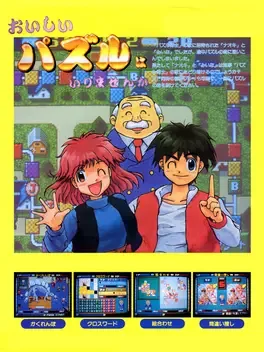
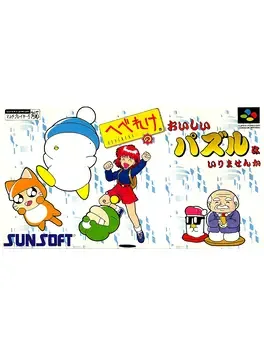
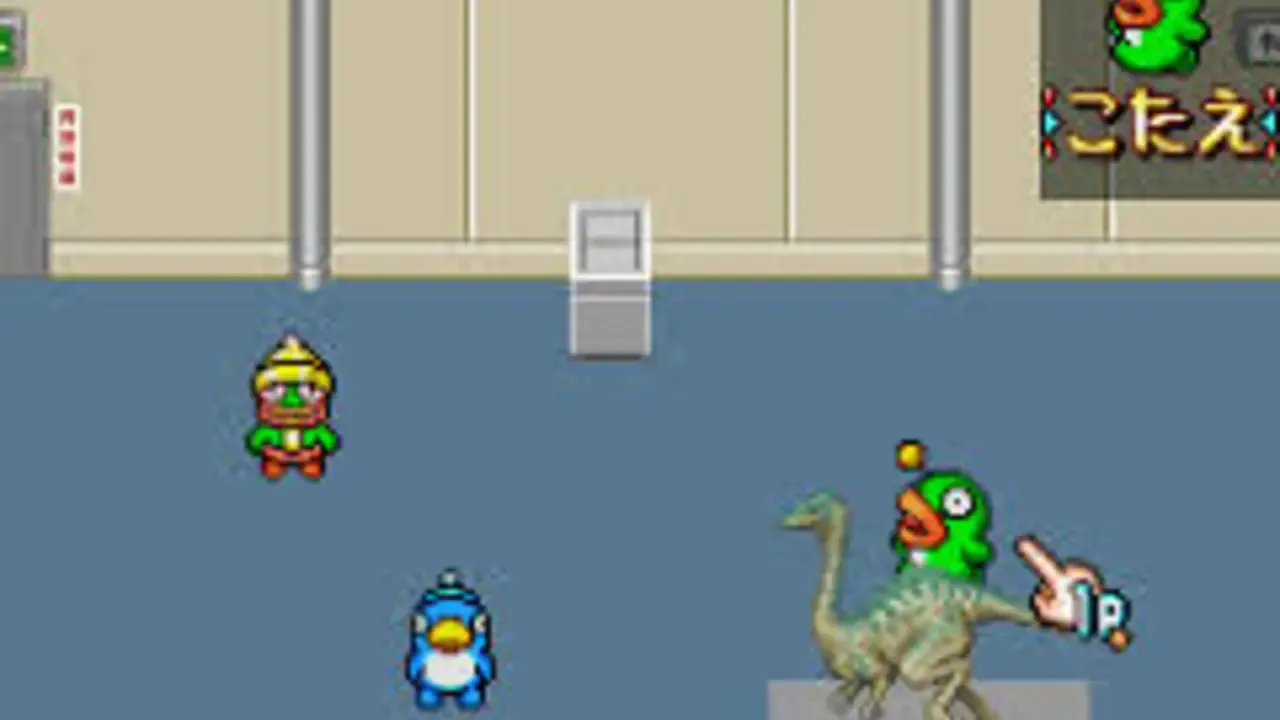
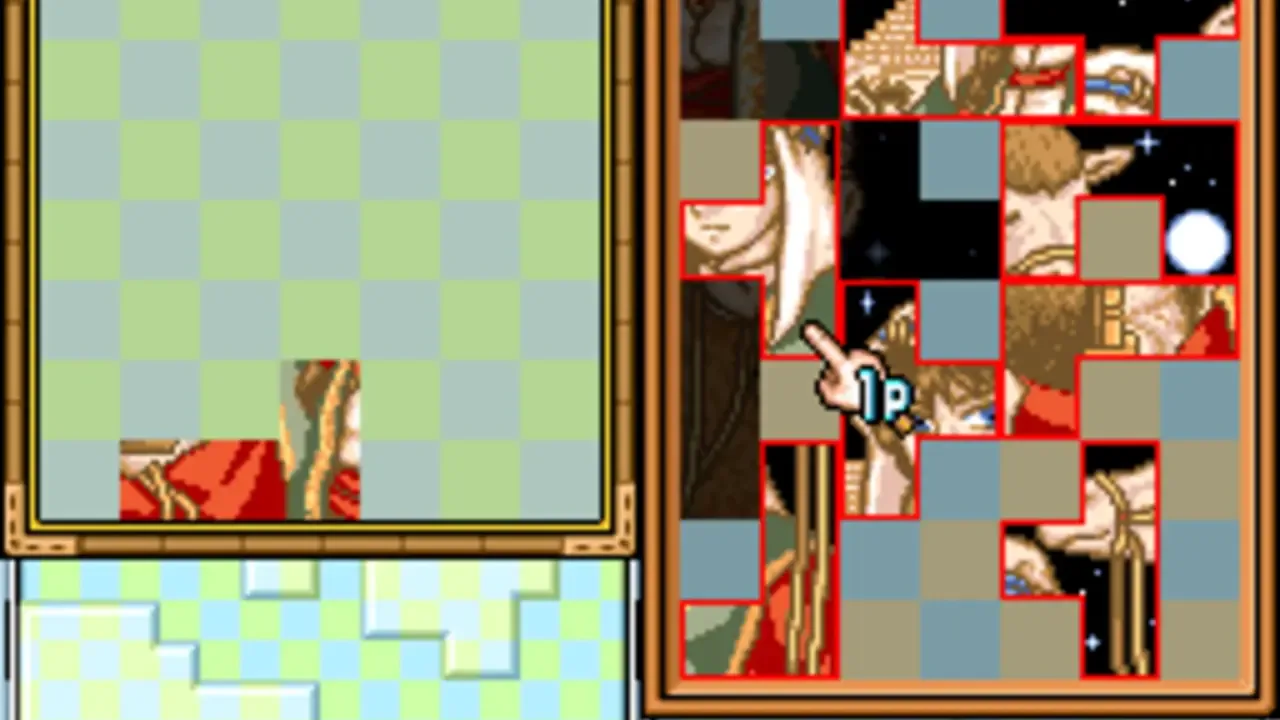
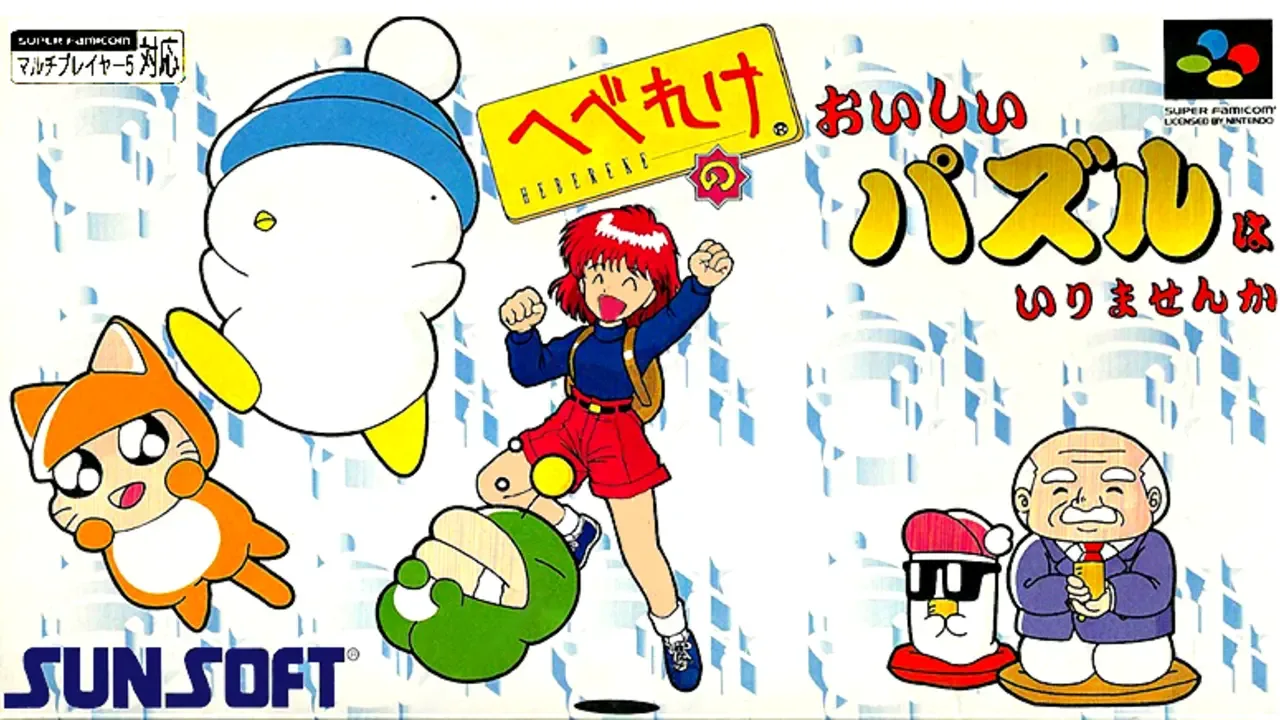
Oishii Puzzle Wa Irimasen Ka is a puzzle video game, developed by Kuusoukagaku Corp. and published by Sunsoft on September 1993 in Japan only for arcades. There are four mini-games to choose from: crossword puzzles, picture matching (jigsaw puzzles), spot the differences, and hide and seek. The game progresses in a sugoroku format, where you spin the roulette wheel, move forward by the number of squares that come up, and play the mini-games instructed on the squares that stop. It is developed by the Science Fiction Research Institute. In 1994, it was ported to the Super Famicom as Hebereke No Oishii Puzzle Ha Irimasen Ka which featured the company's mascot character, Hebereke.
Part of collection:
Hebereke
(last 3 games)
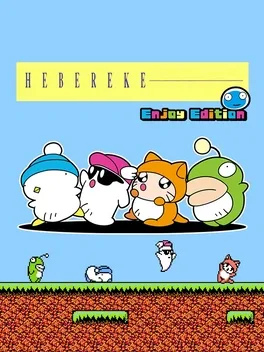
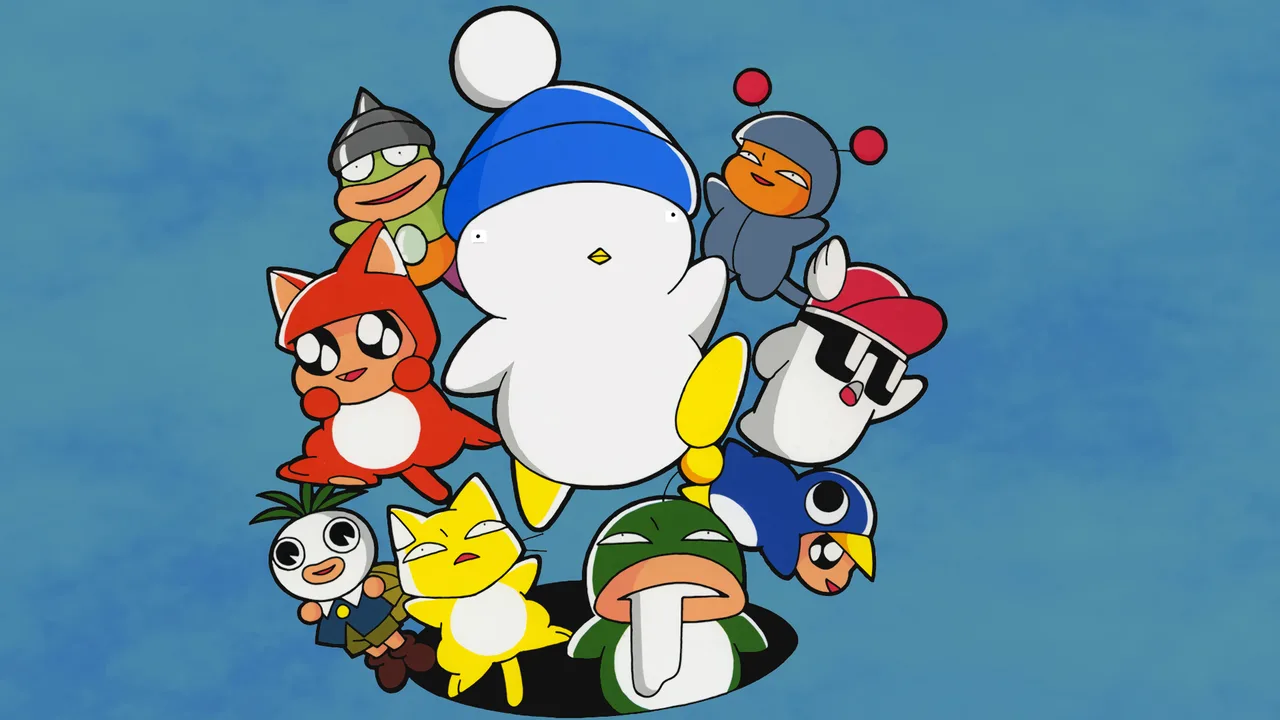
Where am I pyooooo??? Hebereke is back and so is his great and surreal adventure! A mysterious little creature Hebe fell into a mysterious world. Discover a brand new world, explore every corner, find the treasures with your new wonderful friends, and use their skills to find new places.
Hebereke no Oishii Puzzle is a Puzzle game, published by SunSoft, which was released in Japan in 1994.
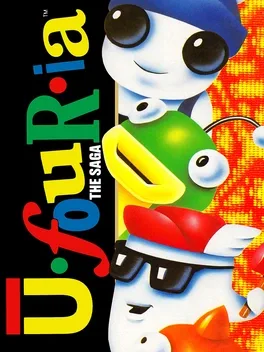
This game is set in a free-roaming environment. The game's world comprises interconnected areas which consist of outdoor sections, caves, water, and other thematic places with platform structures and wandering enemies. Similarly to The Dragon's Trap, the player is theoretically able to explore this world from the beginning; however, many areas are too hazardous or impossible to traverse when the player controls only one character with his limited abilities. This European version of the game has some alterations when compared with the original Japanese release such as a different story, characters' names and sprites being changed, and bird enemies dropping weights instead of feces.
Part of franchise:
Hebereke
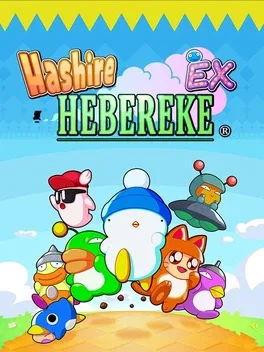
Hashire Hebereke: EX is a modern remake of the 1994-released Super Famicom racing action game Hashire Hebereke by SUNSOFT. Players can choose from comical and cute characters like series protagonist Hebe and partake in extreme races across unique stages. While carrying over elements from the original game, it will add a new Time Attack mode, new characters, and new stages, as well as four-person online multiplayer support.
Could be interesting
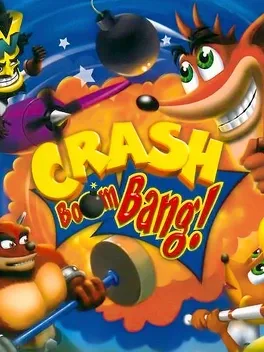
Crash Boom Bang! is a party game developed by Dimps and published by Vivendi Universal Games in Japan and by Sierra Entertainment internationally for the Nintendo DS. It was released in Japan on July 20, 2006, in North America on October 10, 2006,[1] in Europe on October 27, 2006, and in Australia on November 2, 2006.[3] It is the only game in the Crash Bandicoot series to be developed by a Japanese company and the first to be released in Japan before North America. It was also the final game in the series to be released in Japan. Crash Boom Bang! is the first game to be released exclusively for the Nintendo DS, and the second party game of the series, after Crash Bash. The game's story centers on a multi-millionaire who uses the characters of the series to unearth a powerful object dubbed the "Super Big Power Crystal". The game has received largely negative reception from reviewers, who criticized it for having unoriginal, dull gameplay and poor controls.
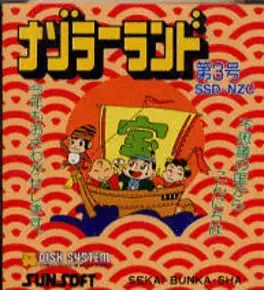
The third and final core entry in the Nazoler Land series of minigame compilations with a magazine theme. It was developed and published by SunSoft for the Famicom Disk System. Nazoler Land Dai-3-gou is the third game in the Nazoler Land series. Like its predecessors, it was developed and published by Sunsoft for Nintendo's Famicom Disk System in Japan only, and contains various minigames with diverse gameplay. These minigames include: Sugoro Quiz All three Nazoler games had a quiz minigame of some kind, but Sugoro Quiz is the first to emphasize a multiplayer aspect. Two to four human players compete in a board game in which players progress by answering trivia questions. Tomo Bakuso The second minigame starring the schoolgirl Tomo, after Nazoler Land Dai 2 Gou's Blast Tomo. In this game, she is trying to pass through a level of platforms, some of which will block access after being passed through a certain number of times. Tanteidan Boy Nazoler An early example of an "escape the room" adventure game, which would become very popular in browser flash games and games like 999. The player must use the items in the room they are trapped in by clicking on items strewn around it and discover the exit. As the player interacts with the room it visibly changes. Bingo Not so much a game but a Bingo simulator. Two to four players can generate a unique bingo card and the game will randomly select numbers. The first player to finish their card wins the game. Nazoler BOX As with Nazoler Land Dai 2 Gou's Nazoler BOX, this isn't so much a minigame as a response to letters sent to SunSoft about the Nazoler Land series. Tomo, from Tomo Bakuso, answers user mail. Kirk, the protagonist of SunSoft's Dead Zone, makes a cameo appearance. Nazoler BOX Contest Results In Nazoler Land Dai 2 Gou's Nazoler BOX there was a way to create pixel art which users could then print out and enter into a contest. This minigame simply comments on the various entries that SunSoft received. It is hosted by cameo characters from Dead Zone and Ripple Island.
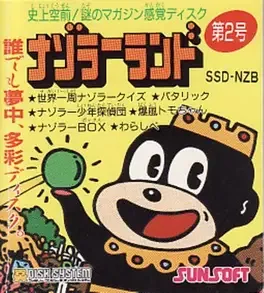
The second game in the Nazoler Land series of minigame compilations published by SunSoft for the Famicom Disk System. Nazoler Land Dai-2-gou is the sequel to Nazoler Land Soukan-gou and is similarly a minigame connection with a magazine theme. It contains six minigames, rather than its predecessor's eight. A notable feature of this compilation is that all the minigames are represented as Famicom disks on the select screen, and once a game is chosen an animation shows the disk being loaded in the Famicom Disk System. The minigames include: Patalick A panel-switching puzzle game that shares some similarities with Q*Bert (specifically, switching panel colors and the isometric perspective) but is far more cerebral and less active in nature. The goal is to use the shape-shifting protagonist (who transforms from an angel to a devil form) to switch all the panels on the screen to the same color, keeping in mind that every panel in a horizontal and vertical line will flip over. Geographic Nazoler Quiz Like the transportation quiz from the first Nazoler Land, this is a quiz game with a geographical theme. Rather than crossing over Japan in various types of transport, the goal is to travel the world and answer questions on different countries. Answering enough questions correctly allows the player to buy a ticket to the next location and progress forward. Straw Pistil A gambling game in which the player barters against AI opponents for money. The opponents are unpredictable, so the game is largely based on luck. Blast Tomo As with "Save Princess Momoko" from Nazoler Land Soukan Gou (or the Cheetahmen from Action 52), Blast Tomo is the "major feature" of the compilation. The goal is to help a schoolgirl, Tomo, reach the bottom of a stage with the strategic placing of a finite number of bombs to destroy blocks in the way. The player must also not any let mice touch Tomo on the way down. Nazoler Boys' Detective Club A parody of Famicom Tantei Club, the player is the leader of a detective club currently investigating a mansion supposedly hiding incriminating evidence. Should the player make too many wrong decisions while exploring, the rest of the group will stop listening to them. Nazoler BOX Not so much a game as a more overtly magazine section where an animated character (Tomo, from Blast Tomo) reads mail from players of the previous game as well as discuss promotional features of the Nazoler Land series. There's also a section where players can draw their own images, as part of a contest for Nazoler Land Dai 3 Gou.

Puzzles and action - enjoy a new sense of play in two ways. Lead the character to use the key block in a total of 100 levels and a multiplayer mode for up to four people can play simultaneously.
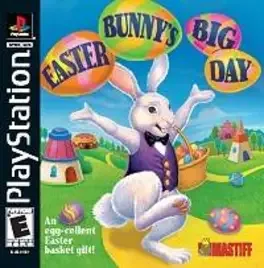
Easter Bunny's Big Day asks children to help the Easter Bunny find and deliver eggs to all the boys and girls of Easter Village. Unfortunately, the floppy-eared rabbit doesn't have enough eggs, so players will have to solve puzzles and play games to find more eggs. Multiple difficulty levels keep the action interesting for children aged four to ten, and several game modes offer additional play options. Parents can play along with children and add assistance with the "helper" feature.
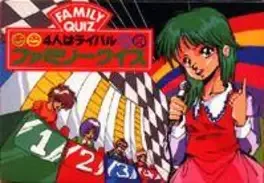
Family Quiz 4-nin wa Rival (ファミリークイズ 4人はライバル? lit. Family Quiz 4 Man Rivalry) is a Japanese trivia game devloped by Athena for the Famicom, and published in Japan in November of 1988. This game was Athena's first console release. With a focus on family play, the game allows for four players to compete simultaneously. The goal is to beat the other opponents in four mini-games, each requiring that the player answer some Japanese trivia questions in order to proceed. The four mini-games are based on a game show, a board-game, the game of Othello, and a memory match game. In the game show, the only version that allows for just one player, answering questions correctly raises that player's podium towards a balloon. The other versions require at least two players, and turns may only be taken after players have answered a trivia question correctly.
A browser-based quiz game where players must select the 'correct' urinal to use in a number of different scenarios.
See how many questions you can answer before it's Game Over. Sounds simple? Think again... the questions are BASTARD hard and require obscure insane logic, super fast reactions or just pure luck to answer correctly. It's not actually impossible though, just really really hard. GOOD LUCK! Mwahahah! :p
The second arcade game in the Bishi Bashi series.
The journey begins! Explore the various islands and find the treasure Masamune!