
Jumping Flash! 2


Buy
Part of collection:
Jumping Flash!
(last 3 games)
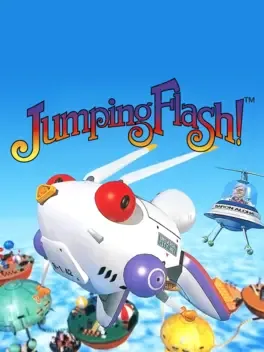
Experience Jumping Flash! originally released on the PlayStation console, enhanced with up-rendering, rewind, quick save, and custom video filters.
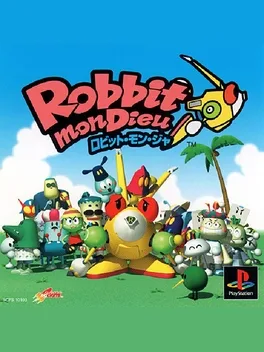
Robbit Mon Dieu, sometimes referred to as Jumping Flash! 3, is a 3D platform game for the Sony PlayStation. The inhabitants of planet Hananuma find themselves encountering numerous problems that they are unable to solve alone, and their call for help is answered by the Universal City Service, who send Robbit to Hananuma to rectify things and put the inhabitants at peace once again. Robbit now has a slamming move after pressing the triangle button while in the air.
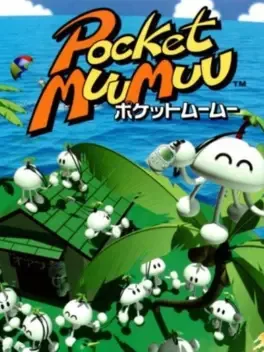
Pocket MuuMuu is an action game developed by Sugar & Rockets and published by Sony Computer Entertainment for the PlayStation, and was released exclusively in Japan in 1999. It is a spin-off game in the Jumping Flash! series. The game makes use of the Sony PocketStation peripheral, but is not required to play. PocketStation games could be played in order to make money so you could buy more PocketStation games as well as other little items.
Could be interesting
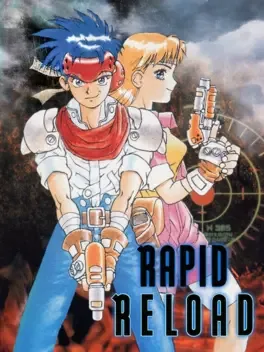
The object of interest in this game is the mysterious Valkiry Stone. Two treasure hunters, Axel and Ruka, set out to find the stone, but the evil gang known as the Pumpkin Heads wants to find the stone first. As either Axel or Ruka, blast your way through six side-scrolling levels against hordes of enemies, facing off against several bosses in each level. You can select from four different weapon effects (normal, bouncing, homing and flamethrower), use smartbombs and a grappling hook.
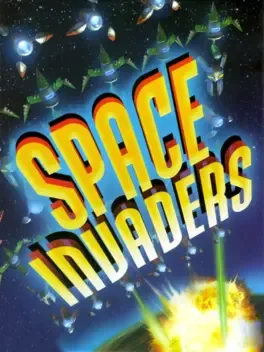
Space Invaders is a game in which the player controls a laser cannon by moving it horizontally across the bottom of the screen and firing at descending aliens. The aim is to defeat five rows of eleven aliens—some versions feature different numbers—that move horizontally back and forth across the screen as they advance towards the bottom of the screen. The player defeats an alien, and earns points, by shooting it with the laser cannon. As more aliens are defeated, the aliens' movement and the game's music both speed up.

R4: Ridge Racer Type 4 is the fourth game in the Ridge Racer series. It includes eight tracks (with reverse variants, for a total of 16 layouts) and 321 vehicles, all of which are fictional. This iteration was one of the first PlayStation titles to feature Gouraud shading on polygons, giving the game a visual depth that was previously missing. It was also the first Ridge Racer game on the system to feature two-player split-screen mode and offered two different driving models.
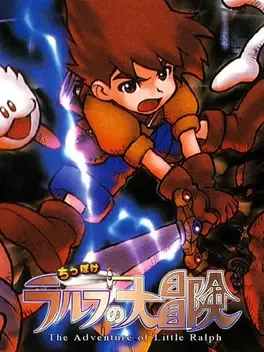
The Adventure of Little Ralph is a 2D platformer. In this game the player controls Ralph, who has been turned back into a child by the evil demons who have invaded his homeland. In order to stop them and return to his former self, he must get through each area filled with enemies, traps, and many hidden routes. Ralph is armed with swords and various magic powers and also has the assistance of a small furry companion. The game's levels are interconnected, unlike the "stages" of most other platform games.
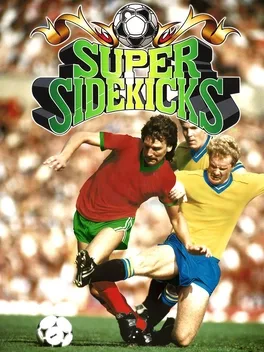
Published in 1993, the original Super Sidekicks (known as Tokuten Ou, "Goal-Scoring King" in Japan) was SNK's first soccer video game. It features 12 teams divided into two groups which compete for the "SNK Cup" (the main differences between teams is their formations on the field): Group A: Germany, Italy, Spain, England, Mexico, Japan Group B: Argentina, Holland, Brazil, France, United States, South Korea The players' team plays against all the others in their group, then it goes into an elimination tournament's semifinals and then the final to win the cup. There was also a hidden feature in the game, which wasn't documented, and affects a single player game. During a free kick for the CPU if the player has tapped button A for player two, the CPU performs a short-shot, while pressing the button A performs a longer kick.
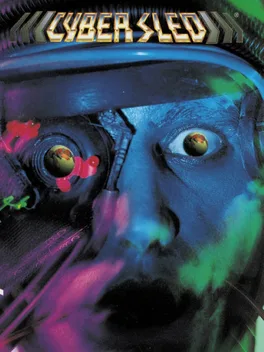
High-tech tanks meet full blown, first person firepower. Cyber Sled cataplults you to a future where tank warfare resembles forumla one racing on an arena football field. Eleven armored battlesleds play hide-and-seek, then seek-and-destroy; each with enough weaponry to take out the former Soviet Union. Their sole purpose? Blow you to scrap. Blink, and you're Cyber-Dead.
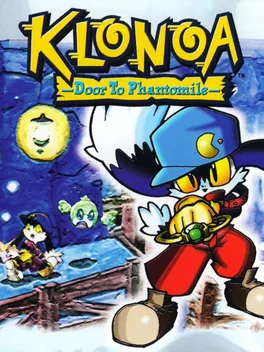
Klonoa: Door to Phantomile is a side-scrolling platform game viewed from a "2.5D" perspective. The player moves the protagonist, Klonoa, along a path in a two-dimensional fashion, but the game is rendered in three dimensions. This allows the path followed to curve and for the player to interact with objects outside of the path.
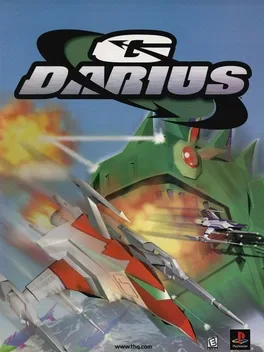
G-Darius is a shoot'em up arcade game, released by Taito in 1997. It is the fourth arcade installment of the Darius series and the first in the entire series to feature three-dimensional polygonal graphics. Much like previous installments in the Darius series, G-Darius is a two-dimensional horizontally scrolling shoot'em up set in a fictional future.
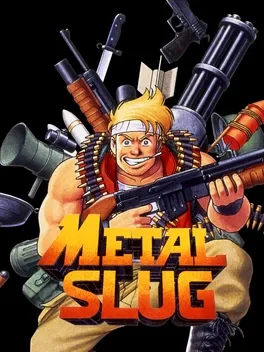
Metal Slug is a 1996 run-and-gun arcade video game originally developed by Nazca Corporation and released by SNK for the Neo Geo MVS. It is the first installment in the eponymous series. Set in 2028, players assume the role of Peregrine Falcon Strike Force soldiers Marco Rossi and Tarma Roving in a fight against the Rebel Army led by Donald Morden and overthrow his coup d'état to prevent a New World Order.

Sonic Wings Special is a 1996 vertical-scrolling shoot 'em up that combines the features in Sonic Wings, Sonic Wings 2, and Sonic Wings 3. It was ported to arcade as Sonic Wings Limited. The home console version adds new characters and endings, new bosses, updated graphics and unlockable planes. There are also Time Attack and 2-player modes. The game uses a branching stage system, so it is impossible to see all levels in one sitting. There is a total of 14 playable characters and many different endings (some of which are reused from previous games in the series). Overall the game has a comic feel. As of Summer 2012, the Android version of Sonic Wings Special has only 4 playable characters with 4 endings and 9 stages. However, the publisher is planning to add further elements of the original version.