
Kisou Jidaigeki Sugoroku: Shinobi No Roku


Buy
Could be interesting
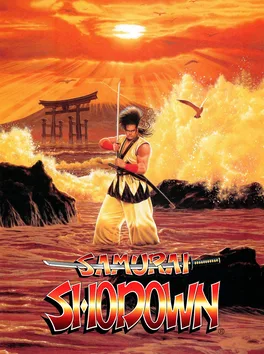
In early Japan, a man named Shiro Tokisada Amakusa preaches a heretic religion. Little does anyone know that Amakusa is really a servant of the evil Ambrosia, who took over Amakusa's body. Ambrosia wishes to shroud the world in darkness. Now, choose between 12 warriors (and 3 bonus characters) to fight for the honor of destroying Amakusa, and fulfilling a mission.
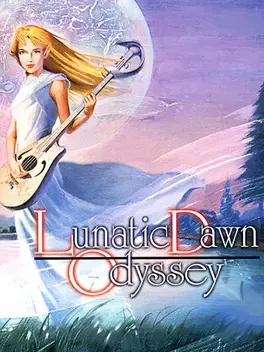
Lunatic Dawn Odyssey is a RPG in which the player controls a group of adventures that begina quest, they will go through different towns and other places. In their journeys they will face different kind of enemies and could talk to different characters and they can change their equipment in the shops. The game uses a first person perspective in the adventure part and a third person perspective in the battle part. The battle part is the classic turn based rpg style. The game features a high degree of freedom since the character can get married and have children and each time that the game is played the circunstances can changed so there are a lot of different endings.
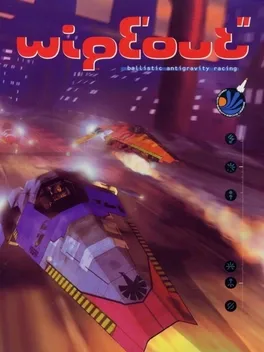
Wipeout is a racing game that is set in 2052, where players compete in the F3600 anti-gravity racing league. The game allows the player to pilot one of a selection of craft in races on several different tracks. There are four racing teams to choose from, and two ships for each team. Each ship has its distinct characteristics of acceleration, top speed, mass, and turning radius. By piloting their craft over power-up pads found on the tracks, the player can pick up various weapons and power-ups such as shields, turbo boosts, mines, shock waves, rockets, or missiles. The power-ups allow the player to either protect their craft or disrupt the competitors' craft.
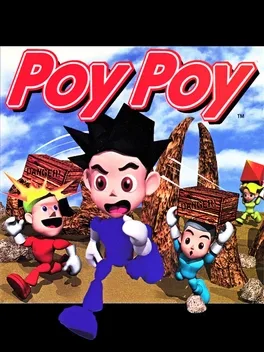
Poy Poy is a multiplayer party game at heart. Grab a multi-tap and four friends and take part in an ultimate battle of skill and wit. The idea is to be the last man standing in this arena based combat game. But don't worry if you can't find a multi-tap or four friends. There's plenty of AI characters to battle in various tournament modes and you can also play a 2 player deathmatch (with or without computer opponents). If it sounds fun now, wait 'till you play it... Set in seven different 3D environments strewn with throwable objects, the game challenges you to a match against three other opponents armed with logs, rocks, ice blocks, and atomic bombs. If you run out of stuff to throw, you can toss your opponents around too. Each hit drops your life meter, so be careful who you pick a fight with.

Simple 1500 Series vol. 49: The Casino is a gambling game with some adventure elements, the game has a story mode in which the player is a man that arrives at a town and when he is in the airport he lost all his money but finds a coin of 50 and he decide to play in the casino to earn enough money to leave town. In the Casino he can play gambling games like Roulette, Card Slot, Card games, Horse racing bet, Tetris, etc
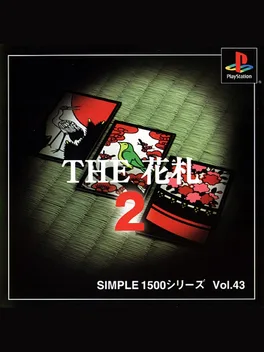
Simple 1500 Series vol. 43: The Hanafuda 2 is the second hanafuda game in the Simple 1500 series and also features a character creation mode in which the player can customize his character appearence (hair, eyes, face, etc) and them compete against different computer opponents in a sort of story mode. The game also has a free mode.
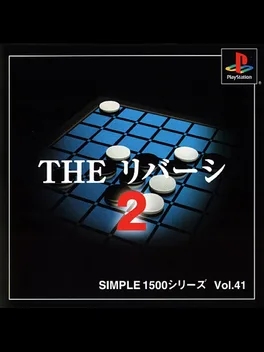
Simple 1500 Series vol. 41: Reversi 2 is a reversi game that features a character creation mode in which the player can customize his character appearence (hair, eyes, face, etc) and them compete against different computer opponents in a sort of story mode. The game also has a free mode.
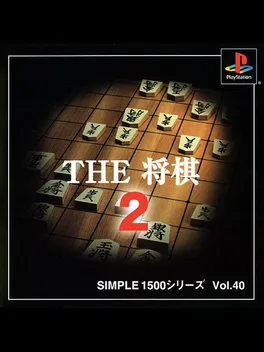
Simple 1500 Series vol. 40: The Shogi 2 is a shogi game that some difficulty levels and a tutorial.
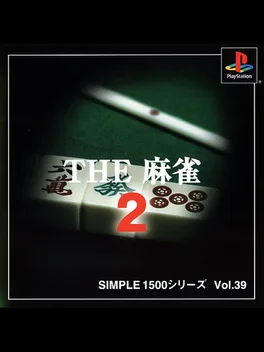
Simple 1500 Series vol. 39: The Mahjong 2 is a four players mahjong game in which the player can compete against three computer opponents to see if he can win the matchs. The game features also a quiz mode and a tutorial.
Pro Mahjong Kiwame is a four player Riichi mahjong game, unlike most one-on-one Mahjong games released at the time and the modern casual games. Players take and discard tiles until they've completed hands by forming groups and pairs.