
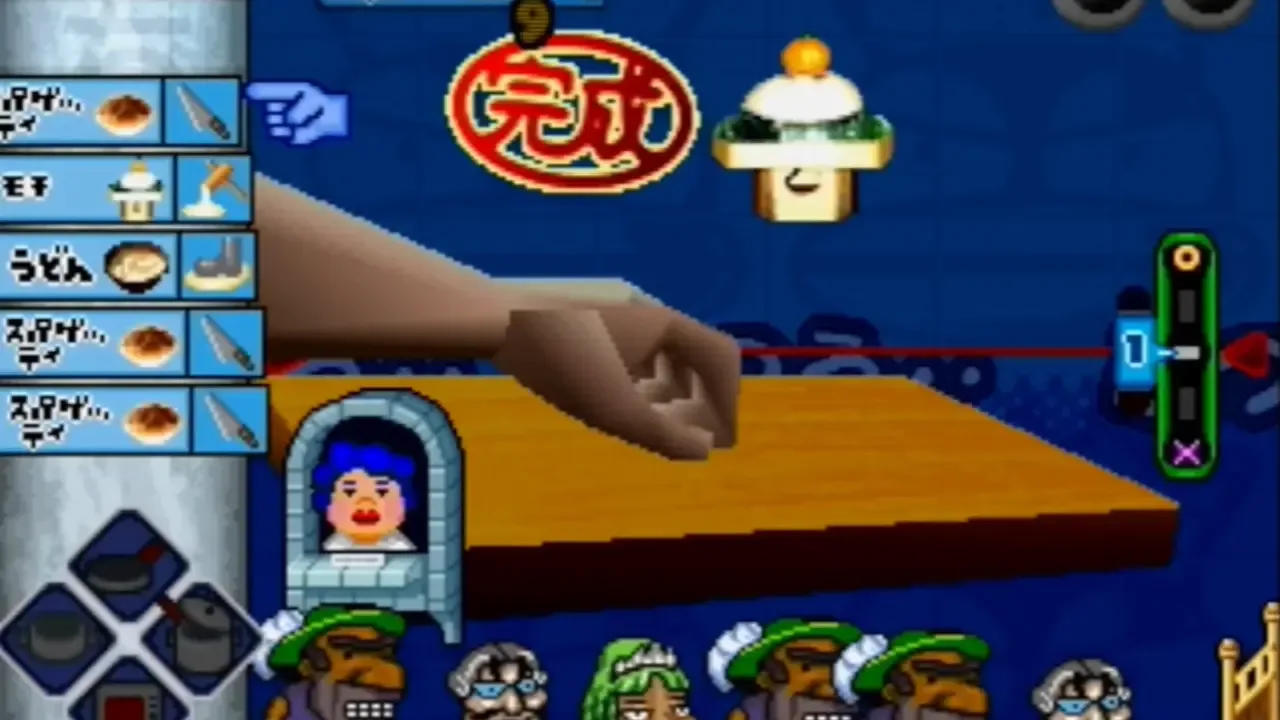
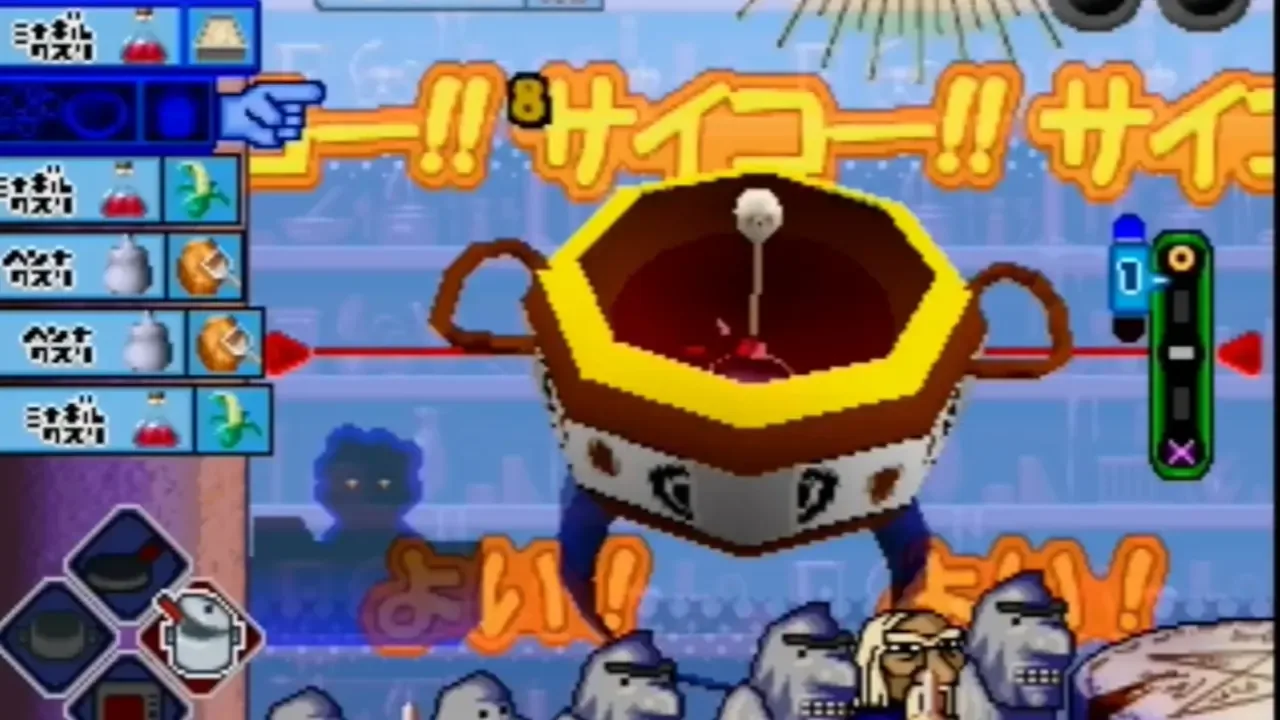
Ore no Ryouri





Buy
Could be interesting
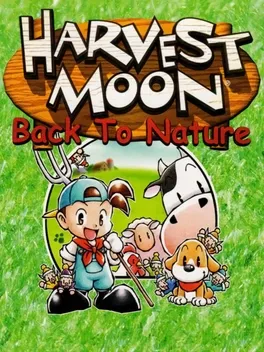
Natsume's farm simulation series makes its debut on the PlayStation with Harvest Moon: Back to Nature. It is the first Harvest Moon game for a non-Nintendo console. Starting with a few rudimentary implements and very little money, players begin the arduous task of reviving their grandfather's farm and thereby claiming their place as its rightful heir. Players are given three years to achieve this goal. A year consists of four seasons, each of which lasts 30 days. Different crops can be planted each season, but before the seeds can be planted, the land must be cleared and then the soil tilled. Seeds must also be watered until the fruit or vegetable matures. Once the crops are ready for harvest, they can be placed in a shipping bin where they'll be collected and paid for. In addition to farming, players will interact with local villagers and partake in seasonal events such as the Tomato Festival and Fireworks Display. As more money is earned, players can expand their farm and begin to raise livestock such as chickens and cows.
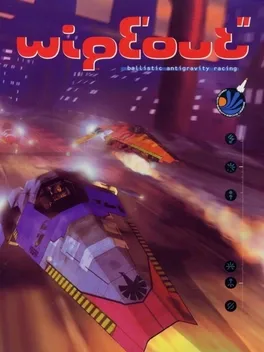
Wipeout is a racing game that is set in 2052, where players compete in the F3600 anti-gravity racing league. The game allows the player to pilot one of a selection of craft in races on several different tracks. There are four racing teams to choose from, and two ships for each team. Each ship has its distinct characteristics of acceleration, top speed, mass, and turning radius. By piloting their craft over power-up pads found on the tracks, the player can pick up various weapons and power-ups such as shields, turbo boosts, mines, shock waves, rockets, or missiles. The power-ups allow the player to either protect their craft or disrupt the competitors' craft.
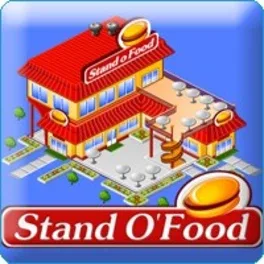
Stand o' Food challenges you to feed a host of hungry patrons before they leave in a huff!

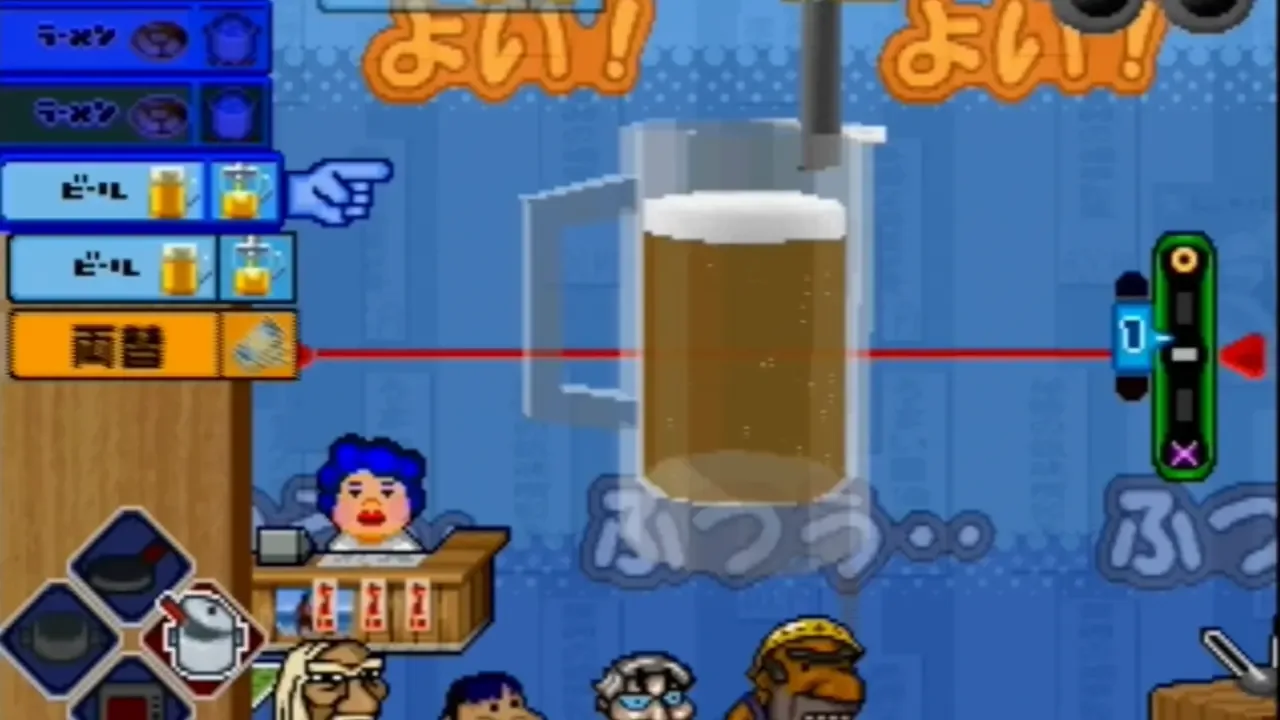
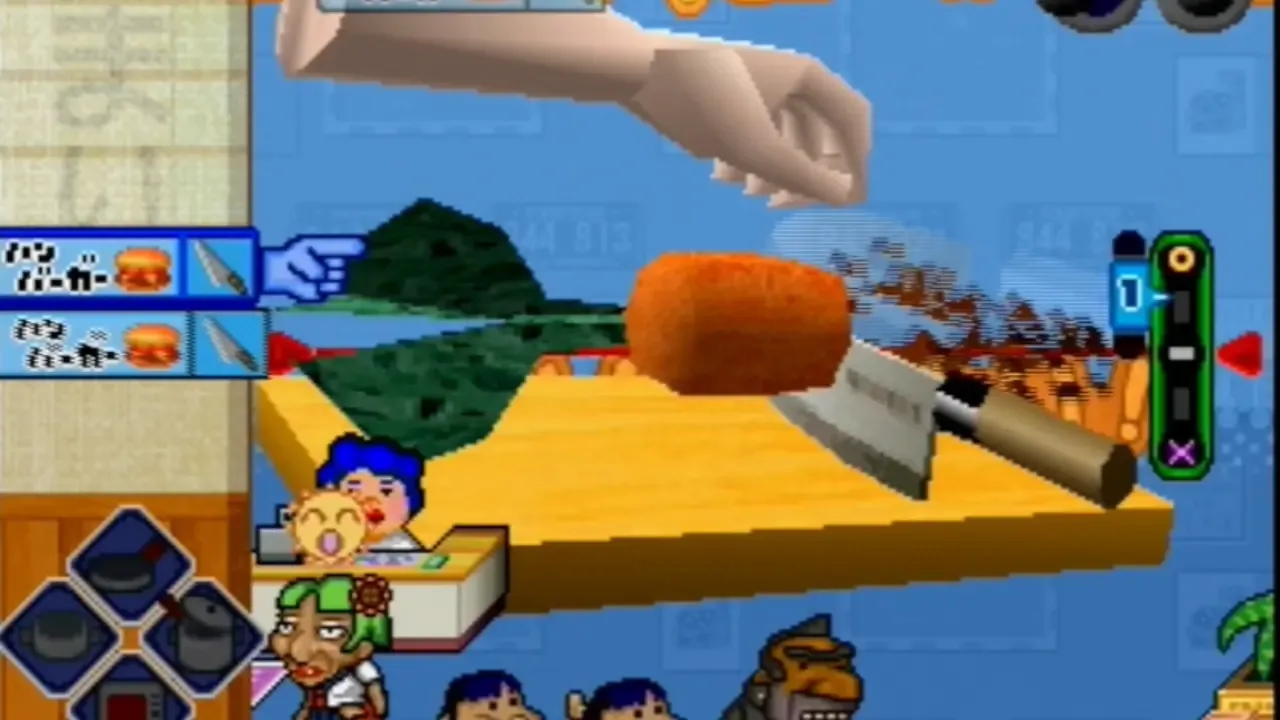
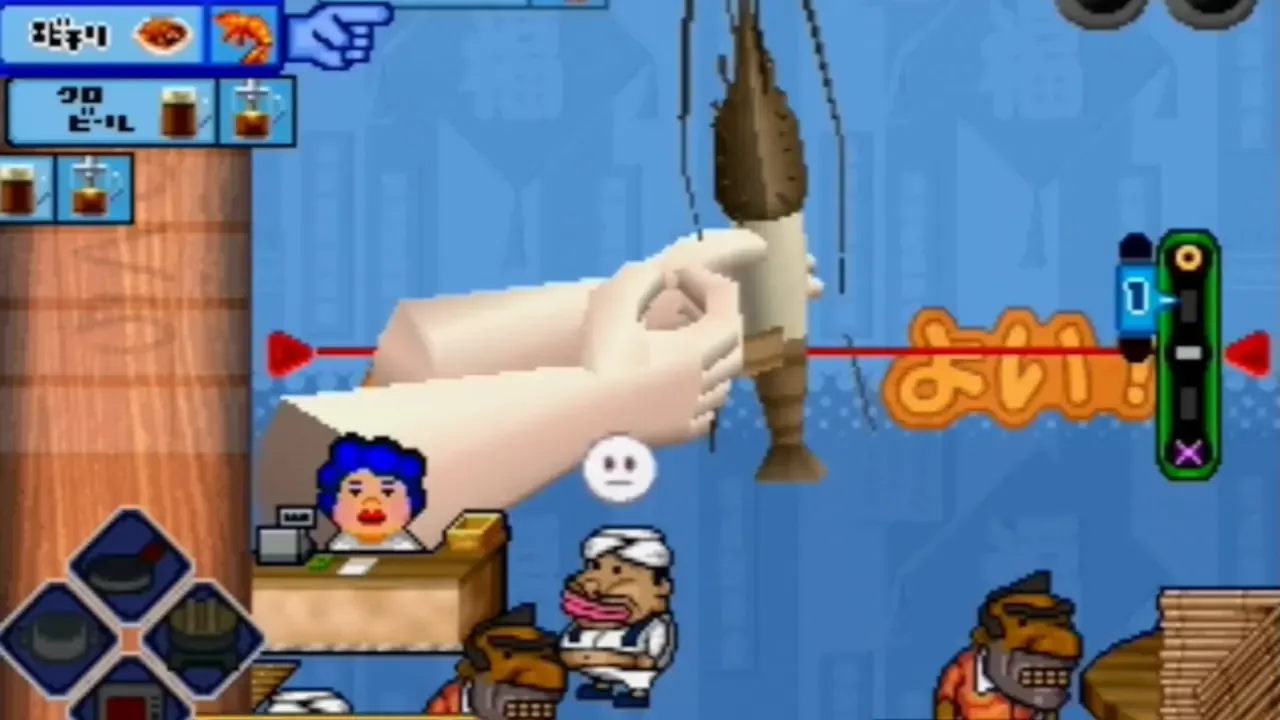
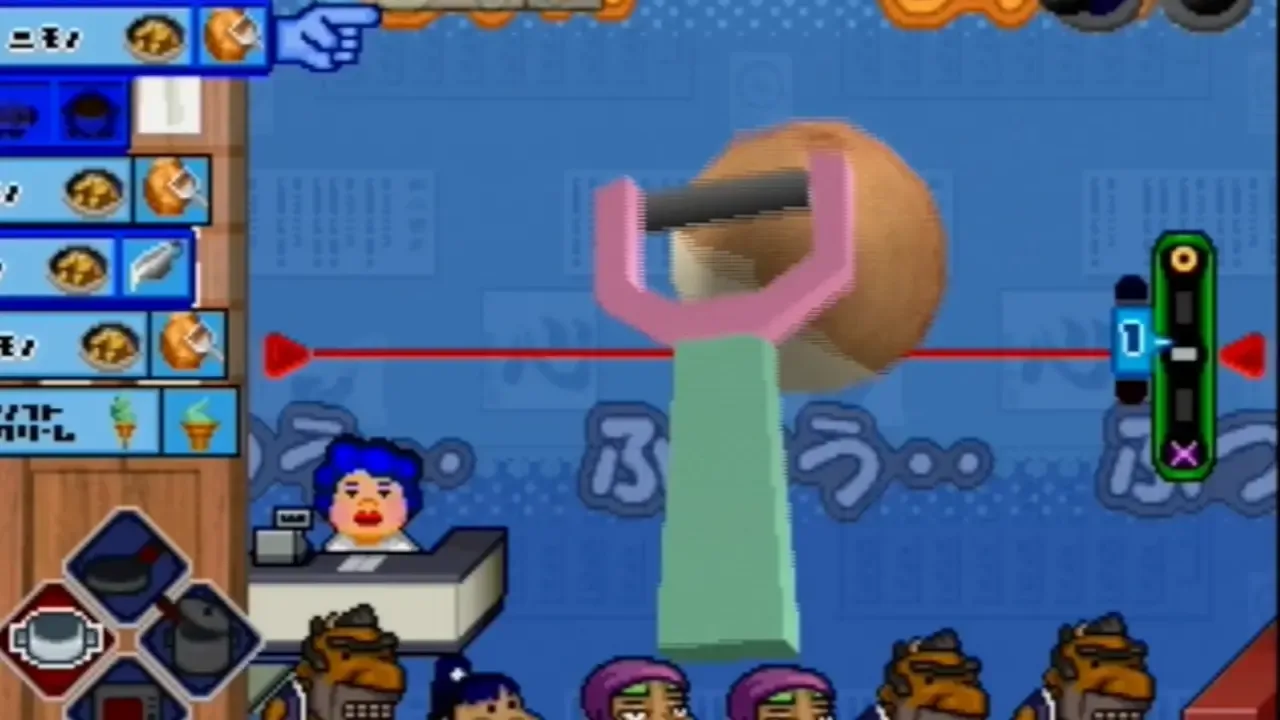
The Famires: Shijou Saikyou no Menu is a business simulator where you run your family restaurant, hire staff and design the layout to serve customers food.
A convenience store simulation game.
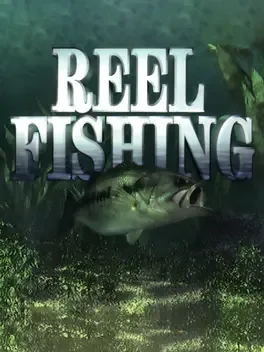
Reel Fishing is designed to create a realistic angling experience in the comfort of the gamer's living room. Strategy comes in choosing the right lure for the circumstance and it takes skill to hook the big ones and reel them in successfully. Underwater shots and "fish-eye" views of the lure offer a perspective on the sport that few ever see on an actual outing. Players can even take a "picture" of their prize catch before releasing it back into the virtual wild.
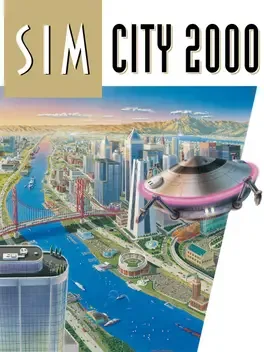
It has all the features, flexibility, art, animation, and power you need to create an environment of your dreams. Choose from a selection of bonus cities and scenarios to rule or ruin as you please. Build schools, libraries, hospitals, zoos, prisons, power plants, and much more... Lay down roads, railways, and highways. Explore the underground layer and build subways and utilities without compromising your aesthetics. Customize different buildings or design your own graphics sets from scratch. This is the ultimate classic Maxis city-building and management simulation. If this game were any more realistic, it'd be illegal to turn it off!

Devil Dice is a unique puzzle game, where the player controls a small devil that runs around a grid covered in large dice. The player can both stand atop dice, and stand on the ground (with the dice towering above). When standing on the dice, the player can move from die to die, or can roll a die in the direction he or she runs, revealing a different face as the die rotates. Creating a group of adjacent dice with identical pips—the size of which must be at least the number of pips—causes those dice to slowly sink into the field before disappearing. Chain reactions are possible by adding additional dice to a sinking set. Different types of dice are available in some modes, with different properties to make the game more challenging. It was originally created by developer Shift on the "homebrew" Yaroze platform, and later turned into a commercial game. Released in 1998, it is one of only a handful of games to make the leap from the Yaroze to commercial release. The game is a million-seller and a demo version was released as a PlayStation Classic game for the PlayStation 3 and PlayStation Portable on November 7, 2007.

R4: Ridge Racer Type 4 is the fourth game in the Ridge Racer series. It includes eight tracks (with reverse variants, for a total of 16 layouts) and 321 vehicles, all of which are fictional. This iteration was one of the first PlayStation titles to feature Gouraud shading on polygons, giving the game a visual depth that was previously missing. It was also the first Ridge Racer game on the system to feature two-player split-screen mode and offered two different driving models.
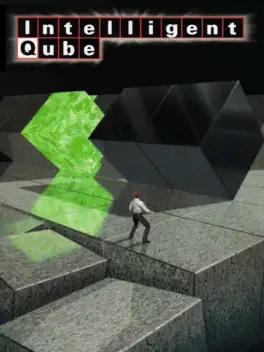
Intelligent Qube is a puzzle game for the PlayStation. In the game, the player controls a character who must run around a platform made of cubes, clearing certain cubes as they approach. Cubes are "cleared" by marking a spot on the stage, waiting for the cube to roll on top of it, and then deactivating the marked spot.