
Q*bert


Buy
Parent game
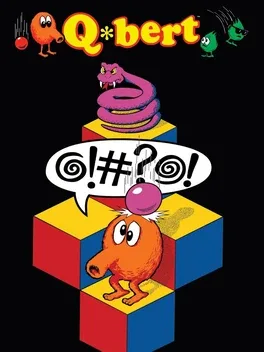
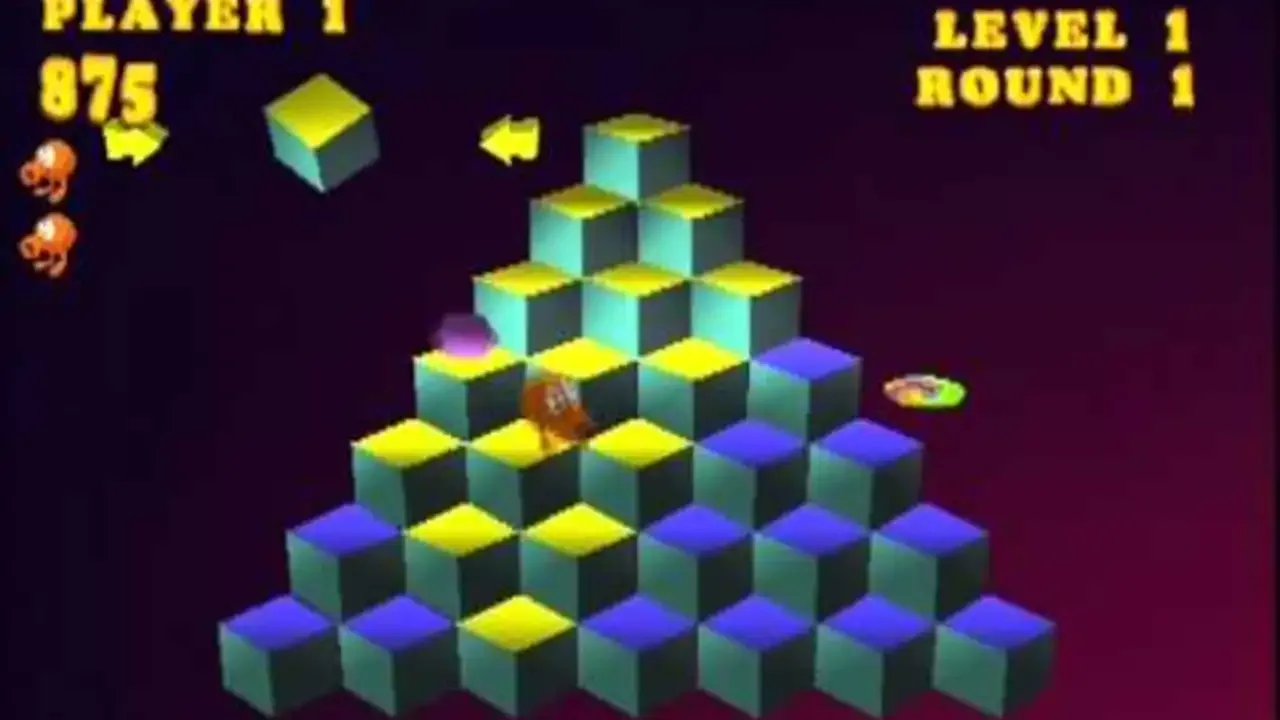
Q*bert was a popular arcade game that was released on a large number of consoles in the early 1980s. It was developed and published by Gottlieb, and became their most successful game. The concept serves as a precursor to the isometric platformer genre, where the title character must work to turn all cubes to a certain colour in a psuedo-3D world, made 3D through isometric graphics in the same way that the Penrose Stairs was made. The game was widely successful and has become a highly recognizable brand of the 1980s gaming era.
Part of collection:
Q*Bert
(last 3 games)
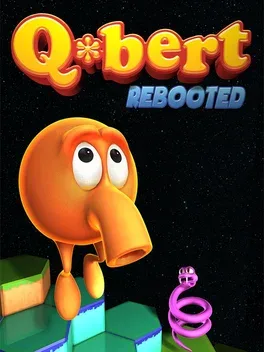
One of the most critically acclaimed and commercially successful arcade games of the 1980s is back in its Classic pixel perfect 2D form, and a re-imagined Reboot version with state of the art 3D game-play and graphics that remain faithful to the original concept.
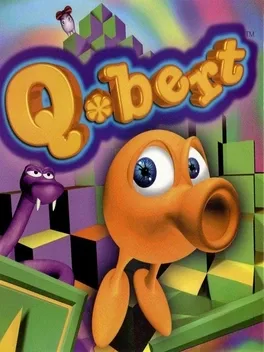
Will you master it or will it master you? Help Q*bert safely navigate his cube world by changing all the cubes to one colour whilst avoiding Coily the Snake and other enemies. Seem simple? Well don't underestimate the task of this challenging puzzle game that will test your skill and mental dexterity to the full. Special features include multiple power-ups, bonus rounds and hidden levels.
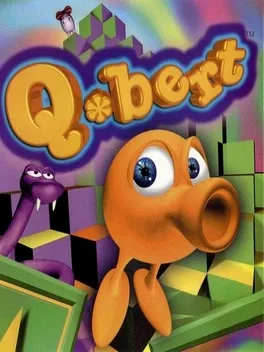
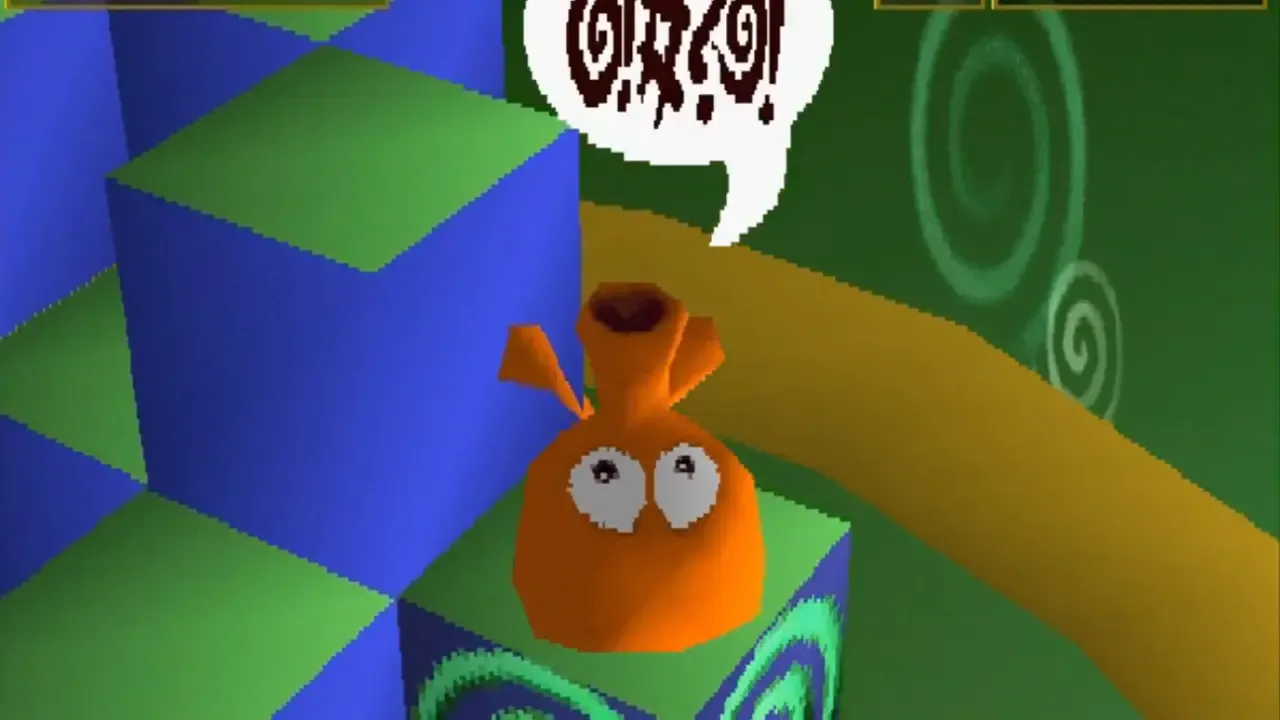
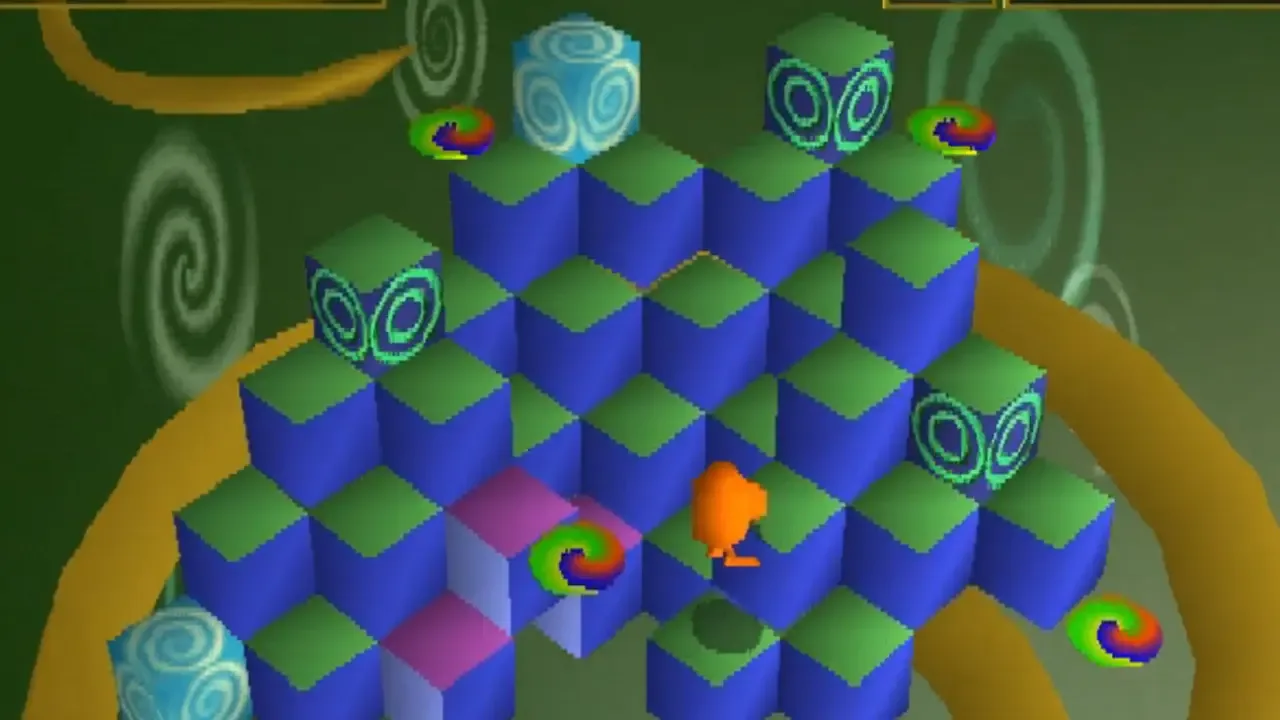
Q*bert is a remake of the arcade game of the same name with three-dimensional (3D) graphics. It was developed by Artech Studios and released by Hasbro Interactive on the PlayStation and PC in 1999 and on the Dreamcast in 2000. Q*bert has 3 modes of play. Classic is like the original Q*bert, and the graphics can be changed from Retro to Modern. The Adventure mode takes Q*bert to 3D dimensions, and contains power ups and all new characters set in 4 worlds. Head to Head is a multiplayer mode.
Could be interesting
Draw boxes to claim as much screen as possible without getting in the path of the "Qix" and "Sparx". Draw slower for more points and hope that you have enough coins. Simple but very addicting!
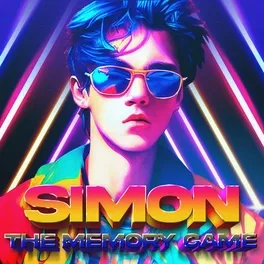
Remember that memory game with colors that used to drive you crazy?

Tropix 2! Quest for the Golden Banana, like its predecessor, is essentially a collection of mini-games, most of them implementations of well-known casual genre titles. The game is divided in islands, where the main monkey character and his animal friends live. Each island acts as a hub for three mini-games. On the main screen, the player has to buy plants, furniture, toys and other things to decorate the scenery and unlock a series of key items to move to the next island. These decorations are bought with gold coins, acquired after playing one of the mini-games: Cascade is a tile matching game, where the objective is to make matches of three or more of the same type by switching adjacent tiles in a grid filled with food. The food keeps falling after successful matches, to be promptly eaten at the bottom by some animal that acts as a level progress meter, crossing the screen towards a small flag. In the boss battles, the goal is to make matches as fast as possible, to throw food at the enemy before they clog all the cells in the grid; Coco Bowl is a bowling game with coconuts as the ball. The coco can be guided with the mouse while it is going through the lane. Some levels have special features, like ramps and other obstacles; Stone Stacker is a simple puzzle game, where the player must stack slabs on top of each other by matching their indentations at the top and bottom, creating a tall pillar at the left side of the screen. Special items, like a hammer and a wildcard stone, help to eliminate useless slabs and make matching easier; Ice Cream Parlour is a time management game, where a penguin must serve ice cream to a series of fellow penguin customers. Thought bubbles over the customers heads show pictures of the recipients and ingredients of their order, while stars below them show their satisfaction level. The player must click on several hotspots on the screen, guiding the penguin to pick up the correct recipient, give it to one of the lemur assistants ready to scoop or place one of the ingredients, and finally bring it back to the client before the patience meter runs out. An iguana acts as the trash can, swallowing badly served orders. The goal of each level is to profit a set amount of money within a time limit. A bonus game appears sometimes, where the player must move an ice cream cone at the bottom of the screen and pile up on it several balls scooped and thrown upwards by one of the lemurs; Pirates! is a shooting game. The player controls a cannon placed over a precarious raft in the middle of the sea, and the objective is to shoot any enemy on the screen before it reaches and destroys the raft. The raft can be repaired between levels on a separate underwater screen, where tetrominoes wood pieces have to be placed logically on its frame. Barrels carry new ammunition types, changing the power and range of the shots. A bonus game appears occasionally, where the cannon is used to feed dolphins; Fish Swap is a matching game, where the player has to swap fishes on a grid, creating large schools that escape the screen. A blowfish appears randomly on the grid, and acts as a power-up liberating several fishes at the same time; Water Words is a word creation game, similar to Bookworm and other titles. The objective is to make words by connecting adjacent letter tiles in a grid. Acceptable words have their score displayed over the submit button. A number of words are required to finish each level, displayed in a list at the right side of the screen; Puffer Popper is a marble popper game, where the player controls a crab moving sideways at the bottom of the screen, shooting bubbles at multicolored bubble strings trying to make matches of three or more of the same color to pop them. The lines twist around the screen, being pushed towards a sand castle by a blowfish. If several bubbles get inside the castle, the game is over.

The player guides Zippy, an X-shaped sprite, around a maze, viewed top-down, with solid walls, hazards and collectable rewards. The view of the maze scrolls randomly right, left, up or down. The object is for the player to survive for a period of time without making contact with either an edge of the playing area, represented as a brick walls, or hazards including water and spikes, all of which lose a life. If the player survives they receive a score bonus for completing the level and they proceed to the next level, which is a continuation of the maze, with less interval between scrolling steps and a shorter level duration. The first level lasts about two minutes, and by the seventh and final level this is down to about forty seconds. Points are awarded for collecting plums and clumps of grass, some of which are invisible. Completing a level of the game triggers a voice saying "Yippee!". On the ZX Spectrum release this was remarkable due to it overcoming the Spectrum's rudimentary sound capabilities. It was a very early use of digitized speech sound effects in home computer games.
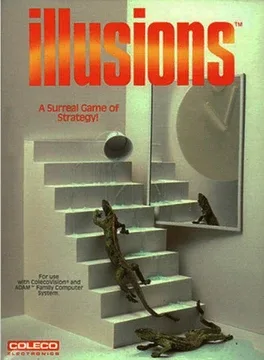
Illusions is a surreal ColecoVision video game in which the player maneuvers blobs around the screen, trying to get them to merge, or, alternatively, split apart. At times, lizards may chase the blobs around. The water bucket, when spilled, can cause the lizard to turn into a fish. If the fish remains there too long, however, it turns into a bird. The game was created by Nice Ideas, a division of Mattel that was located midway between Cannes and Nice.
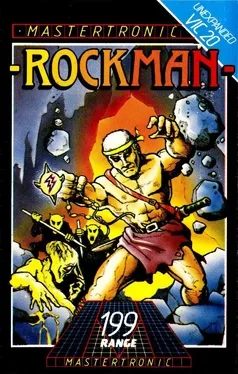
Despite the same title, cover artwork and publisher the VIC-20 and Commodore 16/Plus4 versions are a different game than the one released for the ZX Spectrum.
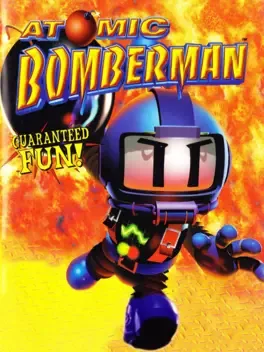
Think you're smarter than the collective intelligence of 9 other bombers throwing bombs faster than your mind can comprehend? Try your hand at this fast paced classic from the 90's with up to 10 players filled with mayhem and blown up body parts. Bombs Away!
Enter the arena and face the other holes in a fierce battle. Eat everything in sight with your black hole and expand it to eat more! Show them who is the biggest hole in town!
An evil planet named Meteo is sending storms of world-ending meteors across the galaxy, and only your puzzle skills can stop them. As blocks drop down on the lower screen, you must use the DS's stylus to match up blocks of the same color. Once you have enough blocks connected, they'll shoot back into the sky to form planets on the upper screen.
Hazumi is simple and elegant. To play the game, use only left/right buttons on dpad (or swing circle pad accordingly).