
RPG Maker VX


Buy
Part of collection:
RPG Maker VX
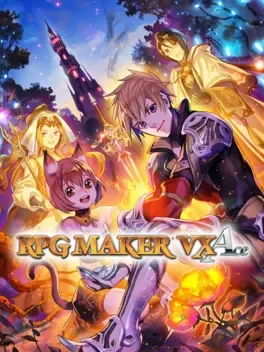
RPG Maker VX Ace is the latest and greatest engine in the RPG Maker series, improving on every aspect of creating your very own epic adventure. The most powerful editor yet, Ace supports multiple tilesets, offers full control over autoshadow and has a very flexible features system.
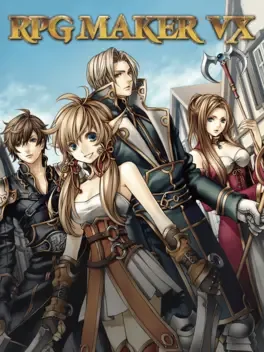
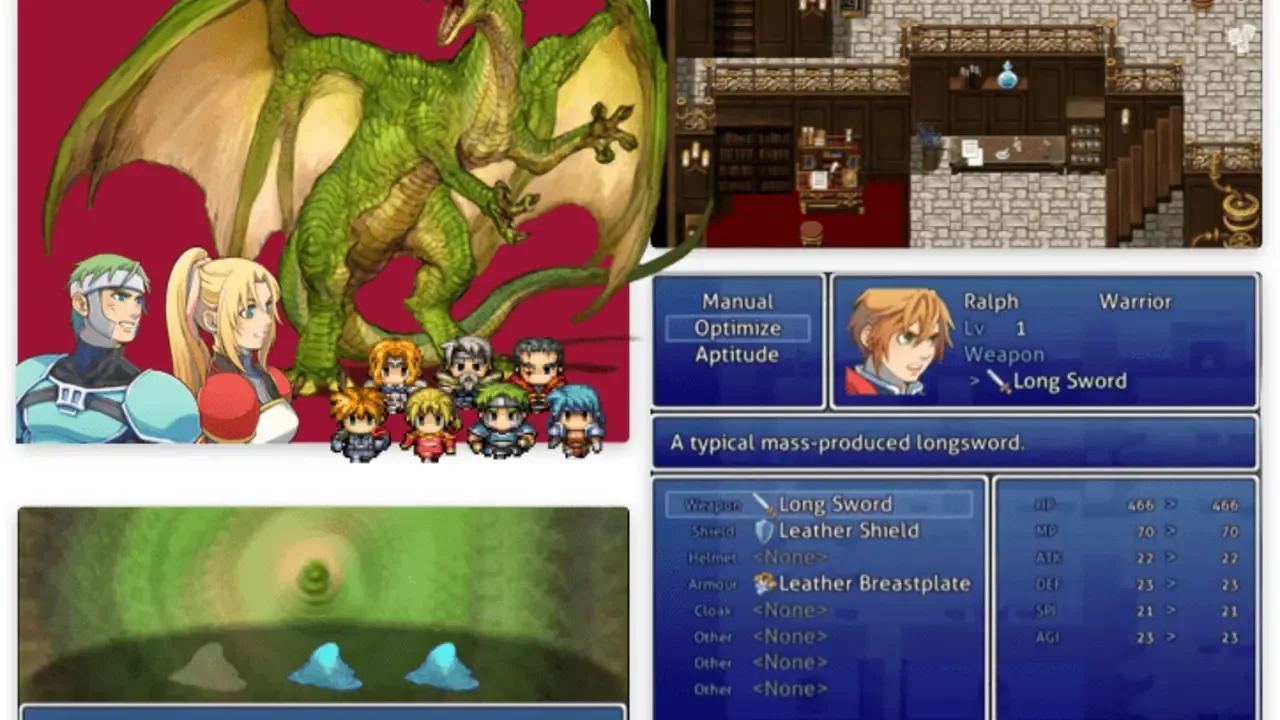
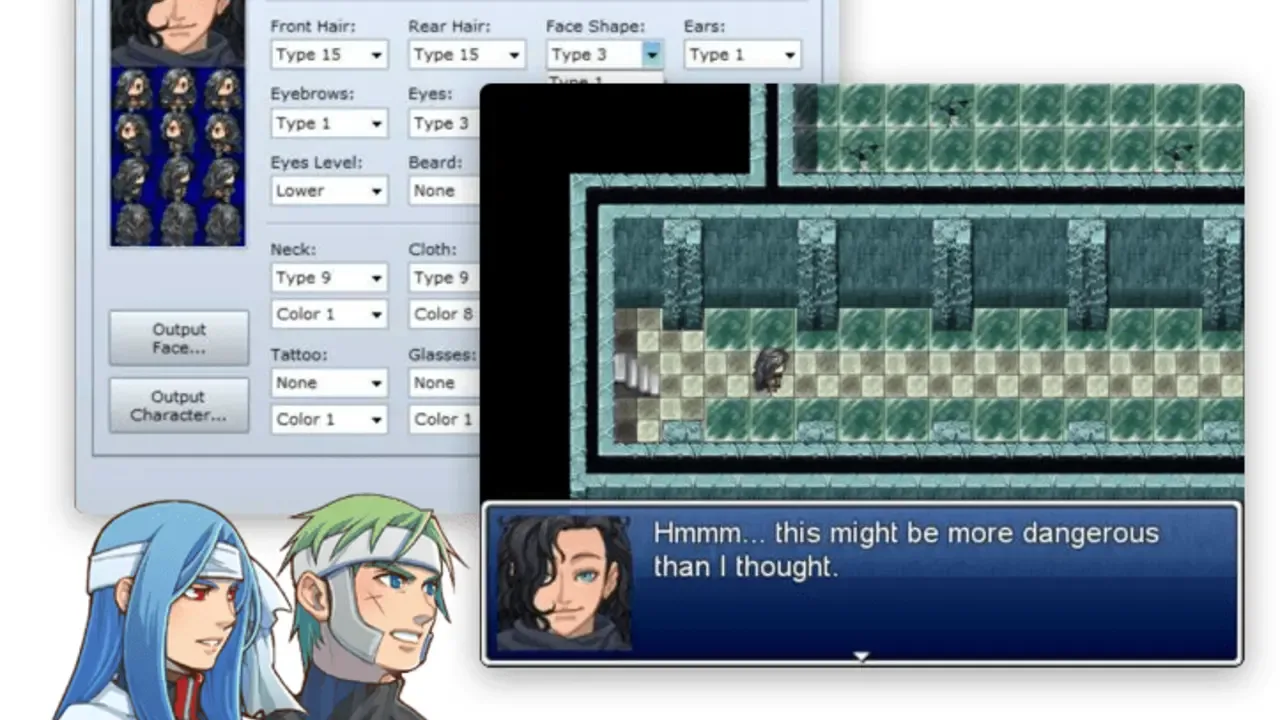
RPG Maker VX is a tool for Windows which allows you to design and play your own RPG. It requires no programming knowledge and allows the designer to create their own tilesets, character sprites, and scripts.
Part of collection:
RPG Maker
(last 3 games)
You want to create an RPG, but every game making tool you have found was either too complex or too limited? RPG Maker MZ empowers you with simple tools to create your RPG right out of the box, yet is customizable enough to make the exact RPG you want!
"Are you ready to become a game developer? Create the RPG you always dreamed of with RPG Maker Fes! RPG Maker Fes is a game creation software that lets you create your own RPGs, at anytime and anywhere, on the Nintendo 3DS system without any programming knowledge. Moreover, all your completed RPGs can be uploaded and then downloaded to be played by other Nintendo 3DS users for free! In order to download and play other users' creations, please visit the Nintendo eShop and download the free software RPG Maker Player."
POWERFUL enough for a developer SIMPLE enough for a child VERSATILE enough for any platform! RPG MAKER MV allows you to make the RPG of your dreams! This latest version includes a host of new features and export options for MacOSX, Android, and iPhone!
Could be interesting
This game is the sixth numbered entry, and the second one for the PlayStation 2, of the role-playing game construction kit. Assemble your own custom 3D RPG using a tile-based map editor, set events, quests, and story elements, and make it all come together in a coherent, enjoyable game. Select from thousands of different character graphics and magic effects, sound samples, and more.
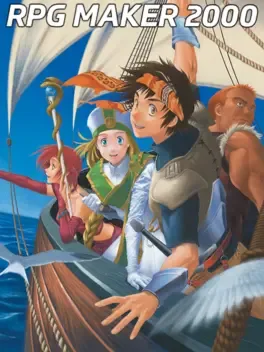
One of the most popular entries in ASCII's RPG Maker series, RPG Maker 2000 was largely responsible for popularizing the use of RPG creation software outside of Japan.
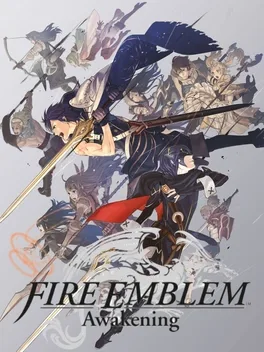
Armies clash as the world burns. As an inevitable war draws ever closer, you must stand with Chrom and his forces--knights, mages, archers, and more--commanding them against the armies of kingdoms, empires, and the dead themselves. Plan your strategery. Move your troops on the battlefield, then choose their weapon and attack. Using the new Pair Up and Dual systems, support your attacks with the help of nearby allies and watch their skills and relationships grow.
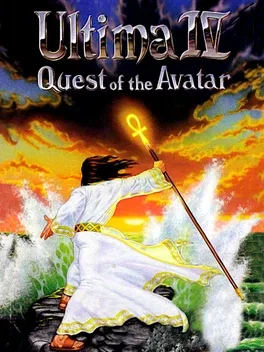
Following the defeat of the evil triad in the previous three Ultima games, the world of Sosaria changed beyond recognition: continents rose and sank, and new cities were built, heralding the advent of a different civilization. Unified by the reign of the benevolent monarch Lord British, the new world was renamed Britannia. Lord British wished to base people's well-being on the ethical principles of Truth, Love, and Courage, proclaiming the Eight Virtues (Honesty, Compassion, Valor, Justice, Sacrifice, Honor, Spirituality, and Humility) as the ideal everyone should strive for. The person who could accomplish full understanding and realization of these virtues would serve as a spiritual leader and a moral example for the inhabitants of Britannia; he alone would be able to obtain holy artifacts, descend into the Stygian Abyss, and access the Codex of Ultimate Wisdom. This person is the Avatar. The fourth game in the Ultima series features an improved game engine, with color graphics and enhanced character interaction: the player can have conversations with non-playable characters by typing names of various topics. However, the main difference between Ultima IV and its predecessors in the series (as well as other role-playing games) lies in the game's objectives and the ways to fulfill them. Instead of building up a character by any means possible in order to face a villain in the end of the game, in Ultima IV the player is trying to become the Avatar, a role model for people. This means upholding the Eight Virtues, basically trying to become a better person. Making morally conscious decisions and helping other people is not done expecting a material reward, but because it is the actual goal of the game and the main focus of its gameplay. The game frowns on behavior typical of most other RPGs, such as backstabbing fleeing enemies or picking up everything that isn't nailed down even if it does not belong to the protagonist. This different approach established the game's reputation as the first "true" Ultima, influencing the design philosophy of later installments and the overall spirit of the series. Character creation is done by choosing responses to morally ambiguous questions. Each of the Eight Virtues corresponds to a character class; by determining the player's personal priorities in the virtues, the game assigns a class and a starting location for the Avatar. After emerging in Britannia, the player is free to explore it in various ways (on foot, moongate teleportation, on horseback, by ship, etc.). Certain items must be collected in any order to enter the Stygian Abyss and complete the game. The Avatar also has to reach the highest level in all virtues. This is achieved by various means: donating blood increases Sacrifice, not fleeing from combat increases Valor, etc. The process, however, is not irreversible: should the Avatar overpay a blind seller, he gains Compassion points; should he, on the other hand, cheat the seller by underpaying, his level in several virtues would decrease. These unorthodox features of the game co-exist with plenty of traditional RPG elements, such as dungeons to explore and hostile monsters to kill. Enemies are encountered on the world map as well as in dungeons; combat takes place on separate top-down screens, allowing player-controlled and enemy parties freely move on them. Characters accumulate experience points and level up, gaining higher amount of hit points and access to stronger magic spells. Like in the previous installments of the series, world map, town exploration and combat are presented from a top-down view, while the dungeons are pseudo-3D and are explored from first-person perspective. Ultima IV also introduces several new gameplay features to the series and role-playing games in general. A number of initially non-playable characters living in various areas of the game world are able to to join the party and fight alongside the hero, replacing traditional player-generated characters or mercenaries and adventurers available only in special locations. Additional new elements include buying and combining reagents in order to cast spells, puzzle rooms in dungeons, and others.
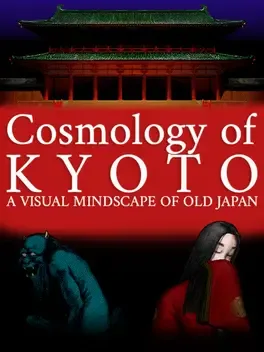
Cosmology of Kyoto is a visual novel adventure game developed by Softedge and published by Yano Electric. It was released for Japan in 1993, and then in North America, for the Macintosh in 1994 and then for the PC in 1995. It is a game where the player, from a first-person perspective, explores ancient Kyoto city during 10th-11th century Japan. The game lacks a clear goal, but is instead nonlinear and emphasizes open exploration, giving players the freedom to explore the city and discover many pathways, buildings, situations, stories and secrets. The game deals with historical, horror, religious and educational themes, and features karma and reincarnation gameplay mechanics. Released on CD-ROM, the dialogues in the game are fully voiced in Japanese, with English subtitles in the localized North American version. The game was not a commercial success, but was critically acclaimed and attracted a cult following. The game is set in the medieval city of Kyoto around the year 1000, during the Heian period of Japanese history. The game lacks an overall plot, but it instead presents fragmented narratives in a non-linear manner, as the player character encounters various non-player characters while wandering the city. These narratives are cross-referenced to an encyclopedia, providing background information as the narratives progress and as the player comes across various characters and locations, with various stories and related information appearing at distinct locations.[9] Many of the characters in the game are based on real-life characters from the city and their appearances in the game are often loosely based on tales from the Konjaku Monogatarishū. The game deals with religion and philosophy, particularly Buddhism and Buddhist philosophy, as well as myth and legend.
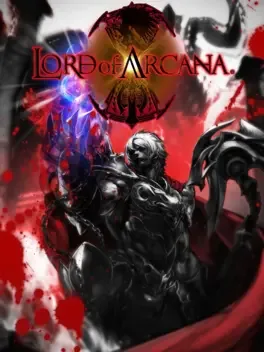
Lord of Arcana is an all-new brutal action role-playing game from Square Enix for the PSP (PlayStation Portable) system. Dive into a world filled with vibrant visuals and non-stop multiplayer action in this new brutally visceral action RPG game Multiplayer gameplay available for up to four players, allowing you to team up with friends to slay tough monsters and battles together. The stunning monster artwork in the game has been designed in collaboration with many well-known illustrators who have been successful both abroad and in Japan, including some renowned Square Enix staff. With incredible visuals and non-stop action, mixed with great multiplayer co-op and creatures designed by a variety of world-famous illustrators, LORD OF ARCANA is not to be missed when it comes to the PSP system.
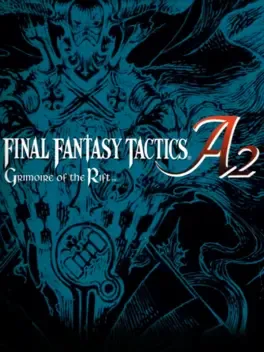
School is out for the summer, but mischievous Luso Clemens must first face detention to make up for his misbehavior. Alone in the library, he stumbles upon an ancient book with magical powers that summons him to the mystical land of Ivalice. Warped into the middle of a battlefield, Luso joins Cid and his clan to set off on an adventurous journey looking for a way home.
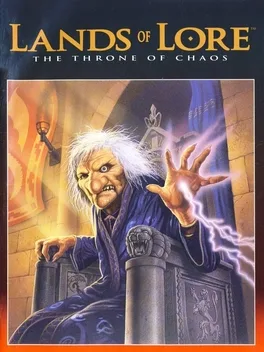
Lands of Lore: The Throne of Chaos takes you on an adventure: save the dying king and stop the evil sorceress Scotia’s Dark Army. Your band of heroes will travel through a vast fantasy word full of mysterious places, dangerous monsters, and hidden treasures in a quest to find a way to defeat the immortal evil enchantress and save the world.
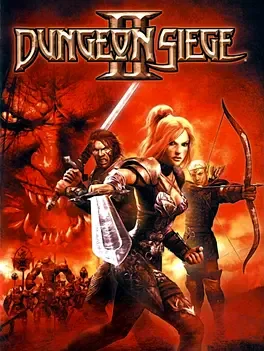
It’s been a generation since you vanquished the evil that plagued the Land of Ehb, and now…a new menace has awakened. In Dungeon Siege II, the sequel to the best-selling RPG from Gas Powered Games, you will be called on to again wield sword and spell to save the world from a growing abomination many years in the making. A thousand years ago, the crusaders of Azunai crossed swords with the legions of Zaramoth in the final battle of a century-long rebellion. As the tyrannical god Zaramoth struck the final blow through Azunai’s trembling shield, the earth shook. In that moment, the forces of magic were unchained, and both armies were consumed in a brilliant cataclysm that stretched for leagues across the Plain of Tears. Only a scarred wasteland remained as final testament to the First Age of Man. And for a millennium, magic has continued to spread to the farthest corners of the world, freely flowing to any who would command it. But the tide of magic has begun to wane, heeding instead the call of an ancient legacy. From the Plain of Tears a new heir beckons, and with each day his strength grows. Consuming those who submit, eradicating those who resist. With none to oppose his ascendance, the circle will be complete, and an ancient age will begin anew. What fate will befall the Second Age of Man? The time for judgment is nigh.
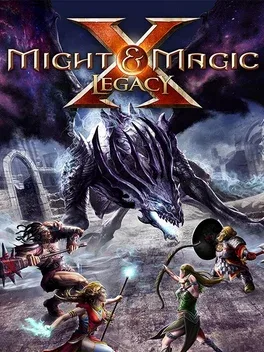
After a decade, a Might & Magic RPG is back with both the unique core formula and a new set of improved and fine-tuned features. In the wake of the spectacular events in Might & Magic Heroes VI, you will play in a party of four adventurers entangled in intrigue and political machinations unfolding in and around Karthal. The city, on the verge of secession, is prey to competing factions vying for its control. Your actions will determine the fate of the city. Might & Magic X Legacy is an authentic solo experience in the classic first-person RPG genre. Create and lead your group into an exciting open world and battle mythical powerful creatures while collecting ancient magical treasures!