
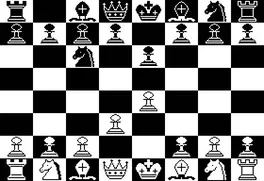
Sargon II
Buy
Part of collection:
Sargon
(last 3 games)
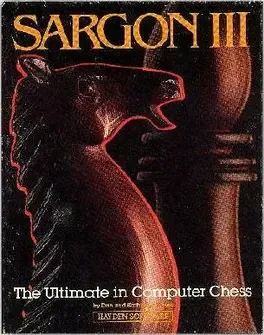
Third in a series of chess games.
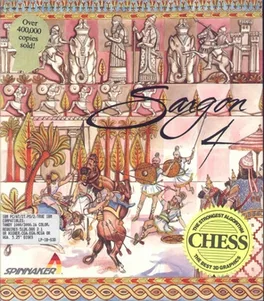
Origin The original SARGON was written by Dan and Kathleen 'Kathe' Spracklen in a Z80-based computer called Wavemate Jupiter III[1] using assembly language through TDL Macro Assembler. The name was originally written entirely in capitals because early computer operating systems such as CP/M did not support lower-case file names. Introduction SARGON was introduced at the 1978 West Coast Computer Faire where it won the first computer chess tournament held strictly for microcomputers, with a score of 5-0.[2][3] This success encouraged the authors to seek financial income by selling the program directly to customers. Since magnetic media were not widely available at the time, the authors placed an advert in Byte Magazine and mailed $15 photocopied listings that would work in any Z80-based microcomputer.[1] Availability of the source code allowed porting to other machines. For example, the March–April 1979 issue of Recreational Computing describes a project that converted Sargon to an 8080 program by using macros. Later the Spracklens were contacted by Hayden Books and a book was published.[4] Commercialization through electronic media When magnetic media publishing became widely available, a Navy Petty Officer, Paul Lohnes, ported Sargon to the TRS-80, altering both graphics, input, and housekeeping routines leaving the Spracklen's chess-playing algorithm intact. Paul consulted with the Spracklens, both living in San Diego at the time, to make the TRS-80 version an instant success with the help of Hayden Book's newly established software division: Hayden Software. Paul was not involved in further refinements to the TRS-80 version due to his reassignment to sea duty shortly after signing the deal with Hayden Software. In the early 1980s SARGON CHESS was ported to several earlier microcomputers, i.e. NASCOM (by Bits & PCs, 1981), Exidy Sorcerer, Sharp MZ 80K,[5] and many others. A complete rewrite was necessary later for the Apple II port, made by Kathleen's brother Gary Shannon. Both were published by Hayden Software. Sequels The Spracklens made significant improvements on the original program[1] and released Sargon II. In 1978 it tied for third at the ninth North American Computer Chess Championship despite being seeded ninth of 12 entries. Sargon finished only behind Belle and Chess 4.7, and defeated AWIT—running on a $5 million Amdahl mainframe—amazing the audience.[6][3][1] That year they published a series of articles in BYTE on computer chess programming,[2][7] stating "we think it would be nice if not everyone had to reinvent the wheel".[6] Sargon II was ported to a variety of personal computers popular in the early 1980s.[8] The game engine featured multiple levels of lookahead to make it more accessible to beginning chess players. BYTE in 1980 estimated that Sargon II had a 1500 rating at the highest tournament-time difficulty level, and speculated that it was the best chess program on sale, including dedicated devices.[9] Sargon 2.5, sold as a ROM module for the Chafitz Modular Game System, was identical to Sargon II but incorporated pondering.[10] It received a 1641 rating at the Paul Masson tournament in June–July 1979, and 1736 at the San Jose City College Open in January 1980.[3] Sargon 3.0 finished in seventh place at the October 1979 North American Computer Chess Championship. The competition had improved, but 3.0 drew against Cray Blitz and easily defeated Mychess, its main microcomputer rival. In December 3.0 easily won the second microcomputer championship in London.[3] In 1980, the Spracklens' Reversi game finished in first place at a computer tournament at Northwestern University, and in 1981 it finished in third place at the Santa Cruz Open Othello Tournament.[11] Sargon III was a complete rewrite from scratch. Instead of an exchange evaluator, this version used a capture search algorithm. Also included was a chess opening repertoire. This third version was written originally for the 6502 assembler and was commercially published by Hayden Software in 1983. Apple contacted the Spracklens and, after a port for 68000 assembly, Sargon III was the first third-party executable software for the Macintosh.[1] After the demise of Hayden Software, later chess programs were also released under the name Sargon, including Sargon IV (Spinnaker Software), Sargon V (Activision) and a CD-i title simply named Sargon Chess. The Spracklens concurrently wrote the engines for the dedicated chess computers produced by Fidelity Electronics, which won the first four World Microcomputer Chess Championships.
Could be interesting
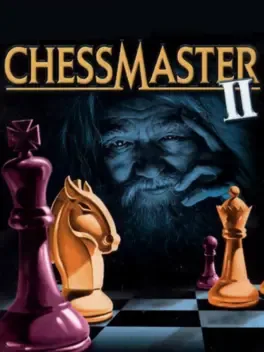
Choose from 24 animated chess sets, including Mycenae, Egyptian, Isle of Lewis, and Stanton in Chessmaster II, a chess strategy board game. Try to checkmate your friends, or challenge one of the 64 computer opponents (each with a different style of play and varying degrees of skill), or try to beat one of the 30 Grandmaster profiles. You'll never miss an opening in the 3D mode, since you can rotate the camera to any angle you want. Or, if you prefer, play on a flat 2D board. Chessmaster II brings the thrills and challenges of chess to life.
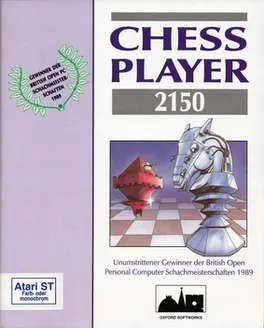
Chess Player 2150 is a chess program which played well against the other chess programs of the day and won the 1989 British Open Personal Computer Chess Championship (according to a post in ST Report International Online Magazine, November 13, 1992, No.8.45). The author was not shy about his program's prowess. Built into the program is a pull-down menu, giving it's performance against Chessmaster 2000, Chessmaster 2100 and Colossus X, in 10 games apiece. The game was designed to improve as it played, so over time a game that played against good players would be much better than when it first began. Users have the option of saving, so that the gained intelligence isn't lost.
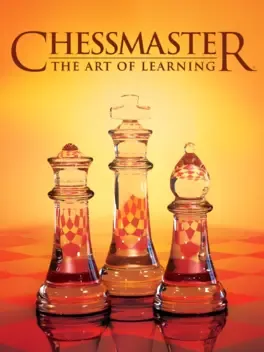
Chessmaster: The Art of Learning expands the scope of chess to include broader principles of learning. Josh Waitzkin's much-anticipated book The Art of Learning (Free Press) is designed to pave the road to successful long-term growth on and off the chessboard. The eight-time National Chess Champion and two-time martial arts World Champion puts users in his shoes in some of the most riveting and formative moments of his chess career, including the legendary climactic game from the book and film Searching for Bobby Fischer. Waitzkin then turns to the classics, introducing beginners to brilliant games from some of the most important players in the history of chess. In his most revealing commentary ever, Waitzkin not only teaches the beginning chess player the fundamentals of the game, but also humanizes the road to mastery. Never has chess been so exciting.
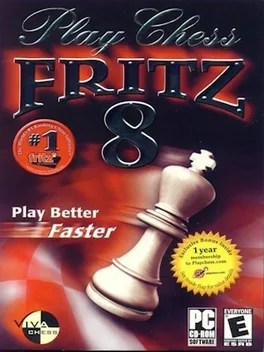
Third in a series of chess games.
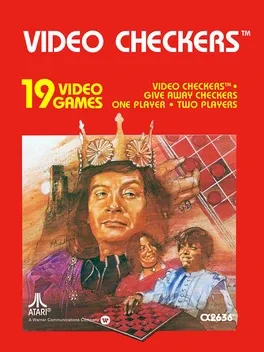
An early video game version of the game Checkers.
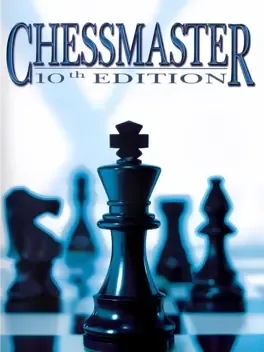
The 10th Edition is the first game in the series to feature a working online component and also the first PC version to feature animated chess sets and customizable interface.
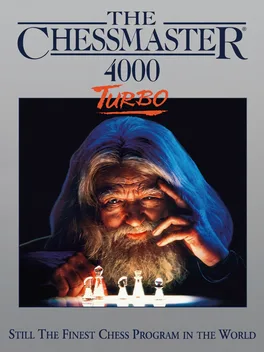
The first 32-bit title in the Chessmaster series, Chessmaster 4000 Turbo offers features designed around the processors of the time. Modem and LAN play is available for the first time. Boards are viewed in 2D or 3D, and include many custom sets, with game options selected from surrounding windows and drop-down menus. Entering moves is now easier - if you click on a square which only one of your pieces can move to, it will move there automatically. Full games (including 500 recreated real-life classics) can be analysed from an expert perspective, and a library of common opening move sequences is included. Computer players act in a variety of ability levels and play styles - some are prepared to play for a draw, others are focused on keeping the centre of the board tidy, and so on.
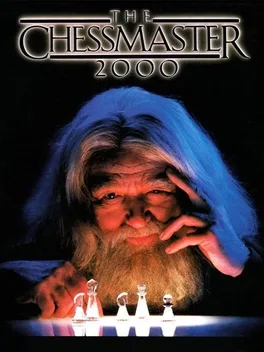
The Chessmaster 2000 is the most powerful computer chess program in the world today and the friendliest! It draws from a mammoth opening library of over 71,000 moves - the world's largest. In mid-game, it displays amazing combinations of classical and modern strategy. At end game it calls further upon the world's newest and finest computer chess algorithm to mount virtuoso tactics.
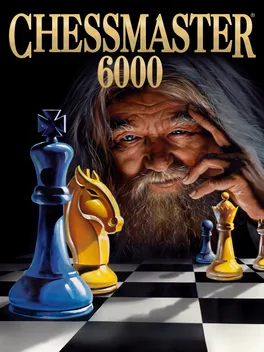
A Chessmaster game from 1998.