
Son Son


Buy
Part of collection:
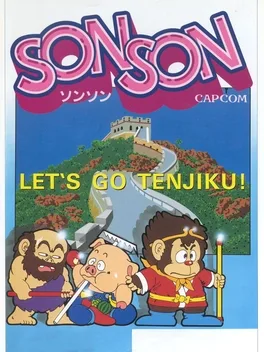
SonSon
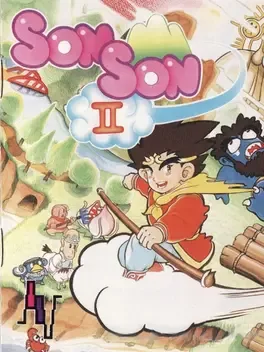
This platformer sequel to Son Son was only released on the PC Engine in Japan. Son Son 2 is the direct sequel to Son Son and features an interpretation of the Son Goku character from ancient Chinese novel Journey to the West. Unlike the first game, which played like a ground-based scrolling shoot-'em-up with several floors the character could switch between, Son Son II plays much more like a traditional platformer, specifically Wonder Boy and even more overtly Capcom's earlier arcade game Black Tiger. Son Son attacks with his extendable staff (based on Sun Wukong's Ruyi Jingu Bang weapon) and can defeat enemies to earn coins, which can be spent on upgrades and health refills. The player also needs to find a key on each stage before they can reach the boss. The goal of the game is to rescue the other members of his party: Xuanzang (Tripitaka), Pigsy and Sandy. They are kidnapped during the opening cutscene by the final boss, who is depicted as a mysterious silhouette. Son Son II is also one of the earliest Capcom games to use Zenny, their trademark fictional currency.
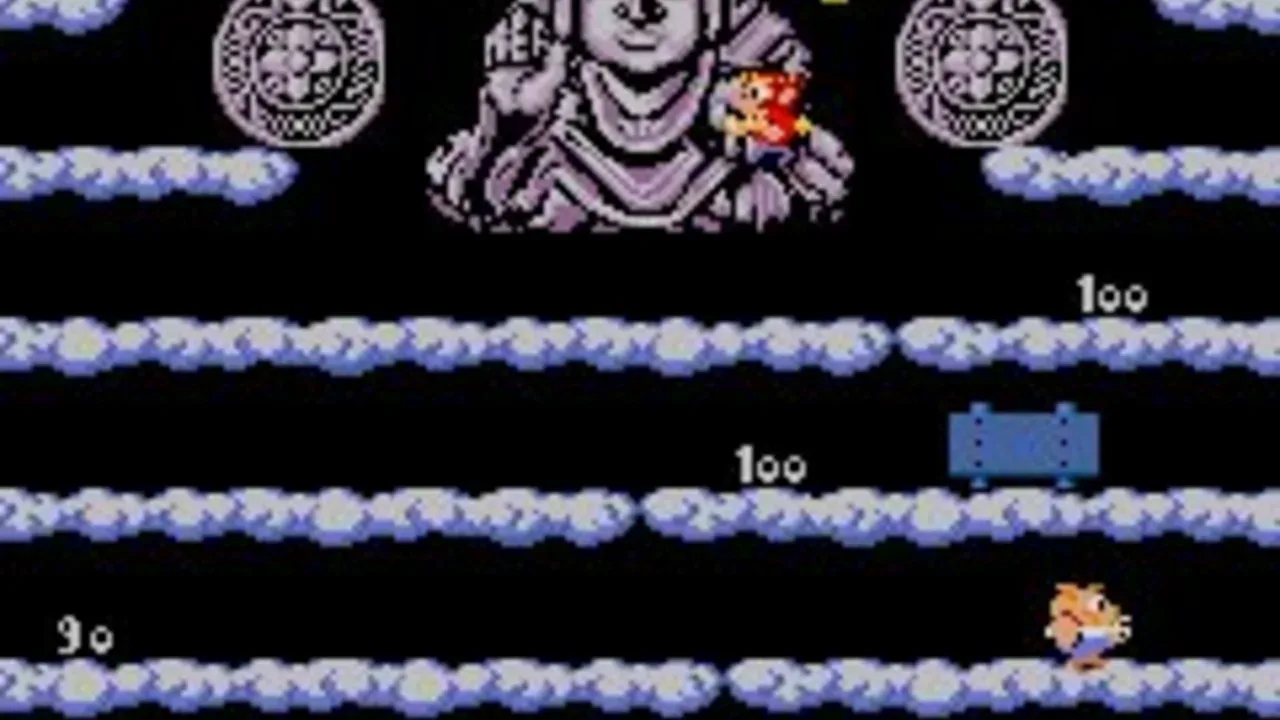
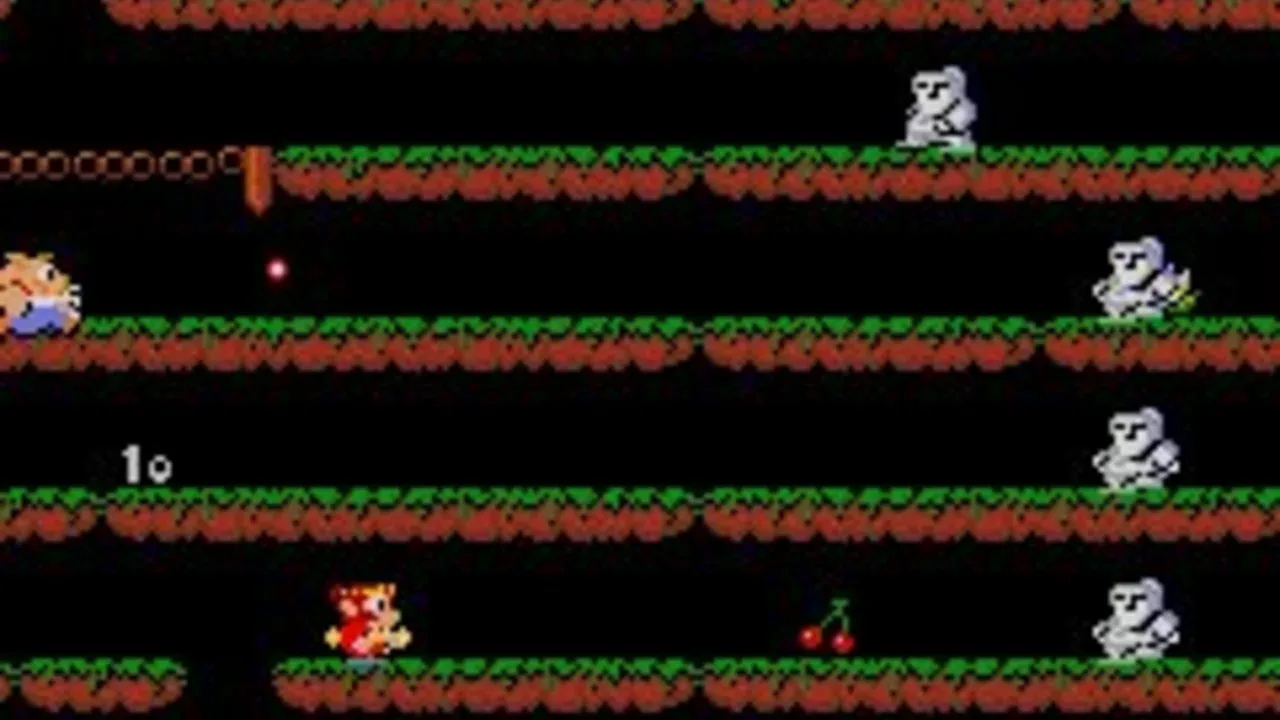
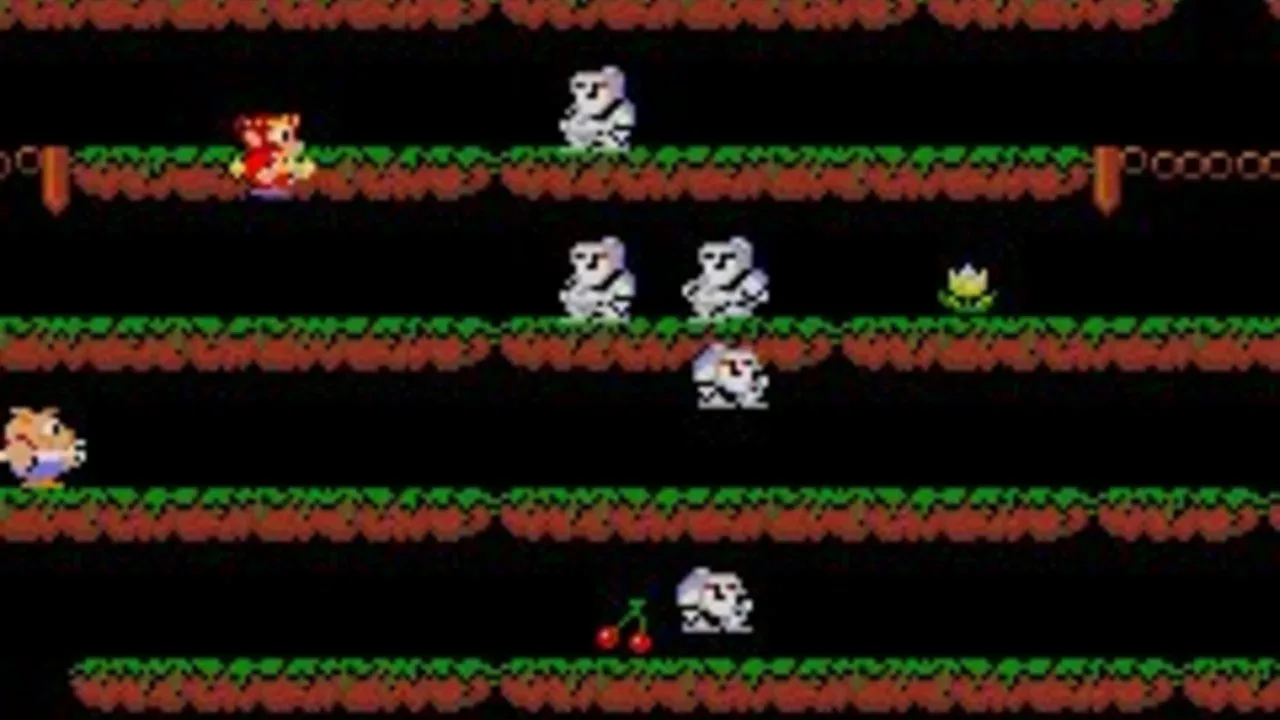
The game is a 2-D sidescrolling platformer. The screen scrolls automatically, only stopping to fight major enemies. The screen features six continuous platforms that occasionally feature small gaps. Sonson and Tonton walk automatically across these platforms. Pressing up or down will cause them to jump up or down to the next platform. Pressing left causes them to move more slowly than the screen scrolls, essentially continuing to move forward but at a reduced pace. Pressing right does the opposite - SonSon and TonTon will move across the platforms faster than the screen scrolls. The duo have only one attack - the ability to fire energy blasts from their stalves. Touching an enemy or an unfriendly projectile causes the player to lose a life. If a player has any additional lives, they will return to the screen riding on a cloud that will give them temporary invincibility. If the player presses the control stick in any direction, the cloud will disappear and the character will resume its usual walking mode. The cloud will eventually disappear on its own if the control stick is not used. Power-ups come in the form of various fruits which produce points (with enough points giving the player an extra life). Gathering certain fruit will cause all enemies currently on a screen to turn into point-bearing fruits. Walking across certain platforms will randomly cause a bamboo shoot to sprout, yielding many extra points. It is possible to play the game co-operatively with partner who plays as TonTon (who is Zhu Wuneng in the original story).
Could be interesting
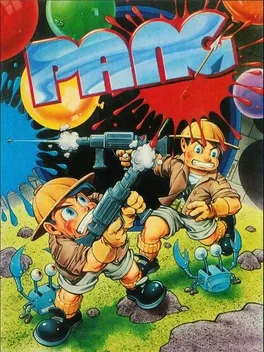
Pang, originally released in Japan as Pomping World and in North America as Buster Bros., is a 1989 arcade action game developed by Mitchell Corporation. Its core gameplay is similar to the 1983 Japanese MSX game Cannon Ball, also released that year for the ZX Spectrum as Bubble Buster. Players embark on a round-the-world quest to destroy bouncing balloons that are threatening landmarks and cities across the globe. The game features 50 stages set in 17 locations, including Mt. Fuji, Mt. Keirin, the Temple of the Emerald Buddha, Angkor Wat, Ayers Rock, the Taj Mahal, Leningrad, Paris, London, Barcelona, Athens, Egypt, Kenya, New York, Maya ruins, Antarctica, and Easter Island. Later versions added additional locations. Each stage includes a background depicting local landmarks, along with a unique arrangement of blocks, some destructible, some permanent, and some hidden with bonus items. Stages begin with balloons of various sizes; the largest balloons split into smaller ones three times before disappearing after the fourth hit. Players start with a single harpoon, though special weapons can drop when balloons are popped. At certain points, food items worth bonus points may also appear. Contact with any balloon results in the loss of a life. In two-player mode, if both players touch a balloon at the same time, only Player 1 loses a life. Similarly, when both reach a bonus or weapon simultaneously, only Player 1 collects it. Players begin with three to five lives depending on dip switch settings, with extra lives awarded upon reaching specific score thresholds. A stage is cleared when all balloons are destroyed, and the game concludes after all stages are completed, ending with the heroes driving their jeep into the sunset on an Easter Island beach.
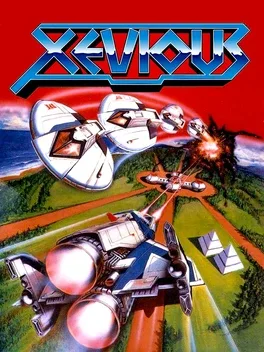
It's a nightmare, but it's true! Research shows that we are the actual aliens on Earth, and the ruthless Xevions are the original inhabitants. Now the Xevions want Earth back -- minus humans! Their invasion forces are fierce -- the land is crawling with deadly Domogram Rovers; the sky is black with Toroid Patrol Fleets and Zoshi Death Squads. Our puny weapons offer no defense. Earth's only hope is our powerful new Solvalou Fighter Plane. Its pilot will have a single mission: Penetrate the enemy ranks and destroy the Xevious Mother Ship. The mission is dangerous. We can't guarantee success. But at this point, it's do or die! One small problem. We still need a pilot. Any volunteers?
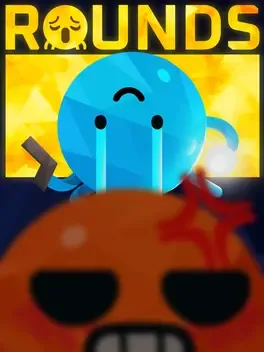
Rounds is a 1v1 rogue-lite shooter where each round gets more intense. The losing player of each round unlocks clever upgrades to create a better build to counter their opponent.
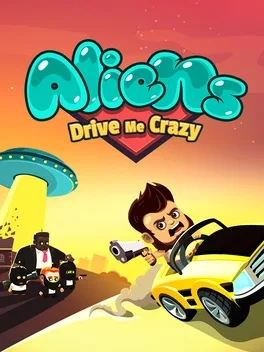
The few Alien Spaceships have crept into earth's orbit with no warning. The loss of global satellite communications puts the world in danger. Survivors must fight using guerrilla tactics... Take control of your car and blast your way through the city to reach an alien's base! Defeat invaders and terrifying Bosses to get access to powerful weapons, cars and power-ups!
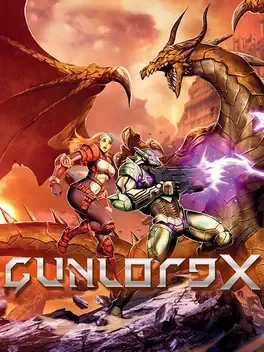
Gunlord X is a platformer action game with an emphasis on exploring huge worlds and blasting off enemies. This game features 9 stages of exciting 2D gameplay with over 45 unique enemy types. Blast yourself through giant landscapes, explore caverns and reveal all secrets!
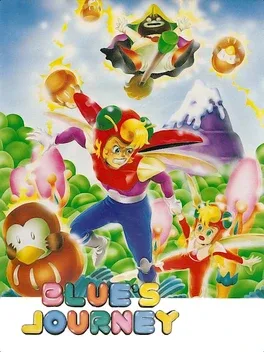
The planet Raguy was once a beautiful place, until the evil Daruma tribe invaded, bringing pollution that corrupted the land. You, as Blue, are a specialist of the Leaf Dump, and you love Princess Fa of the Raguy family. Unfortunately, Princess Fa has fallen sick from the pollution. It's your job to save your princess in Blue's Journey, a 2D side-scrolling platformer with RPG elements. Go through stages jumping on platforms and avoiding traps, while dealing with a multitude of bad guys, with a special bad guy boss at the end of every level to defeat with special means. To help with this, Blue can use a leaf attack and shrink. The leaf attack, only used when Blue is full sized, lets Blue slam a leaf that stuns any enemies he hits. Blue can also pick up power-ups for a more devastating leaf attack, or change his attack entirely. When the enemies are stunned, Blue can pick them up and throw them across the screen to dispose of more baddies. Shrunken down Blue can't use his attacking power, but he can fit into small crevasses and crannies not normally accessible. Of course, Blue can also dispatch enemies by jumping on them. Since Raguy's economy is flower based, Blue can collect flowers to buy things at special huts. But Blue must take care not to fall into traps or bottomless pits, which cause instant death. Being hit by bad guys or their shots is just as bad. Blue starts the game with two hearts, losing one when he gets whacked by a bad guy. When his heart count goes to zero, Blue dies. Play the game alone (as Blue), or with your friend (as a green Blue) for two-player simultaneous fun.
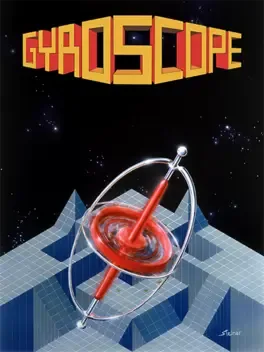
Gyroscope is based on the Atari arcade game Marble Madness, the gameplay is very similar except the player controls a spinning gyroscope rather than a marble. The game is presented in isometric 3D. The player must guide the gyroscope from the top of the course to the bottom within an allotted time limit. If the gyroscope topples off the edge, a life is lost. Hazards on the course include potholes, aliens and glass slopes which cause the gyroscope to spin in random directions. There are five courses comprising four screens each. The gyroscope had to land on a marked square to complete each level.
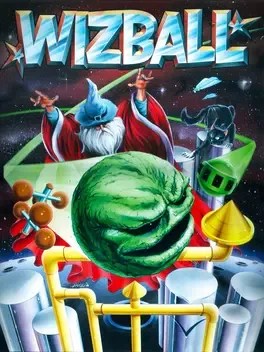
Wizball is a scrolling shooter in similar vein to Gradius with an additional collection dynamic. It is a horizontally scrolling game taking place over eight levels, which involves navigating around a landscape and shooting at sprites. However, the aim of the game is to collect droplets of coloured paint to colour the level. Each level starts off as monochromatic, drawn in three shades of grey, and needs three colours (red, blue, and green) to be collected to complete it. The player, a wizard who has taken the form of a green ball, can navigate between the levels through portals. At first the wizard only has access to the first three levels, but completing levels gains access to further levels. Each level has bouncing spheres of a different colours, and shooting them releases droplets, which may be collected. At the same time, each level needs a different colour to be added, which can be composed by collecting sufficient quantities of the correct colours. On later levels, the spheres of paint start shooting bullets, further adding to the challenge. The wizard himself is not capable of collecting paint droplets, and is initially capable of very limited movement, bouncing up and down at a fixed rate, with the player only controlling a speed of rotation, and thus how fast it will move horizontally after next touching the ground. Collecting green pearls (which appear when some sprites have been shot) gives the player tokens which can be used to "buy" enhancements, such as greater control over movement and improved firepower, and also a companion known as Catellite. Catellite (ostensibly the wizard's cat) is also spherical in form. It normally follows the wizard, but it can also be moved independently by holding down the fire button whilst moving the joystick (which also renders the wizard uncontrollable). Only Catellite is capable of collecting paint droplets; the player has to use it to do so. In the two-player mode, Catellite is controlled by the second player. As well as droplets of colours, sometimes droplets of other colours also appear, having various effects. These include: Light blue - causes a "filth raid", where a wave of fast-moving enemies appear, shooting bullets at the player. Grey - changes Catellite into an "Indestructacat", making it invulnerable to enemies. White - gives an extra life. Purple - changes Catellite into a "mutant cat", causing it to disobey the player's controls. Black - causes "freaky bits", turning most of the scenery black.
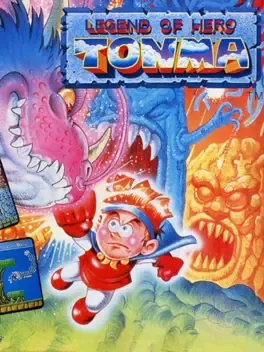
Legend of Hero Tonma is a side scrolling platform game released by Irem to arcades in 1989.
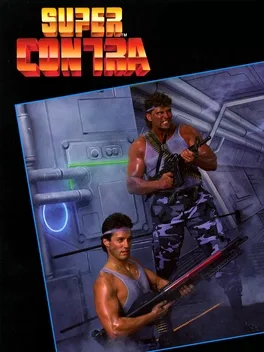
Super Contra is a Run and Gun-style action game produced by Konami, originally released as a coin-operated arcade game in 1988. It is the sequel to the original Contra and the second game in the Contra series released for the arcades. Like in the original game, the game centers on soldiers Bill Rizer and Lance Bean, who are once again assigned to protect the Earth from an army of alien invaders. The game features standard side-scrolling stages, as well as all new overhead stages in lieu of the original game's "3D" stages.