
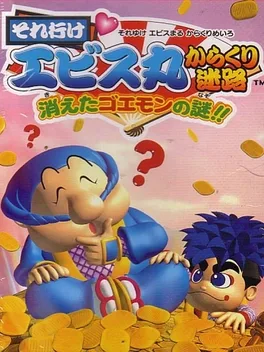
Soreyuke Ebisumaru: Karakuri Meiro - Kieta Goemon no Nazo
Buy
Part of collection:
Mystical Ninja
(last 3 games)
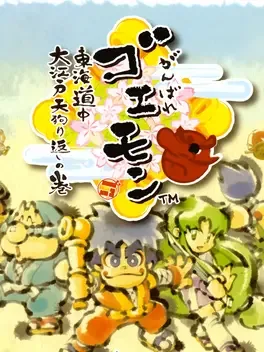
A Ganbare Goemon game released for the Nintendo DS on June 23, 2005 in Japan. Its release marked the revival of the series' medieval Japanese themes and quirky humor, as previous games had taken place in a futuristic setting or with a more serious tone.
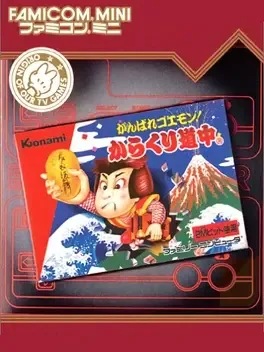
Famicom Mini: Ganbare Goemon! - Karakuri Douchuu is a Game Boy Advance video game released in 2004 by Nintendo. It is a remake of Konami's Famicom game Ganbare Goemon! Karakuri Douchuu, and little to no alterations were made on the game to stay faithful to the original title. The game was not released in America or Europe, and thus was exclusive to Japan. It was part of the Famicom Mini Series that re-released a variety of classic Famicom games for the Game Boy Advance.
Mini Kyodai Robo Goemon Compact is a role-playing game for mobile phones, part of the Ganbare Goemon series. It was published by Konami and released in May 7, 2003 exclusively in Japan.
Part of franchise:
Mystical Ninja
(last 3 games)
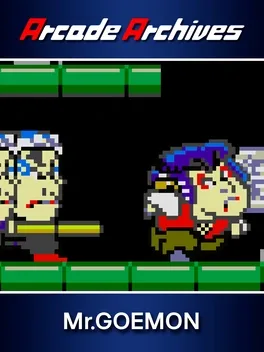
Arcade Archives: Mr. Goemon is a port of the action game Mr. Goemon. The player has to reach the goal by using various items while not getting caught by the enemies. This title is said to be the foundation of the Ganbare Goemon series which is the representative title for Konami at the time.
A Ganbare Goemon game released for the Nintendo DS on June 23, 2005 in Japan. Its release marked the revival of the series' medieval Japanese themes and quirky humor, as previous games had taken place in a futuristic setting or with a more serious tone.
Famicom Mini: Ganbare Goemon! - Karakuri Douchuu is a Game Boy Advance video game released in 2004 by Nintendo. It is a remake of Konami's Famicom game Ganbare Goemon! Karakuri Douchuu, and little to no alterations were made on the game to stay faithful to the original title. The game was not released in America or Europe, and thus was exclusive to Japan. It was part of the Famicom Mini Series that re-released a variety of classic Famicom games for the Game Boy Advance.
Could be interesting
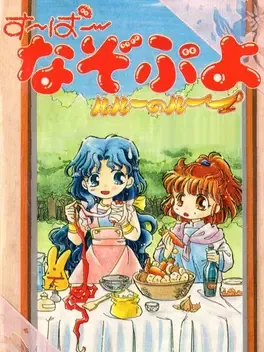
Super Nazo Puyo: Rulue no Roux is the sequel to Nazo Puyo: Arle no Roux. It was succeeded by Super Nazo Puyo Tsu: Rulue no Tetsuwan Hanjouki. A Nuisance Puyo variation known as Iron Puyo was introduced in this game. Super Nazo Puyo: Rulue no Roux uses the basic rules of Puyo Puyo. The game controls like a normal Puyo Puyo game with all five colors available and the ability to roate clockwise and counter clockwise, except the ability to double rotate and climb is not possible. Each puzzle gives the player different objectives to clear. The objectives range from clearing all of a specific color of Puyo, clearing all Nuisance Puyo, creating a specific chain length, clearing a certain amount of Puyo simultaneously, or simply clear the whole board. Every time the player fails to complete a puzzle, the player's health will deplete, as indicated by Arle or Rulue's expression gradually getting more distressed. If the player's health depletes completely, they'll receive a Game Over and can either choose to continue from the last save or quit back to the title. The player can recover completely if the gauges on the right side of the screen fills completely and rank up, with each cleared puzzle filling it gradually. On the pause menu, the player has the option to skip a puzzle at the cost of health. There are five game modes: Arle's Roux, Rulue's Roux, Road to Chains, Endless Puyo, and Editor. In the first three modes, the player must solve the presented tasks with a set of available Puyo. Arle's Roux focuses on a scenario with Arle, acting as the normal course with her puzzles only involving standard Puyo. Rulue's Roux is the mode that focuses on Rulue and acts as the expert mode, with her puzzles including Iron Puyo and Blocks. In both modes, the objective is to clear puzzle sets from varies characters within an area, with one character acting as a boss that cannot be challenged until the others are beaten. Once the boss of a given area is beaten, the player will progress to the next area. Road to Chains acts as a challenge mode where the player is given a series of puzzles to solve at a gradually increasing difficulty, with the player being unable to restore health. The Endless Puyo mode is a regular endless mode except that 6 next Puyo are shown instead of 1 next Puyo, and that nuisance Puyo will fall in the higher levels of difficulty. The Editor mode allows you to place Puyo freely in a manner similar to Practice Notebook in Puyo Puyo 7. You can also set a list of next Puyo and the task to be solved.
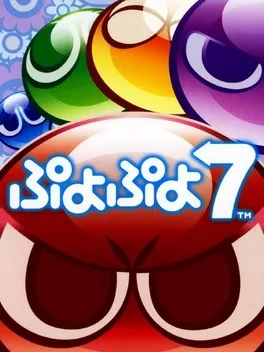
This is the 7th game in the main Puyo Puyo series, which is denoted by the 7. A break from the previous Fever series games, the game is set in a world similar to the real world instead of Primp Town. In this game, a new game mode known as Transformation was added as the default mode. Five new characters were introduced, and a few characters from past games in the series were reintroduced, either as playable characters or cameos.
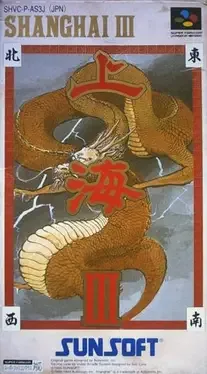
"Shanghai III" is a puzzle game released by SUNSOFT in 1993. This is the 3rd title of the standard puzzle game series that has gained a lot of popularity by adding new functions such as playing with an opponent.

Bust-A-Move (also known as Puzzle Bobble) is a real-time puzzle game in which the player controls a device called "pointer" at the bottom of the screen, aiming and releasing randomly colored bubbles upwards. Depending on the aiming, the bubbles may float up directly or bounce off the walls, changing their trajectory. The goal is to aim the bubbles in such a way that they will touch identically colored ones. When such bubbles form a group of three or more, they pop and disappear from the screen.
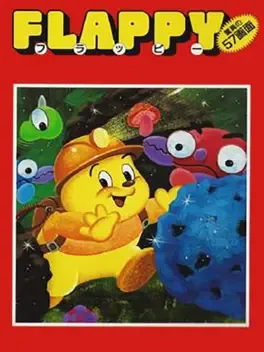
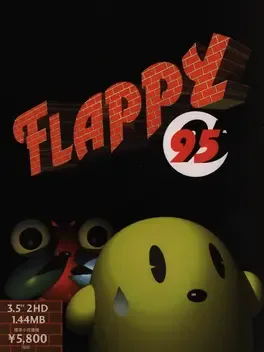
Flappy is a puzzle game by in the same vein as the Eggerland series and Sokoban that is obscure outside Japan. It features Flappy, a somewhat mole-like character who must complete each level by pushing a blue stone from its starting place to the blue tile destination.
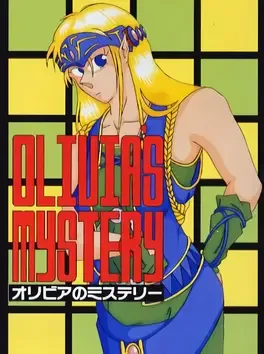
Olivia's Mystery is a Puzzle game, published by Altron, which was released in Japan in 1994.
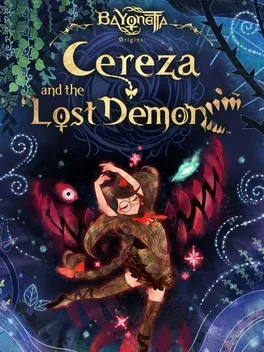
Long before this trainee of the dark arts would come to be called Bayonetta, she took a fateful journey into the forbidden Avalon Forest. Alongside her was Cheshire, her very first demon, possessing Cereza’s stuffed toy. Play as both Cereza and Cheshire and search through the treacherous forest to look for the power to save Cereza’s mother.

From the makers of Myst and Riven comes the next chapter of the Myst franchise. In Uru: Ages Beyond Myst, you'll journey through a variety of different ages and discover the lost civilization of the D'ni people. This time, you don't have to point and click to move around--you can explore each age in real-time 3D. Create your own character and spend hours discovering mysterious areas, solving a large variety of mind-challenging puzzles, and following an epic storyline.
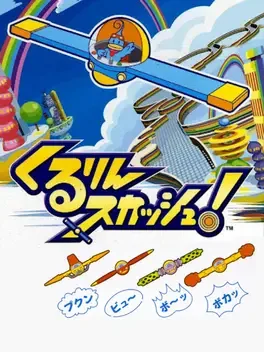
Kururin Squash! is an action-puzzle video game developed by Eighting and published by Nintendo. It was released only in Japan on October 14, 2004. The game is the successor to Kururin Paradise and is the only title of the Kururin series with 3D computer graphics.