
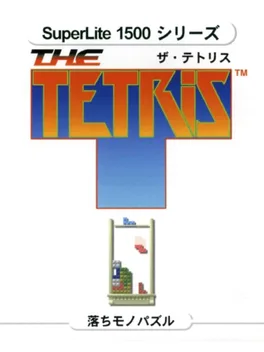
SuperLite 1500 series: The Tetris


Buy
Part of collection:
SuperLite 1500
(last 3 games)
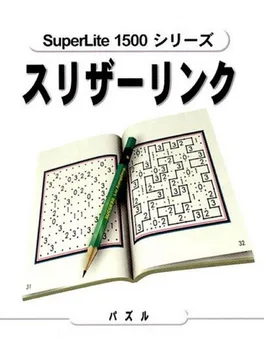
Slitherlink (also known as Fences, Takegaki, Loop the Loop, Loopy, Ouroboros, Suriza and Dotty Dilemma) is a logic puzzle developed by publisher Nikoli. Slitherlink is played on a rectangular lattice of dots. Some of the squares formed by the dots have numbers inside them. The objective is to connect horizontally and vertically adjacent dots so that the lines form a simple loop with no loose ends. In addition, the number inside a square represents how many of its four sides are segments in the loop. Other types of planar graphs can be used in lieu of the standard grid, with varying numbers of edges per vertex or vertices per polygon. These patterns include snowflake, Penrose, Laves and Altair tilings. These add complexity by varying the number of possible paths from an intersection, and/or the number of sides to each polygon; but similar rules apply to their solution. SuperLite 1500 Series - Slither Link is a puzzle game based on the Slitherlink logic puzzle featuring over 200 different stages.
A crossword is a word puzzle that normally takes the form of a square or rectangular grid of white and shaded squares. The goal is to fill the white squares with letters, forming words or phrases, by solving clues which lead to the answers. In languages that are written left-to-right, the answer words and phrases are placed in the grid from left to right and from top to bottom. The shaded squares are used to separate the words or phrases. Squares in which answers begin are usually numbered. The clues are then referred to by these numbers and a direction, for example, "4-Across" or "20-Down". At the end of the clue the total number of letters is sometimes given, depending on the style of puzzle and country of publication. Some crosswords will also indicate the number of words in a given answer, should there be more than one.
Popular collection of puzzle games will fill the picture will be completed based on the mass number of vertical and horizontal scratching puzzles first whenever visiting. The 200 questions included a wide range of offers from beginner to advanced, the size 10x10, 15x15, 20x20 sizes available 3. Configuration of the popular features button operation, and display position adjustment function, you can enjoy a comfortable play.
Part of franchise:
Tetris
(last 3 games)
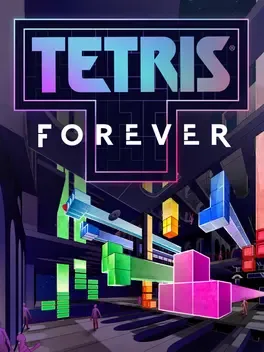
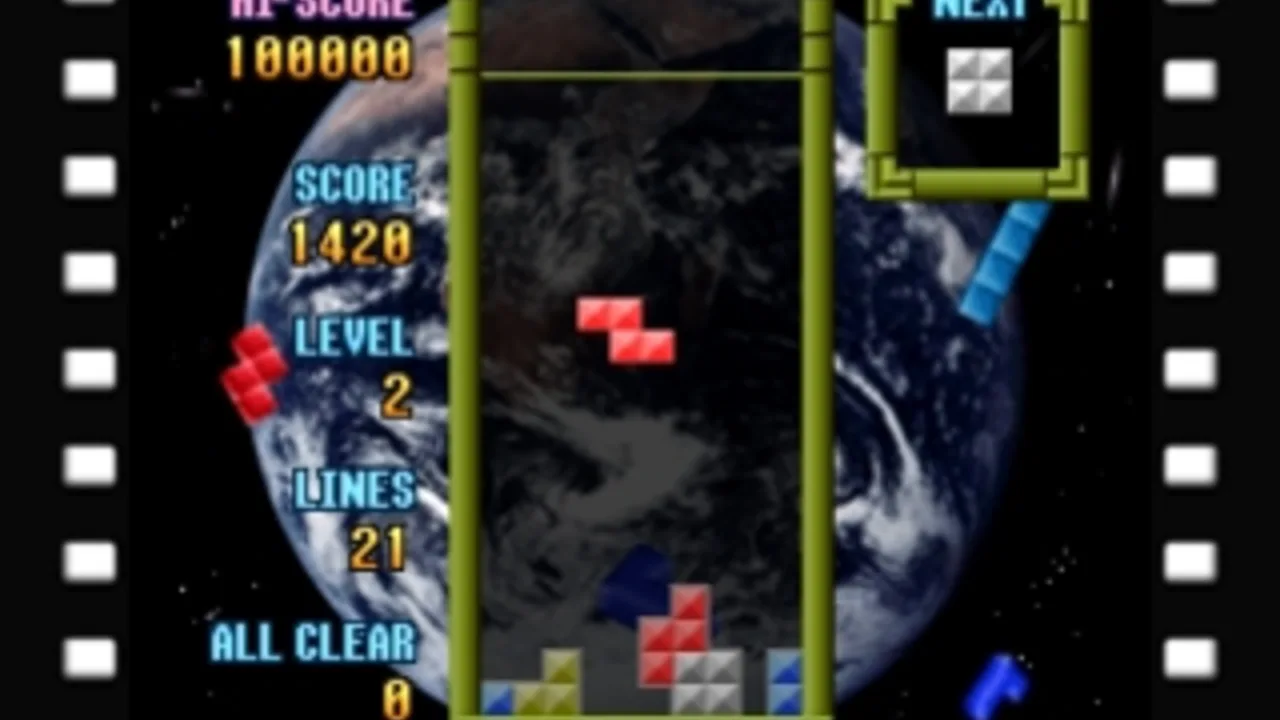
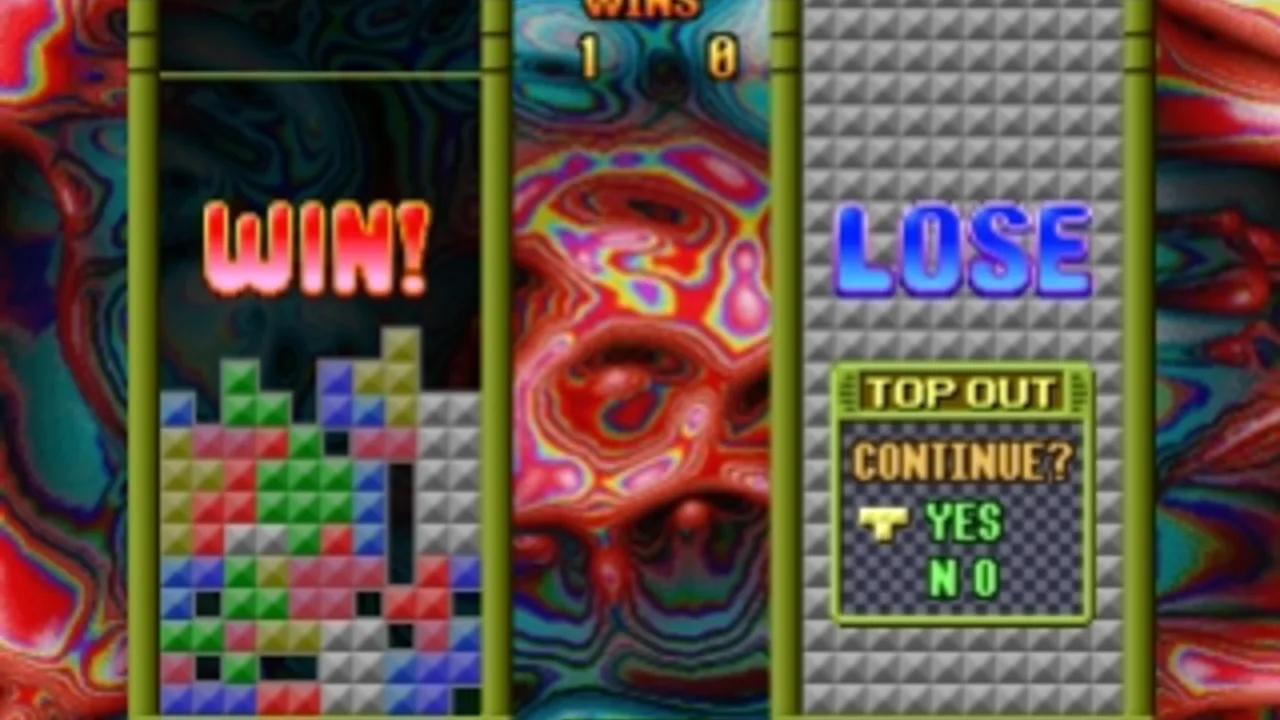
Tetris Forever celebrates the original, genre-inspiring puzzle game that escaped from behind the Iron Curtain, onto the world stage, and into our cultural consciousness. More than 15 playable classic games from the series' history are featured, including many being released for the first time outside Japan. Battle your friends in the multiplayer cult favorite Tetris Battle Gaiden, create massive explosions to clear lines in Super Bombliss, and see where it all began in 1984 with an accurate recreation of the first version of Tetris on the Electronika 60 computer.
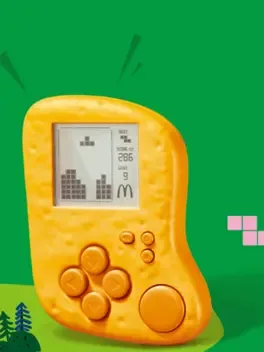
McDonald's Chicken McNugget Tetris is a handheld version of Tetris released in exclusively in China to celebrate the 40th anniversary of the Chicken McNugget.
Tetris E60 is web game released to promote the movie Tetris. It emulates the look of the original Tetris prototype for the Electronika 60 by Alexey Pajitnov.
Could be interesting
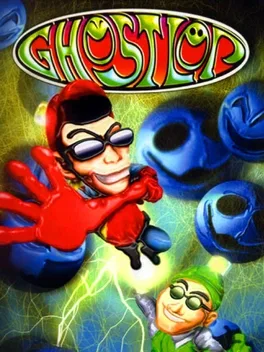
Ghostlop is an unreleased, head-to-head arcade style puzzle game featuring a unique mix of elements from Puzzle Bobble and Breakout, with a color-switching mechanic reminiscent of Silhouette Mirage and Ikaruga. It was in development by Data East and planned to be published by SNK for the Neo Geo MVS (arcade), Neo Geo AES (home) and Neo Geo CD. You aim shots the same way as in Puzzle Bobble, but there are only two main colors of bubbles to destroy--or in this case ghosts. The A and B buttons determine whether your shot is red or blue. If your shot is the same color as the ghosts it hits, it will cut through them like in a bonus level of Alleyway. If it's the opposite color, it will bounce off without doing damage. You can switch as often as you like (even while the ball is bouncing around) so if there are a lot of red ghosts surrounded by a layer of blue ghosts, you could detach all of them from the top of the screen by throwing a blue shot to pass through the outer layer, switching to red to move through the middle, and then switching back to blue to pass out the other side, dropping the majority of the ghosts and putting a lot of garbage on your opponent's screen. As your ball bounces around you're free to move your character back and forth along the bottom of the screen, and you need to catch the ball when it comes back or suffer the penalty of having the pieces lower one notch. The action is fast-paced and smooth. The lighthearted characters and rockabilly music add a lot of charm that is missing from newer puzzle games like Lumines and Planet Puzzle League. In February 2003, a MVS prototype cartridge of Ghostlop was acquired by video game collector Billy Pitt from an Ohio-based arcade operator, who received it via SNK. Around the same time period, a ROM image of the complete game was leaked online by homebrew developer Neobitz.
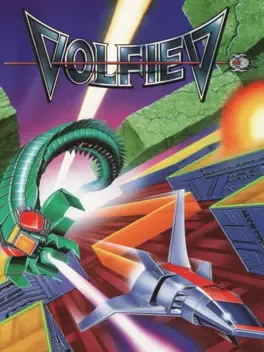
Once in the game, using the arrow keys you can move the 'Scanner' ship around the 'Shield Line' at the parameter of the playing area. While moving around this edge the ship is protected from the aliens by a shield indicated by a glowing circle around the ship. This shield is not infinite and care should be taken to complete each level as quickly as possible. A counter indicates the level of shield that you have: when it reaches zero then any contact with an alien is deadly whether you are on the 'Shield Line' or not. The idea of the game is to cut areas out of the screen without touching any of the aliens. This is done by pressing the SPACE key which initiates the 'Laser Cutter' and moving off the 'Shield Line' and rejoining it somewhere else. While you are in the process of drawing a line, your shield is inactive and touching an alien is fatal. Similarly, if one of the aliens touches the line then it will send a charge down the line towards you and you must quickly return to the safety of the edge before it reaches you. When you rejoin the 'Shield Line' the area that does not contain the 'Boss' alien will be filled (points are gained by trapping the other aliens) and the 'Shield Line' will be adjusted to surround the area that is left. The level is completed when a certain percentage of the total area has been filled in. This percentage starts at 80% but may increase in the later levels.
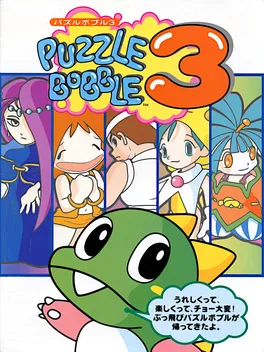
The second sequel to Puzzle Bobble. It was released into arcades in September 1996 and later ported to the Sega Saturn, Sony PlayStation, Game Boy, Nintendo 64 and Microsoft Windows. It would be the final appearance of Puzzle Bobble on the Sega Saturn. Like its predecessors, the player is tasked with shooting balls at groups of balls, creating groups of 3 or more, which are then removed from play. A European remake is entitled Bust-a-Move 3 DX. released in America as Bust-a-Move '99.
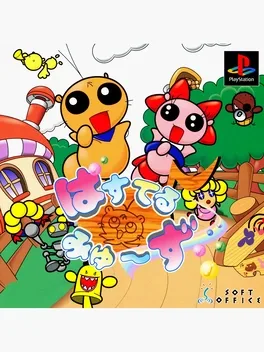
A colored ball matching style puzzle game released exclusively in Japan.
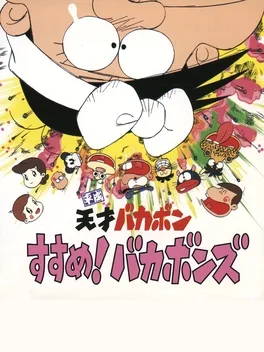
Heisei Tensai Bakabon: Susume! Bakabons is a competitive falling-block puzzle game based on the 1990 animated series Heisei Tensai Bakabon. Pairs of blocks in four colors drop from the top of the screen, and the goal is to line up two or more blocks of the same color, with another pair of a different matching color at either end. Any blocks on top of the ones cleared will fall into the open space, potentially comboing together into chains. Clearing multiple sets of blocks in a combo or chain will send garbage blocks to the opponent's playfield, and also charge up a super move that triggers automatically at a certain threshold which can clear a large number of blocks from the playfield. The game has a single-player story mode in which Bakabon's dad, refusing to wake up in the morning, gets sucked up by his wife's vacuum cleaner and sent to a strange puzzle world where he must defeat the other characters from the show in puzzle battles. There is also a two-player versus mode with nine playable characters.
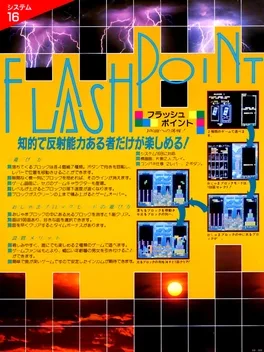
Flash Point is a variant of Tetris, with the various shapes of the tetrominos and their rotation are identical to Sega's Tetris . What makes the game different from a standard Tetris clone is its objective; each stage already contains a pattern of blocks, usually arranged as symbols, characters, or other images. Among these blocks are several bombs. The goal is to make these bombs detonate by clearing out the rows they are in. Once all the bombs have been detonated, the stage "explodes", and the player advances to the next one.
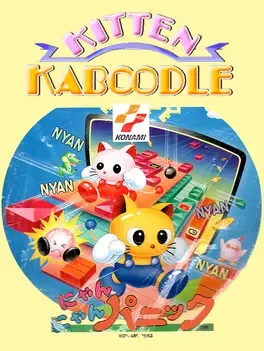
Kitten Kaboodle was produced by Konami in 1988. The game lets the player control a cat as it searches each stage trying to find four hidden keys. The stages are filled with enemies that can be defeated by pushing blocks into them. Blocks can also be jumped over if they get in the way. There are also special blocks that when three of the same kind are lined up it will cause an effect to happen such as clearing the screen of every enemy on it or giving the player temporary invulnerability. Enemies can drop valuables which increase the players points and in turn these points can be spent at a shop which sells various items like running shoes and bombs.
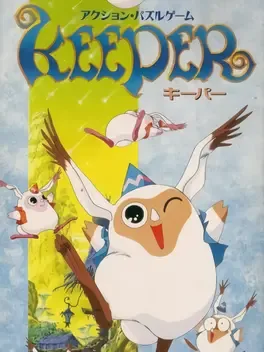
Keeper is an action/puzzle game developed by Fupac and published by Bullet-Proof Software, and released only in Japan for the Super Famicom.
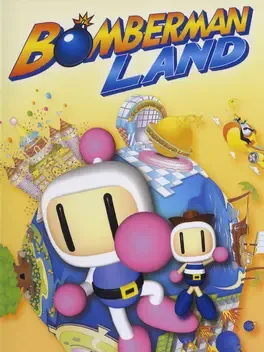
Bomberman Land is a theme park filled with people and different attractions. As in top-down RPG games, the player controls a character who can interact with the NPCs and objects on the map. Various spots give access to the attractions, in the form of mini-games. In some games, the player must pick-up sheep and lock them out of the field, complete jigsaw puzzles, look at equations and answer if they are true or false, etc. Completing various tasks will reward the player with numbered coupons that give access to new areas of the theme park. In addition to the solo play, some games can be played in up to four players battles, or in a tandem cooperative mode.
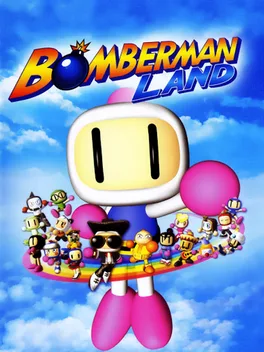
Bombermand Land is a revamped continuation of the Bomberman series. There is a single-player Story Mode where the player travels through the Bomberman universe in order to bring peace to it once again by solving puzzles, defeating enemies and collecting power-ups and weapons to defeat them. There are 40 different single-player minigames and 5 multiplayer games to choose from, ranging from skiing, skateboarding, laser ball, archery among many others. There is also the classic Bomberman which can also allow up to four human opponents in six different battle modes to compete in: Normal, Points, Stars, Crown, All-Out and Wii (which uses the Wii Remote to throw bombs, an exclusive mode for the Wii)