
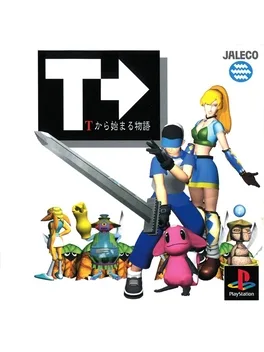
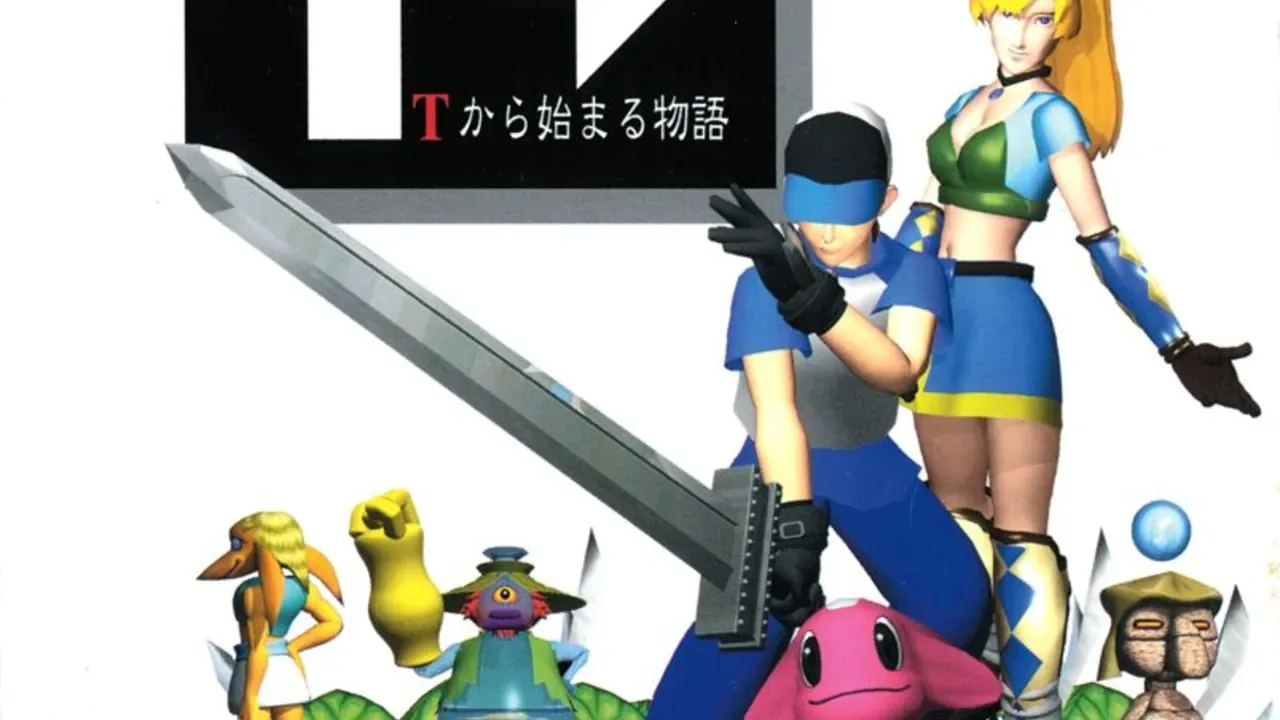
T kara Hajimaru Monogatari


Buy
Could be interesting

Suikoden is a Japanese-style role-playing game with several unusual additions. There are three kinds of combat in the game, the most common one being the traditional turn-based party combat (players can have up to six people in their active party). Magic runes can be equipped on the player's characters which allow limited usage of offensive and healing spells. There are also a few army battles, where the player must control whole units of fighters, archers, magicians, etc., and one-on-one fights (duels).
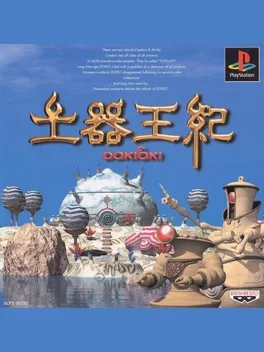
Doki Oki is a first person perspective in the style of games like Myst. In the game the player takes the role of a human that is summoned into another world by strange robotic creatures that tells him that they need his help to defeat a mysterious enemy.
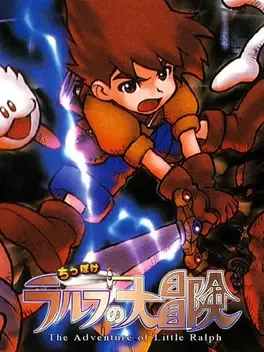
The Adventure of Little Ralph is a 2D platformer. In this game the player controls Ralph, who has been turned back into a child by the evil demons who have invaded his homeland. In order to stop them and return to his former self, he must get through each area filled with enemies, traps, and many hidden routes. Ralph is armed with swords and various magic powers and also has the assistance of a small furry companion. The game's levels are interconnected, unlike the "stages" of most other platform games.
Echo Night 2: Nemuri no Shihaisha is a first person adventure. Like the first game, Echo Night 2 is played from a first-person perspective, but unlike most other first-person games there is no use of firearms in the game. When confronted by a ghost the player must turn on the lights in the room by means of a light switch. The player is often transported into the past via the passengers or certain objects. Once the player fulfills a task important to a spirit they will vanish and drop an "Astral Piece" which can be used to get a different ending scene.
Should you enter Tecmo's Deception you should be warned! You must decide who lives and who dies. As in life, Tecmo's Deception will hold you responsible for your actions. Everything you do, everywhere you go, everyone you meet has a reason. Are you seeking revenge, resurrection, or redemption? It's your decision.

R4: Ridge Racer Type 4 is the fourth game in the Ridge Racer series. It includes eight tracks (with reverse variants, for a total of 16 layouts) and 321 vehicles, all of which are fictional. This iteration was one of the first PlayStation titles to feature Gouraud shading on polygons, giving the game a visual depth that was previously missing. It was also the first Ridge Racer game on the system to feature two-player split-screen mode and offered two different driving models.
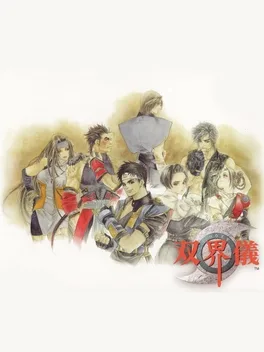
An action RPG released by Square in 1998. Features music by Secret of Mana composer Hiroki Kikuta. To progress from one level to the other you must destroy red, yellow, and blue Garan stones. By destroying the Garan stones, the bar on the right hand side of the screen will go from RED to YELLOW to BLUE. To progress to the next level, the bar must be at least to BLUE. There are some crystals that cannot be destroyed, but you can come back to get them later. You can also make the bar go up by destroying enemies, but it is not as much as destroying actual crystals.
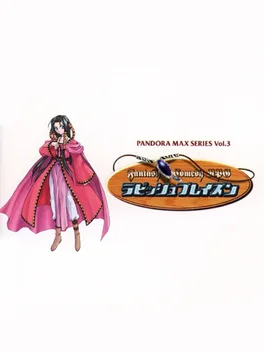
Pandora Max Series Vol. 3: Rubbish Blazon is a RPG developed and published by Pandora Box, which was released in Japan in 2000
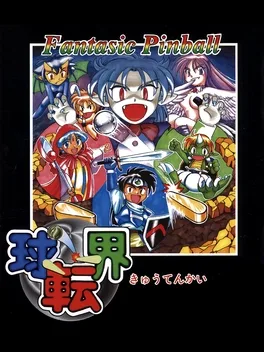
Fantasy-themed Pinball game, which puts the player in control of a trio of heroes out to prevent the Lord of the Underworld from taking over the world. From the same developer as the Devil's Crush port for Sega Genesis/Mega Drive.
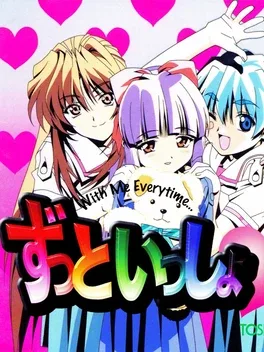
Zutto Issho is a first person perspective dating simulation game that when it was rereleased by Hamster the game graphics, the packanging & the ending song were changed. The goal of the game is to win the girls heart so the player will have to date her and make her feelings about the player's character grow. There are also some time limits in the conversations so the player have to decide quick what to do. There are also other characters to interact with (even the girls got their rival). The game features japanese voice acting for the characters.